IMDb RATING
7.4/10
2.1K
YOUR RATING

Henri-Georges Clouzot's unfinished masterpiece, Inferno (1964), is reconstructed in this film which is part drama and part documentary.Henri-Georges Clouzot's unfinished masterpiece, Inferno (1964), is reconstructed in this film which is part drama and part documentary.Henri-Georges Clouzot's unfinished masterpiece, Inferno (1964), is reconstructed in this film which is part drama and part documentary.
- Directors
- Writers
- Stars
- Awards
- 4 wins & 2 nominations total





Romy Schneider
- Self - Odette Prieur
- (archive footage)


Serge Reggiani
- Self - Marcel Prieur
- (archive footage)


Dany Carrel
- Self - Marylou
- (archive footage)

Jean-Claude Bercq
- Self - Martineau
- (archive footage)

Mario David
- Self - Julien
- (archive footage)

André Luguet
- Self - Duhamel
- (archive footage)

Maurice Garrel
- Self - Le docteur Arnoux
- (archive footage)

Barbara Sommers
- Self - Madame Bordure
- (archive footage)

Maurice Teynac
- Self - Monsieur Bordure
- (archive footage)

Henri Virlojeux
- Self - L'homme sur la terrasse
- (archive footage)

Blanchette Brunoy
- Self - Clotilde
- (archive footage)

Henri-Georges Clouzot
- Self
- (archive footage)


- Directors
- Writers
- All cast & crew
- Production, box office & more at IMDbPro
7.42K
1
2
3
4
5
6
7
8
9
10
Featured reviews
Disappointing
This, apparently, is a film where you gain prestige by saying you like it, thereby associating yourself with the great insane folk of the past, always a sure way to build cred. In my view, if someone has to tell you that someone is (or was) great, they probably don't know what they are talking about. If your greatness is limited to a time or place, you're not great. Sorry, but that's the way it is.
In this case, the emperor has no clothes.
Half of the audience I saw this with could not bear to sit through it to the end, and like Serge and Jean-Louis, they simply walked out. If that was the desired effect, then the filmmakers did great -- at failing.
This film didn't know whether it wanted to tell the story IN the film, or the story OF the film, so it tried to do both, thus failing at both. You've got footage mixed in with experiment mixed in with interviews mixed in with acting, and then there's a soundtrack which we're told didn't exist.
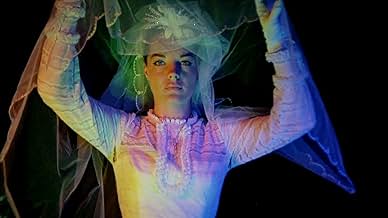
What I liked most about the film was the experimental footage, but even that got old rather quickly. There's only so long a person can be dazzled by the idea of rotating a light about someone's face in different colours. We get it already. To be fair, there are a number of other quite interesting shots, including for some reason a sea of noses, and a sparkly cellophane strangulation.
I do hope to one day see the 1994 L'enfer, which was adapted from the 1964 failure. It currently has a 7.0 score on IMDb, so I hope it will be time well spent.
In this case, the emperor has no clothes.
Half of the audience I saw this with could not bear to sit through it to the end, and like Serge and Jean-Louis, they simply walked out. If that was the desired effect, then the filmmakers did great -- at failing.
This film didn't know whether it wanted to tell the story IN the film, or the story OF the film, so it tried to do both, thus failing at both. You've got footage mixed in with experiment mixed in with interviews mixed in with acting, and then there's a soundtrack which we're told didn't exist.
What I liked most about the film was the experimental footage, but even that got old rather quickly. There's only so long a person can be dazzled by the idea of rotating a light about someone's face in different colours. We get it already. To be fair, there are a number of other quite interesting shots, including for some reason a sea of noses, and a sparkly cellophane strangulation.
I do hope to one day see the 1994 L'enfer, which was adapted from the 1964 failure. It currently has a 7.0 score on IMDb, so I hope it will be time well spent.
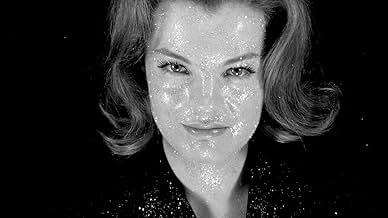
For your delectation... Romy Schneider!
Documentaries rarely come more fascinating than this. Clouzot's lost masterpiece, abandoned when the director suffered a heart attack during the interminable shooting of it. The interviews with Catherine Allégret, Costa Gavras and other participants in Clouzot's project are informative, particularly on the subject of the experimental sound track and the innovations in use of film stock that turned water red. But it is the human drama, not the technological wizardry that fascinates here. Clouzot simply took on too much: writing, directing and producing, as well as overseeing all aspects of casting, music, art direction... The American studio gave him too much money and power for this project, and this almost destroyed him.
Jacques Gamblin and Bérénice Bejo take over the parts Reggiani and Schneider played, and they flesh out the story well enough. (See Cluzet and Béart in Chabrol's remake for a really great experience.) I went to see the footage with Romy Schneider, and I wasn't disappointed. She was the most beautiful of European actresses, and Clouzot's camera adores her. Romy smoking, Romy with a blue tongue, Romy trussed naked on a train track, Romy being followed through the town by Reggiani. Rest assured, I will be getting the DVD.
Jacques Gamblin and Bérénice Bejo take over the parts Reggiani and Schneider played, and they flesh out the story well enough. (See Cluzet and Béart in Chabrol's remake for a really great experience.) I went to see the footage with Romy Schneider, and I wasn't disappointed. She was the most beautiful of European actresses, and Clouzot's camera adores her. Romy smoking, Romy with a blue tongue, Romy trussed naked on a train track, Romy being followed through the town by Reggiani. Rest assured, I will be getting the DVD.
maybe someone else one day will have another go
A most interesting film surrounding the making of Clouzot's unfinished, Inferno. Abandoned in 1964 ostensibly due to the director's heart attack, a substantial amount of filming remains and much use has been made of the original footage. Intended as a film about a husband's obsessive jealousy over his wife's apparent philandering, it seems Clouzot became himself obsessed. The b/w footage appears to have some promise but is without soundtrack so hard to judge, but no the real interest here is the experimental reels. Determined to make a film like no other, Clouzot recruited any number of technicians and artists to help create devices to give him surreal or psychedelic affects. Along the way the director has clearly fallen for the lovely Romy Schneider who for instance spent four days with a camera close up on her lips whilst exhaling cigarette smoke and wearing various colours of lipstick, including blue. Valuable as an insight into the attempted making of Inferno but a little frustrating in that it asks more questions than it answers, like the true mental state of the director and why nobody else might have carried on. It is possible that a lot was left out here because Clouzot's widow was to have last say on the film but it would be nice to know and maybe someone else one day will have another go, there seems enough footage.
How to make a movie about failing to make a movie
Okay, this is an insiders' movie for the die-hards, but it works for everyone.
The director presumably got the idea when he got stuck with Clouzot's widow in an elevator - he even thanks the elevator for its technical failure in the credits.
What do we learn? Overall, we learn about flawed genius, about how unlimited budgets can send a brilliant director off-track. we learn about how far actors will go to satisfy their director's requirements.
What do we see? First, being born in 1964, the year the movie was filmed, I loved the stilted, post-industrial surroundings at the lake and the hotel were the film was supposed to be set. I loved the costumes, the modernity and became totally nostalgic (to going back to being a baby, I suppose). Romy... Does it add anything we haven't seen from her? Perhaps not, but it sure is nice and especially to see her with Serge Reggiani who only makes her beauty shine more.
Does it work as a documentary? Yes, very well, in my humble opinion. The director does not ask (irrelevant) questions, but he simply presents the material and gives us an insight that perhaps, there was more than Clouzot's seizure to halt filming. He uses beautiful background music to make-up for the missing soundtrack. The dialogues read by two really good actors: well, perhaps it was a bit contrite, but I was thinking all the time that one of the things that would have been quite mediocre had the film been completed, would have been that: the dialogues were flat, boring and superficial (but the actors read them well).
My friend asked me: how many movies are there about a movie. Lots, but yesterday evening I could not think of one. But this is more, this is a documentary about a movie about failing to make a movie.
Highly recommended.
The director presumably got the idea when he got stuck with Clouzot's widow in an elevator - he even thanks the elevator for its technical failure in the credits.
What do we learn? Overall, we learn about flawed genius, about how unlimited budgets can send a brilliant director off-track. we learn about how far actors will go to satisfy their director's requirements.
What do we see? First, being born in 1964, the year the movie was filmed, I loved the stilted, post-industrial surroundings at the lake and the hotel were the film was supposed to be set. I loved the costumes, the modernity and became totally nostalgic (to going back to being a baby, I suppose). Romy... Does it add anything we haven't seen from her? Perhaps not, but it sure is nice and especially to see her with Serge Reggiani who only makes her beauty shine more.
Does it work as a documentary? Yes, very well, in my humble opinion. The director does not ask (irrelevant) questions, but he simply presents the material and gives us an insight that perhaps, there was more than Clouzot's seizure to halt filming. He uses beautiful background music to make-up for the missing soundtrack. The dialogues read by two really good actors: well, perhaps it was a bit contrite, but I was thinking all the time that one of the things that would have been quite mediocre had the film been completed, would have been that: the dialogues were flat, boring and superficial (but the actors read them well).
My friend asked me: how many movies are there about a movie. Lots, but yesterday evening I could not think of one. But this is more, this is a documentary about a movie about failing to make a movie.
Highly recommended.
A heart attack and heart break
A view of Henri-Georges Clouzot's filmography cannot be complete with at least acknowledging his lost, partially shot film, Inferno. Production began in the summer of 1964 and fell apart in about a month. Incomplete and unable to find funds to continue, Clouzot abandoned the film, eventually adopting some of his ideas into Woman in Chains, his final feature film. The story of the disruption of the film remained something of a mystery to the more casual of film goers until 2009 with the release of this documentary by Serge Bromberg. Part re-creation, part rediscovery, and part behind the scenes documentary, it's a fascinating look at a filmmaker gone, potentially, as mad as his main character.
After the relative success of La Verite and the murk that was the changing French film industry brought on by the rising French New Wave, Henri-Georges Clouzot decided to embark on his most experimental film based on his large, 300-page script titled L'enfer. The story of a middle-aged man, Marcel (Serge Reggiani), who married a younger woman, Odette (Romy Schneider), and the hell he goes through as he suspects her of infidelities in their vacation in the small town French town they honeymoon. The driver of the film, in Clouzot's mind, was the experimentation he could bring to the film's subjective point of view from Marcel as he sees what may or may not be happening. The parts of the film that were unquestionably in objective reality would be filmed in black and white, and the films tainted by Marcel's point of view would be in color.
The documentary lays out Clouzot's working process, explicitly called out as one of his great strengths on his previous films. There are some contrasts with the French New Wave filmmakers who prioritized improvisation over planning, one of the main reasons that they rejected Clouzot (though they loved Hitchcock who did the same thing...whatever) as representative of the old way of doing things. Clouzot would retort with the idea that his improvisation happened on paper. He would plan to such a degree that he could focus purely on the actors on set, having meticulously pre-planned camera angles, lenses, and framing before they ever showed up to set.
Where Clouzot broke from his previous method of work, though, was the experimentation. He spent several months with his core crew of cameramen and sound technicians just trying things out, whatever distortions and effects they could come up with wholly in the camera. This experimentation was free-flowing and seemingly never ending, helped not at all by Columbia executives seeing the tests and throwing money at Clouzot to continue. The central experiment we get a look at is a color sequence on a lake where Clouzot planned on having the water turn red but everything else in camera to retain their original colors. This could only be done chemically at the time through inversion of colors, so everything from makeup to costumes had to be replicated in the opposite color. Unfortunately, we only ever see tests of the effect and never what might have been the final product, but it does sound like a great idea.
And that was ultimately Clouzot's downfall. He preplanned everything minutely, but he got lost in the experimentation. That seems to have infected his entire way of doing things, and he spent days reshooting the same scenes over and over again. He was reportedly always an exacting director with his actors, demanding many takes to get exactly what he wanted (like Kubrick would later be known for), but he seems to have lost the plot during the production of Inferno. He had the idea of using three crews that he was responsible for, but if he spends all day with the first crew redoing the same stuff he did last week, he's just burning not only money on things he already has in the can but on two other crews who are just sitting around, waiting to be told what to do.
As the cinematographer, William Lubtchansky, says in his interview, Clouzot was always a workaholic, and even an insomniac, and would expect everyone to work at any time he demanded, day or night (this was why he rented a house several miles from the main production offices in the small town's hotel, to avoid that), but Clouzot strained himself until he had a heart attack on set. That was ultimately what shut the production down. In retrospect, Lubtchansky concludes, Clouzot needed a producer to direct his energies, to keep him on schedule and to stop the experimentation.
Inferno is going to be one of those mysterious what-ifs in film, and I think it might have been compelling even if Clouzot hadn't been reigned in and managed to somehow finish production on his own terms. It might have been a complete mess, but it might have also been an interesting complete mess. Claude Chabrol did make a film from Clouzot's script in the 90s, which I'll have to check out at some point, which combined with this documentary is the closest we'll ever get to seeing the final product Clouzot had in mind.
After the relative success of La Verite and the murk that was the changing French film industry brought on by the rising French New Wave, Henri-Georges Clouzot decided to embark on his most experimental film based on his large, 300-page script titled L'enfer. The story of a middle-aged man, Marcel (Serge Reggiani), who married a younger woman, Odette (Romy Schneider), and the hell he goes through as he suspects her of infidelities in their vacation in the small town French town they honeymoon. The driver of the film, in Clouzot's mind, was the experimentation he could bring to the film's subjective point of view from Marcel as he sees what may or may not be happening. The parts of the film that were unquestionably in objective reality would be filmed in black and white, and the films tainted by Marcel's point of view would be in color.
The documentary lays out Clouzot's working process, explicitly called out as one of his great strengths on his previous films. There are some contrasts with the French New Wave filmmakers who prioritized improvisation over planning, one of the main reasons that they rejected Clouzot (though they loved Hitchcock who did the same thing...whatever) as representative of the old way of doing things. Clouzot would retort with the idea that his improvisation happened on paper. He would plan to such a degree that he could focus purely on the actors on set, having meticulously pre-planned camera angles, lenses, and framing before they ever showed up to set.
Where Clouzot broke from his previous method of work, though, was the experimentation. He spent several months with his core crew of cameramen and sound technicians just trying things out, whatever distortions and effects they could come up with wholly in the camera. This experimentation was free-flowing and seemingly never ending, helped not at all by Columbia executives seeing the tests and throwing money at Clouzot to continue. The central experiment we get a look at is a color sequence on a lake where Clouzot planned on having the water turn red but everything else in camera to retain their original colors. This could only be done chemically at the time through inversion of colors, so everything from makeup to costumes had to be replicated in the opposite color. Unfortunately, we only ever see tests of the effect and never what might have been the final product, but it does sound like a great idea.
And that was ultimately Clouzot's downfall. He preplanned everything minutely, but he got lost in the experimentation. That seems to have infected his entire way of doing things, and he spent days reshooting the same scenes over and over again. He was reportedly always an exacting director with his actors, demanding many takes to get exactly what he wanted (like Kubrick would later be known for), but he seems to have lost the plot during the production of Inferno. He had the idea of using three crews that he was responsible for, but if he spends all day with the first crew redoing the same stuff he did last week, he's just burning not only money on things he already has in the can but on two other crews who are just sitting around, waiting to be told what to do.
As the cinematographer, William Lubtchansky, says in his interview, Clouzot was always a workaholic, and even an insomniac, and would expect everyone to work at any time he demanded, day or night (this was why he rented a house several miles from the main production offices in the small town's hotel, to avoid that), but Clouzot strained himself until he had a heart attack on set. That was ultimately what shut the production down. In retrospect, Lubtchansky concludes, Clouzot needed a producer to direct his energies, to keep him on schedule and to stop the experimentation.
Inferno is going to be one of those mysterious what-ifs in film, and I think it might have been compelling even if Clouzot hadn't been reigned in and managed to somehow finish production on his own terms. It might have been a complete mess, but it might have also been an interesting complete mess. Claude Chabrol did make a film from Clouzot's script in the 90s, which I'll have to check out at some point, which combined with this documentary is the closest we'll ever get to seeing the final product Clouzot had in mind.


Did you know
- ConnectionsEdited from Inferno (1964)
- How long is Henri-Georges Clouzot's Inferno?Powered by Alexa
Details
- Release date
- Country of origin
- Official site
- Language
- Also known as
- Inferno
- Filming locations
- Anglards-de-Saint-Flour, Cantal, France(hotel and lake)
- Production companies
- See more company credits at IMDbPro
Box office
- Gross US & Canada
- $25,489
- Opening weekend US & Canada
- $3,981
- Jul 18, 2010
- Gross worldwide
- $52,003
- Runtime
- 1h 40m(100 min)
- Color
- Sound mix
- Aspect ratio
- 1.85 : 1
Contribute to this page
Suggest an edit or add missing content