

A journalist covering police assigned to a juvenile division enters into an affair with one of her subjects.A journalist covering police assigned to a juvenile division enters into an affair with one of her subjects.A journalist covering police assigned to a juvenile division enters into an affair with one of her subjects.
- Awards
- 7 wins & 22 nominations total




Frédéric Pierrot
- Baloo
- (as Frederic Pierrot)


- Director
- Writers
- All cast & crew
- Production, box office & more at IMDbPro
7.316.1K
1
2
3
4
5
6
7
8
9
10
Featured reviews
A textured look at a group of people
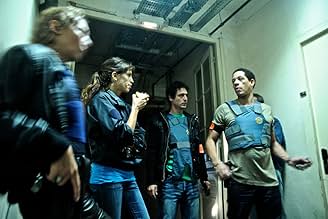
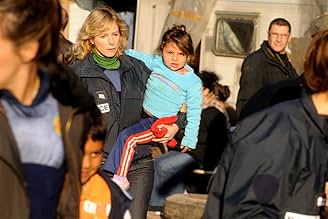
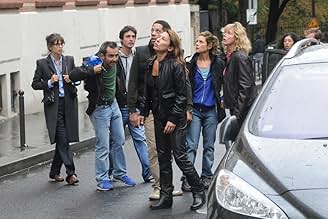
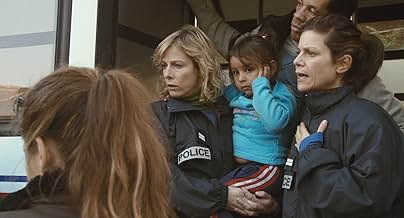
Polisse is a cop movie, but it's that rare cop movie that doesn't seek to glamourize the cops or make them out into heroes. For starters, instead of focusing on the more popular homicide unit, it's about a child protection unit (CPU) in the neighbourhood of Belleville in Paris. The CPU deals with some of the ugliest cases, mostly involving the sexual abuse of children.
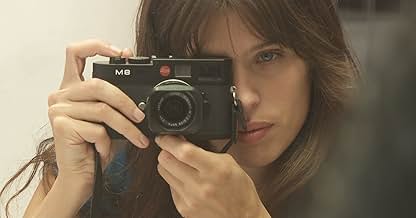
Writer/director Maïwenn (who herself has a small role as a bourgeois photojournalist who embeds herself with the police) handles the difficult material well, never shying away from showing the police as the messy imperfect people they are. These are people who care deeply about what they do but also people who screw up, who fight amongst each other, who cheat on their spouses and don't have enough time for their friends and their family. Despite the fact that the movie is about two hours long, the huge ensemble means that there's a lot of ground to cover, but to Maïwenn and the actors credit, they characters all feel fleshed out and real.
The script is very textured and dense, and I'm not sure the subtitles do justice to the sheer volume of words and the difference in class that the dialects play with, but it's a wonderful great film, very epic in scope. Don't go into it expecting a linear simplistic story. Plot lines are introduced, but seldom wrapped up, but this works to the film's advantage, showing that in many cases this is as far as it can go for the police involved.
Writer/director Maïwenn (who herself has a small role as a bourgeois photojournalist who embeds herself with the police) handles the difficult material well, never shying away from showing the police as the messy imperfect people they are. These are people who care deeply about what they do but also people who screw up, who fight amongst each other, who cheat on their spouses and don't have enough time for their friends and their family. Despite the fact that the movie is about two hours long, the huge ensemble means that there's a lot of ground to cover, but to Maïwenn and the actors credit, they characters all feel fleshed out and real.
The script is very textured and dense, and I'm not sure the subtitles do justice to the sheer volume of words and the difference in class that the dialects play with, but it's a wonderful great film, very epic in scope. Don't go into it expecting a linear simplistic story. Plot lines are introduced, but seldom wrapped up, but this works to the film's advantage, showing that in many cases this is as far as it can go for the police involved.
Great, gritty, documentary feel
What an excellent film!
Full of good dialogue that feels real and down to earth it was not surprising to hear Maiwenn say (at the Sydney Film Festival Q&A) she had spent time with the real CPU. The reality of the emotions and the truthfulness of the situations this team faced was evident and really made the difference to this film.
What stops the review getting full marks is the films tendency to let some of the less interesting scenes play for too long. Oddly it's also the love story she included to make the film seem less bleak and Maiwenn's own character that become unnecessary and make the movie overburdened and run a little too long.
The cast is absolutely fantastic and engaging. Their relationships heartfelt and natural; you would think they had been playing this together for years.
This is a movie of the tougher, grimy side of a city. It presents the human behaviours we shudder to believe exist. And yet, handled so superbly, you will not feel wrung out or overwhelmed. It's a terrific movie that will have you talking for a long time.
Full of good dialogue that feels real and down to earth it was not surprising to hear Maiwenn say (at the Sydney Film Festival Q&A) she had spent time with the real CPU. The reality of the emotions and the truthfulness of the situations this team faced was evident and really made the difference to this film.
What stops the review getting full marks is the films tendency to let some of the less interesting scenes play for too long. Oddly it's also the love story she included to make the film seem less bleak and Maiwenn's own character that become unnecessary and make the movie overburdened and run a little too long.
The cast is absolutely fantastic and engaging. Their relationships heartfelt and natural; you would think they had been playing this together for years.
This is a movie of the tougher, grimy side of a city. It presents the human behaviours we shudder to believe exist. And yet, handled so superbly, you will not feel wrung out or overwhelmed. It's a terrific movie that will have you talking for a long time.
It sticks in my throat. It tears me up.
The average time that someone can work in child protection is two years. Some last longer, or there would not be supervisors, but it is a rough business, as this film depicts.
What should grab you is that they move from case to case without any continuity. This is the real world of child protection. You deal with a druggie mother today, a pederast grandfather tomorrow, and neglected or abused children the next day.
Some may find the language off-putting, but that is the way it is. You are under such stress during work, that you have to relieve it somehow after you get off. It may be crude, but it is effective.
I can also relate to those who lose it occasionally. You can put your heart and soul into this job, and get frustrated easily by parents and the bureaucracy.
The film may have been actors, but it has a documentary feel as they portray the action as it really happens.
What should grab you is that they move from case to case without any continuity. This is the real world of child protection. You deal with a druggie mother today, a pederast grandfather tomorrow, and neglected or abused children the next day.
Some may find the language off-putting, but that is the way it is. You are under such stress during work, that you have to relieve it somehow after you get off. It may be crude, but it is effective.
I can also relate to those who lose it occasionally. You can put your heart and soul into this job, and get frustrated easily by parents and the bureaucracy.
The film may have been actors, but it has a documentary feel as they portray the action as it really happens.
Riveting and face paced
Polisse was my favourite film at the recent Sydney Film Festival. A french film from writer, director, star Maiween, it tells the story of the Child Protection Unit in Paris. It was absolutely riveting from start to finish.
An ensemble piece that moves at a cracking pace, it could be forgiven for not establishing character, but it actually manages to do that and do it very well. We are introduced to this group of close knit colleagues as they go about their day trying to balance the horrors they have to deal with (rapists, kidnappers, abusers, paedophiles) with their personal lives.
Maiween spent quite some time with a real CPU and told us in the Q&A that all the cases she featured are just like ones she witnessed and with that experience she brought an almost documentary feel at the same time as adding creative drama and plot to moments of the story as they rush through case after case. The performances are all excellent and the editing is sublime (it won a French Oscar for this).
It's shocking, emotional, intense and surprisingly very funny.
Highly recommended if you like hard-hitting films that deal with serious subjects in a very human and darkly humorous way.
An ensemble piece that moves at a cracking pace, it could be forgiven for not establishing character, but it actually manages to do that and do it very well. We are introduced to this group of close knit colleagues as they go about their day trying to balance the horrors they have to deal with (rapists, kidnappers, abusers, paedophiles) with their personal lives.
Maiween spent quite some time with a real CPU and told us in the Q&A that all the cases she featured are just like ones she witnessed and with that experience she brought an almost documentary feel at the same time as adding creative drama and plot to moments of the story as they rush through case after case. The performances are all excellent and the editing is sublime (it won a French Oscar for this).
It's shocking, emotional, intense and surprisingly very funny.
Highly recommended if you like hard-hitting films that deal with serious subjects in a very human and darkly humorous way.
Funny, tragic and gripping
Polisse is a difficult film to define. Based on real-life cases dealt with by the Child Protection Unit covering the 19th arrondissement (borough or quarter) of Paris, it could possibly be called a docudrama, although it does not cover events of historical significance.
Maïwenn, who wrote, directed and featured in the film as a photojournalist shadowing the unit, spent time herself with such a unit for research. All the cases featured in the film are supposed to have taken place while she was there or were recounted to her at that time. It is this that gives the film its lifelike, gritty quality. Indeed, the first scene plunges straight into an interview with a little girl who claims her father is molesting her, and is swiftly followed by other similar interviews with suspected paedophiles, victims and accusers. Despite the obviously very serious subject of the film, humorous moments pepper the script, which successfully highlights the tragicomic ludicrousness of some of the situations they encounter.
Alongside the cases of child molesting and underage rape that the team deals with on a day- to-day basis, the film delves into the complex personalities of the characters, who are at times tender and patient, and at others frustrated, angry and even violent. We are privy to the emotional strain the job has on these police officers and the effects on their personal lives, their marriages and relationships with their children. Special bonds also develop between them, and their intimacy and affinity is so well portrayed that it is easy to forget that this is in fact a film and not simply a documentary.
Though Polisse, like real life, does not really follow a plot line, and we never find out if the criminals are actually brought to justice, one does not become bored or frustrated or ever wonder where the film is going. In fact, just like the TV series The Wire to which it has been compared, it is the lack of obvious direction of the film that ultimately makes it all the more powerful and effective.
Maïwenn, who wrote, directed and featured in the film as a photojournalist shadowing the unit, spent time herself with such a unit for research. All the cases featured in the film are supposed to have taken place while she was there or were recounted to her at that time. It is this that gives the film its lifelike, gritty quality. Indeed, the first scene plunges straight into an interview with a little girl who claims her father is molesting her, and is swiftly followed by other similar interviews with suspected paedophiles, victims and accusers. Despite the obviously very serious subject of the film, humorous moments pepper the script, which successfully highlights the tragicomic ludicrousness of some of the situations they encounter.
Alongside the cases of child molesting and underage rape that the team deals with on a day- to-day basis, the film delves into the complex personalities of the characters, who are at times tender and patient, and at others frustrated, angry and even violent. We are privy to the emotional strain the job has on these police officers and the effects on their personal lives, their marriages and relationships with their children. Special bonds also develop between them, and their intimacy and affinity is so well portrayed that it is easy to forget that this is in fact a film and not simply a documentary.
Though Polisse, like real life, does not really follow a plot line, and we never find out if the criminals are actually brought to justice, one does not become bored or frustrated or ever wonder where the film is going. In fact, just like the TV series The Wire to which it has been compared, it is the lack of obvious direction of the film that ultimately makes it all the more powerful and effective.


Did you know
- TriviaDirector Maïwenn's first idea for the title was "Police", but another film already had this name: none other than famous French director Maurice Pialat's film in 1985. Her next idea was, "Vous êtes de la police?", but it too was already a film title. One day, as her young child was learning to write, he misspelled "Police", and she saw in front of her eyes the perfect title considering the subject of her movie, with a child's writing: "Polisse".
- ConnectionsFeatured in Ebert Presents: At the Movies: Episode #1.18 (2011)
- SoundtracksL'Île aux Enfants
Music by Roger Pouly
Lyrics by Christophe Izard
Performed by Anne Germain
(p) & (c) 1974 Editions de Alouettes (catalogue Technisonor)
Avec l'aimable autorisation de Sony ATV
- How long is Polisse?Powered by Alexa
Details
- Release date
- Country of origin
- Official sites
- Languages
- Also known as
- Cánh Sát Pháp
- Filming locations
- Boulevard du Palais, Paris 1, Paris, France(scene at the café)
- Production companies
- See more company credits at IMDbPro
Box office
- Gross US & Canada
- $211,440
- Opening weekend US & Canada
- $16,568
- May 20, 2012
- Gross worldwide
- $20,601,245
- Runtime
- 2h 7m(127 min)
- Color
- Sound mix
- Aspect ratio
- 1.85 : 1
Contribute to this page
Suggest an edit or add missing content