IMDb RATING
7.4/10
5.9K
YOUR RATING


It's been months since Jafar Panahi, stuck in jail, has been awaiting a verdict by the appeals court. By depicting a day in his life, Panahi and Mojtaba Mirtahmasb try to portray the depriva... Read allIt's been months since Jafar Panahi, stuck in jail, has been awaiting a verdict by the appeals court. By depicting a day in his life, Panahi and Mojtaba Mirtahmasb try to portray the deprivations looming in contemporary Iranian cinema.It's been months since Jafar Panahi, stuck in jail, has been awaiting a verdict by the appeals court. By depicting a day in his life, Panahi and Mojtaba Mirtahmasb try to portray the deprivations looming in contemporary Iranian cinema.
- Awards
- 10 wins & 14 nominations total
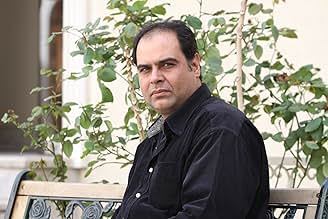
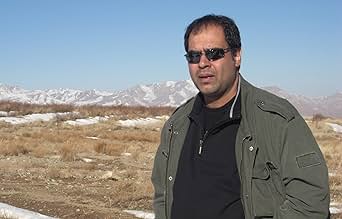

- Directors
- Writer
- All cast & crew
- Production, box office & more at IMDbPro
7.45.9K
1
2
3
4
5
6
7
8
9
10
Featured reviews
Beethovenian
Iranian director Jafar Panahi is one of world's most important movie makers nowadays, while also a victim of the oppressive regime in his country. Arrested, together with other artists, during the events following the Iranian presidential elections in 2009, he spent several months in prison. He was freed then on bail while the judicial procedure against him was going on. Mr. Panahi was eventually sentenced to 6 years of prison and 20 years ban to make movies.
It was during the period spent at home in 2010 that Jafar Panahi made this movie, with the title This is Not a Film (In Film Nist). A friend, documentary producer Mojtaba Mirtahmasb (the author of Lady of the Roses, 2008), came with a consumer-grade camera and shot the footage for a 75 minutes video, having Mr. Panahi as co-director, screenwriter, film editor and star. The video was eventually smuggled outside Iran on a flash drive and screened at the 2011 Cannes Festival.
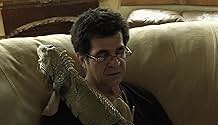
It's just that: 75 minutes in a day spent by Jafar Panahi at home, waiting for the result of the trial. He talks to the phone with his lawyer, then feeds his pet (who is a very nice iguana), then talks with the cameraman shooting the footage about a project for a new film, rejected by the censorship, memories from some of his movies come and go, suddenly a terrible noise of explosions is heard - it's nothing than fireworks, and Mr. Panahi goes to the window to shoot them with his cell phone.
A movie that is not a movie, says Mr. Panahi. It's just mundane reality. Well, it's not that simple: this movie is a non-movie while this non-movie is a movie. Because it's his reality, his universe, which is sending us to the universe of his movies. All his movies talk actually about him, about his universe, and it becomes obvious here, in this non-movie which carries all the tension between image and reality - reality sublimated in cinematic image. Like Mozart, this moviemaker thinks only in artistic constructions. For Mozart any fact of life was musical sound, musical rhythm, for Panahi every fact of life is cinematic image, cinematic rhythm. Look, even his concerns for the sentence to come become art! However, the strongest association should be made to Beethoven! This moviemaker carries all the tension between reality and art, all his creation is fully aware of the paradoxical relationship between reality and art: reality mirrored in art, art mirrored in reality, art suffering that reality struggles to keep its autonomy, reality suffering that it is taken for art.
It was during the period spent at home in 2010 that Jafar Panahi made this movie, with the title This is Not a Film (In Film Nist). A friend, documentary producer Mojtaba Mirtahmasb (the author of Lady of the Roses, 2008), came with a consumer-grade camera and shot the footage for a 75 minutes video, having Mr. Panahi as co-director, screenwriter, film editor and star. The video was eventually smuggled outside Iran on a flash drive and screened at the 2011 Cannes Festival.
It's just that: 75 minutes in a day spent by Jafar Panahi at home, waiting for the result of the trial. He talks to the phone with his lawyer, then feeds his pet (who is a very nice iguana), then talks with the cameraman shooting the footage about a project for a new film, rejected by the censorship, memories from some of his movies come and go, suddenly a terrible noise of explosions is heard - it's nothing than fireworks, and Mr. Panahi goes to the window to shoot them with his cell phone.
A movie that is not a movie, says Mr. Panahi. It's just mundane reality. Well, it's not that simple: this movie is a non-movie while this non-movie is a movie. Because it's his reality, his universe, which is sending us to the universe of his movies. All his movies talk actually about him, about his universe, and it becomes obvious here, in this non-movie which carries all the tension between image and reality - reality sublimated in cinematic image. Like Mozart, this moviemaker thinks only in artistic constructions. For Mozart any fact of life was musical sound, musical rhythm, for Panahi every fact of life is cinematic image, cinematic rhythm. Look, even his concerns for the sentence to come become art! However, the strongest association should be made to Beethoven! This moviemaker carries all the tension between reality and art, all his creation is fully aware of the paradoxical relationship between reality and art: reality mirrored in art, art mirrored in reality, art suffering that reality struggles to keep its autonomy, reality suffering that it is taken for art.
A purely individual look at what it is to be a forbidden film maker.
Jafar Panahi: "If we could tell a film, then why make a film?"
My interest in Iranian cinema started with Dayereh (2000) by Jafar Panahi and since then I've watched a few other Iranian films of which most are directed by him. I remember after the first film I saw, I read about him on Wikipedia and read about his sentence and ban from film making. It is quite shocking and this gives more sense to this documentary which would have never been seen if it hadn't been smuggled out of Iran on a USB stick.
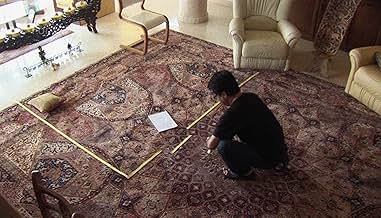
In film nist starts with Jafar Panahi having breakfast over the course of breakfast he calls a friend, Iranian documentary director Mojtaba Mirtahmasb asking him to come over. The only link we have with the outside world is through his phone. Before his friend comes Jafar has a phone call with his lawyer who confirms that he will definitely have to go to prison and that she may try to reduce the ban duration on appeal but it's probably all she can do. She tells him that it is not a judiciary sentence but a political one. When his friend arrives, Jafar Panahi explains the last films he wanted to do and how they were both denied approval and had to let them go. He has the script of one and decides that he can explain it, using his living room, the carpet representing the room in which a girl is- also- imprisoned and a chair for the window.
This is not a film is exactly what the title says it is. It is a day, a documentary at most. Most of Jafar Panahi movies give a lot of freedom to (amateur) actors who creates the whole atmosphere. It seems clear that this was not planned either, this has no script or no particular goal except to have a camera there, to document whatever could be documented before it's too late.
The setting is also particular as the whole town goes crazy over the celebrations of "Fireworks Wednesday" and the two friends stay inside, wondering what to do and how to do it. It gets particularly strange when Jafar Panahi starts recording with his mobile phone, filming the act of being filmed. I think the highest point of this film being not a film, is when Jafar Panahi explains the story of this film he was going to make and in the middle of replaying it... He suddenly becomes silent and his face tells us that he has strong doubts and this is where the quote I picked is said, he doubts the whole concept of a film, of telling a story and if it is a story worth telling. It might be reduced to the film he was discussing in particular, however, I would think that it goes beyond that, that it touches every film he's done including this one.
A lot of the issues are not entirely discussed, maybe as a way to retain dignity in the face of a sentence or simply because they are not thought out to be relevant. These very blunt, almost political and philosophical moments contrast with the comical aspect of his iguana pet slowly climbing a bookshelf or the neighbor who tries to leave her dog with him before he simply starts barking. It is also strongly incidental as when a young arts student walk in to come and pick the trash, a job he does to help out his sister and brother-in-law, suddenly the story focuses on him and as he goes on to pick up the trash, we follow him. In a way, isn't that what movies always tried to do, follow the strange happenings of life?
I liked: It doesn't get much more explicitly banned film, well this is not a film.
I disliked: Very random in a bumpy unscripted way.
70/100 If you are looking for a deep political look in the situation of Iran's cinema industry and its struggle then you won't find it. This is a purely individual look at what it is to be a forbidden film maker.
Read more reviews at: www.theordinaryreview.blogspot.com
My interest in Iranian cinema started with Dayereh (2000) by Jafar Panahi and since then I've watched a few other Iranian films of which most are directed by him. I remember after the first film I saw, I read about him on Wikipedia and read about his sentence and ban from film making. It is quite shocking and this gives more sense to this documentary which would have never been seen if it hadn't been smuggled out of Iran on a USB stick.
In film nist starts with Jafar Panahi having breakfast over the course of breakfast he calls a friend, Iranian documentary director Mojtaba Mirtahmasb asking him to come over. The only link we have with the outside world is through his phone. Before his friend comes Jafar has a phone call with his lawyer who confirms that he will definitely have to go to prison and that she may try to reduce the ban duration on appeal but it's probably all she can do. She tells him that it is not a judiciary sentence but a political one. When his friend arrives, Jafar Panahi explains the last films he wanted to do and how they were both denied approval and had to let them go. He has the script of one and decides that he can explain it, using his living room, the carpet representing the room in which a girl is- also- imprisoned and a chair for the window.
This is not a film is exactly what the title says it is. It is a day, a documentary at most. Most of Jafar Panahi movies give a lot of freedom to (amateur) actors who creates the whole atmosphere. It seems clear that this was not planned either, this has no script or no particular goal except to have a camera there, to document whatever could be documented before it's too late.
The setting is also particular as the whole town goes crazy over the celebrations of "Fireworks Wednesday" and the two friends stay inside, wondering what to do and how to do it. It gets particularly strange when Jafar Panahi starts recording with his mobile phone, filming the act of being filmed. I think the highest point of this film being not a film, is when Jafar Panahi explains the story of this film he was going to make and in the middle of replaying it... He suddenly becomes silent and his face tells us that he has strong doubts and this is where the quote I picked is said, he doubts the whole concept of a film, of telling a story and if it is a story worth telling. It might be reduced to the film he was discussing in particular, however, I would think that it goes beyond that, that it touches every film he's done including this one.
A lot of the issues are not entirely discussed, maybe as a way to retain dignity in the face of a sentence or simply because they are not thought out to be relevant. These very blunt, almost political and philosophical moments contrast with the comical aspect of his iguana pet slowly climbing a bookshelf or the neighbor who tries to leave her dog with him before he simply starts barking. It is also strongly incidental as when a young arts student walk in to come and pick the trash, a job he does to help out his sister and brother-in-law, suddenly the story focuses on him and as he goes on to pick up the trash, we follow him. In a way, isn't that what movies always tried to do, follow the strange happenings of life?
I liked: It doesn't get much more explicitly banned film, well this is not a film.
I disliked: Very random in a bumpy unscripted way.
70/100 If you are looking for a deep political look in the situation of Iran's cinema industry and its struggle then you won't find it. This is a purely individual look at what it is to be a forbidden film maker.
Read more reviews at: www.theordinaryreview.blogspot.com
Revealing inside view in Iranian apartment of a film maker, confined to his home while awaiting an appeal. Though not really boring, don't expect much action
I saw "This Is Not A Film" as part of the Ghent filmfestival 2011. Originally the film "Absolutely Tame Is A Horse" of the same director was scheduled. It had to be replaced in the last minute, due to an export ban on the film itself, plus the Iranian distributor loosing his license.
Nearly all 75 minutes that the replacement film takes, are shot within the apartment of the director in question. He is not allowed to make films, but nowhere was forbidden to read a screenplay aloud. On the other hand, as correctly noted by the camera man, recording this reading might still be considered film making. Hence he named this film "This Is Not A film", which may or may not help to evade the issue.
There were fireworks, which we saw announced on TV as non-religious, a different word for Not Allowed. Yet we clearly saw and heard fireworks on several places spread over the neighborhood. Could this be construed as some not-so-silent protest?? We felt a volatile atmosphere around these fireworks, albeit in an indirect way, because everyone seemed worried about their kids and relatives coming home in time. Moreover, when he was talking on the phone with a colleague who was underway, the latter had to discontinue abruptly when stopped by the police. This very apparently was cause for alarm. Later on he phoned back, and reassured us that the police only wanted to check his camera, lying unused on the passenger seat. All such signals combined clearly demonstrated an atmosphere of suppression and fear for the police.
I was prejudiced by some reviews I've read, describing this not-a-film as a bit boring. Having seen it, I found that too harsh. It may apply to the elevator scene, but that was neatly broken up in small scenes providing for some diversion. Within the apartment, a nice intermezzo was created by a pet lizard. It was being fed in the beginning, and then disappeared out of sight for a while. Later on we saw it crawling over our main character (complaining about its sharp nails) and over the couch, to eventually find a resting place in the bookshelves.
Throughout the film I was surprised that someone convicted for 6 years in prison, and a ban to make films for 20 years, was not locked up, but instead having some house arrest while awaiting an appeal. It clearly shows that I know nothing about the Iranian judicial system. Especially, as we learned from a phone call with his attorney, that his conviction was not on a legal basis, but on political grounds only. The latter is a concept very alien to us.
All in all, this not-a-film gave a limited inside view in a country we only know from newspapers. It was also a revealing inside view in an Iranian apartment, larger and better equipped than I had assumed beforehand. We can only speculate how he pays for all this, given the ban on his regular work. It shows (again) how little we know about Iran. My final conclusion is that I did not regret keeping my tickets for this not-a-film, though I was entitled for a substitute at choice out of the festival program.
Nearly all 75 minutes that the replacement film takes, are shot within the apartment of the director in question. He is not allowed to make films, but nowhere was forbidden to read a screenplay aloud. On the other hand, as correctly noted by the camera man, recording this reading might still be considered film making. Hence he named this film "This Is Not A film", which may or may not help to evade the issue.
There were fireworks, which we saw announced on TV as non-religious, a different word for Not Allowed. Yet we clearly saw and heard fireworks on several places spread over the neighborhood. Could this be construed as some not-so-silent protest?? We felt a volatile atmosphere around these fireworks, albeit in an indirect way, because everyone seemed worried about their kids and relatives coming home in time. Moreover, when he was talking on the phone with a colleague who was underway, the latter had to discontinue abruptly when stopped by the police. This very apparently was cause for alarm. Later on he phoned back, and reassured us that the police only wanted to check his camera, lying unused on the passenger seat. All such signals combined clearly demonstrated an atmosphere of suppression and fear for the police.
I was prejudiced by some reviews I've read, describing this not-a-film as a bit boring. Having seen it, I found that too harsh. It may apply to the elevator scene, but that was neatly broken up in small scenes providing for some diversion. Within the apartment, a nice intermezzo was created by a pet lizard. It was being fed in the beginning, and then disappeared out of sight for a while. Later on we saw it crawling over our main character (complaining about its sharp nails) and over the couch, to eventually find a resting place in the bookshelves.
Throughout the film I was surprised that someone convicted for 6 years in prison, and a ban to make films for 20 years, was not locked up, but instead having some house arrest while awaiting an appeal. It clearly shows that I know nothing about the Iranian judicial system. Especially, as we learned from a phone call with his attorney, that his conviction was not on a legal basis, but on political grounds only. The latter is a concept very alien to us.
All in all, this not-a-film gave a limited inside view in a country we only know from newspapers. It was also a revealing inside view in an Iranian apartment, larger and better equipped than I had assumed beforehand. We can only speculate how he pays for all this, given the ban on his regular work. It shows (again) how little we know about Iran. My final conclusion is that I did not regret keeping my tickets for this not-a-film, though I was entitled for a substitute at choice out of the festival program.
Fascinating in how storytelling through film is unintentionally broken down and laid out.
I have not seen any of Jafar Panahi's films. I've heard of Crimson Gold through the iconic image on the DVD cover but otherwise I'm not aware of his style. This Is Not A Film would be a great introduction as the filmmaker himself compares how he feels to the characters he created 10 years prior and analyses his own style of filmmaking. As someone who is interested in making films, this is a really fascinating documentary. Essentially a home video turned into a film, where its shown in the film itself when they decided to turn it into a film, it unintentionally breaks down storytelling and storytelling methods as Panahi demonstrates a film idea he has in a pitch like process to the point where he questions why we even need the medium of film. The raw emotion in this doc is compelling despite the fact not a lot happens within its 77 minute running time. In the end, you come to know Panahi and his culture more intimately and it's fascinating how his unintentional documentary style is similar to his fiction filmmaking style, especially with an ending that makes your heart skip a beat. I'll contradict the title, this is one hell of a film.
8/10
8/10
It's not a film; why am I reviewing it?
In only seventy-six minutes, the "documentary" (if we can call it that) This is Not a Film manages to do much in the way of silent rebellion, documentation, personal-freedom, and expressionism in a beautifully unconventional sense. It focuses on director Jafar Panahi, who was criminally silenced by the Iranian government for making films deemed as "propaganda." During this particular time, and in current times, Panahi is prohibited from making films and affiliating himself with any types of films. This fact alone makes This is Not a Film bolder and one of the most ostentatious documentaries ever made; mainly because it's a project that never was supposed to even be a thought in Panahi's head.
We see Panahi, alone in his large high-rise apartment, go about his daily activities, which include eating breakfast, playing with his daughter's iguana named Igi, analyzing his older films in a very deep sense, acting out scenes from his movies, and repeatedly calling his attorney to get a ruling on his case. Because of his "propaganda" films, Panahi has the potential to face six years in prison and the possibility of never directing another film again. This is a scary thought for a man who is clearly not our of words to say.
The naturalism and simplicity is what immediately sold me on this film. It's not hard to tell that much of this picture was comprised on Panahi's spontaneous thoughts. Nothing is very consistent; not all of it is particularly compelling, but all of it is truly a sight to behold. This is Not a Film, in order to receive distribution, was put on a flash drive and smuggled out of Iran in a cake, making this a truly unique picture just in its story. How many films (or "films") can you say you've seen that really shouldn't have been made? While my biggest compliment to the "film" is its naturalism and biographical nature, it also is my most prominent complaint. Many things happen here, some interesting, some not, making this experience fluctuate in quality more-so than any other picture I've seen this year. A strong part of me absolutely lauds Panahi for his bravery and commitment to get his "film" released, yet because of its loose, lax nature, I question why he chose to make it more about his typical day instead of voicing an opinion on the cruelty of the Iranian government. Now, I realize how deviant and asking that sounds, seeing as it was incalculably daring for Panahi to make a film at all. But why not go for broke if you chose to go back on a law at all? Why not question or defend the "propaganda" accusation his films now bear? Why not take in account how you really feel about this whole thing? However, one surprisingly elegant thing he does in This is Not a Film is question what exactly a film is? Moreover, does this picture he's making now count as a film? Is it "illegal" that he's getting his pal Mojtaba Mirtahmasb to film much of it on a cell-phone camera? Is it because it's spontaneous, and follows a very non-linear style that it doesn't qualify as a film? Does a film need to be a certain length to be constituted that? Does anything need to happen? I was reminded of those short films I always find myself watching on Youtube from the late 1800's to the early 1900's of little skits or documentaries that briefly regard life/humor/culture of a country at that specific time. Were they films? They never seemed to follow a strict plot line.
This is Not a Film is something people from all countries (especially America) should watch in order to truly view how repressed, censored, and limited other countries can be. In America, grotesque films like The Human Centipede can be made, showcasing disgust and loathe at its height, 2016: Obama's America can be made, a film that deliberately regards almost everything the current US president says as lies and cites his motives as unworthy, and The Hangover Part II can be made, a raunchy comedic exercise capitalizing off lewdness and politically incorrect humor. The fact that This is Not a Film came to be may sit indifferently with people from America, but the fact that it exists is an astonishing landmark for Iranian freedom of speech. While I can't recommend this work in an overbearing nature, if you go to a video store and find it there, it is probably the one you should pick up for its importance and bold roots. But since it isn't a film, I technically should be reviewing it or saying any of this.
Starring: Jafar Panahi. Directed by: Jafar Panahi and Mojtaba Mirtahmasb.
We see Panahi, alone in his large high-rise apartment, go about his daily activities, which include eating breakfast, playing with his daughter's iguana named Igi, analyzing his older films in a very deep sense, acting out scenes from his movies, and repeatedly calling his attorney to get a ruling on his case. Because of his "propaganda" films, Panahi has the potential to face six years in prison and the possibility of never directing another film again. This is a scary thought for a man who is clearly not our of words to say.
The naturalism and simplicity is what immediately sold me on this film. It's not hard to tell that much of this picture was comprised on Panahi's spontaneous thoughts. Nothing is very consistent; not all of it is particularly compelling, but all of it is truly a sight to behold. This is Not a Film, in order to receive distribution, was put on a flash drive and smuggled out of Iran in a cake, making this a truly unique picture just in its story. How many films (or "films") can you say you've seen that really shouldn't have been made? While my biggest compliment to the "film" is its naturalism and biographical nature, it also is my most prominent complaint. Many things happen here, some interesting, some not, making this experience fluctuate in quality more-so than any other picture I've seen this year. A strong part of me absolutely lauds Panahi for his bravery and commitment to get his "film" released, yet because of its loose, lax nature, I question why he chose to make it more about his typical day instead of voicing an opinion on the cruelty of the Iranian government. Now, I realize how deviant and asking that sounds, seeing as it was incalculably daring for Panahi to make a film at all. But why not go for broke if you chose to go back on a law at all? Why not question or defend the "propaganda" accusation his films now bear? Why not take in account how you really feel about this whole thing? However, one surprisingly elegant thing he does in This is Not a Film is question what exactly a film is? Moreover, does this picture he's making now count as a film? Is it "illegal" that he's getting his pal Mojtaba Mirtahmasb to film much of it on a cell-phone camera? Is it because it's spontaneous, and follows a very non-linear style that it doesn't qualify as a film? Does a film need to be a certain length to be constituted that? Does anything need to happen? I was reminded of those short films I always find myself watching on Youtube from the late 1800's to the early 1900's of little skits or documentaries that briefly regard life/humor/culture of a country at that specific time. Were they films? They never seemed to follow a strict plot line.
This is Not a Film is something people from all countries (especially America) should watch in order to truly view how repressed, censored, and limited other countries can be. In America, grotesque films like The Human Centipede can be made, showcasing disgust and loathe at its height, 2016: Obama's America can be made, a film that deliberately regards almost everything the current US president says as lies and cites his motives as unworthy, and The Hangover Part II can be made, a raunchy comedic exercise capitalizing off lewdness and politically incorrect humor. The fact that This is Not a Film came to be may sit indifferently with people from America, but the fact that it exists is an astonishing landmark for Iranian freedom of speech. While I can't recommend this work in an overbearing nature, if you go to a video store and find it there, it is probably the one you should pick up for its importance and bold roots. But since it isn't a film, I technically should be reviewing it or saying any of this.
Starring: Jafar Panahi. Directed by: Jafar Panahi and Mojtaba Mirtahmasb.


Did you know
- TriviaDirector Jafar Panahi was put under house arrest in 2010 and banned from filmmaking for 20 years. This film was smuggled out of Iran on a USB stick hidden in a cake.
- Quotes
Mojtaba Mirtahmasb: It's important that the cameras are ON.
- How long is This Is Not a Film?Powered by Alexa
Details
- Release date
- Country of origin
- Official sites
- Language
- Also known as
- Esto no es una película
- Filming locations
- Production company
- See more company credits at IMDbPro
Box office
- Gross US & Canada
- $77,016
- Opening weekend US & Canada
- $12,608
- Mar 4, 2012
- Gross worldwide
- $88,758
- Runtime
- 1h 15m(75 min)
- Color
Contribute to this page
Suggest an edit or add missing content