IMDb RATING
7.2/10
4.3K
YOUR RATING
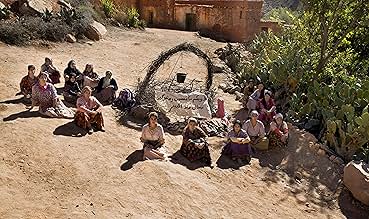
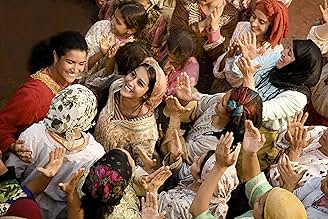
A comedy/drama set in a village and centered on a battle of the sexes, where women threaten to withhold sexual favors if their men refuse to fetch water from a remote well.A comedy/drama set in a village and centered on a battle of the sexes, where women threaten to withhold sexual favors if their men refuse to fetch water from a remote well.A comedy/drama set in a village and centered on a battle of the sexes, where women threaten to withhold sexual favors if their men refuse to fetch water from a remote well.
- Director
- Writers
- Stars
- Awards
- 2 wins & 4 nominations total
- Director
- Writers
- All cast & crew
- Production, box office & more at IMDbPro
7.24.3K
1
2
3
4
5
6
7
8
9
10
Featured reviews
When Cinema Reflects My Mother's Story
As a Moroccan viewer, I found La Source des femmes very moving and, in many ways, accurate. My own mother grew up in a village where women were responsible for carrying water long distances every day, so the film's story felt very familiar. The way it shows the physical and emotional toll this work takes on women-especially during pregnancy or after childbirth-is something many families from rural Morocco can relate to.
The performances are strong, and the film captures the solidarity, humor, and resilience of village women beautifully. It reminded me of the way women in my mother's generation leaned on each other, not just to survive the hard labor but also to push back against unfair traditions.
That said, while the film succeeds in showing the reality and the spirit of resistance, it sometimes feels a bit too polished and simplified-almost like it was made more for international audiences than for the communities it portrays. Real village life is often harsher, with less of the romanticized touches we see onscreen.
Still, it's rare to see a mainstream film center women's voices in a North African village, and for that reason, it resonated deeply with me. It may not capture every nuance, but it does highlight an important truth: women have always carried the weight of their families and communities, sometimes literally, on their backs up the mountain.
The performances are strong, and the film captures the solidarity, humor, and resilience of village women beautifully. It reminded me of the way women in my mother's generation leaned on each other, not just to survive the hard labor but also to push back against unfair traditions.
That said, while the film succeeds in showing the reality and the spirit of resistance, it sometimes feels a bit too polished and simplified-almost like it was made more for international audiences than for the communities it portrays. Real village life is often harsher, with less of the romanticized touches we see onscreen.
Still, it's rare to see a mainstream film center women's voices in a North African village, and for that reason, it resonated deeply with me. It may not capture every nuance, but it does highlight an important truth: women have always carried the weight of their families and communities, sometimes literally, on their backs up the mountain.
Womens' lib, the real thing
In a North African village, the women has a mission. They fetch water from a source in the mountain, while the men have tea. It's desert heat, the barrels are heavy and miscarriages appear on the mountain. The men only care, if the child was a boy.
So the women start a sex strike. Sounds like a comedy, which it's also in some ways are. But at the same time, you here have a perfect opportunity to get rid of lots of prejudices. Passions, conflicts and longing are the same. Only the culture is different.
You find deep religiosity at the same time. This is certainly not mainstream, but entertaining in a deep way until the last drop of water.
So the women start a sex strike. Sounds like a comedy, which it's also in some ways are. But at the same time, you here have a perfect opportunity to get rid of lots of prejudices. Passions, conflicts and longing are the same. Only the culture is different.
You find deep religiosity at the same time. This is certainly not mainstream, but entertaining in a deep way until the last drop of water.
A great writer/director I've never seen
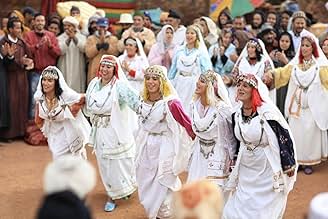
The sing-song politics of North Africa was beautifully used to express the position of the rebel women. They dressed up in their traditional outfits, danced and sang to let their men "have it" about not getting it. I loved this soulful picture, with no cars, no electricity and completely ethnic village surroundings. It was hilarious when, half-way through, the senior character was seen riding her mule (with a foal in the basket) and talking on a mobile phone in the middle of the desert. There was also a mobile phone in the yard of Leila's house, but it only worked in one place, and hung on a line with nobody allowed to move it. Top marks to this team for their writing, directing and acting, combining to make a powerful and yet charming film. I hope I get to see his next work.
Women of Courage
In a remote and primitive patriarchal village between the North of Africa and the Middle East, the land has dried and the women traditionally brings water from a distant fountain to their houses while the idle husbands drink tea in the bar.
The educated Leïla (Leila Bekhti), who is the wife of the local teacher Sami (Saleh Bakri), begins a sex strike movement among the women, supported by the elder Vieux Fusil (meaning old flintlock) (Biyouna), to force the men to bring water to the village. There is a strong reaction from the brutal men, but they resist until the brave women achieve their goal.
"La Source des Femmes" is another brilliant film by Radu Mihaileanu about a group of women of courage that are capable to protest against the status quo of their village through sex strike.
Like other films of this magnificent director, the story is a combination of drama and comedy in precise doses to make the viewer think, and exposes the situation of women not only in Muslin countries but also in poor worldwide areas where ignorance still prevails.
The beauty of the actresses is impressive specially Leïla Bekhti and Hafsia Herzi. My vote is eight.
Title (Brazil): "A Fonte das Mulheres" ("The Women's Fountain")
The educated Leïla (Leila Bekhti), who is the wife of the local teacher Sami (Saleh Bakri), begins a sex strike movement among the women, supported by the elder Vieux Fusil (meaning old flintlock) (Biyouna), to force the men to bring water to the village. There is a strong reaction from the brutal men, but they resist until the brave women achieve their goal.
"La Source des Femmes" is another brilliant film by Radu Mihaileanu about a group of women of courage that are capable to protest against the status quo of their village through sex strike.
Like other films of this magnificent director, the story is a combination of drama and comedy in precise doses to make the viewer think, and exposes the situation of women not only in Muslin countries but also in poor worldwide areas where ignorance still prevails.
The beauty of the actresses is impressive specially Leïla Bekhti and Hafsia Herzi. My vote is eight.
Title (Brazil): "A Fonte das Mulheres" ("The Women's Fountain")
Finally, courage!
Finally, a movie dares to speak about the unspoken, about the reality behind the so-called "freedom of worship"; finally, someone has the guts to denounce the unbearable situation of women in those regions, or even in our regions because of the laxity of our democracies, ready to flout human rights in the name of a would-be tolerance! This cannot stand any more: voices have to raise, the tables have to be thumped, the headscarfs have to fall. Women aren't objects, and this movie reminds us of it well. It is time for them to get back their dignity, to take control of their lives, to become the equal of men. The movie succeeds to combine the seriousness of this situation with some touches of humor, bringing us back to the absurdity of men behaviour whose anxiety, frustration and lack of confidence in themselves led to the destruction of many women who just wanted to live.
Did you know
- TriviaThe basic premise of the plot, the withholding of sexual relations by women to force their menfolk to do something, is first noted in the play, 'Lysistrata' by Aristophanes. Several versions of "Lysistrata" have been filmed for cinemas and television, with the most recent being Chi-Raq (2015) by Spike Lee.
- Quotes
Vieux Fusil: If you hate just one man, you hate everyone in the community.
- SoundtracksDaqqa
Traditional
Performed by La Daqqa de Marrakech
- How long is The Source?Powered by Alexa
Details
Box office
- Gross worldwide
- $5,605,676
- Runtime
- 2h 15m(135 min)
- Color
- Sound mix
- Aspect ratio
- 1.85 : 1
Contribute to this page
Suggest an edit or add missing content