Ashita no Jô
- TV Series
- 1970–1981
- 30m

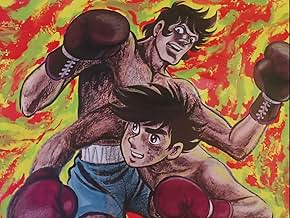
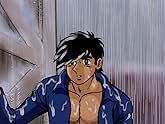
Yabuki Joe is left downhearted and hopeless after a certain tragic event. In attempt to put the past behind him, Joe leaves the gym behind and begins wandering.Yabuki Joe is left downhearted and hopeless after a certain tragic event. In attempt to put the past behind him, Joe leaves the gym behind and begins wandering.Yabuki Joe is left downhearted and hopeless after a certain tragic event. In attempt to put the past behind him, Joe leaves the gym behind and begins wandering.
Browse episodes




8.72.1K
1
2
3
4
5
6
7
8
9
10
Featured reviews
Animated boxing drama with gritty views of Tokyo slums
"Ashita no Joe" ("Tomorrow's Joe," 1970) is a 79-episode Japanese animated TV drama that tells the tale of Joe Yabuki, an orphaned teenager from the wrong side of the tracks in Tokyo who becomes a bantamweight boxing champ. Given the nature of the shantytown where many of the characters live, I initially assumed this was set in the immediate postwar era, but then I spotted the Tokyo Tower in the background in one shot, which would make it after 1958. Plus, the boxing matches are televised (in black-and-white) and many people have TV sets. There may be other cultural references that give specific markers as to when this is set, but I wasn't able to spot them. I watched eight episodes of the TV series for this review (nos. 1-4 and 37-40), plus the ASHITA NO JOE movie that came out in 1980, which compiled scenes from the entire series. All of these were in Japanese with no subtitles, so I was somewhat at a disadvantage. However, the story is primarily told visually and follows the familiar rags-to-riches arc of classic boxing melodramas, so I found it somewhat easy to follow throughout, except for certain subplots that were dependent entirely on dialogue. Episodes 38-39 focus their entire length on one important boxing match, so that was a high point.
I was impressed with the social context depicted so explicitly in the series. Joe initially has no interest in boxing, despite his success in fighting off large numbers of Yakuza thugs. An old boxing manager, Tange Danpei, now an alcoholic living in a shack, sees Joe as a potential champion and his ticket out of the slums, so he persuades Joe to undergo training under his guidance. Joe's motivation is in helping a group of orphaned children who have come to idolize him. When Joe's not training, he's involved in petty scams to amass a hidden cache of money, the purpose of which I was unable to determine. Joe's a big favorite among the vendors and peddlers in the shantytown district, along with other victims of the local Yakuza. When Joe eventually becomes a champ, the poorest fans are the ones rooting for him the most. But before that can happen, he gets in trouble with the law and has to do a stint in prison.
A lot happens in prison, some of which is featured in the movie version, which devotes an entire hour of its 152-minute running time to Joe's stay in prison, which means a significant portion of the series takes place there, starting with ep. 5 and ending at some point before ep. 37. In prison Joe meets another boxer, Rikishi, whom he fights a number of times both in and out of the ring, although they become good friends later on. There's a rich girl named Yoko Shiraki, the daughter of the owner of a prominent boxing club in Tokyo. She shows up a lot and seems quite close to Rikishi, although not, apparently, in a romantic way.
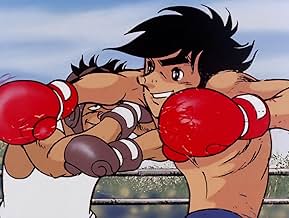
The match between Joe and reigning champ Wolf Kanagushi takes up two episodes, #38-39, and is quite harrowing. Poor Joe gets battered throughout the fight, but keeps bouncing back up before the count of "ten" for more punishment. In an American ring, his corner would have thrown in the towel well before the end of the fight. It's quite suspenseful.
I love the animation and design in this. The lines are bold and the backgrounds richly evocative of a time and place in Tokyo's history when the city had numerous pockets left untouched by the nation's postwar "economic miracle." It mixes elements from old Warner Bros. boxing melodramas (think KID GALAHAD, 1937, or CITY FOR CONQUEST, 1940) with the kind of gritty 1970s yakuza story directed by Kinji Fukasaku (e.g. THE YAKUZA PAPERS). A great deal of attention is paid to the mood of the piece, which holds more interest for me than the plot. In addition to the design of the characters and the detailed Tokyo backgrounds, I was moved by the music score, which uses some very unusual instrumentation, including a solo instrument that I couldn't identify which sounds like a cross between a harmonica and an accordion and is used to play the theme for Joe as he walks alone through the streets.
One problem I had with the series was the cartoonish design of the seven kids who act as Joe's entourage, including one little girl, Sachi. When Joe comes back from prison, after at least two years, the kids look exactly the same, not having aged or grown an inch at all. I'm sorry, but young children tend to look noticeably different after two years. I assume this was a conscious choice on the part of the animators, but the rationale for it eludes me.
The series was directed by Osamu Dezaki, who went on to do the women's tennis series, "Ace wo Nerae" (Aim for the Ace, 1973), which I've also reviewed on this site, and "Rose of Versailles" (1980), a groundbreaking historical series about a girl who becomes a bodyguard for Marie Antoinette. One of the great visual stylists of Japanese animation, Dezaki is more famous today for his later works, "Golgo 13" and "Black Jack."
The VHS tapes I have from this series look very different from the DVD copy of the movie version. The colors are different in each and the lines considerably softer in the DVD. The VHS image shows the graphics in greater detail and the image is complete, whereas the DVD crops the top and bottom and the right side to fit the theatrical aspect ratio. I definitely prefer my VHS copies. I had a chance to buy the entire series on used VHS, but opted to sample Volumes 1 & 10 first. I now wish I'd bought the whole series when I had the chance.
I was impressed with the social context depicted so explicitly in the series. Joe initially has no interest in boxing, despite his success in fighting off large numbers of Yakuza thugs. An old boxing manager, Tange Danpei, now an alcoholic living in a shack, sees Joe as a potential champion and his ticket out of the slums, so he persuades Joe to undergo training under his guidance. Joe's motivation is in helping a group of orphaned children who have come to idolize him. When Joe's not training, he's involved in petty scams to amass a hidden cache of money, the purpose of which I was unable to determine. Joe's a big favorite among the vendors and peddlers in the shantytown district, along with other victims of the local Yakuza. When Joe eventually becomes a champ, the poorest fans are the ones rooting for him the most. But before that can happen, he gets in trouble with the law and has to do a stint in prison.
A lot happens in prison, some of which is featured in the movie version, which devotes an entire hour of its 152-minute running time to Joe's stay in prison, which means a significant portion of the series takes place there, starting with ep. 5 and ending at some point before ep. 37. In prison Joe meets another boxer, Rikishi, whom he fights a number of times both in and out of the ring, although they become good friends later on. There's a rich girl named Yoko Shiraki, the daughter of the owner of a prominent boxing club in Tokyo. She shows up a lot and seems quite close to Rikishi, although not, apparently, in a romantic way.
The match between Joe and reigning champ Wolf Kanagushi takes up two episodes, #38-39, and is quite harrowing. Poor Joe gets battered throughout the fight, but keeps bouncing back up before the count of "ten" for more punishment. In an American ring, his corner would have thrown in the towel well before the end of the fight. It's quite suspenseful.
I love the animation and design in this. The lines are bold and the backgrounds richly evocative of a time and place in Tokyo's history when the city had numerous pockets left untouched by the nation's postwar "economic miracle." It mixes elements from old Warner Bros. boxing melodramas (think KID GALAHAD, 1937, or CITY FOR CONQUEST, 1940) with the kind of gritty 1970s yakuza story directed by Kinji Fukasaku (e.g. THE YAKUZA PAPERS). A great deal of attention is paid to the mood of the piece, which holds more interest for me than the plot. In addition to the design of the characters and the detailed Tokyo backgrounds, I was moved by the music score, which uses some very unusual instrumentation, including a solo instrument that I couldn't identify which sounds like a cross between a harmonica and an accordion and is used to play the theme for Joe as he walks alone through the streets.
One problem I had with the series was the cartoonish design of the seven kids who act as Joe's entourage, including one little girl, Sachi. When Joe comes back from prison, after at least two years, the kids look exactly the same, not having aged or grown an inch at all. I'm sorry, but young children tend to look noticeably different after two years. I assume this was a conscious choice on the part of the animators, but the rationale for it eludes me.
The series was directed by Osamu Dezaki, who went on to do the women's tennis series, "Ace wo Nerae" (Aim for the Ace, 1973), which I've also reviewed on this site, and "Rose of Versailles" (1980), a groundbreaking historical series about a girl who becomes a bodyguard for Marie Antoinette. One of the great visual stylists of Japanese animation, Dezaki is more famous today for his later works, "Golgo 13" and "Black Jack."
The VHS tapes I have from this series look very different from the DVD copy of the movie version. The colors are different in each and the lines considerably softer in the DVD. The VHS image shows the graphics in greater detail and the image is complete, whereas the DVD crops the top and bottom and the right side to fit the theatrical aspect ratio. I definitely prefer my VHS copies. I had a chance to buy the entire series on used VHS, but opted to sample Volumes 1 & 10 first. I now wish I'd bought the whole series when I had the chance.
Possibly The Greatest Anime Ever Made
Ashita no joe is nothing like average shounen, in fact it's not even like average sports anime like hajime no ippo or blue lock, ashita no joe is very realistic anime that doesn't require gruesome scenes or extreme dark themes, it doesn't try to be dark or mind blowing, it's hard to explain in words but there is almost an emotional mature aspect to it, which you can just feel it by watching and reading the art itself.
The journey of joe from being arrogant to being mature is just peak fiction.
It's been more than 50 years and no fiction of media has topped ashita no joe for me. Greatest piece of fiction no doubt about it. Everything about it is beautiful, I love the midnight blues as well.
The journey of joe from being arrogant to being mature is just peak fiction.
It's been more than 50 years and no fiction of media has topped ashita no joe for me. Greatest piece of fiction no doubt about it. Everything about it is beautiful, I love the midnight blues as well.
one of a kind, unique
Don't be discouraged by the production date. This review is penned in 2024 and to be honest there are some pretty interesting things happening in modern anime. And, it follows that a lot of the older series simply cannot compete, pound for pound, with new product? Joe is not merely an exception to the rule, it is THE exception. First of all, the animation style. It was unique in 1971 and it remains unique today. If you do the research, you will find the closest analog was the baseline cartoon style from the 1940s and 1950s, in the popular comic books, a style that was considered lost to the world. Until JOE appeared two decades later. The writing and story lines are excellent. Many episodes touch the heart. Highly recommended. ((Designated "IMDb Top Reviewer." Please check out my list "167+ Nearly-Perfect Movies (with the occasional Anime or TV miniseries) you can/should see again and again (1932 to the present))
Peak
Ashita no Joe isn't a show about boxing, it's a show about a man who boxes. And yet it's the best sport anime I've ever seen.
But Ashita no Joe is less about boxing as a sport, and more about how it can become the very lifeblood for a man, and how that affects him and those around him.
The story of Ashita no Joe, seen through Joe Yabuki (amazing protagonist) as a character, was very influential to the young crowds at the time. Joe's journey through life, his strive to find meaning in a beforehand meaningless existence, his brash attitude, combined with the state of the Doya slums, created a very relateable figure for the younger crowd back in 1968.
It even went so far that they constructed an (real life) funeral for a deceased, fictional character. The creators themselves had difficulty believing how much of an impact Ashita no Joe had as a story.
While Hajime no Ippo (another boxing anime) had a huge impact in terms of Manga field because of its longevity, characters and other things, Ashita no Joe was a social piece of art which became the symbol of a young population protesting on the streets, it went beyond the borders of its media to become a cultural and social symbol.
Ashita no Joe is one of the few shows I consider peak fiction and Joe was the best main character I've encountered.
But Ashita no Joe is less about boxing as a sport, and more about how it can become the very lifeblood for a man, and how that affects him and those around him.
The story of Ashita no Joe, seen through Joe Yabuki (amazing protagonist) as a character, was very influential to the young crowds at the time. Joe's journey through life, his strive to find meaning in a beforehand meaningless existence, his brash attitude, combined with the state of the Doya slums, created a very relateable figure for the younger crowd back in 1968.
It even went so far that they constructed an (real life) funeral for a deceased, fictional character. The creators themselves had difficulty believing how much of an impact Ashita no Joe had as a story.
While Hajime no Ippo (another boxing anime) had a huge impact in terms of Manga field because of its longevity, characters and other things, Ashita no Joe was a social piece of art which became the symbol of a young population protesting on the streets, it went beyond the borders of its media to become a cultural and social symbol.
Ashita no Joe is one of the few shows I consider peak fiction and Joe was the best main character I've encountered.
10Wxrnes
Masterpiece - Maybe the Greatest Anime of All Time
Honestly, I wasn't expecting much from Ashita no Joe. I thought it was just one of those old-school anime that purists overhype out of nostalgia. But I was completely blown away. It's so much more than a boxing anime - it's a deeply human story. Joe might be the most authentic character I've ever seen in anime. He's raw, flawed, and painfully real. His growth feels natural, every decision he makes, every reaction, just fits perfectly. You're not just watching him fight in the ring, you're watching him struggle through life, through pain, anger, loneliness.
What really hit me was how the series tackles themes like grief, exclusion, jealousy, and the search for meaning - all with subtlety and honesty. There's this lingering sadness throughout the story, but somehow, there's also warmth and hope in the darkest moments. It never feels forced. It's just real. Ashita no Joe isn't just a cult classic - it's a timeless masterpiece that grabs you by the gut and stays with you.
What really hit me was how the series tackles themes like grief, exclusion, jealousy, and the search for meaning - all with subtlety and honesty. There's this lingering sadness throughout the story, but somehow, there's also warmth and hope in the darkest moments. It never feels forced. It's just real. Ashita no Joe isn't just a cult classic - it's a timeless masterpiece that grabs you by the gut and stays with you.


Did you know
- TriviaJoe Yabuki was ranked seventh in Mania Entertainment's "10 Most Iconic Anime Heroes", written by Thomas Zoth.
- ConnectionsReferenced in Urusei Yatsura: The Terror of Meow (1982)
- How many seasons does Ashita no Jô have?Powered by Alexa
Details
Contribute to this page
Suggest an edit or add missing content