

A documentary on 85-year-old sushi master Jiro Ono, his renowned Tokyo restaurant, and his relationship with his son and eventual heir, Yoshikazu.A documentary on 85-year-old sushi master Jiro Ono, his renowned Tokyo restaurant, and his relationship with his son and eventual heir, Yoshikazu.A documentary on 85-year-old sushi master Jiro Ono, his renowned Tokyo restaurant, and his relationship with his son and eventual heir, Yoshikazu.
- Awards
- 3 wins & 12 nominations total
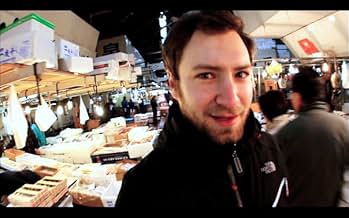

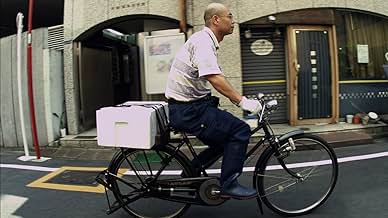


Takashi Ono
- Self
- (uncredited)
7.839.4K
1
2
3
4
5
6
7
8
9
10
Featured reviews
A movie about food, with a story that would inspire all.
This is a movie about food, but it's much deeper in its story and content. I was truly inspired by a man's pursuit of perfection, the dedications of the understudies, the family dynamic between father and son, and the cultural beauty of Japanese crafts. Yes there are shots of "food porn" woven in, but the movie is charming and much deeper than slow-motion food shots (not that I'm complaining, some shots are stunning).
The young director has good command of the camera, and drives the movie through interviews. People in the theater were applauding at the end. I can't wait to get the DVD.
The young director has good command of the camera, and drives the movie through interviews. People in the theater were applauding at the end. I can't wait to get the DVD.
You'll dream of Jiro.
Sushi lovers will be hypnotized by the 85 year old subject of the documentary Jiro Dreams of Sushi. Jiro has spent his life seeking perfection in sushi preparation, and Michelin agrees that he has come close by awarding him three stars, unprecedented for an octogenarian.
Jiro's restaurant Sukiyabashi Jiro in a Tokyo office building basement has reservations available a month away. He and his heir, Yoshikazu labor all day to buy the best raw fish at the market and sell the best sushi. Nothing less.
The film does a good job tracking the preparation, from picking one out of ten fish at any time to delicately shaping tuna around rice or massaging octopi for 20 minutes before preparation. Buying the best rice is another ritual that has its own rules, and Jiro rules.
Although the documentary can be repetitious, moments of beauty accompany the process such as likening serving sushi to a concert with different moods and tempos.
It might be best to see this film on a full stomach. Otherwise you'll be racing to the nearest Asian bistro. Not a bad thing.
Jiro's restaurant Sukiyabashi Jiro in a Tokyo office building basement has reservations available a month away. He and his heir, Yoshikazu labor all day to buy the best raw fish at the market and sell the best sushi. Nothing less.
The film does a good job tracking the preparation, from picking one out of ten fish at any time to delicately shaping tuna around rice or massaging octopi for 20 minutes before preparation. Buying the best rice is another ritual that has its own rules, and Jiro rules.
Although the documentary can be repetitious, moments of beauty accompany the process such as likening serving sushi to a concert with different moods and tempos.
It might be best to see this film on a full stomach. Otherwise you'll be racing to the nearest Asian bistro. Not a bad thing.
Alternatingly Indulgent, Bittersweet, Creative and Poignant
A lingering, sentimental look at the mentality and habits of Jiro Ono, legendary sushi chef and Japanese national treasure. The long, personal chats with Jiro and sons, plus an exhaustive investigation into every aspect of his business, are balanced by an overly generous dose of shallow focal-range, slow-motion food porn. Like many stereotypical wise men of his age and nationality, the old master also has plenty of sharp, stirring wisdom to impart. Though he doesn't come right out and say it, it's easy to see the parallels he hopes you'll draw between his dedication to the kitchen and the nuances of a rewarding life, and my breath caught in my throat on more than one occasion. A great vehicle for deep immersion into a very traditional Japanese culture, this is far deeper and more rewarding than it initially lets on.
Both fascinating and inspirational, this portrait of a man in pursuit of perfection is a humbling and life-changing experience
It is a sad but true fact that modern-day society has tended to place too much emphasis on the pursuit of success defined in tangible and even grandiose forms but not so much on the far more meaningful pursuit of perfection. No wonder then that 'Jiro Dreams of Sushi', a thoughtful and absolutely inspiring portrait of the 85-year-old sushi chef Jiro Ono, comes like a breath of fresh air, demonstrating the superior fulfilment one gets by putting perfection ahead of success- since it is with the former that the latter will inevitably follow.
As is with most of our readers, we had not heard of Jiro Ono before this documentary, but here's just a few facts about him to tantalise you. Jiro is the owner of a 10-seater basement-level restaurant Sukiyabashi Jiro accessible via underpass en route to the Ginza subway station. Yet despite the fact that the restaurant has a fixed-menu, serves only sushi, and will set you back a whopping ¥30,000 (or $$480), you have to make reservations at least one month in advance in order to secure a seat.
And here's the most amazing thing- that humble restaurant has been awarded three Michelin stars, with both celebrity chefs Anthony Bourdain and Joel Robuchon proclaiming that their best sushi experience was at that very establishment. It's a fascinating subject for a documentary, and debut feature helmer David Gelb more than does his subject justice with a thoroughly intriguing look at Jiro's recipe for perfection as well as the dynamic between Jiro and his eldest son cum future heir to the business Yoshikazu.
It's no secret to reveal that dedication, hard work and perseverance are the ingredients to Jiro's success today- and Gelb demonstrates this through interviews with a prominent Japanese food critic Yamamoto Masuhiro, current and former apprentices, and of course Jiro himself. Each of these are informative and insightful, yielding different perspectives on the master – or as the Japanese would call him, 'shokunin', which means artisan – and among the ones you won't forget are his exacting ten-year training regime for staff and his constant and consistent pursuit for betterment.
Yet any portrayal of Jiro cannot be complete without his two sons - the elder Yoshikazu mentioned earlier and his younger son Takashi, who runs the restaurant's only other branch in the upscale Roppongi Hills neighbourhood in Tokyo. Instead of a college education, both sons were trained by their father from young as sushi chefs, and as Jiro himself admits, their tutelage could not have been any much easier than the other kitchen workers who spend hours fanning sheets of nori seaweed over a coal fire or practise making sweet omelette 200 times.
Throughout the movie, Gelb deliberately teases the question of whether the younger Ono, Yoshikazu, is indeed worthy enough to take over the reins from Jiro. It's not easy trying to live up to the expectations of a perfectionist father ("Jiro's ghost will always be there watching," he says with resignation at one point) but the answer as to whether Yoshikazu is good enough, is absolutely gratifying when it comes. Compared to Yoshikazu, less emphasis is paid on Takashi, except to imply that Takashi's methods will never be the same as that of Jiro's.
Interesting to note too that Jiro isn't the only one so passionate about his work- in fact, as Yoshikazu brings us on a tour of the teeming Tsujiki market where the restaurant, like most if not all other sushi joints in Tokyo, gets its catch, it becomes clear that Jiro has been able to keep up such high standards in his food precisely because his suppliers share the same demanding standards over the catch they sell. It's almost a code of practice between the two parties, and even Jiro's rice supplier refuses to sell the same rice he does to Jiro to the folks at the Grand Hyatt because he thinks he might as well not let them have it if they don't know how to cook it.
The attitude displayed by these individuals, including of course Jiro, is truly admirable – and like the people in the film, Gelb's documentary while multi-faceted in its subjects, remains as its titular character singular of purpose in reminding its audiences the reason for Jiro's extraordinary success thus far. Of course, there are the requisite mouth-watering shots of freshly made sushi to tantalise your tastebuds, but what ultimately rings loud and true is the very qualities that has gotten Jiro recognised by the Japanese government as a 'national treasure'.
And as far-fetched as the title may sound, it is actually meant to be taken literally – "in dreams I have grand visions of sushi," says Jiro, the pursuit of which forms the very essence of his being. We dare go as far as to say that watching 'Jiro Dreams of Sushi' is a life-changing experience, one that forces you to reflect and re-evaluate your priorities, to place perfection over success, and to recognise that the pursuit of one's dreams can truly be fulfilling.
As is with most of our readers, we had not heard of Jiro Ono before this documentary, but here's just a few facts about him to tantalise you. Jiro is the owner of a 10-seater basement-level restaurant Sukiyabashi Jiro accessible via underpass en route to the Ginza subway station. Yet despite the fact that the restaurant has a fixed-menu, serves only sushi, and will set you back a whopping ¥30,000 (or $$480), you have to make reservations at least one month in advance in order to secure a seat.
And here's the most amazing thing- that humble restaurant has been awarded three Michelin stars, with both celebrity chefs Anthony Bourdain and Joel Robuchon proclaiming that their best sushi experience was at that very establishment. It's a fascinating subject for a documentary, and debut feature helmer David Gelb more than does his subject justice with a thoroughly intriguing look at Jiro's recipe for perfection as well as the dynamic between Jiro and his eldest son cum future heir to the business Yoshikazu.
It's no secret to reveal that dedication, hard work and perseverance are the ingredients to Jiro's success today- and Gelb demonstrates this through interviews with a prominent Japanese food critic Yamamoto Masuhiro, current and former apprentices, and of course Jiro himself. Each of these are informative and insightful, yielding different perspectives on the master – or as the Japanese would call him, 'shokunin', which means artisan – and among the ones you won't forget are his exacting ten-year training regime for staff and his constant and consistent pursuit for betterment.
Yet any portrayal of Jiro cannot be complete without his two sons - the elder Yoshikazu mentioned earlier and his younger son Takashi, who runs the restaurant's only other branch in the upscale Roppongi Hills neighbourhood in Tokyo. Instead of a college education, both sons were trained by their father from young as sushi chefs, and as Jiro himself admits, their tutelage could not have been any much easier than the other kitchen workers who spend hours fanning sheets of nori seaweed over a coal fire or practise making sweet omelette 200 times.
Throughout the movie, Gelb deliberately teases the question of whether the younger Ono, Yoshikazu, is indeed worthy enough to take over the reins from Jiro. It's not easy trying to live up to the expectations of a perfectionist father ("Jiro's ghost will always be there watching," he says with resignation at one point) but the answer as to whether Yoshikazu is good enough, is absolutely gratifying when it comes. Compared to Yoshikazu, less emphasis is paid on Takashi, except to imply that Takashi's methods will never be the same as that of Jiro's.
Interesting to note too that Jiro isn't the only one so passionate about his work- in fact, as Yoshikazu brings us on a tour of the teeming Tsujiki market where the restaurant, like most if not all other sushi joints in Tokyo, gets its catch, it becomes clear that Jiro has been able to keep up such high standards in his food precisely because his suppliers share the same demanding standards over the catch they sell. It's almost a code of practice between the two parties, and even Jiro's rice supplier refuses to sell the same rice he does to Jiro to the folks at the Grand Hyatt because he thinks he might as well not let them have it if they don't know how to cook it.
The attitude displayed by these individuals, including of course Jiro, is truly admirable – and like the people in the film, Gelb's documentary while multi-faceted in its subjects, remains as its titular character singular of purpose in reminding its audiences the reason for Jiro's extraordinary success thus far. Of course, there are the requisite mouth-watering shots of freshly made sushi to tantalise your tastebuds, but what ultimately rings loud and true is the very qualities that has gotten Jiro recognised by the Japanese government as a 'national treasure'.
And as far-fetched as the title may sound, it is actually meant to be taken literally – "in dreams I have grand visions of sushi," says Jiro, the pursuit of which forms the very essence of his being. We dare go as far as to say that watching 'Jiro Dreams of Sushi' is a life-changing experience, one that forces you to reflect and re-evaluate your priorities, to place perfection over success, and to recognise that the pursuit of one's dreams can truly be fulfilling.
- www.moviexclusive.com
Extraordinary
I was thoroughly charmed by the film. When I read the synopsis, I thought I would be bored to tears. But it's a lovely, poignant, challenging documentary about excellence, discipline, vocational call, tenacity. The film challenged me to think about my own persistence, an ongoing striving to improve and grow, doing work for the love of it and much less so for the financial gain. the documentary highlights the ability to succeed after incredible hardship, and some would say, cruelty. The cinematography was elegant, the music varied and interesting, the precision of the art of making sushi, the rigor and discipline to do it well, the requirement to be surrounded by others who always want to excel. A wonderful film and I'll see it again...and again. It even made me want to eat sushi...which I never do.


Did you know
- TriviaIdeally, the components of sushi should be served at two different temperatures. The rice should be body temperature for best rolling and pressing qualities, and the topping (usually fish) should be room temperature for best flavor. The apprentice preparing the rice places it in an insulated container to keep it at the correct temperature.
- Crazy creditsIn the Special Thanks section, "The Tsukiji Fish Market" is listed twice.
- ConnectionsEdited into Independent Lens: Jiro Dreams of Sushi (2013)
- SoundtracksConcerto for Violin and Orchestra In D, Opus #5: I, Allegro Moderato, Cadenza
Written by Pyotr Ilyich Tchaikovsky
Performed by Jascha Heifetz, London Philharmonic Orchestra and John Barbirolli
- How long is Jiro Dreams of Sushi?Powered by Alexa
Details
- Release date
- Country of origin
- Official sites
- Language
- Also known as
- Nghệ nhân Sushi
- Filming locations
- Production companies
- See more company credits at IMDbPro
Box office
- Gross US & Canada
- $2,552,478
- Opening weekend US & Canada
- $42,035
- Mar 11, 2012
- Gross worldwide
- $2,692,864
- Runtime
- 1h 21m(81 min)
- Color
- Sound mix
- Aspect ratio
- 1.78 : 1
Contribute to this page
Suggest an edit or add missing content