

'Bobby Fischer Against the World' is a documentary feature exploring the tragic and bizarre life of the late chess master Bobby Fischer. The drama of Bobby Fischer's career was undeniable, f... Read all'Bobby Fischer Against the World' is a documentary feature exploring the tragic and bizarre life of the late chess master Bobby Fischer. The drama of Bobby Fischer's career was undeniable, from his troubled childhood, to his rock star status as World Champion and Cold War icon, t... Read all'Bobby Fischer Against the World' is a documentary feature exploring the tragic and bizarre life of the late chess master Bobby Fischer. The drama of Bobby Fischer's career was undeniable, from his troubled childhood, to his rock star status as World Champion and Cold War icon, to his life as a fugitive on the run. This film explores one of the most infamous and myste... Read all
- Nominated for 1 Primetime Emmy
- 1 win & 5 nominations total




- Self
- (archive footage)

- Self
- (as Dr. Anthony Saidy)


- Self
- (archive footage)

- Self
- (archive footage)
- Self
- (archive footage)


- Self
- (as Fernand Gobet PhD)
Featured reviews
A Good Documentary for the Universal Audience
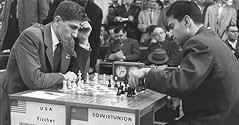
Chess has survived for thousands of years and is arguably the hardest game in the world. Through the eons, if there is one name or one master that has towered above anyone else, it is the American Bobby Fischer. When Fischer defeated Boris Spassky in 1972, the match created more publicity than any other chess event in history (even more than when IBM's computer Deep Blue defeated Garry Kasparov in 1996). A lone American had defeated the mighty Soviet chess machine during the cold war. What should have been just the beginning of an already great career for Fischer, it was actually just the end.
Bobby Fischer made one of the great disappearances of any famous person of the 20th century. He did not die, but was as elusive as Bigfoot after he won the world championship. For those who encountered him only would end of becoming frustrated because they realized he was slowly going insane. 20 years after winning the Championship (1992), Fischer reappeared to play Spassky for another match. When he appeared, it became even more obvious that the man had lost his mind. When the September 11th attacks happened, Fischer shocked the world when he applauded the acts on a radio program. He never played again and passed away in 2008.
This HBO program is fantastic in that it is presented in a manner that is suitable for those who barely know anything about chess or those who know the intricate details of Fischer's career and life. It keeps the viewers' attention by playing nice music in the background throughout. The program shows numerous photographs and television footage that most people have never seen. The central focus of the program is the Fischer - Spassky match of 1972, but it juxtaposes all kind of other topics such as Fischer's family and love life, and his affiliation with a cult group. The program even has Henry Kissinger talking about the match. Kissinger had encouraged Fischer to follow through with the match when Fischer was about to not show up. But, the program does not blame Fischer's religious obsession with chess for this mental breakdown. It posits that it could have been a possibility.
I will have to strongly disagree with one part of this documentary. It stated that when after Fischer won the world championship, he was arguably the most famous man in the world (aside from Jesus). I find this really hard to believe. One because Fischer was a merely just a chess champion and (2) there were many other gigantic figures at that time; Muhammad Ali, Richard Nixon, Chairman Mao, just to name a few.
In the end, the enigma will always remain the enigma. Nobody really knows why Fischer quit playing after 1972 or what caused his mental disintegration. Even though he forfeited his title to Karpov in 1975, why did he completely give up playing even tournaments and simuls altogether? What we are left is speculation. Many chess lovers will proudly proclaim that Fischer was the best player of all time. There maybe some truth to this, but I believe Garry Kasparov finally deserves this title. This is because Kasparov was willing to take on all comers, human beings or computers. Kasparov did this for almost 3 decades. Kasparov defeated an ongoing Champion Anatoly Karpov (one of the top 5 players ever) 5 times and he continued to defend this title beating brilliant and talented young players - Ivanchuck, Shirov, Topalov, Anand, Short, Leko, Kramnik, Kamsky, and so many others for another 2 decades.
*Please do not comment if you are going to get into a "greatest ever" debate - it will be yet another endless discussion and will lead to nowhere.* Fishcer's story is one of the great tragedies of chess, but in the short time that he was brilliant, he shined so brightly that it continues to illuminate to this day. Although his life ended to a sad decline, keep in mind, we remember and admire him for what he produced.
Sins of Omission
Bobby cut his teeth, as it were, at the home of the Collins's, spending an inordinate amount of spare time with them as a young child. In their home, he learned from Jack -- a New York State Champion, an editor of "Modern Chess Openings," (America's leading précis on opening play), a respected Correspondence Chess player, and the dean of American Chess Teachers -- and he received needed motherly sustenance from Jack's sister Ethel.
The Rev. William Lombardy was Fischer's "second" in Reykjavik. It is he who fought the battles for Bobby with the administrators and the arbiters. By his doing so, Bobby could stay somewhat in the background getting his needed rest. The tension and responsibilities lay on the broad shoulders of the Rev. Lombardy, who did a magnificent job on the front lines acting for the Mercurial Mr. Fischer. The full story of Bobby Fischer cannot be adequately told without these three Fischer companions making some contribution to his film life.
Given these three omissions one has the right to ask why Susan Polgar is represented as a Fischer expert. She was but three years old when the Fischer-Spassky match was played, and though she may have had later social connection with him, it is wrong to present her in the role she plays.
One can wonder too how Sam Sloan was chosen to give his views of Fischer. His knowledge of Fischer is a distant one at best.
Plaudits, though, are due for the in-depth interviews of Larry Evans and Tony Saidy, two who knew Bobby well. The same may be said of Asa Hofmann, to this day a legend in New York chess circles.
He let chess out of the board
Bobby Fischer is this brilliant chess player coming out of Brooklyn and literally living the American dream. He starts playing at 6 years old, quickly outshining players in his categories, reaches a moment when he fights the Russian chess world champion in the height of the cold war and wins, thus making popular the game of chess even in an anti- intellectual country as the US and revolutionising the game of chess itself.
Alas, soon after he pretty much goes insane, with bouts of paranoia and psychosis and ridiculous antisemitism (he was Jewish himself). The greatest win of the chess world was in the same time its greatest loss. It is painful to watch this great mind shrink and die under the weight of mental illness. The film is merciless in displaying it and does as much in bringing forth the legend of the greatest chess player of all time as it does to totally demolish it in the end. It is one of those stories where you would wish for the main character to die right after he wins the world championship. Too sad.
As for the chess itself, there was none. It is strictly a layman's story, about Bobby the man and of the people around him and the human footprint of his existence.
Great memories
Very Good Documentary
*** 1/2 (out of 4)
Another very good documentary from HBO, this one taking a look at the life and career of Bobby Fischer, the chess genius who rose to fame at an early age and really put the sport on the U.S. map when he defeated the Russian Spassky in 1972. Fischer's rise was quickly put out when he refused to defend his championship and the genius spent the rest of his life trying to hide from the public and apparently driving closer to madness. David Edmonds, Dr. Anthony Saidy, Susan Polgar, Henry Kissinger, David Shenk, Malcolm Gladwell and Larry Evans are among the many people interviewed here as they try to explain what made Fischer a genius but also what eventually got him kick out of America. This is a very fascinating documentary because it really seems to be trying to tell the truth and not just sugar-coat some rather troubled moments in this man's life. It's clear that he was a genius at the game of chess and the documentary makes an interesting choice showing other great minds of the game who ended their lives in a mental breakdown. The majority of the running time is devoted to the Spassky match as we get a game-to-game breakdown of events, shown the important matches and also the various controversies that Fischer stirred up at the time. So, in reality, even in his greatest moments Fischer was still delivering controversy and upsetting people. Fans of chess, Fischer or those just interesting in great documentaries should really be entertained by this thing. The documentary doesn't really explain the rules of chess so some might want to read up a bit before going into the film but even if you know nothing the story is just so fascinating where it really doesn't matter.


Did you know
- TriviaThough Bobby Fischer hated Soviet players for what he considered collusion i.e. drawing matches between themselves so they could concentrate on beating non-Soviet players like Fischer, Bobby Fischer liked and respected Boris Spassky. In turn, Spassky returned the affection and esteem.
- Quotes
Larry Evans - Former Champion: Reportedly, Fischer's last words were: "Nothing is so healing as the human touch".
- ConnectionsFeatured in Ebert Presents: At the Movies: Episode #1.20 (2011)
- SoundtracksTheme from Shaft
Words and Music by Isaac Hayes
Published by Irving Music, Inc. (BMI)
Performed by Isaac Hayes
Courtesy of Stax Records
By arrangement with Concord Music Group, Inc.
- How long is Bobby Fischer Against the World?Powered by Alexa
Details
- Release date
- Countries of origin
- Official sites
- Languages
- Also known as
- Bobby Fischer: Genius and Madman
- Filming locations
- Production companies
- See more company credits at IMDbPro
Box office
- Gross worldwide
- $90,511
- Runtime
- 1h 33m(93 min)
- Color
- Aspect ratio
- 1.78 : 1