

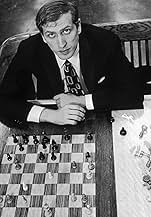
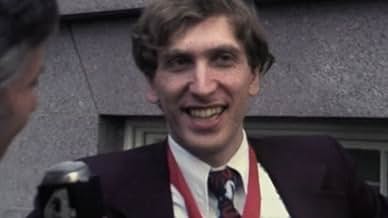
'Bobby Fischer Against the World' is a documentary feature exploring the tragic and bizarre life of the late chess master Bobby Fischer. The drama of Bobby Fischer's career was undeniable, f... Read all'Bobby Fischer Against the World' is a documentary feature exploring the tragic and bizarre life of the late chess master Bobby Fischer. The drama of Bobby Fischer's career was undeniable, from his troubled childhood, to his rock star status as World Champion and Cold War icon, t... Read all'Bobby Fischer Against the World' is a documentary feature exploring the tragic and bizarre life of the late chess master Bobby Fischer. The drama of Bobby Fischer's career was undeniable, from his troubled childhood, to his rock star status as World Champion and Cold War icon, to his life as a fugitive on the run. This film explores one of the most infamous and myste... Read all
- Nominated for 1 Primetime Emmy
- 1 win & 5 nominations total




- Self
- (archive footage)

- Self
- (as Dr. Anthony Saidy)


- Self
- (archive footage)

- Self
- (archive footage)
- Self
- (archive footage)


- Self
- (as Fernand Gobet PhD)
Featured reviews
Chess made him and destroyed him
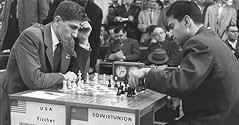
The key historical event that the film revolves around is the 1972 World Championship against the Soviet grandmaster Boris Spassky. This dramatic confrontation hosted in Iceland had huge political significance seeing as it set the American against a Russian at the height of the cold war. As a result it was probably the most internationally famous chess match ever played. Even at this early stage, however, Fischer's erratic behaviour is quite evident. He almost never made it in the first place due to his own personal demons, when finally there he arrived absurdly late and then proceeded to complain about the hum of the TV cameras. You might find yourself wishing that the dignified Spassky actually defeated this highly strung man. But this is partially why this documentary is an interesting one, as its central character is not particularly likable at all. There is very little actual footage of Fischer; he remains a very enigmatic figure. After the Spassky match less and less is seen of him, so much so that his next public appearance in a match in Yugoslavia occurs the best part of twenty years later. In agreeing to this he contravenes international law, seeing as this country was in the midst of a terrible war. The sight of Fischer publicly spitting on the letter warning him that he would be breaking international law is a grim one indeed; the years that followed until his death in 2008 seem to be equally mysterious and sad.
Bobby Fischer Against the World is a very good documentary about a troubled man who was destroyed by the only thing he loved. The documentary states that he was the greatest player there ever was. Personally I think this is a somewhat romantic statement based mostly on the drama of his ascent. But for sure, he was one of the most fascinating chess players that ever lived and in many respects remains an enigma still.
Great memories
Sins of Omission
Bobby cut his teeth, as it were, at the home of the Collins's, spending an inordinate amount of spare time with them as a young child. In their home, he learned from Jack -- a New York State Champion, an editor of "Modern Chess Openings," (America's leading précis on opening play), a respected Correspondence Chess player, and the dean of American Chess Teachers -- and he received needed motherly sustenance from Jack's sister Ethel.
The Rev. William Lombardy was Fischer's "second" in Reykjavik. It is he who fought the battles for Bobby with the administrators and the arbiters. By his doing so, Bobby could stay somewhat in the background getting his needed rest. The tension and responsibilities lay on the broad shoulders of the Rev. Lombardy, who did a magnificent job on the front lines acting for the Mercurial Mr. Fischer. The full story of Bobby Fischer cannot be adequately told without these three Fischer companions making some contribution to his film life.
Given these three omissions one has the right to ask why Susan Polgar is represented as a Fischer expert. She was but three years old when the Fischer-Spassky match was played, and though she may have had later social connection with him, it is wrong to present her in the role she plays.
One can wonder too how Sam Sloan was chosen to give his views of Fischer. His knowledge of Fischer is a distant one at best.
Plaudits, though, are due for the in-depth interviews of Larry Evans and Tony Saidy, two who knew Bobby well. The same may be said of Asa Hofmann, to this day a legend in New York chess circles.
Be careful what you wish for . . .
Garbus's formula is a standard one but succeeds brilliantly here. She juxtaposes archival footage and still photos (much of which, I believe, has never been shown publicly before) with contemporary interviews of many of the key players from Fischer's two-decade pursuit of the title. These individuals - fellow chess players (several of whom were his boyhood friends), tournament organizers, journalists, even his bodyguard - were all members of the small cadre of people that Bobby allowed into his life. Many were even part of his inner circle at Reykjavik. To a person, then, the interviewees were uniquely qualified to share their recollections of Bobby. But, beyond that, they had been positioned to gain some understanding of Bobby. In this film, they share that understanding, or at least their attempts at understanding, of who Bobby Fischer was, and more importantly, why he was that way.
One can only try to imagine the monumental effort required by Garbus to convince them to appear on camera. That she was even able to get Henry Kissinger (now a heavyweight in more ways than one) speaks volumes about her credibility. Kissinger's presence in the film is only one reminder of what was at stake in Reykjavik. Garbus reminds us that this was war: US versus the USSR, capitalism versus communism, freedom versus oppression, each could have been used to describe the battle. But in the end, the only one that really mattered was the title Garbus chose for her work: Bobby Fischer against the World.
Garbus filmed most of the interviews against stunning backdrops of wood-paneled libraries and polished marble floors. In that way she provides quite a contrast for some of the interviewees with their rumpled, 'haven't shaved in three days' look. By doing so, she heightens their humanity, and their humility. Bobby, by contrast, throughout the film, in his words and by his actions, only serves to confirm that he may not have had much of either.
Chess grandmasters Larry Evans and Anthony Saidy, who both knew Bobby since he was a little boy, are not just particularly articulate and insightful, but are also fonts of interesting 'Bobby facts'. Saidy tells us that when Bobby decided to camp out at Saidy's parents' home to avoid the press in the weeks leading up to the World Championship, Saidy's father was dying of cancer. "Bobby, about you staying with us, my dad is sick with cancer". "It's okay, I don't mind", replied the only slightly self absorbed Fischer.
Many of the interviews are with Europeans - Icelanders, Russians, Germans - and all reinforce how impressive it is to hear someone speak fluently in a language other than their native tongue. One has no doubts that their memories and minds must also be sharp. In this context, it is perhaps ironic that LIFE photographer and Scotsman Harry Benson's humanizing photos of Bobby, shown prominently on screen while he speaks, need no words to tell us all we need to know.
Two segments are, each, extraordinary. Saemi Parsson who was Bobby's bodyguard in Reykjavik tells the camera how, after not hearing a word from Bobby in 22 years ("not a peep"), he received the imprisoned Bobby's frantic phone call from Japan (the Japanese had detained Fischer at the request of the US). That Bobby chose to call Parsson, is not quite the correct statement. Rather, that Bobby had no one to call but Parsson seems closer to the truth. We are reminded by this episode that Bobby, by then, was not only stateless, but had severed all relationships with his family and friends. He was alone in more ways than one. The other segment is priceless and is comprised of a faded ABC Wide World of Sports TV special featuring noted sports artist LeRoy Neiman. Neiman, who expected to be "bored to pieces" by the match in Reykjavik draws Fischer as a matador skewering the hapless Spassky! But, can you imagine? ABC's Wide World of Sports? For chess? Such was the impact of Robert James Fischer.
Immediately after beating Spassky, Fischer began his life of seclusion. It may have been even sadder that he also effectively stopped playing chess at the same time, at age 29. All of us are familiar with Fischer's increasingly bizarre post-Reykjavik antics. Sometimes attributed to eccentricity, Garbus makes no secret that she believes Bobby's behaviour was a product of mental illness. Through the images and words of her film, she leaves no other way to label Bobby's paranoia and psychotic pronouncements. She puts the proof right there, in the flickering of a projector, for all to see. We wish it weren't so.
The Fischer King
Some say Fischer was the greatest of all players, and there's much evidence to believe the claim. He became the US number one at 15, and bruised the Soviet Union by beating their star man, Boris Spassky. A whole host of current and former chess legends line up in this documentary to declare Fischer the King.
The documentary suggests Fischer was at war with the world, but I think his main enemy was himself. Those inner demons – being told not to advertise his Jewishness, not having a consistent father figure, having fame thrust upon him, being a pawn in Kissinger's government – were lodged in his mind, like the thousands of chess combinations he accumulated since he was six.
Like all good documentaries, this one presents the good and the bad. Fischer's anti-Semitism is on unexpurgated show, as is footage suggesting how others were the cause of his downfall. (The US, his country of birth, first regarded him a national treasure, but later denied him citizenship.) The documentary also does well when expressing the grandeur of chess, and explaining why so many grandmasters over centuries have died or gone mad in their vain quest to discover the secrets of chess.
Even intelligent people I know don't appreciate that chess has no boundaries. 'It's just a game' goes the usual cry. It may be. But it is an infinite game. It is said that its 32 pieces and 64 squares make it possible for there to be a number of possible combinations greater in total than the number of atoms in the universe. It's a game no mortal will ever be able to conquer. Chess is the ultimate victor.
The final line in the documentary, spoken by Fischer, almost made me cry because of the dignified and unemotional way he delivers it. 'Do you think you had a good upbringing?' a faceless reporter asks him. 'It was okay. Could have been more rounded.' There was never a genius without a tincture of madness. In Bobby Fischer's case it was, alas, slightly more than a tincture.
www.scottishreview.net


Did you know
- TriviaThough Bobby Fischer hated Soviet players for what he considered collusion i.e. drawing matches between themselves so they could concentrate on beating non-Soviet players like Fischer, Bobby Fischer liked and respected Boris Spassky. In turn, Spassky returned the affection and esteem.
- Quotes
Larry Evans - Former Champion: Reportedly, Fischer's last words were: "Nothing is so healing as the human touch".
- ConnectionsFeatured in Ebert Presents: At the Movies: Episode #1.20 (2011)
- SoundtracksTheme from Shaft
Words and Music by Isaac Hayes
Published by Irving Music, Inc. (BMI)
Performed by Isaac Hayes
Courtesy of Stax Records
By arrangement with Concord Music Group, Inc.
- How long is Bobby Fischer Against the World?Powered by Alexa
Details
- Release date
- Countries of origin
- Official sites
- Languages
- Also known as
- Bobby Fischer: Genius and Madman
- Filming locations
- Production companies
- See more company credits at IMDbPro
Box office
- Gross worldwide
- $90,511
- Runtime
- 1h 33m(93 min)
- Color
- Aspect ratio
- 1.78 : 1