IMDb RATING
6.8/10
2.6K
YOUR RATING


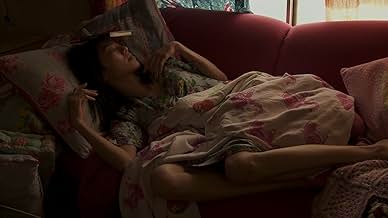
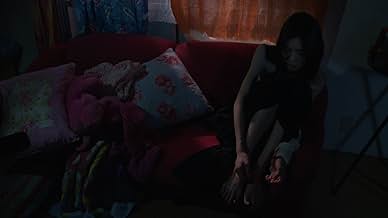
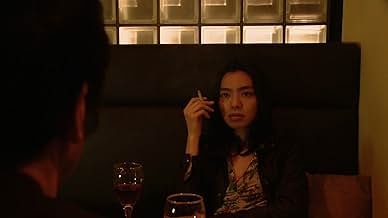
When a single mother suffers a nervous breakdown, she is suspected of child abuse and her child is taken away. Her mental suffering escalates as she succumbs to her darkest fantasies.When a single mother suffers a nervous breakdown, she is suspected of child abuse and her child is taken away. Her mental suffering escalates as she succumbs to her darkest fantasies.When a single mother suffers a nervous breakdown, she is suspected of child abuse and her child is taken away. Her mental suffering escalates as she succumbs to her darkest fantasies.
- Awards
- 1 win & 2 nominations total



- Director
- Writers
- All cast & crew
- Production, box office & more at IMDbPro
6.82.6K
1
2
3
4
5
6
7
8
9
10
Featured reviews
A Masterpiece
Tsukamoto's "Kotoko" is a disturbing, Heartbraking, and shocking masterpiece, with great images and cinematography.
This film describes the nervous breakdown of a single mother, who suffers from severe mental problems, such as paranoia, double vision, anxiety and deep depression.
Her mental state is shown very differently throughout the film. Her state gets better, when she sings or is near her son, otherwise she is paranoid, anxious, and self harming.
Throughout the whole film, her state gets all the way worse, represented in both shocking, and beautiful images.
Cocco's acting is phenomenal. As a viewer, you can really feel what she is going through. When she is singing in her soft and calm voice, you can really calm down for a while, otherwise you are in a state of constant discomfort.
The camera shows off her mental health in either a really shaky, or a really calm camera work.
The film has no soundtrack, but thats not necessary at all.
This film is not for sensitive persons, it shows shocking and disturbing images of self harming and paranoid behaviours. This film needs your whole attention, otherwise you dont get into it.
Story: 10/10 Acting: 10/10 Cinematography: 10/10 Camera: 10/10 (If you dont like shaky, found footage like movies, dont watch this)
Total score: 10.
This film describes the nervous breakdown of a single mother, who suffers from severe mental problems, such as paranoia, double vision, anxiety and deep depression.
Her mental state is shown very differently throughout the film. Her state gets better, when she sings or is near her son, otherwise she is paranoid, anxious, and self harming.
Throughout the whole film, her state gets all the way worse, represented in both shocking, and beautiful images.
Cocco's acting is phenomenal. As a viewer, you can really feel what she is going through. When she is singing in her soft and calm voice, you can really calm down for a while, otherwise you are in a state of constant discomfort.
The camera shows off her mental health in either a really shaky, or a really calm camera work.
The film has no soundtrack, but thats not necessary at all.
This film is not for sensitive persons, it shows shocking and disturbing images of self harming and paranoid behaviours. This film needs your whole attention, otherwise you dont get into it.
Story: 10/10 Acting: 10/10 Cinematography: 10/10 Camera: 10/10 (If you dont like shaky, found footage like movies, dont watch this)
Total score: 10.
It Grows On You
Shinya Tsukamoto directs this film about a woman with severe psychological disorders. It's evident early on that she has almost completely lost her mind because she engages in self-mutilation and hallucinates into seeing evil doppelgangers that do not exist. Tsukamoto has historically made films with somewhat bizarre yet fascinating characters and conflicts. Such is also the case here as he creates a very dangerous, uncomfortable environment for the protagonist's newborn child. The narrative becomes difficult to interpret at times, but this is well shot and oddly absorbing with a unique feel. There is some bloody violence and a few shocking scenes. This is a film that will be very divisive amongst viewers, but I found it even more impressive after a second viewing.
as difficult to write about, as to watch
Almost as difficult to write about, as to watch, this harrowing film is a nightmare from start to finish. Single mother, Kotoko is played by Cocco, who we understand co-wrote the film basing it on her own experiences. Some experiences they must have been, too, if this is to be believed. For some considerable stretch she is struggling inside and out the house carrying, awkwardly, her screaming child. The next phase seems to involve real or imagined violence upon this child. All the time the camera, our viewpoint, is skewed and uneven as the sound around deafens. And all the time the lead lady is self harming, in a big way. As if this were not enough the film's director and co-writer also appears and attempts a relationship with this ongoing nightmare, crazy lady. Uncompromising, as ever, this is quite different from Tsukamoto's other work but then I guess that remarkably they are all quite distinctive with just the one thing in common that makes them his own and makes them so difficult to watch. This is raw and desperate humanity desperately trying to maintain the slenderest grip on something the least bit tolerable in the face of rampant madness.
Provocative and Disturbing
I find it sad that this provocative, challenging film has such a low rating. This is a film about a serious subject (mental illness) that is portrayed through intense visuals and expressionistic performance. The director positions you so that you feel like you are inside the characters head and its a very distressing place to be. There is strong violence and the film is very tragic but there are also moments of beauty such as when Cocco sings and dances. Yes, the camera work is very "shaky" buy the purpose is to create a realism and disorientation as experienced by the character. If the film had been shot formally it would have lost its impact. This is not a film for mainstream cinema fans. It is a challenging and artistic piece of work that deserves serious attention.
Bruising & Beautiful
Few directors have so consistently blurred the line between agony and ecstasy as Shin'ya Tsukamoto. Ever since 1989's 'Tetsuo: The Iron Man' fused flesh and metal into a shrieking, psychosexual nightmare, Tsukamoto has been both a chronicler and an architect of urban alienation- a filmmaker obsessed with the violence of existence in an indifferent world. His jagged, intimate films pulse with bodily horror and emotional extremity, but beneath the rust and blood there's always a yearning for connection.
That yearning takes a harrowing new shape in his 2011 offering 'Kotoko', where Tsukamoto turns his lens inward. Gone is the clash of man and machine; in its place, a quieter but no less brutal war- between mind and body, sanity and survival. The film follows the titular Kotoko, a single mother whose grip on reality is fraying. She suffers from a rare psychological condition that causes her to see double, perceiving people as both kind and cruel, safe and threatening, often simultaneously. This duality plunges her into a state of constant fear and confusion, where even the most mundane interactions become battlegrounds for her sanity.
It's a fascinating premise, and one that makes for an unflinching film. 'Kotoko' doesn't follow a conventional dramatic arc, instead unfolding like a fever dream. Fragmented and elliptical, Tsukamoto's narrative structure mirrors the disintegration of its central character's psyche. The story is intimate to the point of claustrophobia, often trapping one in Kotoko's perspective as reality warps around her. This approach can be disorienting, but it's also deeply immersive, forcing one to experience her confusion, terror and longing, firsthand.
Tsukamoto's characterisation is nuanced and unsparing, while his film has much to say about mental illness, albeit without any easy answers. There's no romanticism, no tidy diagnosis- just the lived experience of a mind in freefall. The narrative eschews resolution in favour of revelation, peeling back layers of trauma, fear and fractured love until all that remains is a raw nerve. It's a harrowing portrait of psychological collapse, and a haunting meditation on what fragments of humanity might still be salvaged from the wreckage.
Still, the film isn't without issue. A few sequences- particularly those involving singing- linger longer than necessary. While clearly well-intentioned and thematically resonant, their extended duration has a tendency to dull their emotional impact. What begins as poignancy risks tipping into indulgence, slightly undermining the immediacy the film otherwise maintains. While these moments don't break its spell, they do strain its impact somewhat- a reminder that even the most affecting motifs benefit from restraint (and a tighter hand in the editing booth).
Visually, 'Kotoko' is as restless as its protagonist. Tsukamoto's cinematography leans heavily on handheld, shaky camera work, amplifying the film's tension. Jittery framing mirrors Kotoko's unstable mental state, pulling one into her disorientation and dread. At its best, this technique is visceral and effective, heightening the emotional stakes with raw urgency. However, its overuse can become wearying, occasionally distracting from the emotional core rather than enhancing it.
The sound design is sparse but razor-sharp, punctuating moments of silence with sudden bursts of noise that jolt the viewer into Kotoko's fractured headspace. The score- minimal, often built around the haunting vocals of star Cocco- functions as an extension of Kotoko's psyche, oscillating between lullaby and lament. Meanwhile, the production design is stripped-down and intimate, favouring cramped interiors and bare, weathered spaces. There's a palpable tactility to the environments- scuffed floors, peeling walls, dim lighting- grounding the film's more hallucinatory flourishes in a grim, tangible reality.
Cocco, best known as a singer-songwriter, delivers a startling turn in the title role. Her portrayal of Kotoko is unflinching- a painfully authentic fusion of fragility and fury. Fully inhabiting the character, she channels her anguish in a most affecting way. Tsukamoto, in a supporting role, offers a quiet counterpoint: his presence is restrained, almost spectral, allowing Cocco's emotional volatility to dominate proceedings. Although dialogue is relatively sparse, their physical, emotive performances speak volumes without the need for words. Further, their supporting cast's understated contributions add texture to the film's emotional landscape.
Shin'ya Tsukamoto's 'Kotoko' is not an easy watch, nor is it meant to be. It's a film that demands emotional surrender, confronting the viewer with the unfiltered reality of psychological collapse. Though not without its faults, it finds a strange kind of grace in its unrelenting intensity. Tsukamoto's vision is uncompromising, and Cocco's performance unforgettable. Together, they craft a work as bruising as it is beautiful: a howl from the depths, a wounded plea for connection in an uncaring world.
That yearning takes a harrowing new shape in his 2011 offering 'Kotoko', where Tsukamoto turns his lens inward. Gone is the clash of man and machine; in its place, a quieter but no less brutal war- between mind and body, sanity and survival. The film follows the titular Kotoko, a single mother whose grip on reality is fraying. She suffers from a rare psychological condition that causes her to see double, perceiving people as both kind and cruel, safe and threatening, often simultaneously. This duality plunges her into a state of constant fear and confusion, where even the most mundane interactions become battlegrounds for her sanity.
It's a fascinating premise, and one that makes for an unflinching film. 'Kotoko' doesn't follow a conventional dramatic arc, instead unfolding like a fever dream. Fragmented and elliptical, Tsukamoto's narrative structure mirrors the disintegration of its central character's psyche. The story is intimate to the point of claustrophobia, often trapping one in Kotoko's perspective as reality warps around her. This approach can be disorienting, but it's also deeply immersive, forcing one to experience her confusion, terror and longing, firsthand.
Tsukamoto's characterisation is nuanced and unsparing, while his film has much to say about mental illness, albeit without any easy answers. There's no romanticism, no tidy diagnosis- just the lived experience of a mind in freefall. The narrative eschews resolution in favour of revelation, peeling back layers of trauma, fear and fractured love until all that remains is a raw nerve. It's a harrowing portrait of psychological collapse, and a haunting meditation on what fragments of humanity might still be salvaged from the wreckage.
Still, the film isn't without issue. A few sequences- particularly those involving singing- linger longer than necessary. While clearly well-intentioned and thematically resonant, their extended duration has a tendency to dull their emotional impact. What begins as poignancy risks tipping into indulgence, slightly undermining the immediacy the film otherwise maintains. While these moments don't break its spell, they do strain its impact somewhat- a reminder that even the most affecting motifs benefit from restraint (and a tighter hand in the editing booth).
Visually, 'Kotoko' is as restless as its protagonist. Tsukamoto's cinematography leans heavily on handheld, shaky camera work, amplifying the film's tension. Jittery framing mirrors Kotoko's unstable mental state, pulling one into her disorientation and dread. At its best, this technique is visceral and effective, heightening the emotional stakes with raw urgency. However, its overuse can become wearying, occasionally distracting from the emotional core rather than enhancing it.
The sound design is sparse but razor-sharp, punctuating moments of silence with sudden bursts of noise that jolt the viewer into Kotoko's fractured headspace. The score- minimal, often built around the haunting vocals of star Cocco- functions as an extension of Kotoko's psyche, oscillating between lullaby and lament. Meanwhile, the production design is stripped-down and intimate, favouring cramped interiors and bare, weathered spaces. There's a palpable tactility to the environments- scuffed floors, peeling walls, dim lighting- grounding the film's more hallucinatory flourishes in a grim, tangible reality.
Cocco, best known as a singer-songwriter, delivers a startling turn in the title role. Her portrayal of Kotoko is unflinching- a painfully authentic fusion of fragility and fury. Fully inhabiting the character, she channels her anguish in a most affecting way. Tsukamoto, in a supporting role, offers a quiet counterpoint: his presence is restrained, almost spectral, allowing Cocco's emotional volatility to dominate proceedings. Although dialogue is relatively sparse, their physical, emotive performances speak volumes without the need for words. Further, their supporting cast's understated contributions add texture to the film's emotional landscape.
Shin'ya Tsukamoto's 'Kotoko' is not an easy watch, nor is it meant to be. It's a film that demands emotional surrender, confronting the viewer with the unfiltered reality of psychological collapse. Though not without its faults, it finds a strange kind of grace in its unrelenting intensity. Tsukamoto's vision is uncompromising, and Cocco's performance unforgettable. Together, they craft a work as bruising as it is beautiful: a howl from the depths, a wounded plea for connection in an uncaring world.


Did you know
- TriviaAll entries contain spoilers
- How long is Kotoko?Powered by Alexa
Details
- Runtime
- 1h 31m(91 min)
- Color
- Aspect ratio
- 1.78 : 1
Contribute to this page
Suggest an edit or add missing content