

In Tokyo, a young sex worker develops an unexpected connection with a widower over a period of two days.In Tokyo, a young sex worker develops an unexpected connection with a widower over a period of two days.In Tokyo, a young sex worker develops an unexpected connection with a widower over a period of two days.
- Directors
- Writers
- Stars
- Awards
- 1 win & 6 nominations total
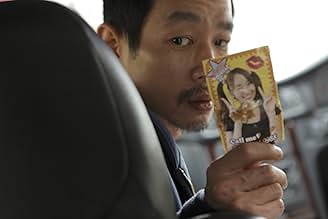






Kôichi Ôhori
- Taxi Driver
- (as Kouichi Ohori)
Ryota Nakanishi
- Student
- (uncredited)
- Directors
- Writers
- All cast & crew
- Production, box office & more at IMDbPro
7.013.6K
1
2
3
4
5
6
7
8
9
10
Featured reviews
Essential viewing
The great Iranian director Abbas Kiarostami made "Like Someone In Love" in Japan but it could have been set anywhere for this is a film that knows no boundaries or borders. As you would expect from Kiarostami it's brilliantly written and directed and beautifully played, particularly by Tadashi Okuno as an old professor whose loneliness draws him to a young student supplementing her income by working as an escort. He's not looking for sex, just conversation and company and when, the next day, they run into her jealous boyfriend the old man allows himself to be mistaken for her grandfather ... and then the boy finds out the truth.
It's a film of mostly small dramas and when violence finally erupts Kiarostami keeps it off screen. For the most part these people simply talk, about their problems, their relationships and life itself and Kiarostami films sequences in 'real time' and with a fixed camera just as he does in his Iranian films. I found it mesmerizing, at times funny, sometimes moving and in the end, really rather shocking. It makes for essential viewing.
It's a film of mostly small dramas and when violence finally erupts Kiarostami keeps it off screen. For the most part these people simply talk, about their problems, their relationships and life itself and Kiarostami films sequences in 'real time' and with a fixed camera just as he does in his Iranian films. I found it mesmerizing, at times funny, sometimes moving and in the end, really rather shocking. It makes for essential viewing.
Beautiful
In Tokyo, a young prostitute (Rin Takanashi) develops an unexpected connection with a widower (Tadashi Okuno) over a period of two days.
At this point in his career, Abbas Kiarostami had been directing films for forty years, so he is no amateur. But it might be a bit of a new beginning, filming in Tokyo with an all-Japanese cast. In fact, had one not known better, they might assume the director was Japanese. What do these two worldviews create when blended?
Professor Nico Baumbach makes much of this cultural difference (and rightfully so), saying Kiarostami's foreign immersion "heightens in a new way the sense of the filmmaker as spectator", but is then quick to point out that despite this, we are not alienated from our subjects. The experience of distance "becomes the condition for an emotional connection that otherwise would not have been possible."
The film is also, in short, beautifully shot, with glorious cinematography. This is the sort of film, with its style and charismatic lead actress that one could watch for hours regardless of plot or substance. Critic David Denby says it more eloquently when he writes, "The cinematography is clear and hard-focused, and the editing produces long, flowing passages. This exquisitely made, elusive film has a lulling rhythm and a melancholy charm."
At this point in his career, Abbas Kiarostami had been directing films for forty years, so he is no amateur. But it might be a bit of a new beginning, filming in Tokyo with an all-Japanese cast. In fact, had one not known better, they might assume the director was Japanese. What do these two worldviews create when blended?
Professor Nico Baumbach makes much of this cultural difference (and rightfully so), saying Kiarostami's foreign immersion "heightens in a new way the sense of the filmmaker as spectator", but is then quick to point out that despite this, we are not alienated from our subjects. The experience of distance "becomes the condition for an emotional connection that otherwise would not have been possible."
The film is also, in short, beautifully shot, with glorious cinematography. This is the sort of film, with its style and charismatic lead actress that one could watch for hours regardless of plot or substance. Critic David Denby says it more eloquently when he writes, "The cinematography is clear and hard-focused, and the editing produces long, flowing passages. This exquisitely made, elusive film has a lulling rhythm and a melancholy charm."
A peculiar relationship dissected as subtly as possible
"Like Someone in Love" is Abbas Kiarostami's follow-up to the mind- bending relationship drama "Certified Copy". Dissection of the title alone provides so many interesting clues and directions for the film to take in addition to what was analyzed previously. And while it does in fact address those interesting ideas (indirectly), it is as minimal as any film-going audience could possibly stand. We essentially watch an unexplained relationship unfold in almost real-time (just under 24 hours).
Akiko (Rin Takashi) is a college-aged girl up to something in the big city of Tokyo that is probably not good for her. She's having an argument with her boyfriend on the phone and she's saying no to a job that a middle-aged man is offering her. This middle-aged man is clearly her pimp and "no" means "yes, sir, I will do whatever you tell me to." So into the cab Akiko goes and we begin to worry about her safety. We spent an awful long time worrying about her safety with no idea what lies ahead for her. The cab ride was two hours long and we saw a lot of it. Akiko arrives at the apartment of an older gentleman looking for companionship. We don't really know what exactly Takashi Watanabe (Tadashi Okuno) wanted with Akiko, and then in the morning he drives her back to Tokyo. Another long car ride.
Visually the car rides were impeccably shot. The scenery was reflected in the windshield and we could still see the characters' faces behind. Unfortunately we don't really know what's happening with these characters during these long car rides. Sometimes a car ride is just a car ride.
Eventually we meet Noriaki (Ryo Kase), Akiko's offensive boyfriend. And he starts putting the relationships into perspective. A different perspective. He allows Akiko and Watanabe to act differently than they actually are, which allows us to start seeing them as they actually are. And then it ends. Well, not quite that quickly, but without giving anything away, it ends.
We're given so little on screen to examine that it can be frustrating even to the viewers that appreciate the subtle beauty in film. Two weeks after first seeing it, my mind has started to form a few opinions on what was being said but it's still a bit too little, too late.
Akiko (Rin Takashi) is a college-aged girl up to something in the big city of Tokyo that is probably not good for her. She's having an argument with her boyfriend on the phone and she's saying no to a job that a middle-aged man is offering her. This middle-aged man is clearly her pimp and "no" means "yes, sir, I will do whatever you tell me to." So into the cab Akiko goes and we begin to worry about her safety. We spent an awful long time worrying about her safety with no idea what lies ahead for her. The cab ride was two hours long and we saw a lot of it. Akiko arrives at the apartment of an older gentleman looking for companionship. We don't really know what exactly Takashi Watanabe (Tadashi Okuno) wanted with Akiko, and then in the morning he drives her back to Tokyo. Another long car ride.
Visually the car rides were impeccably shot. The scenery was reflected in the windshield and we could still see the characters' faces behind. Unfortunately we don't really know what's happening with these characters during these long car rides. Sometimes a car ride is just a car ride.
Eventually we meet Noriaki (Ryo Kase), Akiko's offensive boyfriend. And he starts putting the relationships into perspective. A different perspective. He allows Akiko and Watanabe to act differently than they actually are, which allows us to start seeing them as they actually are. And then it ends. Well, not quite that quickly, but without giving anything away, it ends.
We're given so little on screen to examine that it can be frustrating even to the viewers that appreciate the subtle beauty in film. Two weeks after first seeing it, my mind has started to form a few opinions on what was being said but it's still a bit too little, too late.
A quiet film about broken people
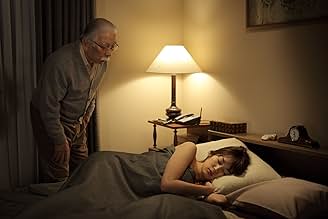
A vignette of some pretty sad people whose lives intersect in awkward ways over the course of a day. There's an escort/prostitute (Rin Takanashi), who isn't able to see the grandmother who's made a special trip to Tokyo to meet her, because she's going off to meet a client old enough to be her grandfather (Tadashi Okuno). He's a widower who used to teach, and struggles to get her to do the things he planned - drink some wine, eat the food he prepared, and talk - as instead she just wants to go to sleep. Then there's her troubled boyfriend (Ryo Kase), a guy who's in love with her but senses her distance and suspects she's up to something, heightening his jealousy and clinginess. He actually meets the older man the following day and assumes he's her grandfather, resulting in a strained conversation where he gets some advice. Even the nosy neighbor (Mihiko Suzuki) tells of how her love was unrequited and she's now cooped up, caring for her disabled brother.
They're all a bit broken, each in their own way, and yet Kiarostami allows each to engage in thoughtful dialogue that shows their humanity, and that they're not simply objects of pity. It's in those moments that I liked the film the most. I have to say, though, that its quiet style lagged a bit as it played out, and the ending was rather abrupt and unresolved. The quality of the filmmaking was high, and I could really feel myself on the streets of Tokyo at night and in the heads of these people, but the story wasn't particularly compelling to me, so I was left feeling it was a near miss.
They're all a bit broken, each in their own way, and yet Kiarostami allows each to engage in thoughtful dialogue that shows their humanity, and that they're not simply objects of pity. It's in those moments that I liked the film the most. I have to say, though, that its quiet style lagged a bit as it played out, and the ending was rather abrupt and unresolved. The quality of the filmmaking was high, and I could really feel myself on the streets of Tokyo at night and in the heads of these people, but the story wasn't particularly compelling to me, so I was left feeling it was a near miss.
Very Underrated
This is one of the very few good films I have watched in a while. This film is criticised for being simple, but Kiarostami's craft is almost flawless and very realistic. There are times when I questioned the duration of real-time in the film as he opt not to use jump cuts to show the shift in time, but except that minor glitch, this film was highly tense, deep and meaningful at so many levels.
Unlike the superficial Hollywood garbage we get to see everyday, Kiarostami's films show us real people with real problems. Probably one of the very few directors who can claim to have real class in this present era. I started watching this film after reading an interview with the director. The film did not disappoint me even a little bit. I am ashamed that I did not come across his name before.
Unlike the superficial Hollywood garbage we get to see everyday, Kiarostami's films show us real people with real problems. Probably one of the very few directors who can claim to have real class in this present era. I started watching this film after reading an interview with the director. The film did not disappoint me even a little bit. I am ashamed that I did not come across his name before.


Did you know
- TriviaIn the late 1990s Abbas Kiarostami was driving late at night while on a visit to Tokyo and witnessed a young girl on the side of the street dressed as a bride. In the years following, while visiting Tokyo to promote other films, he realized that he was always looking for that same girl because she had left such an impression but that he would never likely notice her again in real life because she wouldn't be wearing the same dress. This experience became the basis for the film.
- ConnectionsFeatured in At the Movies: Cannes Film Festival 2012 (2012)
- How long is Like Someone in Love?Powered by Alexa
Details
- Release date
- Countries of origin
- Official sites
- Language
- Also known as
- The End
- Filming locations
- Shizuoka, Japan(Shizuoka Station)
- Production companies
- See more company credits at IMDbPro
Box office
- Gross US & Canada
- $239,056
- Opening weekend US & Canada
- $21,813
- Feb 17, 2013
- Gross worldwide
- $562,878
- Runtime
- 1h 49m(109 min)
- Color
- Sound mix
- Aspect ratio
- 1.66 : 1
Contribute to this page
Suggest an edit or add missing content