IMDb RATING
7.4/10
4.8K
YOUR RATING

The river creates and the river destroys in an eternal cycle that even man can't escape.The river creates and the river destroys in an eternal cycle that even man can't escape.The river creates and the river destroys in an eternal cycle that even man can't escape.
- Director
- Writers
- Stars
- Awards
- 23 wins & 12 nominations total





- Director
- Writers
- All cast & crew
- Production, box office & more at IMDbPro
7.44.8K
1
2
3
4
5
6
7
8
9
10
Featured reviews
Man versus Nature. Man versus Man. A Thousand-year story
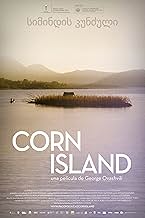
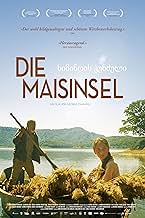
Every year, the level of the Enguri River drops to uncover islands with fertile river-bottom soil. Locals can temporarily claim these islands for a season to grow a subsistence crop. An old man with one oar in an old wooden boat slowly makes his way to just such an island. He paces it off, digs the earth, tastes the soil, decides it will do, and marks his claim with a scrap of cloth on a stick. He leaves and then returns again and again, bringing supplies including scrap lumber to build a cabin with a thatched roof and then to plant corn with the help of his granddaughter who's in her early adolescence. Almost no words are spoken.
A big part of this film is thus man versus nature. Will nature allow the old man and his granddaughter to scratch a living from this transient plot of land? This part of the film might as well be prehistoric because it's so primitive. Intentionally so.
There's another part of the film caused by the island's location: in no-man's land between the warring country of Georgia and Abkhazia, a breakaway territory. This off-screen conflict brings soldiers from both sides into the film and we have man versus man versus man.
The film takes its time in all things. It's slaved to nature's pace and the growing corn. Things unfold slowly. Some of them aren't explained. That's the way it is in real life.
If you like artistic films with beautiful cinematography, this is a film for you. If you're looking for complex ideas and twisted plots, look elsewhere. This is a primal film about conflicts in nature, conflicts between men.
A big part of this film is thus man versus nature. Will nature allow the old man and his granddaughter to scratch a living from this transient plot of land? This part of the film might as well be prehistoric because it's so primitive. Intentionally so.
There's another part of the film caused by the island's location: in no-man's land between the warring country of Georgia and Abkhazia, a breakaway territory. This off-screen conflict brings soldiers from both sides into the film and we have man versus man versus man.
The film takes its time in all things. It's slaved to nature's pace and the growing corn. Things unfold slowly. Some of them aren't explained. That's the way it is in real life.
If you like artistic films with beautiful cinematography, this is a film for you. If you're looking for complex ideas and twisted plots, look elsewhere. This is a primal film about conflicts in nature, conflicts between men.
Corn Island : A great film which shows that even a tiny piece of land can be used to make a great film.
About cinema it is said that sometimes images convey perfectly what words fail to express. When words are uttered they make sense only when they merely suit the situations for which they were spoken. This effect is shown in Georgian film "Corn Island" with utmost austerity as an old man and his young grand-daughter set foot on a small island in the middle of a river. Their sudden arrival sets off a climate of distrust in the minds of other people. This is the start of a difficult life for them as there are also others who would like to see them defeated in their mission. There are some films which develop at their own pace. It is likely that laymen would call them slow whereas true admirers of cinema would label them as poetic works of art. Corn Island is one such film which would immensely appeal anybody who appreciates cinema as a poetic art. One can see how the entire process of planting a seed until the final stages of agriculture is carried out. The origin of this poetic film can be traced back to a day in August 1992 when an Abkhazian person ordered Georgian director George Ovashvili to leave Abkhazian black sea coast. According to him the war had started.
Almost perfect film!
George Ovashvili's film was showing on my cable, and I decided to check it out... it's actually a film from a decade ago that made the rounds at every major film festival and ended up with 23 wins and 12 nominations! I must say, it truly deserved every single one of them!
The story, written by Roelof Jan Minneboo, George Ovashvili, and Nugzar Shataidze, transports us to Georgia, where the Inguri River's water level drops annually, revealing islands with fertile river-bottom soil. The locals can temporarily claim these islands for a season to grow crops, so an elderly man in an old wooden boat slowly makes his way to one such island. He measures it, digs the earth, tastes the soil, decides it's suitable, and marks his claim with a piece of cloth on a stick. He leaves and returns repeatedly, bringing supplies, including scrap lumber to build a cabin with a thatched roof, and then planting corn with the help of his teenager granddaughter. Almost no words are spoken, so don't worry if you don't have subtitles (for some reason, I only had German subtitles) - you'll be just fine!
A significant aspect of this film is the profound connection between the man and nature, conveyed through captivating imagery and visuals - a timeless story that seems so primitive... intentionally so, in my opinion.
Another aspect of the film is the island's location: in the middle of the Inguri River, dividing Georgia from Abkhazia. This off-screen conflict brings soldiers from both sides, disturbing the intense bond between nature and the old man and his granddaughter.
The film takes its time with everything, and it follows the nature's pace of the flowing river, growing corn... and it feels great watching things unfolding slowly. Real life feeling! Almost perfect film!
The story, written by Roelof Jan Minneboo, George Ovashvili, and Nugzar Shataidze, transports us to Georgia, where the Inguri River's water level drops annually, revealing islands with fertile river-bottom soil. The locals can temporarily claim these islands for a season to grow crops, so an elderly man in an old wooden boat slowly makes his way to one such island. He measures it, digs the earth, tastes the soil, decides it's suitable, and marks his claim with a piece of cloth on a stick. He leaves and returns repeatedly, bringing supplies, including scrap lumber to build a cabin with a thatched roof, and then planting corn with the help of his teenager granddaughter. Almost no words are spoken, so don't worry if you don't have subtitles (for some reason, I only had German subtitles) - you'll be just fine!
A significant aspect of this film is the profound connection between the man and nature, conveyed through captivating imagery and visuals - a timeless story that seems so primitive... intentionally so, in my opinion.
Another aspect of the film is the island's location: in the middle of the Inguri River, dividing Georgia from Abkhazia. This off-screen conflict brings soldiers from both sides, disturbing the intense bond between nature and the old man and his granddaughter.
The film takes its time with everything, and it follows the nature's pace of the flowing river, growing corn... and it feels great watching things unfolding slowly. Real life feeling! Almost perfect film!
Nature in Cinema
George Ovashvili's Corn Island is an auteuristic work that finds its balance between men and nature. Through the lives of an Abkhazian grandfather and his granddaughter, we find our place in the cycle of life. First you work the soil to feed yourself, then when you die you become part of the nature. This cycle reminds me of a Kim Ki-Duk film "Spring, Summer, Fall, Winter... and Spring" which is a brilliant film that attains nature from its characters' lives.
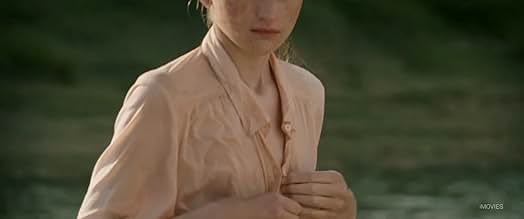
An Abkhazian peasant (Ilyas Salman) and his granddaughter (Mariam Buturishvili) are living on one of many islands created by Enguri River, the river stands as boundary between Abkhazia and Georgia. As they try to harvest enough corn to survive the winter, conflicts from outer world affects their lives. Girl finds a wounded soldier who have hidden himself in the corn plants. Old man and his granddaughter helps and hides him while his enemies searches for him. Conflict between two small groups of soldiers is an effective use of minimalism on clashes between Abkhazia and Georgia. But the film does not touch political issues, it takes the subject with an artistic point of view.
Old man has a lot of resemblances with titular character of Akira Kurosawa's "Dersu Uzala" as they both are living close to nature and away from "human". That made the watching interesting for me as I like Dersu Uzala and I think secluded characters are profound features of a film in terms of spirituality.
Generally I think director/co-screenwriter George Ovashvili take inspiration from directors Akira Kurosawa, Kim Ki-Duk and Jean Renoir (La Grande Illusion). Film has nearly no dialogue yet the cinematography of the film by Elemér Ragályi seemed like it was talking with images, I think Ragályi has a style close to Emmanuel Lubezki and Christian Berger.
It is not a masterpiece but this slow-burning film has a somber beauty, art-house fans will like it.
An Abkhazian peasant (Ilyas Salman) and his granddaughter (Mariam Buturishvili) are living on one of many islands created by Enguri River, the river stands as boundary between Abkhazia and Georgia. As they try to harvest enough corn to survive the winter, conflicts from outer world affects their lives. Girl finds a wounded soldier who have hidden himself in the corn plants. Old man and his granddaughter helps and hides him while his enemies searches for him. Conflict between two small groups of soldiers is an effective use of minimalism on clashes between Abkhazia and Georgia. But the film does not touch political issues, it takes the subject with an artistic point of view.
Old man has a lot of resemblances with titular character of Akira Kurosawa's "Dersu Uzala" as they both are living close to nature and away from "human". That made the watching interesting for me as I like Dersu Uzala and I think secluded characters are profound features of a film in terms of spirituality.
Generally I think director/co-screenwriter George Ovashvili take inspiration from directors Akira Kurosawa, Kim Ki-Duk and Jean Renoir (La Grande Illusion). Film has nearly no dialogue yet the cinematography of the film by Elemér Ragályi seemed like it was talking with images, I think Ragályi has a style close to Emmanuel Lubezki and Christian Berger.
It is not a masterpiece but this slow-burning film has a somber beauty, art-house fans will like it.
Simple but well executed visual narrative!
As a review, I wouldn't go much into detail since the movie itself is minimal in most of the sense but if you are nature loving slow paced artistic movie fan, You will surely love this movie.
Although movie present post-war conflict between two nations, there's hardly any dynamics in visually or audibly.Simple story narration, An old man and his grand daughter find themselves in a small island temporarily formed by river and cultivate corn.
Director portray entire procedure in growing a corn plants which might feel a bit slow but the breezy tone of the cinematography makes the movie intellectually engaging This is a thought provoking beautifully executed art piece.
Although movie present post-war conflict between two nations, there's hardly any dynamics in visually or audibly.Simple story narration, An old man and his grand daughter find themselves in a small island temporarily formed by river and cultivate corn.
Director portray entire procedure in growing a corn plants which might feel a bit slow but the breezy tone of the cinematography makes the movie intellectually engaging This is a thought provoking beautifully executed art piece.


Did you know
- TriviaIn order to find the location for this movie, the filmmakers had been looking for a real island for two years. Eventually, they realised it would be too complicated and too dangerous to film on such a place. Instead, they built the island on an artificial lake, where they could control the water level to some extent, director George Ovashvili revealed in an interview.
- ConnectionsReferenced in CT na MFF Karlovy Vary 2017: Generální reditel Petr Dvorák (2017)
- How long is Corn Island?Powered by Alexa
Details
- Release date
- Countries of origin
- Official site
- Languages
- Also known as
- Simindis kundzuli
- Filming locations
- Production companies
- See more company credits at IMDbPro
Box office
- Budget
- €1,500,000 (estimated)
- Gross worldwide
- $37,445
Contribute to this page
Suggest an edit or add missing content