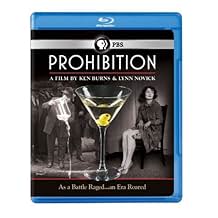
Prohibition
- TV Mini Series
- 2011
- 1h
IMDb RATING
8.2/10
3.6K
YOUR RATING

The story of the American activist struggle against the influence of alcohol, climaxing in the failed early 20th century nationwide era when it was banned.The story of the American activist struggle against the influence of alcohol, climaxing in the failed early 20th century nationwide era when it was banned.The story of the American activist struggle against the influence of alcohol, climaxing in the failed early 20th century nationwide era when it was banned.
- Won 1 Primetime Emmy
- 1 win & 3 nominations total
Browse episodes



8.23.6K
1
2
3
4
5
6
7
8
9
10
Featured reviews
Amazing Story. How could Probition Ever Existed? This film makes clear the roots of the insanity of prohibition.
I've always wondered how the US ever passed laws prohibiting alcohol. Such an amazingly common thing today, it would be like banning caffeine or soda. This six hour story is told well from all sides and it provides clarity as to the insane and radical motives behind the Volstead Act and how it backfired in every way. While the video and photos are all rather dated being from the 1910s and 1920s, the interviews of experts, historians and people with real-life stories really come together well. The narration is also great and uses some of the best names in the film business.
This is a long series, about 6 hours. Ken Burns' direction is poignant and well-paced. It gives you time to think about the meaning and the historical impact of each chapter of this story which touches on many decades.
I feel I know understand an important part of American history that never made sense to me. Concepts like "Bootleggers and Baptists" being aligned and the role of the gangsters in society become crystal clear after viewing this film. I had no idea how vicious and immoral the attacks on Al Smith were by the Herbert Hoover camp. Politics and police seem violently corrupt in this era. You learn a lot about life, laws, religion and politics in a difficult and bitter era (the Great Depression). Most importantly, you are reminded of the fact that US was built on Freedoms--and Prohibition is such an amazing violation of this. It's a historical guidepost to preserving our freedoms going forward.
The story of the Roaring 20s, flappers, the speakeasy, the rum-runners, and ironically, how the post-prohibition era was favorable to women and equality and stories I'd never imagined.
FDR had three priorities when he took office: 1) regulate the banks, 2) cut federal spending, 3) legalize beer. He won by a landslide. On a funny note, Utah voted to repeal the Volstead Act rather quickly. Amazing given that that state has spend the last 80 years trying to restrict it! This three DVD series is worthy of a weekend of your time. Thanks PBS for this fine historical film and Ken Burns for another amazing tale.
This is a long series, about 6 hours. Ken Burns' direction is poignant and well-paced. It gives you time to think about the meaning and the historical impact of each chapter of this story which touches on many decades.
I feel I know understand an important part of American history that never made sense to me. Concepts like "Bootleggers and Baptists" being aligned and the role of the gangsters in society become crystal clear after viewing this film. I had no idea how vicious and immoral the attacks on Al Smith were by the Herbert Hoover camp. Politics and police seem violently corrupt in this era. You learn a lot about life, laws, religion and politics in a difficult and bitter era (the Great Depression). Most importantly, you are reminded of the fact that US was built on Freedoms--and Prohibition is such an amazing violation of this. It's a historical guidepost to preserving our freedoms going forward.
The story of the Roaring 20s, flappers, the speakeasy, the rum-runners, and ironically, how the post-prohibition era was favorable to women and equality and stories I'd never imagined.
FDR had three priorities when he took office: 1) regulate the banks, 2) cut federal spending, 3) legalize beer. He won by a landslide. On a funny note, Utah voted to repeal the Volstead Act rather quickly. Amazing given that that state has spend the last 80 years trying to restrict it! This three DVD series is worthy of a weekend of your time. Thanks PBS for this fine historical film and Ken Burns for another amazing tale.
Very Interesting, as expected
I watched this several years after it had been first aired at my local library. It was a nice situation to see it in. Some of the library patrons who were also attending had relatives and such who were involved in the "industry" during the featured years.
The librarian had to make sure that we were sickened, or at least spooked by pointing out that all of the photographs of dead people were of real dead people and not staged.
Some of the prohibition people were just simply nuts.
Nothing makes crime like the de-legalization of something that most people can handle or will handle anyways.
The librarian had to make sure that we were sickened, or at least spooked by pointing out that all of the photographs of dead people were of real dead people and not staged.
Some of the prohibition people were just simply nuts.
Nothing makes crime like the de-legalization of something that most people can handle or will handle anyways.
10Calaboss
Another Winner From Ken Burns
When it comes to making full coverage documentaries, you can't beat the work of Ken Burns. "Prohibition" is another fine illustration of that.
This five and one half hour mini-series, shown in three parts on PBS and available on DVD, never bogs down. That's pretty amazing right there. I would think it difficult to have that kind of running time and not have at least a couple spots where the story gets boring. It never does, and is a tribute to Ken's film making ability.
"Prohibition" describes how we got there, what it did to our country, and why the 18th Amendment, banning booze, became the only Amendment to be repealed. It was doomed to fail from the start, but nobody saw it at the beginning. It almost single-handedly brought about organized crime in America, a problem that has yet to be repealed.
Ken Burns covers it all very well, and his good name in these documentary efforts never fails to bring in the big names for voice-over work. In this case, Tom Hanks, Patricia Clarkson, Adam Arkin, Jeremy Irons, John Lithgow, etc., etc..
(Although it was never mentioned, I couldn't help but think of the parallels to modern day marijuana laws. When you have a product that millions of Americans want and you make it illegal, the money from that product goes to gangs that provide it, and with that, all the violence that goes along with those gangs. You can't legislate morality, as the 18th Amendment surely showed. And pot is much less harmful than alcohol.)
Another great job by Ken Burns.
This five and one half hour mini-series, shown in three parts on PBS and available on DVD, never bogs down. That's pretty amazing right there. I would think it difficult to have that kind of running time and not have at least a couple spots where the story gets boring. It never does, and is a tribute to Ken's film making ability.
"Prohibition" describes how we got there, what it did to our country, and why the 18th Amendment, banning booze, became the only Amendment to be repealed. It was doomed to fail from the start, but nobody saw it at the beginning. It almost single-handedly brought about organized crime in America, a problem that has yet to be repealed.
Ken Burns covers it all very well, and his good name in these documentary efforts never fails to bring in the big names for voice-over work. In this case, Tom Hanks, Patricia Clarkson, Adam Arkin, Jeremy Irons, John Lithgow, etc., etc..
(Although it was never mentioned, I couldn't help but think of the parallels to modern day marijuana laws. When you have a product that millions of Americans want and you make it illegal, the money from that product goes to gangs that provide it, and with that, all the violence that goes along with those gangs. You can't legislate morality, as the 18th Amendment surely showed. And pot is much less harmful than alcohol.)
Another great job by Ken Burns.
Greatest Legal Miscalculation of 20th Century America Documented in Outstanding Burns/Novick Film
My favorite comment in this documentary is offered by Pete Hamill, American journalist, novelist and essayist, who said basically if you want people to brush their teeth, pass a law banning toothpaste. And then people will do everything they can to acquire toothpaste illegally, and they'll brush their teeth just to spite the law. The unforeseen consequence of Prohibition is that once you take away a person's right to do something that people have always done, people will feel the desire to want it much more intensely, in the same way if you deny a child all sweets, the kid will be sneaking chocolate inside his jacket sleeves. Hamill later says he doesn't drink, but he would probably take a swig in front of a government building if the law ever forbade him from doing it. Encouraging moderation is not the same as banning something completely.
The other comment worth noting concerns repeal crusader Pauline Sabin who had been entrenched in republican politics prior to 1928. Republican congressmen would vote to adhere to the strictest of prohibition laws as laid out by the Volstead Act and then go to one of Sabin's parties demanding a drink. She concluded that the United States had become "a Nation of Hypocrites", which is the title of the third installment of Burn's documentary. Sabin becomes an unlikely hero who would sway the country against Prohibition and the eventual repeal of the 18th Amendment of the Constitution, the only amendment so dignified. Ironically, Daniel Okrent points out that today alcohol is somewhat harder to come by than during Prohibition because of liquor laws, underage drinking laws, etc. When alcohol was strictly forbidden, there was nothing in place to regulate it, except for raids on speakeasies and private distilleries.
Based in part on Daniel Okrent's "Last Call: The Rise and Fall of Prohibition", Ken Burns and Lynn Novick's "Prohibition" is a thoroughly entertaining, simultaneously humorous and "sobering" look at one of the strangest episodes in American legal history. The documentary is in three parts, the first chronicling the birth of the temperance movement which began in the 1820's almost a century before the ratification of the 18th Amendment. No question that alcohol was a problem for some people, mostly among the rural poor, but the temperance movement decided alcohol itself was the problem and vowed its eradication by the late 19th century. The first part ends with the ratification of the 18th Amendment to the US Constitution prohibiting not only the sale but importation of alcohol. Part two concerns the passage of the Volstead Act designed to enforce the amendment, and the immediate consequences of trying to stop people from drinking, and the antithetical results, such as lawlessness and bribery. The third and most sobering of the episodes chronicles many of the unintended consequences, such as the violence erupting in Chicago and the night club craze. The documentary ends with the movement for the repeal of the 18th Amendment.
The unforeseen catastrophes of the 18th Amendment which were designed to heighten American morality and assuage drunkenness turned America into one of the most alcoholic-driven nations among the industrialized world. Americans drank more booze, partied more, got more drunk, and flaunted the law more often during Prohibition than at any other time in the nation's history since after the Civil War, even as compared to the present time. Possibly only the 1960's are somewhat comparable to the mayhem of the 1920's.
The irony of ironies that the decade begun by the Temperance Movement's victory with the passage of the 18th Amendment to the US Constitution in 1919 would be nicknamed the Roarding Twenties and the Jazz Age. This was not a decade known for drinking milk. This was a decade characterized by cocktail glasses in the hands of flappers dancing on tables to the evocative music of Duke Ellington and Count Basie. Men would be raising giant mugs of frothy beer in underground establishments called speakeasies. Only Prohibition allowed the likes of Al Capone and Lucky Luciano to become wealthy gangsters, almost movie stars by today's standards. The leaders of the Temperance Movement, particularly the Woman's Christian Temperance Union and the Anti-Saloon League, were appalled when their daughters ran off to speakeasies and night clubs to partake of the forbidden fruit. Strangely, Prohibition helped usher in the Night Club culture of America which has continued unabated ever since. All the great night clubs famous for their booze, music, and dancing such as the Cotton Club and the Stork Club, were incepted when alcohol was supposed to be illegal.
For some reason, I didn't think Prohibition permeated into so many aspects of American life during its enforcement from 1920 through 1932. People could open small businesses in their basements and make a fortune through bootlegging, and then be hauled away under the Volstead Act. The rise of the Chicago Gang syndicate became a prototype for similar syndicates across the country, all vying for their bootlegging territory. At one point, citizens were legally compelled to snitch on neighbors suspected of bootlegging. The story as presented by Burns/Novick is as compelling as any action thriller being produced today. A great movie of American history, with all the elements that make a great story. Essentially it's a legal thriller with sex, violence, and lots of booze. Lots of it.
The other comment worth noting concerns repeal crusader Pauline Sabin who had been entrenched in republican politics prior to 1928. Republican congressmen would vote to adhere to the strictest of prohibition laws as laid out by the Volstead Act and then go to one of Sabin's parties demanding a drink. She concluded that the United States had become "a Nation of Hypocrites", which is the title of the third installment of Burn's documentary. Sabin becomes an unlikely hero who would sway the country against Prohibition and the eventual repeal of the 18th Amendment of the Constitution, the only amendment so dignified. Ironically, Daniel Okrent points out that today alcohol is somewhat harder to come by than during Prohibition because of liquor laws, underage drinking laws, etc. When alcohol was strictly forbidden, there was nothing in place to regulate it, except for raids on speakeasies and private distilleries.
Based in part on Daniel Okrent's "Last Call: The Rise and Fall of Prohibition", Ken Burns and Lynn Novick's "Prohibition" is a thoroughly entertaining, simultaneously humorous and "sobering" look at one of the strangest episodes in American legal history. The documentary is in three parts, the first chronicling the birth of the temperance movement which began in the 1820's almost a century before the ratification of the 18th Amendment. No question that alcohol was a problem for some people, mostly among the rural poor, but the temperance movement decided alcohol itself was the problem and vowed its eradication by the late 19th century. The first part ends with the ratification of the 18th Amendment to the US Constitution prohibiting not only the sale but importation of alcohol. Part two concerns the passage of the Volstead Act designed to enforce the amendment, and the immediate consequences of trying to stop people from drinking, and the antithetical results, such as lawlessness and bribery. The third and most sobering of the episodes chronicles many of the unintended consequences, such as the violence erupting in Chicago and the night club craze. The documentary ends with the movement for the repeal of the 18th Amendment.
The unforeseen catastrophes of the 18th Amendment which were designed to heighten American morality and assuage drunkenness turned America into one of the most alcoholic-driven nations among the industrialized world. Americans drank more booze, partied more, got more drunk, and flaunted the law more often during Prohibition than at any other time in the nation's history since after the Civil War, even as compared to the present time. Possibly only the 1960's are somewhat comparable to the mayhem of the 1920's.
The irony of ironies that the decade begun by the Temperance Movement's victory with the passage of the 18th Amendment to the US Constitution in 1919 would be nicknamed the Roarding Twenties and the Jazz Age. This was not a decade known for drinking milk. This was a decade characterized by cocktail glasses in the hands of flappers dancing on tables to the evocative music of Duke Ellington and Count Basie. Men would be raising giant mugs of frothy beer in underground establishments called speakeasies. Only Prohibition allowed the likes of Al Capone and Lucky Luciano to become wealthy gangsters, almost movie stars by today's standards. The leaders of the Temperance Movement, particularly the Woman's Christian Temperance Union and the Anti-Saloon League, were appalled when their daughters ran off to speakeasies and night clubs to partake of the forbidden fruit. Strangely, Prohibition helped usher in the Night Club culture of America which has continued unabated ever since. All the great night clubs famous for their booze, music, and dancing such as the Cotton Club and the Stork Club, were incepted when alcohol was supposed to be illegal.
For some reason, I didn't think Prohibition permeated into so many aspects of American life during its enforcement from 1920 through 1932. People could open small businesses in their basements and make a fortune through bootlegging, and then be hauled away under the Volstead Act. The rise of the Chicago Gang syndicate became a prototype for similar syndicates across the country, all vying for their bootlegging territory. At one point, citizens were legally compelled to snitch on neighbors suspected of bootlegging. The story as presented by Burns/Novick is as compelling as any action thriller being produced today. A great movie of American history, with all the elements that make a great story. Essentially it's a legal thriller with sex, violence, and lots of booze. Lots of it.
When I read about the evils of drinking, I stop reading.
It might be a bold statement, but I personally feel that Prohibition was arguably the biggest mistake America ever made, with the possible exception of the Vietnam War. Ken Burns, already well known for making a great deal of extremely high quality films and documentaries about a variety of subjects (including the aforementioned one), has once again delivered a riveting and deeply interesting experience that no history aficionado should miss. Although this series is shorter than many of his others, it's no less intriguing as it delves into how the movement to get alcohol banned in the United States actually started almost a century before the amendment banning it was passed. We learn how it was endorsed by a lot of different groups of people (many of them women), and they all had different reasons for wanting to see it go. Many priests had heard countless stories of women being abused by their husbands, ordinarily mellow people being turned into brutes, and children being neglected all because of drinking. Many had seen how beer and wine could ruin not just one person, but whole communities. The film does a great job of showing every conceivable angle to the story of prohibition, and discusses in detail how people, many of them Irish and German immigrants who loved to drink, tried their hardest to make sure it wouldn't go anywhere. Many bar and saloon owners were convinced such a ridiculous act would never happen, as the federal government was too reliant on taxes paid by these establishments. Meanwhile, once prohibition actually came into effect, people who were law abiding citizens before the act became criminals just to get what they viewed as theirs in the first place, and those who were already criminals became even more wealthy, as many new opportunities were opened. Of course, you can't talk about this era and not bring up the mobster aspect of it. Thugs like Al Capone (who was sometimes seen as someone much more respectable than just a thug) ran huge, elaborate bootlegging operations that encompassed entire cities, had their minions kill or threaten anyone who stood in their way, and left a legacy on america that's still talked about now. Burns also masterfully explains how the horrendous flu pandemic of 1918 and the First World War, both of which left millions dead, contributed to a much more flippant and hedonistic way of living which resulted in flappers. Women came to realize that life was short and you can die at any moment, so they dove into a sexualized lifestyle that made their Victorian parents quite angry. Despite the fact that prohibition was tearing the country apart, people were still breaking the law left and right and drinking whenever they wanted to. Thousands of speakeasies were operated all across america. These carefree times would eventually come to a tragic and sudden end in 1929, when a stock market crash caused the most dire emergency america had faced since the Civil War. This is just a small selection of the things talked about in this documentary. If you're like me and you've already seen Burns' masterpiece on the vietnam war (probably the best thing he ever did), you'll feel right at home. The same narrator is here, and there's more than enough archive footage. All I can say is if you like to drink, and especially if you don't like to, then this is for you.


Did you know
- TriviaAlthough the documentary gives the etymology of the term 'bootlegging' (people selling illegal liquor from flasks that they kept in their boot legs), the origin of the term 'speakeasy' is not further explained. According to the Etymology Dictionary, these illegal liquor saloons were called 'speakeasies' "because of the practice of speaking quietly about such a place in public, or when inside it, so as not to alert the police or neighbors".
- ConnectionsFeatured in CBS 11 News: Episode dated 17 August 2011 (2011)
- How many seasons does Prohibition have?Powered by Alexa
Details
- Release date
- Country of origin
- Official site
- Language
- Also known as
- Förbudstiden i USA
- Production companies
- See more company credits at IMDbPro
- Runtime
- 1h(60 min)
- Color
- Sound mix
- Aspect ratio
- 16:9 HD
Contribute to this page
Suggest an edit or add missing content