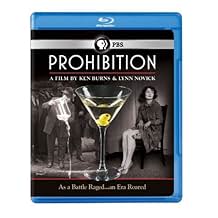
Prohibition
- TV Mini Series
- 2011
- 1h
IMDb RATING
8.2/10
3.6K
YOUR RATING

The story of the American activist struggle against the influence of alcohol, climaxing in the failed early 20th century nationwide era when it was banned.The story of the American activist struggle against the influence of alcohol, climaxing in the failed early 20th century nationwide era when it was banned.The story of the American activist struggle against the influence of alcohol, climaxing in the failed early 20th century nationwide era when it was banned.
- Won 1 Primetime Emmy
- 1 win & 3 nominations total
Browse episodes



8.23.6K
1
2
3
4
5
6
7
8
9
10
Featured reviews
Very Interesting, as expected
I watched this several years after it had been first aired at my local library. It was a nice situation to see it in. Some of the library patrons who were also attending had relatives and such who were involved in the "industry" during the featured years.
The librarian had to make sure that we were sickened, or at least spooked by pointing out that all of the photographs of dead people were of real dead people and not staged.
Some of the prohibition people were just simply nuts.
Nothing makes crime like the de-legalization of something that most people can handle or will handle anyways.
The librarian had to make sure that we were sickened, or at least spooked by pointing out that all of the photographs of dead people were of real dead people and not staged.
Some of the prohibition people were just simply nuts.
Nothing makes crime like the de-legalization of something that most people can handle or will handle anyways.
10Calaboss
Another Winner From Ken Burns
When it comes to making full coverage documentaries, you can't beat the work of Ken Burns. "Prohibition" is another fine illustration of that.
This five and one half hour mini-series, shown in three parts on PBS and available on DVD, never bogs down. That's pretty amazing right there. I would think it difficult to have that kind of running time and not have at least a couple spots where the story gets boring. It never does, and is a tribute to Ken's film making ability.
"Prohibition" describes how we got there, what it did to our country, and why the 18th Amendment, banning booze, became the only Amendment to be repealed. It was doomed to fail from the start, but nobody saw it at the beginning. It almost single-handedly brought about organized crime in America, a problem that has yet to be repealed.
Ken Burns covers it all very well, and his good name in these documentary efforts never fails to bring in the big names for voice-over work. In this case, Tom Hanks, Patricia Clarkson, Adam Arkin, Jeremy Irons, John Lithgow, etc., etc..
(Although it was never mentioned, I couldn't help but think of the parallels to modern day marijuana laws. When you have a product that millions of Americans want and you make it illegal, the money from that product goes to gangs that provide it, and with that, all the violence that goes along with those gangs. You can't legislate morality, as the 18th Amendment surely showed. And pot is much less harmful than alcohol.)
Another great job by Ken Burns.
This five and one half hour mini-series, shown in three parts on PBS and available on DVD, never bogs down. That's pretty amazing right there. I would think it difficult to have that kind of running time and not have at least a couple spots where the story gets boring. It never does, and is a tribute to Ken's film making ability.
"Prohibition" describes how we got there, what it did to our country, and why the 18th Amendment, banning booze, became the only Amendment to be repealed. It was doomed to fail from the start, but nobody saw it at the beginning. It almost single-handedly brought about organized crime in America, a problem that has yet to be repealed.
Ken Burns covers it all very well, and his good name in these documentary efforts never fails to bring in the big names for voice-over work. In this case, Tom Hanks, Patricia Clarkson, Adam Arkin, Jeremy Irons, John Lithgow, etc., etc..
(Although it was never mentioned, I couldn't help but think of the parallels to modern day marijuana laws. When you have a product that millions of Americans want and you make it illegal, the money from that product goes to gangs that provide it, and with that, all the violence that goes along with those gangs. You can't legislate morality, as the 18th Amendment surely showed. And pot is much less harmful than alcohol.)
Another great job by Ken Burns.
When I read about the evils of drinking, I stop reading.
It might be a bold statement, but I personally feel that Prohibition was arguably the biggest mistake America ever made, with the possible exception of the Vietnam War. Ken Burns, already well known for making a great deal of extremely high quality films and documentaries about a variety of subjects (including the aforementioned one), has once again delivered a riveting and deeply interesting experience that no history aficionado should miss. Although this series is shorter than many of his others, it's no less intriguing as it delves into how the movement to get alcohol banned in the United States actually started almost a century before the amendment banning it was passed. We learn how it was endorsed by a lot of different groups of people (many of them women), and they all had different reasons for wanting to see it go. Many priests had heard countless stories of women being abused by their husbands, ordinarily mellow people being turned into brutes, and children being neglected all because of drinking. Many had seen how beer and wine could ruin not just one person, but whole communities. The film does a great job of showing every conceivable angle to the story of prohibition, and discusses in detail how people, many of them Irish and German immigrants who loved to drink, tried their hardest to make sure it wouldn't go anywhere. Many bar and saloon owners were convinced such a ridiculous act would never happen, as the federal government was too reliant on taxes paid by these establishments. Meanwhile, once prohibition actually came into effect, people who were law abiding citizens before the act became criminals just to get what they viewed as theirs in the first place, and those who were already criminals became even more wealthy, as many new opportunities were opened. Of course, you can't talk about this era and not bring up the mobster aspect of it. Thugs like Al Capone (who was sometimes seen as someone much more respectable than just a thug) ran huge, elaborate bootlegging operations that encompassed entire cities, had their minions kill or threaten anyone who stood in their way, and left a legacy on america that's still talked about now. Burns also masterfully explains how the horrendous flu pandemic of 1918 and the First World War, both of which left millions dead, contributed to a much more flippant and hedonistic way of living which resulted in flappers. Women came to realize that life was short and you can die at any moment, so they dove into a sexualized lifestyle that made their Victorian parents quite angry. Despite the fact that prohibition was tearing the country apart, people were still breaking the law left and right and drinking whenever they wanted to. Thousands of speakeasies were operated all across america. These carefree times would eventually come to a tragic and sudden end in 1929, when a stock market crash caused the most dire emergency america had faced since the Civil War. This is just a small selection of the things talked about in this documentary. If you're like me and you've already seen Burns' masterpiece on the vietnam war (probably the best thing he ever did), you'll feel right at home. The same narrator is here, and there's more than enough archive footage. All I can say is if you like to drink, and especially if you don't like to, then this is for you.
Excellence throughout.
This is the latest documentary series from Ken Burns--the docu-god for Public Broadcasting. Not surprisingly, with his amazing reputation for perfection, he was able to once again get many of America's top actors to provide their voice talents to the shows--such as Tom Hanks, Sam Waterston and Blythe Danner. And, like so many PBS documentaries, Peter Coyote narrates more than capably.
The miniseries consists of three episodes. The first is about the background leading to Prohibition--the temperance movement and problems with alcohol over-consumption. It also ends with the implementation of the Constitutional Amendment. Part Two is about the practical aspects of the law. The difficulty in enforcement is due to a lack of widespread support, loopholes in the law as well as the way the law actually ENCOURAGED the growth of organized crime. Part Three is about the rising dislike of the law that led to its repeal.
Overall, it's yet another very good series by Ken Burn and is among the best shows you can find on the topic. Well worth your time--and it manages to make an educational show fun...of sorts.
The miniseries consists of three episodes. The first is about the background leading to Prohibition--the temperance movement and problems with alcohol over-consumption. It also ends with the implementation of the Constitutional Amendment. Part Two is about the practical aspects of the law. The difficulty in enforcement is due to a lack of widespread support, loopholes in the law as well as the way the law actually ENCOURAGED the growth of organized crime. Part Three is about the rising dislike of the law that led to its repeal.
Overall, it's yet another very good series by Ken Burn and is among the best shows you can find on the topic. Well worth your time--and it manages to make an educational show fun...of sorts.
Ken Burns' latest docu: goes great with ice and a twist of lime
Daniel Okrent's "Last Call: The Rise and Fall of Prohibition" and Ken Burns and Lynn Novick's "Prohibition" mini-series were two similar projects that began together resulting in two different end products. Together, both provide a rather detailed account not only of Prohibition's place in American history, but the events leading up to such, the results of repeal and the long-lasting societal impact of the entire matter. Separate, both are still strong, informative and entertaining yet each tend to focus on different themes that sometimes do not intermingle and the result is noticeable.
Ken Burns, in his trademarked fashion, intermingles fantastically- original photos and video with colorful interviews from subject-matter experts and first-hand histories over-laced with celebrity voice-overs, makes learning hip and brings about a passion for a dark, but necessary, time in American history. Burns' documentary was too light in certain instances where a deeper look at American history would have benefited the story. Okrent's novel definitely fills in such details that Burns either ignored or edited out but was definitely too heavy at times with whole sections coming across as a historical text book rather than an entertaining narrative.
Burns, and Okrent as well, enlighten 21st-Century audiences to the fact that Prohibition, what can be now considered a silly arrangement, was not only responsible for the rise of Jazz, the introduction of mixed drinks and the invention of speed boats but also led to very beginnings of the Civil Rights Movement and the outright success of Women's Suffrage.
Naturally, Burns provides much attention to that of the gangsters of the era, particularly Chicago's Al Capone. But again, he provides just enough details for a satisfactory display of information yet fails to get deeper. Similarly, this occurs when discussing the role of the Church and the Prohibition movement. Dry Congressmen and Senators knew how to convince their Baptist and Methodist ministers to use the pulpit to condemn the evils of alcohol, particularly in the Mid-West states.
Likewise, Prohibition was an outcry not just against alcohol but also against the rise of poor immigrants filling America's urban centers. The Irish, the Germans, the Italians, all known for enjoying wine and spirits, and all Catholics, became a scary threat for "decent, Protestant country folks". Cutting off immigrants from their alcohol was a way to ensure that these new Americans were productive members of society, not a burden of filthy drunkards. Burns did not spend too much time on these ideals.
However, Burns attention to detail and crafting of a narrative tale is shown in his vision and with what is presented. He does keep entertainment at the forefront of his documentary, much like what he has done in the past, especially with his must-see Baseball series. Some indirect humor is presented with history playing the comedian to a more naïve time. Burns does get political with some of his views, but at no time are such views sobering enough to prevent the viewer from seeking out a drink.
Ken Burns, in his trademarked fashion, intermingles fantastically- original photos and video with colorful interviews from subject-matter experts and first-hand histories over-laced with celebrity voice-overs, makes learning hip and brings about a passion for a dark, but necessary, time in American history. Burns' documentary was too light in certain instances where a deeper look at American history would have benefited the story. Okrent's novel definitely fills in such details that Burns either ignored or edited out but was definitely too heavy at times with whole sections coming across as a historical text book rather than an entertaining narrative.
Burns, and Okrent as well, enlighten 21st-Century audiences to the fact that Prohibition, what can be now considered a silly arrangement, was not only responsible for the rise of Jazz, the introduction of mixed drinks and the invention of speed boats but also led to very beginnings of the Civil Rights Movement and the outright success of Women's Suffrage.
Naturally, Burns provides much attention to that of the gangsters of the era, particularly Chicago's Al Capone. But again, he provides just enough details for a satisfactory display of information yet fails to get deeper. Similarly, this occurs when discussing the role of the Church and the Prohibition movement. Dry Congressmen and Senators knew how to convince their Baptist and Methodist ministers to use the pulpit to condemn the evils of alcohol, particularly in the Mid-West states.
Likewise, Prohibition was an outcry not just against alcohol but also against the rise of poor immigrants filling America's urban centers. The Irish, the Germans, the Italians, all known for enjoying wine and spirits, and all Catholics, became a scary threat for "decent, Protestant country folks". Cutting off immigrants from their alcohol was a way to ensure that these new Americans were productive members of society, not a burden of filthy drunkards. Burns did not spend too much time on these ideals.
However, Burns attention to detail and crafting of a narrative tale is shown in his vision and with what is presented. He does keep entertainment at the forefront of his documentary, much like what he has done in the past, especially with his must-see Baseball series. Some indirect humor is presented with history playing the comedian to a more naïve time. Burns does get political with some of his views, but at no time are such views sobering enough to prevent the viewer from seeking out a drink.


Did you know
- TriviaAlthough the documentary gives the etymology of the term 'bootlegging' (people selling illegal liquor from flasks that they kept in their boot legs), the origin of the term 'speakeasy' is not further explained. According to the Etymology Dictionary, these illegal liquor saloons were called 'speakeasies' "because of the practice of speaking quietly about such a place in public, or when inside it, so as not to alert the police or neighbors".
- ConnectionsFeatured in CBS 11 News: Episode dated 17 August 2011 (2011)
- How many seasons does Prohibition have?Powered by Alexa
Details
- Release date
- Country of origin
- Official site
- Language
- Also known as
- Förbudstiden i USA
- Production companies
- See more company credits at IMDbPro
- Runtime
- 1h(60 min)
- Color
- Sound mix
- Aspect ratio
- 16:9 HD
Contribute to this page
Suggest an edit or add missing content