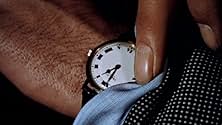
Scenes from various films and TV programs that feature clocks, or some verbal mention of time, combine to make a 24-hour timepiece movie.Scenes from various films and TV programs that feature clocks, or some verbal mention of time, combine to make a 24-hour timepiece movie.Scenes from various films and TV programs that feature clocks, or some verbal mention of time, combine to make a 24-hour timepiece movie.
- Awards
- 1 win total
Rosanna Arquette
- Self
- (archive footage)
Bette Davis
- Self
- (archive footage)
Leonardo DiCaprio
- Self
- (archive footage)
William Hurt
- Self
- (archive footage)
Steve McQueen
- Self
- (archive footage)
Marilyn Monroe
- Self
- (archive footage)
Vincent Price
- Self
- (archive footage)
- Director
- Writer
- All cast & crew
- Production, box office & more at IMDbPro
8.9415
1
2
3
4
5
6
7
8
9
10
Featured reviews
Mesmerising
If you get the chance to see any of this take it. I saw it when It was at the Musée d'arts contemporain in Montreal. I did not see all 24 hours, but I did sit in that room a lot longer than I expected (like, 2 hours!) a couple of times.
The clips are so well chosen and linked together. Many sequences from the same films are used and I found myself drawn into several stories at once.
I really can't otherwise explain it. Art film really isn't my thing, but this captivated me. Every so often I look up where the exhibit is now and wonder if I could realistically get there to see it.
The clips are so well chosen and linked together. Many sequences from the same films are used and I found myself drawn into several stories at once.
I really can't otherwise explain it. Art film really isn't my thing, but this captivated me. Every so often I look up where the exhibit is now and wonder if I could realistically get there to see it.
"An Ambitious Meditation on Time: The Clock's Bold Experiment in Cinematic Montage"
The Clock is a bold and immersive experimental film that pushes the boundaries of narrative structure and time-based cinema. By combining thousands of clips from movies, television shows, and documentaries, the film creates a 24-hour visual journey, continuously referencing the passage of time, moments of human connection, and existential reflections on mortality. While its innovative approach to editing and montage is impressive, the film's very concept can feel repetitive and somewhat exhausting for viewers not accustomed to such avant-garde methods.
The lack of a traditional storyline or character development may also alienate those who seek a conventional narrative structure. However, for cinephiles or those with a deep appreciation for film history, The Clock serves as a fascinating tapestry of cinematic moments that reflect our collective experience with time, clocks, and the human condition.
Though not a film for everyone, it offers a unique experience for viewers who are willing to embrace its experimental nature and philosophical undertones. Ultimately, The Clock stands as an ambitious work that showcases the power of montage and its potential for transforming the way we engage with the concept of time on screen.
The lack of a traditional storyline or character development may also alienate those who seek a conventional narrative structure. However, for cinephiles or those with a deep appreciation for film history, The Clock serves as a fascinating tapestry of cinematic moments that reflect our collective experience with time, clocks, and the human condition.
Though not a film for everyone, it offers a unique experience for viewers who are willing to embrace its experimental nature and philosophical undertones. Ultimately, The Clock stands as an ambitious work that showcases the power of montage and its potential for transforming the way we engage with the concept of time on screen.
#1 on any Film-lovers bucket list.
I blundered into this at the Tate Modern a couple of months ago and am still stunned by what I saw. It is a hypnotic immersion in cinema , yet it is also a functional timepiece.
I await its return to the US, so I can see the 18 hours I missed.
Read about it on Wikipedia. Put it on your bucket list and see it, if you are lucky enough.
The Clock returns to London, UK
It's worth recording that Christian Marclay's masterpiece, first seen at the White Cube in London in 2010, returned to the UK capital in September 2018, this time at the renowned Tate Modern gallery, where it will run until January 2019, on occasion for its allotted 24 hours. We dipped into the private view from 19.15 to 21.15 and intend to return several times in order to view the entire cycle. The content already has been described here but this review was written specifically to confirm that it's mesmerising. Part of the fun is in identifying the unidentified clips - thousands of them - but one is mostly in awe of the amount of research involved in piecing together a visual record of every minute that passes during 24 hours. (Apparently the early hours of the morning were hardest to locate). Marclay took 3 (not 2) years to piece everything together and did so with a team of researchers who trawled through videos. They're all credited at the Tate. The film is of such huge significance because no one who experiences it will ever again see in a film a cut-away of a clock or a watch without thinking, "I wonder if he used that one?" Go to see this film whenever you get the opportunity. For all manner of reasons it will never be available for home viewing.
Time Flies
As one who has sat through all twenty-four hours of 'The Clock' - not all at one sitting, I hasten to add - I feel qualified to opine that this is one of those films that for a long time afterwards transforms the way you view subsequent films.
The original sources drawn upon are many and varied - including old television programmes - some seen regularly and some just the once - and as the top of every hour approaches the cutting grows faster and faster as again the big hand approaches the twelve.
And so it goes on and on and on and on. And for the remainder of your life when you hear a dialogue reference to the time or see a clock in the background you regularly find yourself thinking "Ah, that would fit well in 'The Clock'!"
The original sources drawn upon are many and varied - including old television programmes - some seen regularly and some just the once - and as the top of every hour approaches the cutting grows faster and faster as again the big hand approaches the twelve.
And so it goes on and on and on and on. And for the remainder of your life when you hear a dialogue reference to the time or see a clock in the background you regularly find yourself thinking "Ah, that would fit well in 'The Clock'!"
Did you know
- TriviaMuseums were given specific instructions on how the film was to be presented. The film was to be projected onto a 21 by 12 foot (6.4 m × 3.7 m) screen in a room with white IKEA couches. The couches needed to staged in such a manner to facilitate coming and going, and no curtains were to be across the entrances to the exhibit.
- ConnectionsEdited from Safety Last! (1923)
- How long is The Clock?Powered by Alexa
Details
- Runtime
- 24h(1440 min)
- Color
- Aspect ratio
- 16:9 HD
Contribute to this page
Suggest an edit or add missing content
