

A doctor working in 1980s East Germany finds herself banished to a small country hospital.A doctor working in 1980s East Germany finds herself banished to a small country hospital.A doctor working in 1980s East Germany finds herself banished to a small country hospital.
- Director
- Writers
- Stars
- Awards
- 10 wins & 24 nominations total

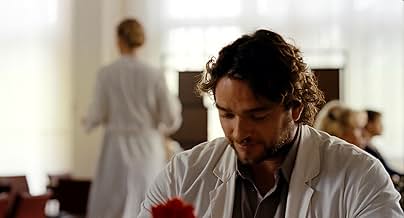


Claudia Geisler-Bading
- Stationsschwester Schlösser
- (as Claudia Geisler)


- Director
- Writers
- All cast & crew
- Production, box office & more at IMDbPro
7.216.9K
1
2
3
4
5
6
7
8
9
10
Featured reviews
Physicians Behind the Iron Curtain
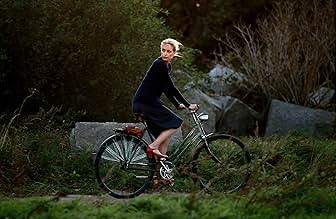
Looking back at 1980 East Germany director Christian Petzold conjures up a dreary Orwellian world of suppressed emotions, police state invasiveness and a simmering yearning for something better. The work of Cinematographer Hans Fromm creates an atmosphere of almost perpetual colorless twilight and Petzold's laconic scenes and long takes create a subtle but omnipresent feeling of oppression and paranoia.
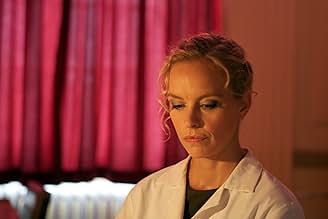
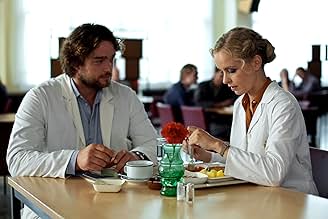
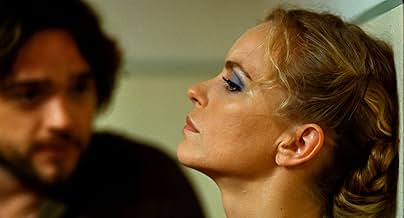
In a beautifully understated performance Nina Hoss (Barbara) is a doctor whose desire to leave East Germany results in her being punished through relocation to a rural village clinic where she encounters clinic chief Ronald Zehrfeld (Dr. Reiser). Reiser appears to be sympathetic but she is reluctant to trust him. Jasna Fritzi Bauer is Stella a young girl who constantly escapes juvenile work camps seeking refuge at the clinic. Mark Waschke is Jorg a well-to-do foreigner who loves Barbara and offers to help her escape to Denmark where they can be together. Rainer Bock is a Stasi officer who periodically subjects Barbara to strip searches in an attempt to harass and prevent her from fleeing.
"Barbara" is a quiet character piece. It's a subtle, tense, humanistic drama not ideally suited for audiences of plot-driven pictures. Nina Hoss deserves serious consideration from the Academy as hers is one of the best performances by an actress this year.
In a beautifully understated performance Nina Hoss (Barbara) is a doctor whose desire to leave East Germany results in her being punished through relocation to a rural village clinic where she encounters clinic chief Ronald Zehrfeld (Dr. Reiser). Reiser appears to be sympathetic but she is reluctant to trust him. Jasna Fritzi Bauer is Stella a young girl who constantly escapes juvenile work camps seeking refuge at the clinic. Mark Waschke is Jorg a well-to-do foreigner who loves Barbara and offers to help her escape to Denmark where they can be together. Rainer Bock is a Stasi officer who periodically subjects Barbara to strip searches in an attempt to harass and prevent her from fleeing.
"Barbara" is a quiet character piece. It's a subtle, tense, humanistic drama not ideally suited for audiences of plot-driven pictures. Nina Hoss deserves serious consideration from the Academy as hers is one of the best performances by an actress this year.
Quiet... too quiet
It's 1980 East Germany. Dr Barbara Wolff (Nina Hoss) is new in the backwaters hospital. She has isolated herself from all her colleagues. The secret police Stasi is keeping track of her for applying for an exit visa and she lost her job at a prestigious hospital in East Berlin. She can trust nobody even the chief doctor Reiser. There is a patient named Stella that has developed an attachment to Barbara. She is pregnant and is desperate to flee to the West.
I love the idea of this story. This should be a tense thriller of paranoia and fear. Instead this is slow moving, reserved emotionally and quiet. The long takes, medium shots, and the stoic performances strip the movie of its tension. The fact that she is holding her feelings so tightly may be fitting for the story. It doesn't always allow people to feel her fears. It's a specific way to do this story and it works on that level.
I love the idea of this story. This should be a tense thriller of paranoia and fear. Instead this is slow moving, reserved emotionally and quiet. The long takes, medium shots, and the stoic performances strip the movie of its tension. The fact that she is holding her feelings so tightly may be fitting for the story. It doesn't always allow people to feel her fears. It's a specific way to do this story and it works on that level.
More Starsi intimidation.
It looks like THE LIVES OF OTHERS is going to spearhead a cycle of films about victims of the East German secret police and that sounds like a good subject along the lines of the US conspiracy thrillers. This one has an interesting enough premise. Out of favor doctor Hoss (THE WHITE MASSAI) is sent to a provincial hospital, where the friendly fellow medico may be keeping a report on her. The official who keeps on calling in the lady with the rubber glove to do cavity searches certainly is.
The sub-plot of the teenage girl from the socialist work camp is strong enough but the way things are wound up is not all that convincing and tension has slacked by then.
Production values are good enough but the film lacks the feeling of time and place that would make it register.
The sub-plot of the teenage girl from the socialist work camp is strong enough but the way things are wound up is not all that convincing and tension has slacked by then.
Production values are good enough but the film lacks the feeling of time and place that would make it register.
10yagian
A Quiet, Simple, and Elegant Film
I visited Eastern Europe, Berlin, Prague, and Budapest, in March 1990. At that time, the Berlin Wall had already been fallen down, but Germany had not reunited yet.
People could freely come and go over the borders between East and West Germany. I went through Checkpoint Charlie to East Berlin, and I visited retro-future TV tower and saw Ladas running on street.
In a night train from Berlin to Prague, I asked a passenger who sat next to me if Germany would reunite in a year, and he answered that he didn't believe it would happen so early. In fact, Germany reunited in October 1990.
Although I actually visited East Berlin, now, it is hardly for me to believe that the half of Germany was a communist state just twenty-three years ago.
--------------------
"Barbara" is a German film about people living in East Germany in 1980. Barbara is a female doctor, who was watched by the secret police.
It is one of the greatest German films that I have ever seen. There is no exaggeration and omission in this film. Every element in it is necessary, and I couldn't find that any things were unnecessary.
This film is very quiet, because there is no background music. That makes audience concentrated in every tiny sound. Barbara was always nervous about the secret police, so she got surprised when the doorbell started to ring, and the audience also got really surprised with the sound of the doorbell, and fully understood her emotion.
Nina Hoss, as Barbara, was also great and attractive. She didn't overplay at all, but accurately expressed how Barbara felt in her mind. After seeing her performance, most actors and actress became to look unnatural.
This film is a quiet, simple, and elegant. If you love films, I strongly recommend you to see it.
People could freely come and go over the borders between East and West Germany. I went through Checkpoint Charlie to East Berlin, and I visited retro-future TV tower and saw Ladas running on street.
In a night train from Berlin to Prague, I asked a passenger who sat next to me if Germany would reunite in a year, and he answered that he didn't believe it would happen so early. In fact, Germany reunited in October 1990.
Although I actually visited East Berlin, now, it is hardly for me to believe that the half of Germany was a communist state just twenty-three years ago.
--------------------
"Barbara" is a German film about people living in East Germany in 1980. Barbara is a female doctor, who was watched by the secret police.
It is one of the greatest German films that I have ever seen. There is no exaggeration and omission in this film. Every element in it is necessary, and I couldn't find that any things were unnecessary.
This film is very quiet, because there is no background music. That makes audience concentrated in every tiny sound. Barbara was always nervous about the secret police, so she got surprised when the doorbell started to ring, and the audience also got really surprised with the sound of the doorbell, and fully understood her emotion.
Nina Hoss, as Barbara, was also great and attractive. She didn't overplay at all, but accurately expressed how Barbara felt in her mind. After seeing her performance, most actors and actress became to look unnatural.
This film is a quiet, simple, and elegant. If you love films, I strongly recommend you to see it.
Takes me back 50 years to working in the DDR!
Yes, I worked in the old DDR. Living in London, and being a graduate engineer able to speak German, I was hired by a company importing machinery from the DDR to be their liaison man at the factory in East Berlin, and spent a number of lengthy periods over there in the late 60s and early 70s. I very much settled into working life there, and would socialise with the other engineers at the factory. I even had a local girlfriend for a while!
I recall the mindless bureaucracy, the often petty limitations on what everyone could do, and of course the ubiquitous police presence. In order to have my car to get around during these long tours of duty, I would usually take the ferry and drive there, and on one occasion I got harangued by a cop who told me my car was too dirty and that having a dirty car was strictly forbidden in the DDR!!
This movie depicts an era a decade later, and some things had changed. I remember many older people expressing considerable enthusiasm for their 'socialist utopia', largely because they felt their lives were massively better than under the Nazis and during the war years. But there was also a rising generation who wanted what people in the west had, a desire which had a particularly curious form of expression in Levi jeans! These were like gold dust, and sometimes at weekends I would pop through Checkpoint Charlie into West Berlin, and buy half a dozen pairs to give to my friends. Barbara and André were very much of that generation, Schütz was distinctly of the old guard.
So for me, the movie played out against a familiar background, and the agonising personal decisions this forced upon the central characters had great reality. Both Barbara and André were portrayed very much as caring doctors, placed in intolerable situations by the heavy and unfeeling hand of the state. The movie very cleverly kept us all in the dark, as we speculated how it might end. Well worth watching to find out!


Did you know
- TriviaThe Torgau workhouse to which Stella is sent is the Torgau Juvenile Detention Centre. The Centre, which ran from 1964 to 1989, was for the "re-education" of young people aged 14 to 18. Inmates had committed no crimes, but were deemed to need education so that they could fit in with the norms of socialist life in East Germany.
- GoofsAndre hands Barbara a cup of coffee, which she promptly drops. You see the shattered pieces of the cup on the floor, but no coffee.
- Quotes
André: Doctor Wolff will be working with us. She is from Berlin... from the Charite Hospital, and has decided...
Assistenzärztin Schulze: We have introduced ourselves.
- ConnectionsFollowed by Phoenix (2014)
- SoundtracksNocturne g-moll Opus 15 No. 3
Composed by Frédéric Chopin
- How long is Barbara?Powered by Alexa
Details
- Release date
- Country of origin
- Official sites
- Language
- Also known as
- Bárbara
- Filming locations
- Production companies
- See more company credits at IMDbPro
Box office
- Gross US & Canada
- $1,013,902
- Opening weekend US & Canada
- $63,410
- Dec 23, 2012
- Gross worldwide
- $6,908,277
- Runtime
- 1h 45m(105 min)
- Color
- Sound mix
- Aspect ratio
- 1.85 : 1
Contribute to this page
Suggest an edit or add missing content