

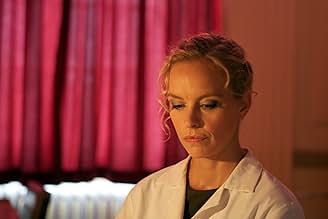
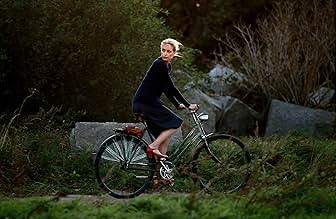
A doctor working in 1980s East Germany finds herself banished to a small country hospital.A doctor working in 1980s East Germany finds herself banished to a small country hospital.A doctor working in 1980s East Germany finds herself banished to a small country hospital.
- Director
- Writers
- Stars
- Awards
- 10 wins & 24 nominations total

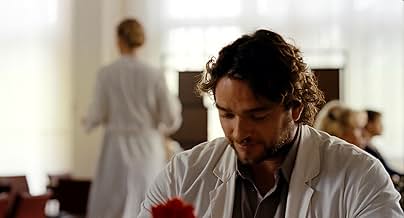
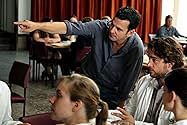


Claudia Geisler-Bading
- Stationsschwester Schlösser
- (as Claudia Geisler)


- Director
- Writers
- All cast & crew
- Production, box office & more at IMDbPro
7.216.9K
1
2
3
4
5
6
7
8
9
10
Featured reviews
10yagian
A Quiet, Simple, and Elegant Film
I visited Eastern Europe, Berlin, Prague, and Budapest, in March 1990. At that time, the Berlin Wall had already been fallen down, but Germany had not reunited yet.
People could freely come and go over the borders between East and West Germany. I went through Checkpoint Charlie to East Berlin, and I visited retro-future TV tower and saw Ladas running on street.
In a night train from Berlin to Prague, I asked a passenger who sat next to me if Germany would reunite in a year, and he answered that he didn't believe it would happen so early. In fact, Germany reunited in October 1990.
Although I actually visited East Berlin, now, it is hardly for me to believe that the half of Germany was a communist state just twenty-three years ago.
--------------------
"Barbara" is a German film about people living in East Germany in 1980. Barbara is a female doctor, who was watched by the secret police.
It is one of the greatest German films that I have ever seen. There is no exaggeration and omission in this film. Every element in it is necessary, and I couldn't find that any things were unnecessary.
This film is very quiet, because there is no background music. That makes audience concentrated in every tiny sound. Barbara was always nervous about the secret police, so she got surprised when the doorbell started to ring, and the audience also got really surprised with the sound of the doorbell, and fully understood her emotion.
Nina Hoss, as Barbara, was also great and attractive. She didn't overplay at all, but accurately expressed how Barbara felt in her mind. After seeing her performance, most actors and actress became to look unnatural.
This film is a quiet, simple, and elegant. If you love films, I strongly recommend you to see it.
People could freely come and go over the borders between East and West Germany. I went through Checkpoint Charlie to East Berlin, and I visited retro-future TV tower and saw Ladas running on street.
In a night train from Berlin to Prague, I asked a passenger who sat next to me if Germany would reunite in a year, and he answered that he didn't believe it would happen so early. In fact, Germany reunited in October 1990.
Although I actually visited East Berlin, now, it is hardly for me to believe that the half of Germany was a communist state just twenty-three years ago.
--------------------
"Barbara" is a German film about people living in East Germany in 1980. Barbara is a female doctor, who was watched by the secret police.
It is one of the greatest German films that I have ever seen. There is no exaggeration and omission in this film. Every element in it is necessary, and I couldn't find that any things were unnecessary.
This film is very quiet, because there is no background music. That makes audience concentrated in every tiny sound. Barbara was always nervous about the secret police, so she got surprised when the doorbell started to ring, and the audience also got really surprised with the sound of the doorbell, and fully understood her emotion.
Nina Hoss, as Barbara, was also great and attractive. She didn't overplay at all, but accurately expressed how Barbara felt in her mind. After seeing her performance, most actors and actress became to look unnatural.
This film is a quiet, simple, and elegant. If you love films, I strongly recommend you to see it.
Sparse, real and very good
This brilliant German film explores two fundamental questions: whether it is possible to collaborate with a fundamentally oppressive state, and the acute degree of personal loneliness felt by those who cannot, and whom the state thereby treats as its enemies. The mundane depersonalisation of life under the Stasi is captured much more acutely, it seems to me, in this story than in the more acclaimed 'The Lives of Others'; that the leading collaborator is arguably a decent and attractive person, albeit one who has made different choices to the admirable but not wholly likable heroine, adds subtlety and humanity to the overall portrait of society. Both protagonists are excellent in their roles; the camera-work captures the underlying feelings of alienation in a way that reminded me of early Kieslowski. 'Barbara' is by turns bleak, poetic, emotional and thought-provoking: it deserves to be more widely known.
A Somber and Compelling Film
BARBARA may be a little too slow and humorless for many tastes, but it's one of those films that's so real it hardly seems like a film at all. You have to admire the stark realism here. Whether you want to go there or not, this film truly takes you to a secluded province of East Germany, 1980. BARBARA affords an acute look at the inside of a totalitarian state. While it doesn't show a whole lot in this regard, what it does is shown most effectively. The lack of any soundtrack--something I didn't even notice while viewing but that one of the reviews on Amazon pointed out--only adds to BARBARA's immediacy. Quietly immersing, with a real surprise at the end. Excellent cinematography and fine acting by all.
Fear, Suspicion and Paranoia
"Barbara" is set in the East Germany of 1980. The title character is a young doctor who has fallen foul of the authorities because she has made an official request to emigrate to the West to be with her West German lover. Making such a request was not, officially, illegal, but it has earned Barbara the suspicion of the authorities. She has lost her job at a prestigious Berlin hospital and has been transferred to a small rural hospital near the Baltic coast. She is kept under regular surveillance and is subjected to regular searches by the Stasi, the East German secret police. Although the Stasi never find any evidence, Barbara is secretly making plans to escape to the West with the help of her lover Jörg.
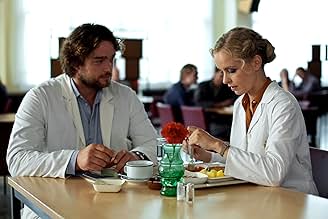
The two other main characters are Barbara's boss Doctor André Reiser and a young girl named Stella, a patient at the hospital. Although Reiser seems friendly, he makes little secret of the fact that he is an informer for the Stasi. (He claims to have been blackmailed into accepting the role, but Barbara doubts the truth of his story). Like Barbara, Stella has committed no actual crime, but is nevertheless fallen foul of the authorities, who regard her as having an anti-social attitude, and she has been incarcerated in a labour camp for "re-education". (Communist Newspeak for "punishment when you haven't actually done anything to be punished for"). It is hardly surprising that Stella loathes everything about East Germany and is even more desperate to escape than Barbara.
1980 was less than a decade before the fall of the Berlin Wall, but at the time the East German regime, like Communist regimes all over Eastern Europe, seemed as secure as ever. Whatever revolutionary idealism the regime had once possessed had long since evaporated as Communism evolved into what George Orwell described in "1984" as "oligarchical collectivism", a strongly hierarchical system where those at the top of the pecking order used their position to secure privileges and material advantages for themselves, and protected their position by repression and the use of the ever-present Stasi to root out dissent.
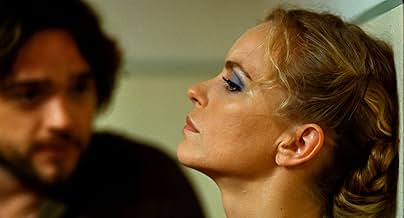
As another reviewer has written, Barbara as played by Nina Hoss is admirable but not wholly likeable. There is something cold and aloof about her, as though her experiences have taught her not to trust anyone. The use of the Christian name Barbara, which literally means "strange, foreign", may have been deliberate, as she is very much an outsider in her society. Even with Jörg we wonder if her feelings for him are rooted in love or in a desire to escape the system. Only with her fellow dissident Stella does she seem to unwind and be herself. André, who as a tool of the oppressive system is far from admirable, paradoxically seems warmer and more human, although Barbara keeps her distance from him. It is notable that she always addresses him with the formal "Sie" rather than the more intimate "du". This is a point of German linguistic etiquette which will probably lost on English-speaking viewers who can only understand the subtitles, but the implication is that she does not wish to get close to him. The more admirable side of Barbara's character becomes clear when, at the end of the movie, she makes a startling decision. Both Hoss and Ronald Zehrfeld as André play their parts very well.
Over the last few decades, the German cinema has made sterling efforts to come to terms with the legacy of the country's Nazi past. Christian Petzold's film can be seen as part of an attempt to come to terms with another, and more recent, dark side of the nation's history. The film is not an easy one to watch, as it captures the atmosphere of fear, suspicion and paranoia which afflicts all those who have the misfortune to live under a totalitarian system, as well as the bleak shabbiness of Eastern Europe before the Wall came down. Yet it well repays the effort of watching it. 7/10.
The two other main characters are Barbara's boss Doctor André Reiser and a young girl named Stella, a patient at the hospital. Although Reiser seems friendly, he makes little secret of the fact that he is an informer for the Stasi. (He claims to have been blackmailed into accepting the role, but Barbara doubts the truth of his story). Like Barbara, Stella has committed no actual crime, but is nevertheless fallen foul of the authorities, who regard her as having an anti-social attitude, and she has been incarcerated in a labour camp for "re-education". (Communist Newspeak for "punishment when you haven't actually done anything to be punished for"). It is hardly surprising that Stella loathes everything about East Germany and is even more desperate to escape than Barbara.
1980 was less than a decade before the fall of the Berlin Wall, but at the time the East German regime, like Communist regimes all over Eastern Europe, seemed as secure as ever. Whatever revolutionary idealism the regime had once possessed had long since evaporated as Communism evolved into what George Orwell described in "1984" as "oligarchical collectivism", a strongly hierarchical system where those at the top of the pecking order used their position to secure privileges and material advantages for themselves, and protected their position by repression and the use of the ever-present Stasi to root out dissent.
As another reviewer has written, Barbara as played by Nina Hoss is admirable but not wholly likeable. There is something cold and aloof about her, as though her experiences have taught her not to trust anyone. The use of the Christian name Barbara, which literally means "strange, foreign", may have been deliberate, as she is very much an outsider in her society. Even with Jörg we wonder if her feelings for him are rooted in love or in a desire to escape the system. Only with her fellow dissident Stella does she seem to unwind and be herself. André, who as a tool of the oppressive system is far from admirable, paradoxically seems warmer and more human, although Barbara keeps her distance from him. It is notable that she always addresses him with the formal "Sie" rather than the more intimate "du". This is a point of German linguistic etiquette which will probably lost on English-speaking viewers who can only understand the subtitles, but the implication is that she does not wish to get close to him. The more admirable side of Barbara's character becomes clear when, at the end of the movie, she makes a startling decision. Both Hoss and Ronald Zehrfeld as André play their parts very well.
Over the last few decades, the German cinema has made sterling efforts to come to terms with the legacy of the country's Nazi past. Christian Petzold's film can be seen as part of an attempt to come to terms with another, and more recent, dark side of the nation's history. The film is not an easy one to watch, as it captures the atmosphere of fear, suspicion and paranoia which afflicts all those who have the misfortune to live under a totalitarian system, as well as the bleak shabbiness of Eastern Europe before the Wall came down. Yet it well repays the effort of watching it. 7/10.
More Starsi intimidation.
It looks like THE LIVES OF OTHERS is going to spearhead a cycle of films about victims of the East German secret police and that sounds like a good subject along the lines of the US conspiracy thrillers. This one has an interesting enough premise. Out of favor doctor Hoss (THE WHITE MASSAI) is sent to a provincial hospital, where the friendly fellow medico may be keeping a report on her. The official who keeps on calling in the lady with the rubber glove to do cavity searches certainly is.
The sub-plot of the teenage girl from the socialist work camp is strong enough but the way things are wound up is not all that convincing and tension has slacked by then.
Production values are good enough but the film lacks the feeling of time and place that would make it register.
The sub-plot of the teenage girl from the socialist work camp is strong enough but the way things are wound up is not all that convincing and tension has slacked by then.
Production values are good enough but the film lacks the feeling of time and place that would make it register.


Did you know
- TriviaThe Torgau workhouse to which Stella is sent is the Torgau Juvenile Detention Centre. The Centre, which ran from 1964 to 1989, was for the "re-education" of young people aged 14 to 18. Inmates had committed no crimes, but were deemed to need education so that they could fit in with the norms of socialist life in East Germany.
- GoofsAndre hands Barbara a cup of coffee, which she promptly drops. You see the shattered pieces of the cup on the floor, but no coffee.
- Quotes
André: Doctor Wolff will be working with us. She is from Berlin... from the Charite Hospital, and has decided...
Assistenzärztin Schulze: We have introduced ourselves.
- ConnectionsFollowed by Phoenix (2014)
- SoundtracksNocturne g-moll Opus 15 No. 3
Composed by Frédéric Chopin
- How long is Barbara?Powered by Alexa
Details
- Release date
- Country of origin
- Official sites
- Language
- Also known as
- Bárbara
- Filming locations
- Production companies
- See more company credits at IMDbPro
Box office
- Gross US & Canada
- $1,013,902
- Opening weekend US & Canada
- $63,410
- Dec 23, 2012
- Gross worldwide
- $6,908,277
- Runtime
- 1h 45m(105 min)
- Color
- Sound mix
- Aspect ratio
- 1.85 : 1
Contribute to this page
Suggest an edit or add missing content