IMDb RATING
7.0/10
8.4K
YOUR RATING


Rebecca is one of the world's top war photographers. She must weather a major emotional storm when her husband refuses to put up with her dangerous life any longer.Rebecca is one of the world's top war photographers. She must weather a major emotional storm when her husband refuses to put up with her dangerous life any longer.Rebecca is one of the world's top war photographers. She must weather a major emotional storm when her husband refuses to put up with her dangerous life any longer.
- Awards
- 6 wins & 14 nominations total







Chloë Victoria Annett
- Jessica
- (as Chloë Annett)

Zoubida Akif
- Ariana
- (as Zoubida Afik)
7.08.3K
1
2
3
4
5
6
7
8
9
10
Featured reviews
A Call to worlds inequality through the eyes of a photographer
This is an inspiring movie that shows today's reality of the extremist religious – social politics in countries dominated by radicals, fanatics
Things that we see on the news everyday, and sometimes we just take it for granted
It is happening as I write these words here, and for sure it will still be happening when you will be reading theses lines, and who knows watching the movie
It was nicely and simply shot, totally artistic, and the director was careful enough not to be graphic on scenes that perhaps required some detailed frames. And what to say about Juliete Binoche, I am her fan, so I won't say much about her performance, only that she contributed a lot on her role in order to the story be told the way it was.
Still thinking about this...
I saw this at The Heartland Film Festival in Indianapolis this weekend. It's been 24+ hours since the movie ended, and it's themes are still with me. The horror of war..the difficulty balancing passion and pragmatism...what do children need from their parents... My mind changed such that the final take away is the theme of the film. Life is difficult and decisions have consequences. I want to have coffee with Rebecca and shake her. Tell her how much her children and husband need her..Tell her the sacrifice isn't worth it. Atrocities will continue. Taking pictures of suicide bombers does glamorous the cause. Taking pictures of deceased Africans doesn't bring them to life. Why are you so angry? For these reasons, I must recommend this film. It is not only well acted, but it creates and stirs up emotions, makes you think. Some time more than entertainment is demanded from a film.
7OJT
Good, but slow drama about different needs
This is Norwegian director Erik Poppe's fourth feature film, and a film which many have had high expectations too. I must say this is a good film, but far from his best. I simply loved "Hawaii, Oslo" and "Troubled waters" which both was pretty much perfect film experiences. The debut film "Schpaa" was also very promising.
The script here is written by Norwegian author and screenwriter Harald Rosenløw Eeg, after a story by Erik Popp which is largely inspired by personal experiences as a war photographer.
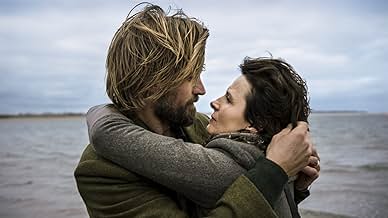
We meet the great war photographer Rebecca (Juliette Binoche), living in Ireland, when she's home, that is. Because her relationship with her family is faltering due to her dangerous work, and many days away from home. She follows suicide bombers in Kabul, and rampage killers in Africa. Her husband is a marine biologist (Nicolai Coaster-Waldau), and he is very tired of her not being there, even when she's home. This is also affecting their two daughters.
Make no mistake. This is a good film, but I felt it lacked some tempo. The slow thinking pace may be correct to get the feeling, but the film loses momentum, and could easily be a disappointment for those expecting another Poppe masterpiece. Because this isn't. Well, it's an interesting theme, but what could have been a great drama is slipping away. It's not the actor's fault, because they are doing a great job.
The film is artistically beautiful, and the opening is really something which makes you speculate. I must admit I was a bit disappointed, since I reckon Poppe as the best Norwegian director ever. But this wasn't wholly fulfilling to me.
This won the Special Grand Prize of the jury at the 37th Montréal Film Festival 2013.
The script here is written by Norwegian author and screenwriter Harald Rosenløw Eeg, after a story by Erik Popp which is largely inspired by personal experiences as a war photographer.
We meet the great war photographer Rebecca (Juliette Binoche), living in Ireland, when she's home, that is. Because her relationship with her family is faltering due to her dangerous work, and many days away from home. She follows suicide bombers in Kabul, and rampage killers in Africa. Her husband is a marine biologist (Nicolai Coaster-Waldau), and he is very tired of her not being there, even when she's home. This is also affecting their two daughters.
Make no mistake. This is a good film, but I felt it lacked some tempo. The slow thinking pace may be correct to get the feeling, but the film loses momentum, and could easily be a disappointment for those expecting another Poppe masterpiece. Because this isn't. Well, it's an interesting theme, but what could have been a great drama is slipping away. It's not the actor's fault, because they are doing a great job.
The film is artistically beautiful, and the opening is really something which makes you speculate. I must admit I was a bit disappointed, since I reckon Poppe as the best Norwegian director ever. But this wasn't wholly fulfilling to me.
This won the Special Grand Prize of the jury at the 37th Montréal Film Festival 2013.
The best film Erik Poppe has put out in years
Griping drama about a war photographer who is caught between choosing her family or her work. Which we learn is a lot more complicated than we initially thought. The cast did a believable portrayal of the difficulties that people encounter in life between their passion and family. What I liked especially about this film was that the lead was not portrayed as some war hero and her story was not romanticized. The story and characters all felt realistic and convincing since the characters were different shades of gray. Something that is amiss these days within film making. There is always a need to create a struggle between good and evil. Probably one of the better stories I have seen this year. Erik Poppe you did a great job with this one!
Intense Melodrama on the Pitfalls of War Photography
War photographer Rebecca (Juliette Binoche) is one of the best at her job, obtaining the kind of pictures that invariably get published in western magazines as examples of the violence of conflicts in nonwestern areas such as Afghanistan or Kenya. The only snag is that Rebecca is so obsessed with her work that she cannot understand the damage she is doing to her family back in Ireland, especially her daughter Steph (Lauryn Canny).
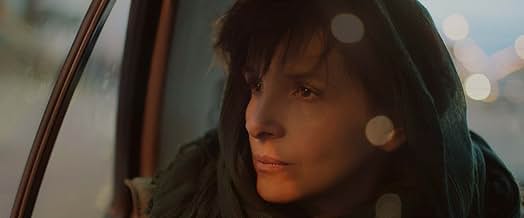
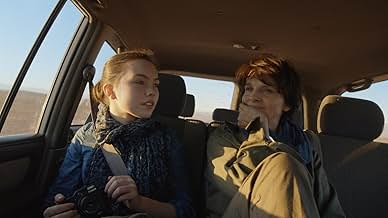
The conflict between personal and professional values forms the kernel of Erik Poppe's film. Yet thematically speaking the director is far more interested in prompting reflection on the photographer's trade. While Rebecca certainly shows a good deal of bravery in trying to get the best pictures, we also understand that she is something of a voyeur who actively enjoys intruding into her subjects' personal space. Her fondness for the close-up of suffering people is quite disconcerting, especially in a sequence taking place in the back of an SUV in Afghanistan. In political terms, she adopts a neocolonialist position of the westerner taking scopophilic pleasure in the power she exerts through her camera.
Perhaps the film's most telling moment occurs back in Ireland, when Steph turns the camera on Rebecca and photographs her repeatedly. Rebecca cannot endure the experience of the lens pointing at her in such an intense manner and turns her head away, her eyes filling with tears. Would that Rebecca might understand that her subjects could feel much the same; but if she did so, then she would not be good at her job.
Given the integrity with which Poppe examines this issue, it's rather sad that the film as a whole should be somewhat melodramatic. In the end the action descends into something of a tug-of-love battle between mother and family; at one point Rebecca bundles Steph and her younger sister Lisa (Adrianna Cramer Curtis) in a pathetic attempt to abduct them from their family home. Needless to say husband Marcus (Nikolaj Coaster-Waldau) foils the plot and eventually looks after the girls himself.
The film makes a half-hearted attempt to draw a parallel between Rebecca's wanderlust and the rhythms of the tide (her daughter observes that the photographer is like the sea, coming and going), but unfortunately outstays its welcome: the last half-hour unfolds slowly but predictably towards an inevitable denouement. This is a shame, given the seriousness of its basic premise - almost as if director Poppe had lost the courage of his convictions.
The conflict between personal and professional values forms the kernel of Erik Poppe's film. Yet thematically speaking the director is far more interested in prompting reflection on the photographer's trade. While Rebecca certainly shows a good deal of bravery in trying to get the best pictures, we also understand that she is something of a voyeur who actively enjoys intruding into her subjects' personal space. Her fondness for the close-up of suffering people is quite disconcerting, especially in a sequence taking place in the back of an SUV in Afghanistan. In political terms, she adopts a neocolonialist position of the westerner taking scopophilic pleasure in the power she exerts through her camera.
Perhaps the film's most telling moment occurs back in Ireland, when Steph turns the camera on Rebecca and photographs her repeatedly. Rebecca cannot endure the experience of the lens pointing at her in such an intense manner and turns her head away, her eyes filling with tears. Would that Rebecca might understand that her subjects could feel much the same; but if she did so, then she would not be good at her job.
Given the integrity with which Poppe examines this issue, it's rather sad that the film as a whole should be somewhat melodramatic. In the end the action descends into something of a tug-of-love battle between mother and family; at one point Rebecca bundles Steph and her younger sister Lisa (Adrianna Cramer Curtis) in a pathetic attempt to abduct them from their family home. Needless to say husband Marcus (Nikolaj Coaster-Waldau) foils the plot and eventually looks after the girls himself.
The film makes a half-hearted attempt to draw a parallel between Rebecca's wanderlust and the rhythms of the tide (her daughter observes that the photographer is like the sea, coming and going), but unfortunately outstays its welcome: the last half-hour unfolds slowly but predictably towards an inevitable denouement. This is a shame, given the seriousness of its basic premise - almost as if director Poppe had lost the courage of his convictions.


Did you know
- Trivia"A thousand time goodnight" is a line from William Shakespeare's Romeo and Juliet.
- GoofsWhen Rebecca and Marcus are walking hand in hand on the beach after drinking wine with his colleagues, the second shot is a frontal medium shot. In the upper left part of the shot, the sound operator's boom microphone is briefly, but clearly visible.
- How long is 1,000 Times Good Night?Powered by Alexa
Details
- Release date
- Countries of origin
- Official sites
- Language
- Also known as
- A Thousand Times Good Night
- Filming locations
- Production companies
- See more company credits at IMDbPro
Box office
- Budget
- €5,284,200 (estimated)
- Gross US & Canada
- $53,895
- Opening weekend US & Canada
- $24,120
- Oct 26, 2014
- Gross worldwide
- $2,549,568
- Runtime
- 1h 57m(117 min)
- Color
- Sound mix
- Aspect ratio
- 2.35 : 1
Contribute to this page
Suggest an edit or add missing content