IMDb RATING
7.3/10
2.2K
YOUR RATING


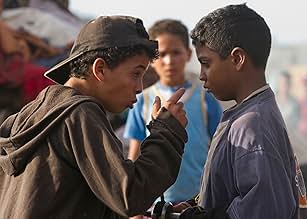
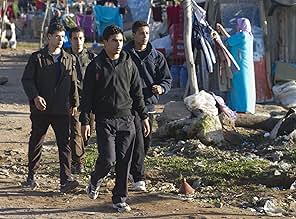
A fictional account of the lives of the men responsible for the suicide bombings in Casablanca in 2003.A fictional account of the lives of the men responsible for the suicide bombings in Casablanca in 2003.A fictional account of the lives of the men responsible for the suicide bombings in Casablanca in 2003.
- Director
- Writers
- Stars
- Awards
- 10 wins & 5 nominations total

Abdelhakim Rachid
- Yachine
- (as Abdelhakim Rachi)
- …


Rabii Benjhail Tadlaoui
- Zaid
- (as Rabii Tadlaoui)
- Director
- Writers
- All cast & crew
- Production, box office & more at IMDbPro
7.32.1K
1
2
3
4
5
6
7
8
9
10
Featured reviews
A strikingly alternative view of the conditioning of young minds
The cinematic piece offers a breath of fresh air when it comes to the stigmatized dehumanization of muslim youth, and brings to light the root of the issue instead of the unreconsilable outcome.
Makes you think, who is to blame?
It shows how easy it is for anyone to be brainwashed If he lives in certain circumstances. I think almost everyone could fall into the same trap if they were in their place with that difficult life. so who should be blamed? them? Or society? Or religion? All religions are myths and i think religion keeps destroying humanity. this movie is very good
Limited choices create extreme leaps. Raw reality strongly portrayed!
This is an immaculate movie that show many stories in one. Yes it's about how kids became terrorists, but is about much more. About poverty, about the mind's fight for peace in an environment with limited choices and opportunities. Either all out in crime or all out in (the wrong aspects of manipulated) religion or be the chump in the middle being slapped around ..until you are pushed to an extreme side. Where wolves- like in every nation- are ready to recruit these poor, non educated, hopeless young men with a promise of either riches in this world or in the afterworld. When it comes down to it...every army or gang is filled with these kind of men..albeit there can be a big difference of course in how poor or hopeless the young men/women are depending on where they grew up and reside.
The need for a sense of direction and purpose. Love and fear in a dog eat dog world. How to stay clean in so much dirt ?
I love how this film gives a voice to this reality. This is (also) what art is all about..to voice that what needs voicing or to give a voice to those that are screaming but aren't seen nor heard. Expression is what saves one from imploding or exploding ..carrying so much weight.
The director has that privilege of expression, that the people in the movie dont have. But still..it gives a voice..even ifs not directly theirs.
And furthermore to hopefully open the eyes of people that dont know about these lives, and complexity of life in general. To those that are open to it.
Beautifully filmed. A favourite.
A different look at Muslim fundamentalism
The terrorist bombings in the Moroccan city of Casablanca didn't get as much attention as those in New York, London or Madrid. The five attacks were aimed at western and Jewish targets, killed 45 people, and were carried out by Moroccans, all of them young men from Sidi Moumen, a nearby slum. The attacks came as a shock, because for an Arab country, Morocco is considered rather moderate and open-minded. So why did these young terrorists carry out such gruesome attacks in their own city?
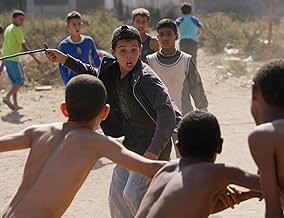
The film 'Le chevaux de Dieu' (God's Horses) tries to answer that question, and does it in an impressive way. For the most part, the film shows the daily life of young men in the slums. It is a cruel environment, an urban jungle full of violence, drugs, alcohol, corruption and extortion. And above all: without any hope. It is this desperate life that provides the fertile ground for frustration and rebellion.
The film shows clearly that the young men at no point deliberately choose for Muslim fundamentalism. One of them is arrested for throwing a stone to a police car and returns from prison as a faithful Muslim. Another kills his boss to prevent a rape, and is told by the religious community that God forgives him, provided that he starts praying and believing in Allah.
For the young slum dwellers, faith and religion is a tempting way of life. It preaches forgiveness, whereas the slum is full of violence. It is clear and deliberate, not chaotic like slum life. Its most important feature is discipline, which is in stark contrast with the loose morals in the slum dwellings.
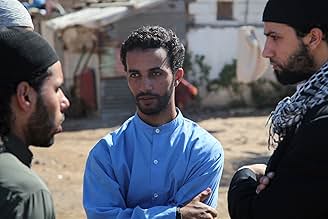
The young men are fascinated by the Muslim organization. Slowly their lives are getting controlled by it. When the leader tells them they are selected for a special assignment, they feel honoured. Even when it becomes clear what this assignment is, most of them don't hesitate for a second.
The film doesn't approve of Muslim fundamentalism in any way. It merely shows the mechanics of it. That's why it is such a good movie. Watching the young men being absorbed by their religion, you almost pity them. But most of all, you understand why they do what they do. That's more than most other post-9/11 films have accomplished.
Moreover, the acting is incredibly subtle, and the cinematography is so effective that, at the end of the film you think you know the Sidi Moumen neighbourhood really well. When you go watch the movie, pay attention to the last shot; it is a beauty. In an amazing traveling shot, the camera circles around a group of kids playing football in the slums and watching the fatal explosion in the distance. Then, without cutting, the camera pans towards a cliff, we see the ball falling down and disappearing in the darkness. 'Le chevaux de Dieu' is a gem, and it would be a pity if it stays unnoticed by western audiences.
The film 'Le chevaux de Dieu' (God's Horses) tries to answer that question, and does it in an impressive way. For the most part, the film shows the daily life of young men in the slums. It is a cruel environment, an urban jungle full of violence, drugs, alcohol, corruption and extortion. And above all: without any hope. It is this desperate life that provides the fertile ground for frustration and rebellion.
The film shows clearly that the young men at no point deliberately choose for Muslim fundamentalism. One of them is arrested for throwing a stone to a police car and returns from prison as a faithful Muslim. Another kills his boss to prevent a rape, and is told by the religious community that God forgives him, provided that he starts praying and believing in Allah.
For the young slum dwellers, faith and religion is a tempting way of life. It preaches forgiveness, whereas the slum is full of violence. It is clear and deliberate, not chaotic like slum life. Its most important feature is discipline, which is in stark contrast with the loose morals in the slum dwellings.
The young men are fascinated by the Muslim organization. Slowly their lives are getting controlled by it. When the leader tells them they are selected for a special assignment, they feel honoured. Even when it becomes clear what this assignment is, most of them don't hesitate for a second.
The film doesn't approve of Muslim fundamentalism in any way. It merely shows the mechanics of it. That's why it is such a good movie. Watching the young men being absorbed by their religion, you almost pity them. But most of all, you understand why they do what they do. That's more than most other post-9/11 films have accomplished.
Moreover, the acting is incredibly subtle, and the cinematography is so effective that, at the end of the film you think you know the Sidi Moumen neighbourhood really well. When you go watch the movie, pay attention to the last shot; it is a beauty. In an amazing traveling shot, the camera circles around a group of kids playing football in the slums and watching the fatal explosion in the distance. Then, without cutting, the camera pans towards a cliff, we see the ball falling down and disappearing in the darkness. 'Le chevaux de Dieu' is a gem, and it would be a pity if it stays unnoticed by western audiences.
Powerful tale of the evolution of young boys into suicide bombing terrorists
Based on the real multiple bombings that took place on May 16, 2003 in Casablanca, Morocco, the film follows its main characters over a period of 10 years, as they transition from boys to young men.
There's a lot that's powerful here, and there is much that has the ring of truth in this journey into darkness. But compared to (for example), Hany Abu-Assad's more complex and richer 'Paradise Now' there's also something a bit schematic. The reasons behind the transformation of these once sweet young men into bombers– poverty, hopelessness, an overly macho culture – are certainly true, but they're also familiar. It doesn't quite feel like we're digging deeper into their souls.
I also wish the villains of the piece, both Jihadist and 'civilian' were a little less on-the-nose, a little less mustache twirling. In terms of those men who are recruiting the boys, I missed the charisma that I assume must be part of the recruitment process.
Much like Ayouch's earlier 'Ali Zoaua: Price of the Streets', also about middle -eastern street kids, while the film is intelligent and interesting, it feels like it should be even more emotionally devastating than it ultimately is. That said, it's good enough that I could imagine re-visiting it, and seeing if it pulls me in even deeper on a second viewing.
There's a lot that's powerful here, and there is much that has the ring of truth in this journey into darkness. But compared to (for example), Hany Abu-Assad's more complex and richer 'Paradise Now' there's also something a bit schematic. The reasons behind the transformation of these once sweet young men into bombers– poverty, hopelessness, an overly macho culture – are certainly true, but they're also familiar. It doesn't quite feel like we're digging deeper into their souls.
I also wish the villains of the piece, both Jihadist and 'civilian' were a little less on-the-nose, a little less mustache twirling. In terms of those men who are recruiting the boys, I missed the charisma that I assume must be part of the recruitment process.
Much like Ayouch's earlier 'Ali Zoaua: Price of the Streets', also about middle -eastern street kids, while the film is intelligent and interesting, it feels like it should be even more emotionally devastating than it ultimately is. That said, it's good enough that I could imagine re-visiting it, and seeing if it pulls me in even deeper on a second viewing.


Did you know
- TriviaOfficial submission of Morocco to the Oscars 2014 best foreign language film category.
- SoundtracksGouli je t'aime
by Youmni Rabii & City 16
Lyricst & Composer - Youmni Abdellatif
Les chevaux de Dieu (Bande originale du film)
©Les Films du Nouveau Monde, 2013
- How long is Horses of God?Powered by Alexa
Details
Box office
- Budget
- $3,000,000 (estimated)
- Gross US & Canada
- $14,817
- Opening weekend US & Canada
- $2,251
- May 18, 2014
- Gross worldwide
- $96,277
- Runtime
- 1h 55m(115 min)
- Color
- Sound mix
- Aspect ratio
- 1.85 : 1
Contribute to this page
Suggest an edit or add missing content