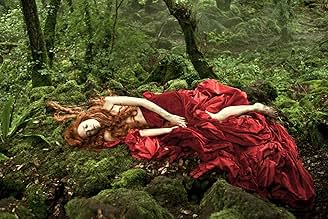
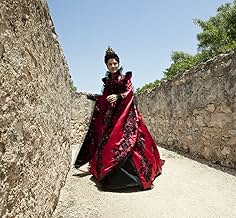
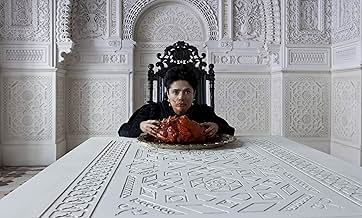
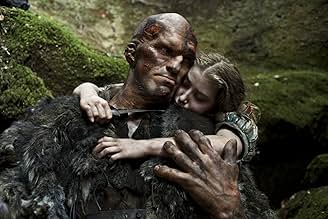
From the bitter quest of the Queen of Longtrellis, to two mysterious sisters who provoke the passion of a king, to the King of Highhills obsessed with a giant Flea, these tales are inspired ... Read allFrom the bitter quest of the Queen of Longtrellis, to two mysterious sisters who provoke the passion of a king, to the King of Highhills obsessed with a giant Flea, these tales are inspired by the fairytales by Giambattista Basile.From the bitter quest of the Queen of Longtrellis, to two mysterious sisters who provoke the passion of a king, to the King of Highhills obsessed with a giant Flea, these tales are inspired by the fairytales by Giambattista Basile.
- Awards
- 21 wins & 15 nominations total
6.432.9K
1
2
3
4
5
6
7
8
9
10
Featured reviews
Fairy tales your mother never told you..
I had the chance to see this movie. As with most, I didn't have a chance to see any trailers so I had no idea what to expect.
In a word, I would call the movie unique and not just another fairy tale movie like all the others. These have a darker twist to them and a fate and/or consequences for those involved. The movie has definite pluses and minuses.
Definite pluses: the music, the costumes, the beautiful exotic settings, the special effects, and the acting and choice of cast. All were very good.
I'm neutral on the separate plots. Some people say the plots are related and some say they aren't. I guess that's up to the viewer and how he/she interprets them. I'm not a particular fan of the macabre.
Definite minus: the movie as a whole piece of work is kind of a mess. The three stories jump around and there is no smooth time line of events. They are all kind of just thrown together. A visual mess.
Another minus: the ending. It just ends leaving you hanging and wondering what happened to certain people.
This movie is so unique that is can have such exceptional cinematography but yet have such jumbled up plot lines.
I guess the only main theme across all the stories is about obsession and how it can affect you and those around you if it is not kept under control.
In a word, I would call the movie unique and not just another fairy tale movie like all the others. These have a darker twist to them and a fate and/or consequences for those involved. The movie has definite pluses and minuses.
Definite pluses: the music, the costumes, the beautiful exotic settings, the special effects, and the acting and choice of cast. All were very good.
I'm neutral on the separate plots. Some people say the plots are related and some say they aren't. I guess that's up to the viewer and how he/she interprets them. I'm not a particular fan of the macabre.
Definite minus: the movie as a whole piece of work is kind of a mess. The three stories jump around and there is no smooth time line of events. They are all kind of just thrown together. A visual mess.
Another minus: the ending. It just ends leaving you hanging and wondering what happened to certain people.
This movie is so unique that is can have such exceptional cinematography but yet have such jumbled up plot lines.
I guess the only main theme across all the stories is about obsession and how it can affect you and those around you if it is not kept under control.
fairy tales
a film who has the rare gift to create a lot of adversaries. because it is...different. in good sense. and in bad sense. and this is normal. inspired by a classic Rennaisence book, it preserves the virtues of music, landscapes and costumes. and it propose an impressive cast. in same measure, it is not expected fairy tale. because the message is more direct than you expect it. and more...dark. and, maybe, the only significant sin is the absence of links between stories. the good point - its status of support for memories. because each of them seems be a parable about a fundamental error. and about its price. about punishment. and about the natural answer. in same measure, it is a film about a far perspective about small things defining each of us. and this detail does it a real good film.
Visually striking, but ultimately uninspiring
The royal court roars with laughter. A group of jesters grin and jeer at one another, do cartwheels, breathe fire. In the midst of all this mirth, the Queen sits sad and silent on her throne. Her eyes fall on one of the players and suddenly she runs off, distraught. The King chases after her, shouting that he is sorry, that he did not know. His apologies fall on deaf ears.
So begins Tale of Tales, Matteo Garrone's visually striking, but ultimately uninspiring adaptation of the Pentamerone, a book of Italian folk stories collected in the 17th century.The film cuts between three separate narrative strands, linked together by the unifying theme of all-consuming obsession. One tale centres around a monarch mad with lust, and two crones in his kingdom who desire only to be young again. Another depicts a woman who will do anything for motherhood. The third tale introduces us to a king's unhealthy fascination with a flea, and an ogre unable to set free his reluctant and unhappy bride.
Fairy tales these may be, but their delightfully disturbing content ensures that they are not meant for children. (At least by modern, if not by 17th century standards – the Pentamerone, just as full of sex and violence as Garrone's 15 rated film, was subtitled 'Entertainment for Little Ones'). Yet even though Tale of Tales is too graphic and gruesome for kids and is clearly aimed at older audiences, it remains too childishly straightforward to be captivating. I would have needed either more nuance or more mystery and suggestion for the film to draw me in and immerse me in its world. There are, for instance, scenes where characters morph into a different physical shape. Had these transformations remained unexplained by the narrative they would have evoked a sense of wonder and significance, like visual poems hinting at some elusive but compelling underlying idea. Instead, the characters transform because a magician cast a spell, and there is nothing to think about. It is the kind of simple cause and effect storytelling with a clear moral – for all three narrative strands put forward the idea that 'obsession is not good for you' – which works so well for children's stories, but is too obvious to really interest adults.
To be fair, it was never Garrone's intention to prompt intellectual engagement with Tale of Tales. 'Don't try to understand it. Just feel it, like when you are standing in front of a painting. Follow the characters, take the journey, feel the emotion,' the director said in a Guardian interview. But the characters are too one-dimensional to seem real, and I found it hard to care about their lives or fates. They also speak far too much to function well as figures onto whom one can project emotion, like when one is standing in front of a painting. It should have been show not tell, with the camera lingering on the characters' facial expressions, and allowing spectators to empathise and identify with them. Instead, feelings, from love to longing, are spoken – 'He's like a brother to me', 'I want to be young again' – and the action moves forward.
Less would have been more, with Tale of Tales. The power of the film lies in its visuals, which are beguiling, gorgeous and grotesque. The dialogues and narrative explanations serve only to trivialise the images, lessening the overall effect of the film. The trailer for Tale of Tales, a succession of visuals set to nothing but music,is better than the film itself.
So begins Tale of Tales, Matteo Garrone's visually striking, but ultimately uninspiring adaptation of the Pentamerone, a book of Italian folk stories collected in the 17th century.The film cuts between three separate narrative strands, linked together by the unifying theme of all-consuming obsession. One tale centres around a monarch mad with lust, and two crones in his kingdom who desire only to be young again. Another depicts a woman who will do anything for motherhood. The third tale introduces us to a king's unhealthy fascination with a flea, and an ogre unable to set free his reluctant and unhappy bride.
Fairy tales these may be, but their delightfully disturbing content ensures that they are not meant for children. (At least by modern, if not by 17th century standards – the Pentamerone, just as full of sex and violence as Garrone's 15 rated film, was subtitled 'Entertainment for Little Ones'). Yet even though Tale of Tales is too graphic and gruesome for kids and is clearly aimed at older audiences, it remains too childishly straightforward to be captivating. I would have needed either more nuance or more mystery and suggestion for the film to draw me in and immerse me in its world. There are, for instance, scenes where characters morph into a different physical shape. Had these transformations remained unexplained by the narrative they would have evoked a sense of wonder and significance, like visual poems hinting at some elusive but compelling underlying idea. Instead, the characters transform because a magician cast a spell, and there is nothing to think about. It is the kind of simple cause and effect storytelling with a clear moral – for all three narrative strands put forward the idea that 'obsession is not good for you' – which works so well for children's stories, but is too obvious to really interest adults.
To be fair, it was never Garrone's intention to prompt intellectual engagement with Tale of Tales. 'Don't try to understand it. Just feel it, like when you are standing in front of a painting. Follow the characters, take the journey, feel the emotion,' the director said in a Guardian interview. But the characters are too one-dimensional to seem real, and I found it hard to care about their lives or fates. They also speak far too much to function well as figures onto whom one can project emotion, like when one is standing in front of a painting. It should have been show not tell, with the camera lingering on the characters' facial expressions, and allowing spectators to empathise and identify with them. Instead, feelings, from love to longing, are spoken – 'He's like a brother to me', 'I want to be young again' – and the action moves forward.
Less would have been more, with Tale of Tales. The power of the film lies in its visuals, which are beguiling, gorgeous and grotesque. The dialogues and narrative explanations serve only to trivialise the images, lessening the overall effect of the film. The trailer for Tale of Tales, a succession of visuals set to nothing but music,is better than the film itself.
"wow" with a little bit of "come on"
It's a fantastic audio-visual journey that takes you into a world of medieval fantasies full of all the classical elements but with fresh stories and views. If you enjoy the work of Paolo Sorrentino (2013 Oscar for "La grande bellezza") you will love this film for it's masterful craft of building a world within. Only Salma Hayek delivers a disappointing performance: Stiff and uninspired. Pictures, music as well as sound design and costumes (not to mention the practical effects) are all stunning! Italy (with the help of France and the UK) delivers once again a masterpiece on the very tight budget of only 12 million uros while the rest of European cinema is sleeping.
Not your mother's fairy tales
Greetings again from the darkness. Fairy tales have long been a fruitful source for movie material. Some, like Disney productions, land gently on the family/children end of the scale; while others like the Brothers Grimm material are much darker and adult in nature. And now, along comes director Matteo Garrone and his blending of three stories loosely based on the 17th century tales published by Giambattista Basile
and "black comedy" falls short as a description.
Mr. Garrone is best known for his chilling look at an Italian crime family in the award winning Gomorrah (2008), so a trilogy of demented monarchial fantasies may seem a bit outside his comfort zone but grab ahold of your crown jewels and be ready for just about anything.
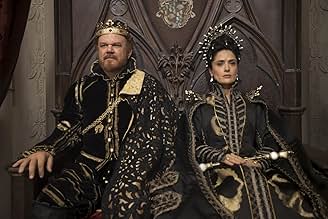
A very strong opening leads us into the first story about a King (John C Reilly) and Queen (Salma Hayek) who are by no one's definition, the perfect couple. The Queen's inability to have children leads her to strike a deal with a Faustian seer who promises a baby to the royal couple. The only catch is that the King must kill a sea monster, and the Queen must eat its heart after it's properly prepared by a virgin. Yep, it's pretty dark and pretty odd. Of course, as with all actions, there are consequences (albino twins of different mothers) some of which are not so wonderful.
The second story involves a lecherous King (Vincent Cassel) who falls in love with a local woman based solely on her singing voice. Much deceit follows and the actions of two sisters (played by 3 actresses – Hayley Carmichael, Stacy Martin, Shirley Henderson) and some supernatural aging products lead to a twisty story of romance that can't possibly end well for anyone involved.
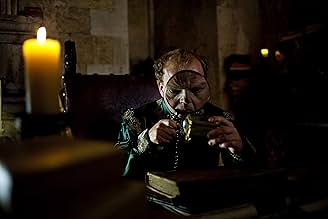
The third of our 3-headed story is the strangest of all, as a King (Toby Jones) nurtures a pet flea until it grows to behemoth size. Yes, a pet flea would be considered unusual, but eclipsing even that in uniqueness is the King's willingness to offer the hand of his daughter (Bebe Cave) in marriage to a frightening ogre who lives a solitary life in the mountains.
These three stories are interwoven so that we are bounced from one to another with little warning which seems only fitting given the material. Knowing the theme of the three stories does not prepare one for the details – neither the comedy, nor the dramatic turns. All actors approach the material with deadpan seriousness which adds to the feeling of a Grimm Brothers and Monty Python mash-up.
Alexandre Desplat provides the perfect score for this oddity, though the audience may be limited to those who can appreciate grotesque sequences assembled with the darkest of comedy. The moral to these stories may be difficult to quantify; however, it's a reminder that actions beget consequences no matter the time period.
Mr. Garrone is best known for his chilling look at an Italian crime family in the award winning Gomorrah (2008), so a trilogy of demented monarchial fantasies may seem a bit outside his comfort zone but grab ahold of your crown jewels and be ready for just about anything.
A very strong opening leads us into the first story about a King (John C Reilly) and Queen (Salma Hayek) who are by no one's definition, the perfect couple. The Queen's inability to have children leads her to strike a deal with a Faustian seer who promises a baby to the royal couple. The only catch is that the King must kill a sea monster, and the Queen must eat its heart after it's properly prepared by a virgin. Yep, it's pretty dark and pretty odd. Of course, as with all actions, there are consequences (albino twins of different mothers) some of which are not so wonderful.
The second story involves a lecherous King (Vincent Cassel) who falls in love with a local woman based solely on her singing voice. Much deceit follows and the actions of two sisters (played by 3 actresses – Hayley Carmichael, Stacy Martin, Shirley Henderson) and some supernatural aging products lead to a twisty story of romance that can't possibly end well for anyone involved.
The third of our 3-headed story is the strangest of all, as a King (Toby Jones) nurtures a pet flea until it grows to behemoth size. Yes, a pet flea would be considered unusual, but eclipsing even that in uniqueness is the King's willingness to offer the hand of his daughter (Bebe Cave) in marriage to a frightening ogre who lives a solitary life in the mountains.
These three stories are interwoven so that we are bounced from one to another with little warning which seems only fitting given the material. Knowing the theme of the three stories does not prepare one for the details – neither the comedy, nor the dramatic turns. All actors approach the material with deadpan seriousness which adds to the feeling of a Grimm Brothers and Monty Python mash-up.
Alexandre Desplat provides the perfect score for this oddity, though the audience may be limited to those who can appreciate grotesque sequences assembled with the darkest of comedy. The moral to these stories may be difficult to quantify; however, it's a reminder that actions beget consequences no matter the time period.
Horror Heroines on Paramount+
From "Yellowjackets" to Vicious, scream queens take center stage in these movies and series streaming on Paramount+.
Did you know
- TriviaThe movie was based on the Pentamerone ("The Tale of Tales, or Entertainment for Little Ones"), a collection of fairy tales by 17th century Italian poet and courtier Giambattista Basile.
- GoofsIn the credits the name of the Italian composer Girolamo Frescobaldi (1584-1643) is misspelled 'Frescobladi'.
- Crazy creditsDedication before end credits: "To Nico and Marco"
- SoundtracksSe l'aura spira tutta vezzosa, F 7.15
Composed by Girolamo Frescobaldi
Greatest Character Actors of All Time
The talented actors totally transform for their roles. How many do you recognize?
- How long is Tale of Tales?Powered by Alexa
Details
- Release date
- Countries of origin
- Official sites
- Languages
- Also known as
- Il racconto dei racconti - Tale of Tales
- Filming locations
- Castel del Monte, Andria, Bari, Apulia, Italy(Highhills castle)
- Production companies
- See more company credits at IMDbPro
Box office
- Budget
- €12,000,000 (estimated)
- Gross US & Canada
- $118,925
- Opening weekend US & Canada
- $8,871
- Apr 24, 2016
- Gross worldwide
- $5,500,277
- Runtime
- 2h 14m(134 min)
- Color
- Sound mix
- Aspect ratio
- 2.35 : 1
Contribute to this page
Suggest an edit or add missing content