We all love food. As a society, we devour countless cooking shows, culinary magazines and foodie blogs. So how could we possibly be throwing nearly 50% of it in the trash? Filmmakers and foo... Read allWe all love food. As a society, we devour countless cooking shows, culinary magazines and foodie blogs. So how could we possibly be throwing nearly 50% of it in the trash? Filmmakers and food lovers Jen and Grant dive into the issue of waste from farm, through retail, all the way... Read allWe all love food. As a society, we devour countless cooking shows, culinary magazines and foodie blogs. So how could we possibly be throwing nearly 50% of it in the trash? Filmmakers and food lovers Jen and Grant dive into the issue of waste from farm, through retail, all the way to the back of their own fridge. After catching a glimpse of the billions of dollars of g... Read all
- Director
- Writers
- Stars
- Awards
- 8 wins & 7 nominations total
- Director
- Writers
- All cast & crew
- Production, box office & more at IMDbPro
Featured reviews
Important, maddening and entertaining
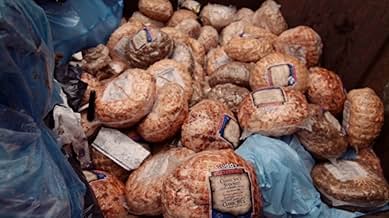
The central element: director Grant Baldwin and his mate and film-making partner Jen Rustemeyer decide to live for 6 months only on food that is discarded. Far from having to ingest disgusting half-eaten snacks, they find a plethora of high end, terrific, nutritious foods, sometimes tossed because they were at – or just somewhat near – their 'sell by' date (which the film explains has little real world relation to freshness or health), or because of minor cosmetic blemishes, or sometimes – as with boxes upon boxes of high end chocolate bars and containers of hummus – for no obvious reason at all (they check for food warnings and recalls to make sure they're not accidentally poisoning themselves).
Along the way we also see interviews with various experts on food waste, meet organic farmers, and get glimpses of how crazy the waste through the whole system is – from farm to store to home. (For just one of many examples; celery routinely has a large number of perfectly good stalks from each plant cut off to make packaging and shipping a bit easier, leaving behind a field full of top rate, unblemished chopped off stalks.) It's all educational and often maddening.
That said, it's not a film I feel a need to own. It's not a particularly emotional or deep experience, and the facts it shares are straightforward and clear. So I don't think it's something I need to see again, as glad as I was to have seen it once. That's both a strength – the film accomplishes it's goal of awakening the viewer admirably and efficiently – and a weakness – as a film it doesn't transcend from enlightening and entertaining lecture to an artistic experience.
Stop throwing away food, man
Just Watch It: It won't be a waste of your time.
Dumpster diving for food and enlightenment
If that were the only point of the documentary it would not be so good. What makes this work is the research that Rustemeyer and Baldwin did about food waste in not only Canada but in the US, and the filming and interviews they did with other people in the food business. They report that it is estimated that 40% of the food grown in the United States is wasted. It is mostly thrown into landfills where it produces the greenhouse gas, methane, as well as creating an unsanitary mess. They also show that responsible farmers allow gleaning on their property so that unharvested food does not go to waste. Additionally of course farmers typically compost anything they can't sell.
What I found most interesting was the part about how the expiration dates on food products are contributing massively to the waste. According to another source (treehugger.com) "Most consumers think that the dates on the food in their fridge say something about food safety. But most 'sell by,' 'use by' and 'best by' dates are intended to indicate freshness, and say nothing about when food may spoil." So, because of the confusion in the minds of most people food retailers find it best to remove food that is past the expiration date on the package from their shelves. What to do with it? As we see in this documentary often what they do is just throw it out. That's often the easiest course for the retailer. Thus Rustemeyer and Baldwin in their dumpster travels come upon a very large dumpster (as big as a swimming pool, Baldwin remarks) full of hundreds of hummus packages all perfectly good to eat. The shot is arresting: it looks like you could swim among the packages there are so many of them! Another problem for the retailer that results in throwing away perfectly edible food is the sense that if it doesn't look good nobody will buy. Ugly fruits and veggies are removed from sight and again end up most often in the dumpster. (Old hippy dumpster divers know this!) I would observe that many food producers are vehemently opposed to GMO labeling but are very accommodating with the "use by" labeling. Why? Well, if the retailer has to throw out the food they will probably have to buy more, which would be good for the producer's bottom line. GMO labeling not so good since people might not buy their product.
In addition to the fine editing, excellent camera work and the well-researched presentation of this Indie documentary there is the pleasure of seeing people who really care about the environment and about the waste.
--Dennis Littrell, author of "Yoga: Scared and Profane (Beyond Hatha Yoga)"
Did you know
- ConnectionsFeatured in Last Week Tonight with John Oliver: Food Waste (2015)
Details
- Release date
- Countries of origin
- Official site
- Language
- Also known as
- Sopor på menyn
- Filming locations
- Vancouver, British Columbia, Canada(Grant and Jenny's hometown)
- Production companies
- See more company credits at IMDbPro