

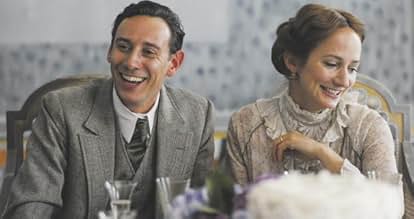
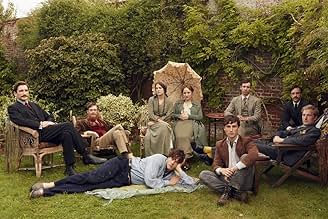
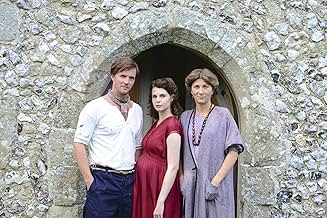
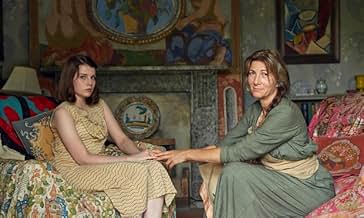
An intimate and emotional drama for BBC Two about the revolutionary Bloomsbury group.An intimate and emotional drama for BBC Two about the revolutionary Bloomsbury group.An intimate and emotional drama for BBC Two about the revolutionary Bloomsbury group.
Browse episodes



6.5927
1
2
3
4
5
6
7
8
9
10
Featured reviews
Lovely, warm, and enlightened
This miniseries is a most interesting, intriguing, and beautifully intimate one. The writing and character development is quite pleasing, and carried out by a lovely group of cast members, some of whom are quite fabulous, and have superb range proven by all the different roles they've portrayed and the genres of which those roles were. I'll not go into plot summary detail, but will say that this story brings forward the realities of the Bohemian lifestyles lived before and after WWI and WWII in parts of England, and other countries in Europe. It's truly a warm, tantalizing, and enlightening tale.
Painted in circles
Life in Squares is a confusing and dull three part period drama about the tangled love affairs of the Bloomsbury Group.
Virginia (Lydia Leonard) married Leonard Woolf (Al Weaver) who soon realises that she is mentally fragile, while her sister Vanessa (Phoebe Fox) turned her affections towards Duncan Grant (James Norton) who teams up with her and his male lover. In fact Grant is the love and leave em kind when it comes to male relationships.
As the drama progresses the younger actors are replaced by an older set of actors and the Bloomsbury group attitude towards free love and creativity gets bleaker as World War Two approaches and losses are felt.
Amanda Coe's script was not easy to follow and seemed sparse which explains why I felt bored and listless.
Scandinavian director Simon Kaijser goes for Nordic noir pacing and a murky look which did not work for this three parter that needed to be faster moving and brighter.
Virginia (Lydia Leonard) married Leonard Woolf (Al Weaver) who soon realises that she is mentally fragile, while her sister Vanessa (Phoebe Fox) turned her affections towards Duncan Grant (James Norton) who teams up with her and his male lover. In fact Grant is the love and leave em kind when it comes to male relationships.
As the drama progresses the younger actors are replaced by an older set of actors and the Bloomsbury group attitude towards free love and creativity gets bleaker as World War Two approaches and losses are felt.
Amanda Coe's script was not easy to follow and seemed sparse which explains why I felt bored and listless.
Scandinavian director Simon Kaijser goes for Nordic noir pacing and a murky look which did not work for this three parter that needed to be faster moving and brighter.
Unhelpful Change of Actors
Given that this short series involves quite a few flashbacks and a relatively large cast of characters, the choice to have different actors play the "younger" and "older" versions of some of them really doesn't help, I think. Not only does this make it hard sometimes to work out who they are, but it leads to harsh comparisons of the performance (and in some cases the looks) of a few of them. Apart from the children, this would have been better done with make-up, I feel. In particular, Phoebe Fox is so great as Vanessa Bell that she is sorely missed in episode three. No offence to Eve Best, but she comes across as a completely different person - not only does she look nothing like Fox, but Vanessa feels "gone".
Having said that, it was nice not to have painful and protracted exposition of who all these people were, as collectively there would have been too much to fit in - and the series would have felt even more episodic than it sometimes does. As it is, the classic period drama cliches of "terrible things happening far away" are present and correct, as are their very real tragic effects, but the underlying aura of very privileged people playing around lingers.
Worth a look - although really only a 6 out of 10, IMHO. I gave it the 7th for Phoebe.
Having said that, it was nice not to have painful and protracted exposition of who all these people were, as collectively there would have been too much to fit in - and the series would have felt even more episodic than it sometimes does. As it is, the classic period drama cliches of "terrible things happening far away" are present and correct, as are their very real tragic effects, but the underlying aura of very privileged people playing around lingers.
Worth a look - although really only a 6 out of 10, IMHO. I gave it the 7th for Phoebe.
Remarkable Insight into the Life of an Epoch-Making Group of Artists
Although I did not expect it, I found LIFE IN SQUARES to be a remarkable piece of television drama, offering insights into the lives of the Bloomsbury Group that I had never previously thought of.
The title is a clever one, suggesting the bourgeois existence of the Stephen sisters Virginia and Vanessa (played by Lydia Leonard, Eve Best, Phoebe Fox, and Catherine McCormack across the three-episode structure) where they grew up in luxury, but also denoting imprisonment, both mental and emotional. David Roger's production designs, with elegant rooms heavily over-stuffed with curios of all historical periods, restrict the actors' freedom of movement; they are forced to move round chairs, or negotiate too many ornaments. When the Bloomsbury Group meet for their regular soirées, they do so in small, confined rooms, with little room to breathe.
This kind of goldfish-bowl lifestyle inevitably has a significant effect on the Group's life-choices. While dedicating themselves to ideals of artistic purity that transcend the mundane concerns of early twentieth century Britain, we wonder whether that represents nothing more than a form of futile release from conformity. This is especially summed up in Vanessa Bell's checkered career; a talented artist in her own right, she becomes so much subject to her husband Clive's (Sam Hoare/ Andrew Havill's) bidding that she ends up losing her artistic will. She embarks on a long-term relationship with Duncan Grant (James Norton/ Rupert Penry-Jones), but finds little emotional satisfaction there - despite his undying devotion to her, he remains a professed homosexual.
Virginia experiences equal pains. We know from the start that she is mentally fragile, but it seems that her sister's overbearing nature, coupled with the prevailing ideology that all wives should have children at that time, pushes her into marriage with Leonard Woolf (Al Weaver. Guy Henry), Although the two enjoy a tranquil and often fulfilling life, it is not what Virginia wants. She tries to find solace in her writing, but even that is not enough to prevent her from committing suicide at the outbreak of World War II. From this drama, we get the sense of terrible sorrow that such an innovator should have felt so hemmed in by social and mental pressures that she should take her own life.
The sisters' existence does not change, even when they sacrifice London for the country, and Vanessa's family moves into Charleston, an idealized retreat still open to general visitors. Life there becomes even more claustrophobic, especially when Duncan's boyfriend David Garnett (aka Bunny) (Ben Lloyd-Hughes/ Jack Davenport) moves in. Vanessa is often forced into the role of unwilling peacemaker; at length she ends up doing something that she felt she must do, but ends up causing her lasting mental pain and suffering.
What makes LIFE IN SQUARES such a game-changing piece is that its sympathy extends to male and female characters alike. Would-be critics like Roger Fry (Elliott Cowan) are trying to make their way in the world as they pronounce on the effect of Modernism on the post-1918 universe, but they appear to lack the conviction to do so. This is chiefly due to their environment; the hothouse world of London (and provincial) society is so insulated from from worldly affairs that it ends up feeding on itself.
Brilliantly directed by Simon Kaijser from a script by Amanda Coe, LIFE IN SQUARES offers important material for reflection on the power as well as the limitations of the imagination, and how we must remain mindful of ourselves and our well-being rather than subjecting ourselves to the often restrictive dictates of prevailing socio-economic convention.
The title is a clever one, suggesting the bourgeois existence of the Stephen sisters Virginia and Vanessa (played by Lydia Leonard, Eve Best, Phoebe Fox, and Catherine McCormack across the three-episode structure) where they grew up in luxury, but also denoting imprisonment, both mental and emotional. David Roger's production designs, with elegant rooms heavily over-stuffed with curios of all historical periods, restrict the actors' freedom of movement; they are forced to move round chairs, or negotiate too many ornaments. When the Bloomsbury Group meet for their regular soirées, they do so in small, confined rooms, with little room to breathe.
This kind of goldfish-bowl lifestyle inevitably has a significant effect on the Group's life-choices. While dedicating themselves to ideals of artistic purity that transcend the mundane concerns of early twentieth century Britain, we wonder whether that represents nothing more than a form of futile release from conformity. This is especially summed up in Vanessa Bell's checkered career; a talented artist in her own right, she becomes so much subject to her husband Clive's (Sam Hoare/ Andrew Havill's) bidding that she ends up losing her artistic will. She embarks on a long-term relationship with Duncan Grant (James Norton/ Rupert Penry-Jones), but finds little emotional satisfaction there - despite his undying devotion to her, he remains a professed homosexual.
Virginia experiences equal pains. We know from the start that she is mentally fragile, but it seems that her sister's overbearing nature, coupled with the prevailing ideology that all wives should have children at that time, pushes her into marriage with Leonard Woolf (Al Weaver. Guy Henry), Although the two enjoy a tranquil and often fulfilling life, it is not what Virginia wants. She tries to find solace in her writing, but even that is not enough to prevent her from committing suicide at the outbreak of World War II. From this drama, we get the sense of terrible sorrow that such an innovator should have felt so hemmed in by social and mental pressures that she should take her own life.
The sisters' existence does not change, even when they sacrifice London for the country, and Vanessa's family moves into Charleston, an idealized retreat still open to general visitors. Life there becomes even more claustrophobic, especially when Duncan's boyfriend David Garnett (aka Bunny) (Ben Lloyd-Hughes/ Jack Davenport) moves in. Vanessa is often forced into the role of unwilling peacemaker; at length she ends up doing something that she felt she must do, but ends up causing her lasting mental pain and suffering.
What makes LIFE IN SQUARES such a game-changing piece is that its sympathy extends to male and female characters alike. Would-be critics like Roger Fry (Elliott Cowan) are trying to make their way in the world as they pronounce on the effect of Modernism on the post-1918 universe, but they appear to lack the conviction to do so. This is chiefly due to their environment; the hothouse world of London (and provincial) society is so insulated from from worldly affairs that it ends up feeding on itself.
Brilliantly directed by Simon Kaijser from a script by Amanda Coe, LIFE IN SQUARES offers important material for reflection on the power as well as the limitations of the imagination, and how we must remain mindful of ourselves and our well-being rather than subjecting ourselves to the often restrictive dictates of prevailing socio-economic convention.
Really Terrible Self-Indulgent Rubbish!
Life In Squares
It was a dreadful rambling mess that just amounted to self-indulgence. The lives of the Bell's and the Woolf's was just so tedious and yet we had no sense of all the work they did and the money they made opening companies and creating books, paintings and designs.
With regard to their "shocking" lives, perhaps unconventional for the time but surely not for a group of artists. It was a really nothing more than commune living.
We spent half our time trying to work out who was who as we had two sets of actors playing the parts of the characters at different ages. The script was clunky and the emotions, at best, superficial.
I'm giving this a 4 outta 10, but my advice skip the whole series as it was rubbish!
It was a dreadful rambling mess that just amounted to self-indulgence. The lives of the Bell's and the Woolf's was just so tedious and yet we had no sense of all the work they did and the money they made opening companies and creating books, paintings and designs.
With regard to their "shocking" lives, perhaps unconventional for the time but surely not for a group of artists. It was a really nothing more than commune living.
We spent half our time trying to work out who was who as we had two sets of actors playing the parts of the characters at different ages. The script was clunky and the emotions, at best, superficial.
I'm giving this a 4 outta 10, but my advice skip the whole series as it was rubbish!


Did you know
- TriviaAl Weaver who plays, Leonard Woolf also plays a character named Leonard in Grantchester.
- How many seasons does Life in Squares have?Powered by Alexa
Details
- Release date
- Country of origin
- Language
- Also known as
- Жизнь в квадратах
- Filming locations
- Production companies
- See more company credits at IMDbPro
- Color
- Aspect ratio
- 1.78 : 1
Contribute to this page
Suggest an edit or add missing content