IMDb RATING
7.8/10
26K
YOUR RATING
The story of the relationship between Karamakate, an Amazonian shaman and last survivor of his people, and two scientists who work together over the course of forty years to search the Amazo... Read allThe story of the relationship between Karamakate, an Amazonian shaman and last survivor of his people, and two scientists who work together over the course of forty years to search the Amazon for a sacred healing plant.The story of the relationship between Karamakate, an Amazonian shaman and last survivor of his people, and two scientists who work together over the course of forty years to search the Amazon for a sacred healing plant.
- Nominated for 1 Oscar
- 46 wins & 32 nominations total
Antonio Bolívar
- Old Karamakate
- (as Tafillama-Antonio Bolívar Salvador)
Miguel Dionisio Ramos
- Manduca
- (as Yauenkü Miguee)
Jesús Rodríguez
- Borracho Cohiuano
- (as Jesús Rodríguez)
7.825.6K
1
2
3
4
5
6
7
8
9
10
Featured reviews
Magical and memorable film based on a true story , well shot and magnificently photographed
Interesting look at the lifestyle of the Amazon people in the vanishing jungle where a shaman deals with two diverse characters , being first Colombian film nominated for an Academy Award for Best Foreign Film . The amazing story of the relationship between Karamakate (Nilbio Torres -Young Karamakate-, Antonio Bolívar -Old Karamakate- and all the natives of the film are natural actors) and two scientists who seek a magic plant , Theo (Jan Bijvoet) and Evan (Brionne Davis) . As decades apart , an Amazonian shaman and last survivor of his people , and two scientists who work together over the course of 40 years to search the Amazon for a sacred healing flower . It's based on two true stories, linked together by one remarkable man and , perhaps, the most famous, celebrated river in the world, the Amazon . And the man is Karamakate, the last shaman of his jungle tribe . We first meet him in 1940 , deep into his sixties as played by Antonio Bolivar, when he encounters a man foreign to his home, an American scientist Richard Evans Schultes (Brionne Davis) . The rain forest of the Amazon are disappearing at the rate of 5000 acres day . Four million Indians once lives there , nowadays 120.000 remain .
Embrace Of The Serpent is one such cinematic experience which brought a deserved Academy Award Nomination . Ecological thriller that has in highlighting the destruction of the South American rain woods by the rubbers ; being based upon a real story , on diaries by scientists Theodor Koch-Grunberg and Richard Evan Schultes , both of whom delve into the Amazonian rainforest in search of a rare plant with medicinal and hallucinatory qualities, with the assistance of a local shaman on opposite ends of his own life journey . An ecological adventure with mystical touches that was ahead of its time in denounce about forest destruction , including some disconcerting scenes , as the frames where a man is praised to be the Messiah is based on an actual event . Embrace of the Serpent attempts to frame the destruction of the rain forest's ecology and peoples as a slow-motion tragedy on scales both personal and cultural , but it is more intriguing in its ambitions, which frustrate it, than in it successes, which are limited . This exciting film contains thrills , emotion , adventure and marvelous scenes from deep rainy forest that generate a lot of surprises and illusion . This film has got some images "stuck in their head" including several sequences can stay in your brain for a long, long while .
Glamorous and lush cinematography by David Gallego who photographs wonderfully the Amazon jungle , obviously filmed under difficult conditions on location . Shot in black-and-white, which is at once visually distinctive but also rather flattening . Evocative musical score by Nascuy Linares and the music Evan plays on the gramophone is Haydn's "The Creation". This engrossing and enjoyable film with interesting screenplay by Ciro Guerra and Jacques Toulemonde Vidal was well directed by Ciro Guerra . He's a good professional filmmaking giving various Colombian successes such as Los Viajes Del Viento (2009) and La Sombra Del Caminante (2004) . Rating "Embrace of the Serpent" : Better than average . Wholesome watching .
Embrace Of The Serpent is one such cinematic experience which brought a deserved Academy Award Nomination . Ecological thriller that has in highlighting the destruction of the South American rain woods by the rubbers ; being based upon a real story , on diaries by scientists Theodor Koch-Grunberg and Richard Evan Schultes , both of whom delve into the Amazonian rainforest in search of a rare plant with medicinal and hallucinatory qualities, with the assistance of a local shaman on opposite ends of his own life journey . An ecological adventure with mystical touches that was ahead of its time in denounce about forest destruction , including some disconcerting scenes , as the frames where a man is praised to be the Messiah is based on an actual event . Embrace of the Serpent attempts to frame the destruction of the rain forest's ecology and peoples as a slow-motion tragedy on scales both personal and cultural , but it is more intriguing in its ambitions, which frustrate it, than in it successes, which are limited . This exciting film contains thrills , emotion , adventure and marvelous scenes from deep rainy forest that generate a lot of surprises and illusion . This film has got some images "stuck in their head" including several sequences can stay in your brain for a long, long while .
Glamorous and lush cinematography by David Gallego who photographs wonderfully the Amazon jungle , obviously filmed under difficult conditions on location . Shot in black-and-white, which is at once visually distinctive but also rather flattening . Evocative musical score by Nascuy Linares and the music Evan plays on the gramophone is Haydn's "The Creation". This engrossing and enjoyable film with interesting screenplay by Ciro Guerra and Jacques Toulemonde Vidal was well directed by Ciro Guerra . He's a good professional filmmaking giving various Colombian successes such as Los Viajes Del Viento (2009) and La Sombra Del Caminante (2004) . Rating "Embrace of the Serpent" : Better than average . Wholesome watching .
Awesome
Another Ciro Guerra's masterpiece. Fascinating movie. After "The wind Journeys" Guerra shows again his talent with an incredible history about the Amazonas jungle back in the early 1900s. The beauty and uniqueness of the scenes is mind blowing. The sound takes you deep inside the jungle. The story is a thriller that makes you live the most strange adventures that you could ever imagine in the jungle. It is based on two diaries written by a German and American travelers. All actors have an incredible command of the indigenous dialect. Additionally, the native indigenous actors seem to be truly professionals. Enjoyed every single minute. A must see.
Allows us to remember how to dream
For 350 years, Spain built a vast empire in South America based on the labor and exploitation of the Indian population, forcing them to accept Christianity while decimating their culture, religion, and even their language. In the late 19th and early 20th Centuries, "rubber barons" rounded up all the Indians and forced them to tap rubber out of the trees in rainforest zones leading to slavery and human rights abuses. Winner of the top Director's Fortnight Award at Cannes and Colombia's submission to the Oscars in the Best Foreign Film category, Ciro Guerra's ("The Wind Journeys") Embrace of the Serpent (El abrazo de la serpiente) provides a powerful insight into the effects of colonialism on an indigenous population.
The film, in which nine different languages are spoken, follows two interconnected stories based on the travel journals of two Amazonian explorers thirty years apart, German scientist Theodor Koch-Grunberg (Jan Bijvoet, "Borgman") and American plant enthusiast Richard Evans Schultes (Brionne Davis, "Avenged"). Both men are seeking the Yakruna plant to discover its powerful ability to heal. The two explorers are accompanied by the Amazonian shaman Karamakate (Niblio Torres as a young man and Antonio Bolivar as the elder) not only to find the sacred plant for research purposes but to learn deeper truths about themselves and the nature of reality. Karamakate, the last surviving member of his tribe, guards the secrets of Yakruna, a last symbol of independence for his people.
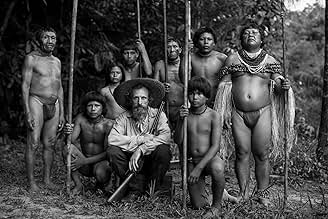
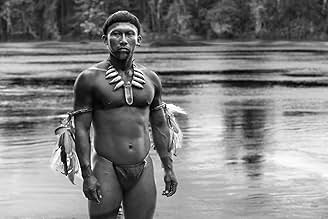
Filmed in black and white by cinematographer David Gallego ("Cecilia"), it is the first film to be shot on location in the Amazon in thirty years and its gorgeous kaleidoscope of rivers and forests, and the blending of time creates a surreal, dreamlike atmosphere, fortified by native songs and chants. As the film begins, a young Karamakate, armed with a spear and dressed in native attire, stands menacingly as a boat approaches the shore containing the German scientist and his companion Manduca (Yauenku Migue), a native dressed in white man's clothing.
Manduca asks the shaman to cure the explorer who is very sick, but Karamakate, who is familiar with the destructive nature of the white man, refuses. When Theo tells him, however, that he has seen survivors of his people and will take him to them, the young shaman agrees as long as the white man follows his "prohibitions" about disturbing the natural flow of the jungle. The two scientists, Theo in 1909 and Evan in 1940, follow the same path and explore the same places drastically changed over the years. Karamakate, as he did with Theo, acts as Evan's guide and considers himself as a "chullachaqui," an empty shell of a human being, and must become a man once more in tune with nature.
Two scenes stand out. After a night of singing and dancing with a native group and demonstrating Western technology, Theodor becomes angry when a member of the group wants to keep his compass in exchange for goods. To rationalize his anger, he tells Karamakate that owning a compass would disturb their traditions of finding locations through the sun and stars, but the shaman tells him "You cannot forbid them to learn. Knowledge belongs to all men." The other scene is one of pure horror when a priest (Luigi Sciamanna, "Secreto de Confesion") at a Spanish mission is found brutally whipping his young students until Theodor intervenes.
Despite an element of religious madness that feels out of sync with the tone of the film, Embrace of the Serpent soars when its focus is on spiritual awareness. The shaman tells both scientists the need to unburden themselves of their material possessions and explore the mystery of consciousness alone without their physical and psychological baggage. They cannot be cured of their illness, he tells them, because they have forgotten how to dream. After Evan ingests a native plant following a heated exchange with Karamakate, a montage of brilliant, swirling colors pushes the boundary of what we think is real and allows us to remember how to dream.
The film, in which nine different languages are spoken, follows two interconnected stories based on the travel journals of two Amazonian explorers thirty years apart, German scientist Theodor Koch-Grunberg (Jan Bijvoet, "Borgman") and American plant enthusiast Richard Evans Schultes (Brionne Davis, "Avenged"). Both men are seeking the Yakruna plant to discover its powerful ability to heal. The two explorers are accompanied by the Amazonian shaman Karamakate (Niblio Torres as a young man and Antonio Bolivar as the elder) not only to find the sacred plant for research purposes but to learn deeper truths about themselves and the nature of reality. Karamakate, the last surviving member of his tribe, guards the secrets of Yakruna, a last symbol of independence for his people.
Filmed in black and white by cinematographer David Gallego ("Cecilia"), it is the first film to be shot on location in the Amazon in thirty years and its gorgeous kaleidoscope of rivers and forests, and the blending of time creates a surreal, dreamlike atmosphere, fortified by native songs and chants. As the film begins, a young Karamakate, armed with a spear and dressed in native attire, stands menacingly as a boat approaches the shore containing the German scientist and his companion Manduca (Yauenku Migue), a native dressed in white man's clothing.
Manduca asks the shaman to cure the explorer who is very sick, but Karamakate, who is familiar with the destructive nature of the white man, refuses. When Theo tells him, however, that he has seen survivors of his people and will take him to them, the young shaman agrees as long as the white man follows his "prohibitions" about disturbing the natural flow of the jungle. The two scientists, Theo in 1909 and Evan in 1940, follow the same path and explore the same places drastically changed over the years. Karamakate, as he did with Theo, acts as Evan's guide and considers himself as a "chullachaqui," an empty shell of a human being, and must become a man once more in tune with nature.
Two scenes stand out. After a night of singing and dancing with a native group and demonstrating Western technology, Theodor becomes angry when a member of the group wants to keep his compass in exchange for goods. To rationalize his anger, he tells Karamakate that owning a compass would disturb their traditions of finding locations through the sun and stars, but the shaman tells him "You cannot forbid them to learn. Knowledge belongs to all men." The other scene is one of pure horror when a priest (Luigi Sciamanna, "Secreto de Confesion") at a Spanish mission is found brutally whipping his young students until Theodor intervenes.
Despite an element of religious madness that feels out of sync with the tone of the film, Embrace of the Serpent soars when its focus is on spiritual awareness. The shaman tells both scientists the need to unburden themselves of their material possessions and explore the mystery of consciousness alone without their physical and psychological baggage. They cannot be cured of their illness, he tells them, because they have forgotten how to dream. After Evan ingests a native plant following a heated exchange with Karamakate, a montage of brilliant, swirling colors pushes the boundary of what we think is real and allows us to remember how to dream.
Lush, fixating, and hypnotizing
Honestly, how this didn't get one iota of the hype that Son of Saul got is beyond me. As far as I'm concerned, the real winner of that Oscar for foreign-language film. It's so incredibly fixating and transportive in the world it creates. The cinematography is exquisite, the sound design impressive, and the directorial achievement here is just incredible. I never entirely understood everything that was going on, but it didn't stop the film from fully capturing me. The acting is also uniformly strong, and the film could have been even more confusing had it not been to the spectacular editing, which did a great job going from one storyline to the next, and one timeline to the other. I just think this is a really magical, really special film. It deserves to be seen by many more people than it has.
White men messing up traditions
I love how this movie is put together. By combining the accounts of two explorers - over 30 years apart - it manages to tell a story of a world changing. You can see how actions made by the first explorer directly changes the world of the people they meet. Mostly in a bad way. The movie conveys, with a sadness, how much the people of these tribes lost because of the way they were handled by "white people". But this is not the time tested "gone with the wolves"-story. It's an artistic and stylistic, yet believable, account of the old meeting the new.
One thought though: While it is an interesting discussion why it's in black and white, I think the movie would have been better off in color. At least partly. Black and white is nice, but the jungle scenery in this movie could have been breathtaking in color - but the again, maybe that's the point.
Did you know
- TriviaThe scene where a man is praised to be the Messiah is based on an actual event.
- Quotes
Young Karamakate: Knowledge belongs to all. You do not understand that. You are just a white man.
- ConnectionsFeatured in Starfilm (2017)
- SoundtracksEmbrace Of The Serpent
(Theme from Original Motion Picture Soundtrack)
by Nascuy Linares
© 2016 Plaza Mayor Company, Ltd.
- How long is Embrace of the Serpent?Powered by Alexa
Details
- Release date
- Countries of origin
- Official sites
- Languages
- Also known as
- El abrazo de la serpiente
- Filming locations
- Production companies
- See more company credits at IMDbPro
Box office
- Budget
- $1,400,000 (estimated)
- Gross US & Canada
- $1,329,249
- Opening weekend US & Canada
- $50,955
- Feb 21, 2016
- Gross worldwide
- $3,217,212
- Runtime
- 2h 5m(125 min)
- Color
- Sound mix
- Aspect ratio
- 2.35 : 1
Contribute to this page
Suggest an edit or add missing content