IMDb RATING
7.0/10
1.4K
YOUR RATING
A look at the growing disparity between different economic classes.A look at the growing disparity between different economic classes.A look at the growing disparity between different economic classes.
- Director
- Writers
- Stars
Geraint Anderson
- Self - Former Banker Dresdener Kleinwort
- (archive footage)
Brigitte Bardot
- Self
- (archive footage)
Jean-Paul Belmondo
- Self
- (archive footage)
Richard Brooks
- Self - Former HMRC Tax Inspector
- (archive footage)
- …
Warren Buffett
- Self - CEO Berkshire Hathaway
- (archive footage)
George W. Bush
- Self - Former President, USA
- (archive footage)
David Cameron
- Self - Prime Minister, UK
- (archive footage)
John Christensen
- Self - Economist
- (archive footage)
- …
Andrew Craig
- Self - Former Banker UBS
- (archive footage)
Reece Davis-James
- Self - Looter
- (archive footage)
- …
Bill de Blasio
- Self - Mayor of New York City, USA
- (archive footage)
- (as Mayor Bill de Blasio)
David DeGraw
- Self - Occupy Activist
- (archive footage)
Bob Diamond
- Self - CEO Barclays Bank
- (archive footage)
Bernie Ecclestone
- Self - Chief Executive Formule One
- (archive footage)
Milton Freedman
- Self - Economist, USA
- (archive footage)
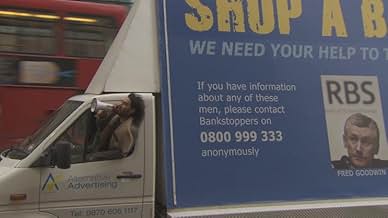
Fred Goodwin
- Self - Former CEO Royal Bank of Scotland
- (archive footage)
Philip Green
- Self - Owner Topshops
- (archive footage)
- Director
- Writers
- All cast & crew
- Production, box office & more at IMDbPro
7.01.4K
1
2
3
4
5
6
7
8
9
10
Featured reviews
The children were impressed...
After watching this documentary, the children were impressed so I asked them to reach for their mobile phones and google "how many phones are in the world". They know no other phones than mobile phones and no better source than Wikipedia. Probably, neither do you.
Wikipedia told them that there are approximately over 6,800,000,000 mobile phones in use for a global population of 7,012,000,000. They also delighted themselves by looking up the breakdown by country etc. Please also do so yourself.
Thirty, forty years ago no one could have thought that by today each person would have their own private phone line, much less in their pocket, and to boot, not just a phone but a computer.
Yet the poor are getting poorer, we are told.
I wonder what this documentary would have been like if instead of wealth, Russell Brand had had knowledge or commonsense. We will never find out.
Wikipedia told them that there are approximately over 6,800,000,000 mobile phones in use for a global population of 7,012,000,000. They also delighted themselves by looking up the breakdown by country etc. Please also do so yourself.
Thirty, forty years ago no one could have thought that by today each person would have their own private phone line, much less in their pocket, and to boot, not just a phone but a computer.
Yet the poor are getting poorer, we are told.
I wonder what this documentary would have been like if instead of wealth, Russell Brand had had knowledge or commonsense. We will never find out.
KISS Approach
Greetings again from the darkness. I'm not one of those who subscribe to the belief that documentary films should present all sides to the story in a "just the facts, ma'am" style. In fact, I respect a filmmaker who is so passionate about a topic that he/she enthusiastically attempts to overwhelm the viewer with "proof" that their opinion is the definitive truth and no further debate is needed. Here, renowned director Michael Winterbottom (The Trip, 2010) supports comedian/actor/activist Russell Brand in his agenda to educate the masses on the evil of big banks and rich people, and the need for re-distribution of wealth.
Now that agenda may seem a bit odd coming from an admitted rich guy, but in fact, Brand's professional success lends some credibility to his argument or at least it's a different approach than having a group of people living in poverty talk about how they got screwed by "the man".
To say that Brand dumbs-down his explanation is certainly an understatement. To emphasize this, there are a couple of segments where he utilizes elementary level students to differentiate between rich and poor – what's fair and what's not. Concentrating mostly on the British economy, while also noting the similarities to the United States 2008 crash, Brand makes the argument that the turning point was approximately 35 years ago as Margaret Thatcher assumed power and Free Market Capitalism took over. It's a bizarre point coming from a native of a country whose Monarchs (not known for their "fairness") date back for centuries. However, this is an example of the keep-it-simple approach in getting the masses to join his quest.
Borrowing a page from Michael Moore's long-successful script, Brand presents the big banks and the super rich as the villains of society. It's a common theme and one that's pretty easy to agree with the banks were bailed out, and then proceeded to pay their upper management huge bonuses. The viable argument is, why don't they pay "us" back? Brand attempts to follow Moore's lead again (while referencing Joseph Campbell) by walking into the banks and asking to see the CEO's. These attempts fall flat, and leave us with Brand wise-cracking while bystanders try to figure out if it's all a prank.
The most effective sequences involve Brand walking the streets of Grays London where he was raised. His discussions with the locals are real, and infinitely more enlightening than his storming into bank lobbies. The statistics don't lie – the rich are getting richer, while the rest of society struggles. George Carlin said it best the poor are needed to keep the middle class motivated to work so the rich can benefit. Brand also rails against legal tax evasion via offshore accounts – especially in Grand Cayman. He lobbies for those accounts to be taxed and the money returned to the country of origin.
Most of Brand's mission is preaching the importance of fairness, and the claim is made that by definition, capitalism is the inequality of power. Whether you agree with him or not, Brand is to be respected for using his celebrity status for a cause much more important than the best table in a restaurant, or courtside seats to a game. His simple-is-best approach carries right through to the end where he does offer up his list of recommendations to create a more fair system. If his simple and sometimes funny approach allows more people to enter into discussions, then his cause is worthwhile, even if his recommendations are a bit lacking in substance and depth.
Now that agenda may seem a bit odd coming from an admitted rich guy, but in fact, Brand's professional success lends some credibility to his argument or at least it's a different approach than having a group of people living in poverty talk about how they got screwed by "the man".
To say that Brand dumbs-down his explanation is certainly an understatement. To emphasize this, there are a couple of segments where he utilizes elementary level students to differentiate between rich and poor – what's fair and what's not. Concentrating mostly on the British economy, while also noting the similarities to the United States 2008 crash, Brand makes the argument that the turning point was approximately 35 years ago as Margaret Thatcher assumed power and Free Market Capitalism took over. It's a bizarre point coming from a native of a country whose Monarchs (not known for their "fairness") date back for centuries. However, this is an example of the keep-it-simple approach in getting the masses to join his quest.
Borrowing a page from Michael Moore's long-successful script, Brand presents the big banks and the super rich as the villains of society. It's a common theme and one that's pretty easy to agree with the banks were bailed out, and then proceeded to pay their upper management huge bonuses. The viable argument is, why don't they pay "us" back? Brand attempts to follow Moore's lead again (while referencing Joseph Campbell) by walking into the banks and asking to see the CEO's. These attempts fall flat, and leave us with Brand wise-cracking while bystanders try to figure out if it's all a prank.
The most effective sequences involve Brand walking the streets of Grays London where he was raised. His discussions with the locals are real, and infinitely more enlightening than his storming into bank lobbies. The statistics don't lie – the rich are getting richer, while the rest of society struggles. George Carlin said it best the poor are needed to keep the middle class motivated to work so the rich can benefit. Brand also rails against legal tax evasion via offshore accounts – especially in Grand Cayman. He lobbies for those accounts to be taxed and the money returned to the country of origin.
Most of Brand's mission is preaching the importance of fairness, and the claim is made that by definition, capitalism is the inequality of power. Whether you agree with him or not, Brand is to be respected for using his celebrity status for a cause much more important than the best table in a restaurant, or courtside seats to a game. His simple-is-best approach carries right through to the end where he does offer up his list of recommendations to create a more fair system. If his simple and sometimes funny approach allows more people to enter into discussions, then his cause is worthwhile, even if his recommendations are a bit lacking in substance and depth.
A look into rapacious capitalism
Russell Brand presents a quick look into global capitalism, the spreading ownership cult of the one percent and it's devastating effects on the working class and the unemployed.
Director/writer Michael Winterbottom tries to simplify this very complex and often esoteric issue so the average person can comprehend it. The scenes with the school children is a good example. Plus the one on one interviews with the people on social assistance is another example.
Unfortunately for me, I had a rather difficult time understand everything Russell Brand is saying with that terrible inner city British accent! I feel as if I missed some important statements by him. But please do not let his speaking influence your decision to watch this documentary. There is a lot to be learned about how the 1% is setting themselves into ivory towers --- the future overlords of all.
Director/writer Michael Winterbottom tries to simplify this very complex and often esoteric issue so the average person can comprehend it. The scenes with the school children is a good example. Plus the one on one interviews with the people on social assistance is another example.
Unfortunately for me, I had a rather difficult time understand everything Russell Brand is saying with that terrible inner city British accent! I feel as if I missed some important statements by him. But please do not let his speaking influence your decision to watch this documentary. There is a lot to be learned about how the 1% is setting themselves into ivory towers --- the future overlords of all.
Entertaining exploration of a potentially boring subject
Sometimes life is simply not fair. Bad luck can visit us all.
What this film lays bare is that you can work hard all your life, try to stack the chips in your favour by doing that, and yet simply be screwed over by the wealthy powerful who gorge themselves on their wealth and power. It's not just a case of the have-nots being jealous of the haves. It's a case of the haves not being even remotely benign or even grateful to those who work hard all their lives to maintain the wealth creating machines. It's done by smoke and mirrors. The film shows British politicians using key words and phrases to convince voters that they are on their side, understand their daily grind and to convince them that they are their people. It also blows away the notion that the rich are 'wealth creators' as if there would be no wealth, happiness or even jobs in our society if it wasn't for Amazon or Google and the like. The post war period was one of cooperation and relative 'happiness' when CEO salaries were more in line with workers salaries and the taxpayer didn't need to subsidise corporations by subsidising low wages for example or by bailing out failed banks and financial institutions.
The film shows that we clearly live in a society where the wealthy are in control and, by lobbying, donating to, and employing MPs they can make laws that suit them.
One big message from the film is that collective action can work, as a starting point. See the film to see that in practice.
Thank you Russel, you weird combination of knowledgeable man and cheeky child. Keep it up.
What this film lays bare is that you can work hard all your life, try to stack the chips in your favour by doing that, and yet simply be screwed over by the wealthy powerful who gorge themselves on their wealth and power. It's not just a case of the have-nots being jealous of the haves. It's a case of the haves not being even remotely benign or even grateful to those who work hard all their lives to maintain the wealth creating machines. It's done by smoke and mirrors. The film shows British politicians using key words and phrases to convince voters that they are on their side, understand their daily grind and to convince them that they are their people. It also blows away the notion that the rich are 'wealth creators' as if there would be no wealth, happiness or even jobs in our society if it wasn't for Amazon or Google and the like. The post war period was one of cooperation and relative 'happiness' when CEO salaries were more in line with workers salaries and the taxpayer didn't need to subsidise corporations by subsidising low wages for example or by bailing out failed banks and financial institutions.
The film shows that we clearly live in a society where the wealthy are in control and, by lobbying, donating to, and employing MPs they can make laws that suit them.
One big message from the film is that collective action can work, as a starting point. See the film to see that in practice.
Thank you Russel, you weird combination of knowledgeable man and cheeky child. Keep it up.
Thought provoking.
I spotted this on Amazon Prime video and decided to take a look, I've never been a huge fan of Russell Brand and was curious about the content.
I found this documentary to be thought provoking and well worth watching. Russell Brand has gained my respect because I believe he is, in his own inimitable style, trying to open people's eyes to the gross inequalities of life in Britain today. I felt compelled to write this review having seen a couple of negative comments about looting, nobody bothered to mention the bankers? This documentary explains in simple terms about the economic crisis and the application of austerity measures to the detriment of those least able to afford it and it does it in a way that keeps you watching to the very end. I do not think It will ever change the opinions of those with closed minds, but for anyone else it should at least make you think, I thoroughly recommend watching this documentary.
Details
- Release date
- Countries of origin
- Language
- Also known as
- El traje nuevo del emperador
- Filming locations
- Production company
- See more company credits at IMDbPro
Box office
- Gross worldwide
- $50,539
- Runtime
- 1h 41m(101 min)
- Color
Contribute to this page
Suggest an edit or add missing content