IMDb RATING
7.5/10
3.1K
YOUR RATING
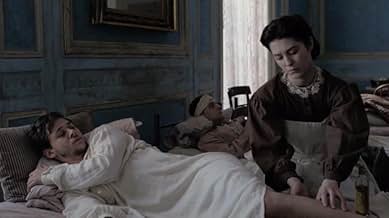
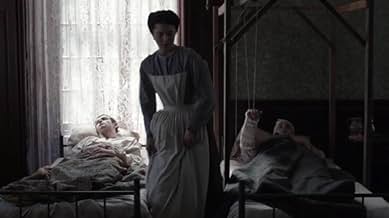
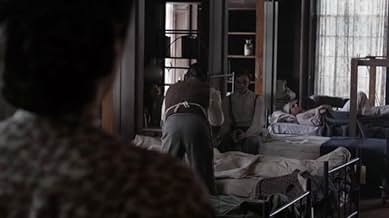
Follows the lives of two volunteer nurses on opposing sides of the Civil War - New England abolitionist Mary Phinney and Confederate supporter Emma Green.Follows the lives of two volunteer nurses on opposing sides of the Civil War - New England abolitionist Mary Phinney and Confederate supporter Emma Green.Follows the lives of two volunteer nurses on opposing sides of the Civil War - New England abolitionist Mary Phinney and Confederate supporter Emma Green.
- Awards
- 1 win total
Browse episodes
7.53K
1
2
3
4
5
6
7
8
9
10
Featured reviews
A very good start.
I'm not sure why any viewer would compare a series set during American revolutionary times (the Civil War) to Downton Abbey. Downton Abbey was simply a remake of the popular (and recently remade) series, Upstairs, Downstairs. It was mostly an entertaining soap about a rich family and their household, but I digress...
First off, all of the actors are well-cast and do suitably good work. It's only been two episodes, so we'll have to wait and see as far as whether any heavy lifting will be required, acting wise. It's safe to say that we should expect to see the transformation of some of the characters, insofar as their beliefs are portrayed. There is a doctor, for example, who has no problem with slavery, but believes that it is his duty to equally treat Union and Confederate soldiers because, "Blood does not run grey or blue, it runs red." The nurse to whom he makes this argument (Nurse Mary/Baroness), is a staunch supporter of the Union and believes that as a Union hospital, Union soldiers can claim priority.
We have familiar faces in this cast - L. Scott Caldwell, Donna Murphy, Gary Cole, Tara Summers, and new ones in Shalita Grant, McKinley Belcher III, and Mary Elizabeth Winstead. While Mercy Street bears some similarity to The Knick due to its setting (a hospital) and a promise of change to come, it is less graphic in its portrayal of the everyday occurrences of the medical world.
With the popularity of Hamilton on today's Broadway stage, Mercy Street is a welcome addition to the TV lineup, as anything that encourages today's American to learn about the past is a boon, indeed.
First off, all of the actors are well-cast and do suitably good work. It's only been two episodes, so we'll have to wait and see as far as whether any heavy lifting will be required, acting wise. It's safe to say that we should expect to see the transformation of some of the characters, insofar as their beliefs are portrayed. There is a doctor, for example, who has no problem with slavery, but believes that it is his duty to equally treat Union and Confederate soldiers because, "Blood does not run grey or blue, it runs red." The nurse to whom he makes this argument (Nurse Mary/Baroness), is a staunch supporter of the Union and believes that as a Union hospital, Union soldiers can claim priority.
We have familiar faces in this cast - L. Scott Caldwell, Donna Murphy, Gary Cole, Tara Summers, and new ones in Shalita Grant, McKinley Belcher III, and Mary Elizabeth Winstead. While Mercy Street bears some similarity to The Knick due to its setting (a hospital) and a promise of change to come, it is less graphic in its portrayal of the everyday occurrences of the medical world.
With the popularity of Hamilton on today's Broadway stage, Mercy Street is a welcome addition to the TV lineup, as anything that encourages today's American to learn about the past is a boon, indeed.
10 stars for the first season, one for the second
This series began with real promise - an American period drama along the lines and quality of what Masterpiece has imported from across the pond. And for the most part, the first season delivered.
But the second season devolved into a Grey's Anatomy-style soap (complete with the annoying underscore) that treated the horrors and suffering of the Civil War as a backdrop for quirky characters and their high jinks. The psychological drama never reached deeper than a wading pool.
The real mercy in Mercy Street was putting it out of its misery at the end of the second season.
But the second season devolved into a Grey's Anatomy-style soap (complete with the annoying underscore) that treated the horrors and suffering of the Civil War as a backdrop for quirky characters and their high jinks. The psychological drama never reached deeper than a wading pool.
The real mercy in Mercy Street was putting it out of its misery at the end of the second season.
History IS messy!
(I hope what I have written is not considered spoilers - I would not do that intentionally!)
I understand a lot of the criticisms written in these reviews. My reaction to watching Episode 1 was "What is this? Desperate Housewives of Civil War Medicine??" - because it seemed so "overheated" and unbelievable. For example, when Nurse Phinney has to sleep on the floor of the ward among the soldiers' beds, I exclaimed, "That didn't happen! That would never have happened! But then I started to read the true story of Nurse Phinney, "Adventures of an Army Nurse in Two Wars" and guess what - it DID happen plus a whole lot more!
What I saw as "overheated" in terms of the drama between hospital personnel was actually DOWNPLAYED from the true reality!!! The surgeons and doctors did NOT want female nurses around and wanted to drive them OUT. The hospital WAS as chaotic, as shown. And as far as soldiers not being fed - YUP, it was only TOO TRUE!!! There was a shocking amount of graft and profiteering going on in the food supply chain! I highly recommend the true story of Nurse Phinney - it is quite a read!!
I understand a lot of the criticisms written in these reviews. My reaction to watching Episode 1 was "What is this? Desperate Housewives of Civil War Medicine??" - because it seemed so "overheated" and unbelievable. For example, when Nurse Phinney has to sleep on the floor of the ward among the soldiers' beds, I exclaimed, "That didn't happen! That would never have happened! But then I started to read the true story of Nurse Phinney, "Adventures of an Army Nurse in Two Wars" and guess what - it DID happen plus a whole lot more!
What I saw as "overheated" in terms of the drama between hospital personnel was actually DOWNPLAYED from the true reality!!! The surgeons and doctors did NOT want female nurses around and wanted to drive them OUT. The hospital WAS as chaotic, as shown. And as far as soldiers not being fed - YUP, it was only TOO TRUE!!! There was a shocking amount of graft and profiteering going on in the food supply chain! I highly recommend the true story of Nurse Phinney - it is quite a read!!
Interesting characters
This series is unique for presenting the ambivalence and contradictions of the Civil War Era. The protagonist nurse is a staunch abolitionist who is made to accept the need to also help Confederate wounded by a doctor who is loyal to the Union and thus a traitor to his slave- owning pro-Confederate Maryland family. Nevertheless he is unmoved by abolitionist sentiments--until he meets a free black Philadelphia man he admires.
The head of the Southern family that owns the hotel-turned hospital works to save his holdings and business interests while not betraying his Southern loyalties. He opposes efforts by Union soldiers to enforce claims to return runaway slaves (seems unhistorical here set in 1862- -I thought the Union stopped returning "contraband" in 1861.)
The African-American characters debate the merits of freedom versus the security of slavery or of employment not much removed from slavery.
In short, the moral certainties of hindsight are removed and the characters must struggle in their contemporary context. I do enjoy that.
Some casting choices were surprising but they all work.
The head of the Southern family that owns the hotel-turned hospital works to save his holdings and business interests while not betraying his Southern loyalties. He opposes efforts by Union soldiers to enforce claims to return runaway slaves (seems unhistorical here set in 1862- -I thought the Union stopped returning "contraband" in 1861.)
The African-American characters debate the merits of freedom versus the security of slavery or of employment not much removed from slavery.
In short, the moral certainties of hindsight are removed and the characters must struggle in their contemporary context. I do enjoy that.
Some casting choices were surprising but they all work.
10itazuke
Marcy Street
I love this series....after reading some of the reviews I realized how 'nit-picky' some people are...they should be grateful that there are programs like this on television.......today we have such garbage for a selection of programs....who cares if the dialog is lame or if nurses talk back to doctors and it wasn't customary of the day, but mind you, there have been feisty and independent women throughout history .....enjoy the non-commercial program and take in a little bit of how harsh our ancestors really did have it......or go watch some lame 'reality' show on TLC. We need more period movies and series on television
Did you know
- TriviaThe real Alice Green actually died a few weeks short of her 15th birthday in early 1860, over a year before the start of the Civil War.
- How many seasons does Mercy Street have?Powered by Alexa
Details
- Release date
- Country of origin
- Official sites
- Language
- Also known as
- Улица милосердия
- Filming locations
- Laburnum House - 1300 Westwood Avenue, Richmond, Virginia, USA(Mansion House Hotel)
- Production companies
- See more company credits at IMDbPro
Contribute to this page
Suggest an edit or add missing content