
A massive explosion and shootout in snowy Causeway Bay, Hong Kong, reveals a pharmaceutical heir's plot. His father's death in hospital triggers a drug war, destabilizing both legitimate and... Read allA massive explosion and shootout in snowy Causeway Bay, Hong Kong, reveals a pharmaceutical heir's plot. His father's death in hospital triggers a drug war, destabilizing both legitimate and criminal worlds.A massive explosion and shootout in snowy Causeway Bay, Hong Kong, reveals a pharmaceutical heir's plot. His father's death in hospital triggers a drug war, destabilizing both legitimate and criminal worlds.


Hee Ching Paw
- Foon
- (as Nina Paw)

Ashina Kwok
- Junkie Girl
- (as Kwok Yik Sam Ashina)

- Director
- Writers
- All cast & crew
- Production, box office & more at IMDbPro
5.9541
1
2
3
4
5
6
7
8
9
10
Featured reviews
A challenging, ambitious film worth the 8-year wait.
As just an ordinary viewer, I'm not a filmmaker, so I'm not qualified to judge the technical "good" or "bad" of this movie. I simply feel that a film is, at its core, the director's story, even if it doesn't get recognized by the masses. I'm not a fan of any specific director or film, but I know that filmmaking is an incredibly complex undertaking.
This film kept everyone waiting for eight long years. I can only guess that the "soul" of the movie (the director) wanted to show the audience the best version possible and did a lot to make that happen. Unfortunately, it feels like that original persistence was crushed under stacks of silent, emotionless, flat paper, leaving only silence in its wake.
While I don't personally agree with how the director handled his personal issues, this review is just my personal opinion on the film itself.
I was thinking about the cop/crime genre, and here's a hypothetical storyline: What if a cop film was driven by three "soul" protagonists? They might never have appeared in the film's "society" from start to finish, but they were secretly planning and directing the entire incident from behind the scenes, causing the whole city to fall into chaos. And in the end, it's an unknown, but very righteous, "hard-boiled" character who, all alone, manages to defeat these three masterminds. I think that would be a pretty good storyline, but that's just a hypothetical for a movie that doesn't exist. Of course, even if this hypothetical plot worked, it would still need a lot of firefights. After all, it's a cop movie, and it needs to be an intelligent and action-packed film that the public can accept.
Finally, I want to give this movie a full 5 stars because it deserves it. I believe it's only a matter of time before the next film is even better.
(P. S. There are absolutely no elements of stylistic plagiarism in this movie.)
This film kept everyone waiting for eight long years. I can only guess that the "soul" of the movie (the director) wanted to show the audience the best version possible and did a lot to make that happen. Unfortunately, it feels like that original persistence was crushed under stacks of silent, emotionless, flat paper, leaving only silence in its wake.
While I don't personally agree with how the director handled his personal issues, this review is just my personal opinion on the film itself.
I was thinking about the cop/crime genre, and here's a hypothetical storyline: What if a cop film was driven by three "soul" protagonists? They might never have appeared in the film's "society" from start to finish, but they were secretly planning and directing the entire incident from behind the scenes, causing the whole city to fall into chaos. And in the end, it's an unknown, but very righteous, "hard-boiled" character who, all alone, manages to defeat these three masterminds. I think that would be a pretty good storyline, but that's just a hypothetical for a movie that doesn't exist. Of course, even if this hypothetical plot worked, it would still need a lot of firefights. After all, it's a cop movie, and it needs to be an intelligent and action-packed film that the public can accept.
Finally, I want to give this movie a full 5 stars because it deserves it. I believe it's only a matter of time before the next film is even better.
(P. S. There are absolutely no elements of stylistic plagiarism in this movie.)
Slice of death
It'll throw you right in a world of many stories without clear focus and you'll wonder if anyone is sane including yourself. There is no hero (so no arc), there are quite many people's with troma.
It's its own thing, mostly violence and a headache.
Imagine an action movie with 6 heroes with disconnected stories that intertwine, without introduction so you probably would need to watch it multiple times and to truly understand them all. You'll root for no one, and probably half guess half of the the motives of each action.
It's its own thing, mostly violence and a headache.
Imagine an action movie with 6 heroes with disconnected stories that intertwine, without introduction so you probably would need to watch it multiple times and to truly understand them all. You'll root for no one, and probably half guess half of the the motives of each action.
Pretentious at its most
If you are HongKonger, you may already know how pretentious the director Juno Mak is. Even with his music (that were't written by him)- grey background, pretentious but gibberish dialogue in MV and lyrics, yet without real context and philosophic meaning.
If you are new to Juno Mak, now you know. All characters in the film pretend to be mysterious and enigmatic, but they are lifeless and speak in the same boring tone. The story line is chaotic. Every characters seem to have storylines, but failed to deliver anything, not even mentioning the emotion. Even for a bad movie, if a character is set to die, there's emotional peak. But for this film, no one really gives a f if anyone's dying in the film.
The only good thing is the art and setting. But are they necessary? Absolute no. The story can be valid without those pretentious snowing , post-nuclear Hong Kong setting. They are fun, but not relevant.
I can guarantee 90% of audience already want to sleep in the middle and say it's total rubbish and waste of money in the end. The remaining 10% may be a movie lover, but this is not a cult and art movie just made for them. This a huge budget one. It's supposed to be valid from end to end to let people understand. Like Nolan's movie, someone may not get it, but they are absolutely valid. This one is not. The storytelling, story itself, dialogues, etc., make no one can understand.
So stop pretend to be a master, Juno Mak. You are not. This movie is crap. Just learn as a beginner.
If you are new to Juno Mak, now you know. All characters in the film pretend to be mysterious and enigmatic, but they are lifeless and speak in the same boring tone. The story line is chaotic. Every characters seem to have storylines, but failed to deliver anything, not even mentioning the emotion. Even for a bad movie, if a character is set to die, there's emotional peak. But for this film, no one really gives a f if anyone's dying in the film.
The only good thing is the art and setting. But are they necessary? Absolute no. The story can be valid without those pretentious snowing , post-nuclear Hong Kong setting. They are fun, but not relevant.
I can guarantee 90% of audience already want to sleep in the middle and say it's total rubbish and waste of money in the end. The remaining 10% may be a movie lover, but this is not a cult and art movie just made for them. This a huge budget one. It's supposed to be valid from end to end to let people understand. Like Nolan's movie, someone may not get it, but they are absolutely valid. This one is not. The storytelling, story itself, dialogues, etc., make no one can understand.
So stop pretend to be a master, Juno Mak. You are not. This movie is crap. Just learn as a beginner.
11stars for the beautiful scene and color tone
11stars for the beautiful scene and color tone
Rarely scene this style of filming and plot in Hong Kong gangster movie, very good try. Outstanding in this part when match with excellent actor like Sean Liu, with the above average lighting and filming skills.. the chemistry is max.
4 stars for the storyline and screen clip. The pace too fast, script too difficult to understand. Audience will be hard to follow.
I will still give 8 marks and wish to have a longer director version cut.
4 stars for the storyline and screen clip. The pace too fast, script too difficult to understand. Audience will be hard to follow.
I will still give 8 marks and wish to have a longer director version cut.
A brooding, visually rich crime drama that has fascinating themes but ultimately overreaches itself.
From Rigor Mortis writer-director Juno Mak, Sons of the Neon Night is a lavish, brooding arthouse crime drama with an impressive star-studded ensemble and a whopping budget that buckles under the weight of its huge overreaching ambition.
Set in an alternate, crime-ridden, snowy Hong Kong, a hospital bombing causes the death of Park Li, the chairman of QIN, a pharmaceutical conglomerate that acts as a front for a major drug ring. Moreton Li, the youngest son, succeeds the chairman position and aims to turn QIN into a clean, legitimate business.
Armed with seemingly unlimited resources and time, Juno Mak has admirable ambition, aiming to deliver something unique and different from commercial filmfare, and to his credit, maintains his singular artistic voice.
However, the ponderous multi-threaded narrative is so focused with breaking storytelling rules that it has no chance of finishing satisfyingly within its 132 minute runtime, reportedly cut down from a six-hour director's cut.
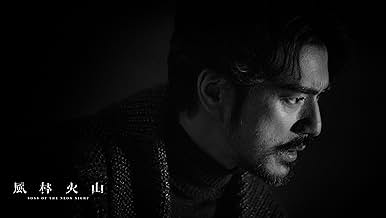
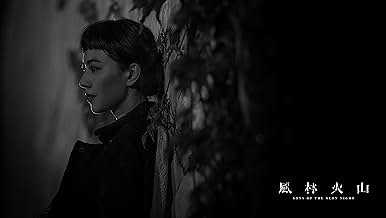
The visuals are striking. Every frame could be a matted black-and-white photograph hung in a modern designer gallery. Takeshi Kaneshiro waking up smoking in his bed in the Hong Kong Cross Harbour Tunnel in the opening set my brain on fire, "Is he the king of the underworld?"
It is bold to create a perpetually snowing Hong Kong and let the Hong Kong movie audience deal with that visual. I've read so many online posts commenting, "There's no snow in Hong Kong" or "Causeway Bay doesn't look like that". I imagine Juno Mak smirking every time that happens going, "Tsk tsk".
It was fascinating entering this metaphorical crime-laden Hong Kong and relating to Juno Mak's unique, oddball and glum worldview. It felt like a more abstract version of the Sin City movies and I enjoyed deciphering what all the visual motifs meant. However, this empty vagueness could be frustrating for many.
My key criticism with the visuals, as gorgeous and well-composed as they are, is the cinematography does not visualize the narrative and its themes.
Moreton's proposal to sell pharmaceutical drugs over illegal drugs is a thematically rich idea, but never visualized. How about a montage juxtaposing a tired office worker popping painkillers from his medicine cabinet to a junkie shooting up in the alleyway?
One of the plots features Sean Lau's narcotics officer trying to save his sick daughter, but the camera never fully shows her face. How can the audience root for a character they can't see?
The movie habitually floats interesting ideas and plot threads, watches it lift off, but then cuts the kite string and goes, "You know where that'll go, right?".
All the story exposition, the who, what, where, when, why, and how, is entirely delivered through dialogue, a similar issue to Christopher Nolan's Tenet. It even sinfully opens with lengthy blink-and-you'll-miss title cards setting up the story.
International audiences will struggle with the subtitles and keeping track of which character is being mentioned in the dialogue.
The film's open-ended approach is a double-edged sword. At times, the negative space is well-placed and the audience is invited to brood along with its characters on what will happen next. But other times, lot of the story seems forcibly left open as there isn't enough runtime for proper payoff.
It all ends on a unsatisfying note...
The problem in the end, is still script.
In a behind-the-scenes interview, Takeshi Kaneshiro, told Juno Mak after reading the script, "You'll never finish telling the whole story. Every character is a lead part. This should be a series."
Sons of the Neon Night is a similar case to Francis Ford Coppola's Megalopolis, a self-financed project where the director has free reign, but nothing's reigning him in.
There are rumors of Netflix releasing a longer version as a mini-series. I'd be interested in seeing a complete director's cut.
Will adding more runtime solve the issue? I'm not sure but I'd be happy to find out.
There's a lot of things to like in Sons of the Neon Night and I am not quite ready to dismiss it all yet.
Set in an alternate, crime-ridden, snowy Hong Kong, a hospital bombing causes the death of Park Li, the chairman of QIN, a pharmaceutical conglomerate that acts as a front for a major drug ring. Moreton Li, the youngest son, succeeds the chairman position and aims to turn QIN into a clean, legitimate business.
Armed with seemingly unlimited resources and time, Juno Mak has admirable ambition, aiming to deliver something unique and different from commercial filmfare, and to his credit, maintains his singular artistic voice.
However, the ponderous multi-threaded narrative is so focused with breaking storytelling rules that it has no chance of finishing satisfyingly within its 132 minute runtime, reportedly cut down from a six-hour director's cut.
The visuals are striking. Every frame could be a matted black-and-white photograph hung in a modern designer gallery. Takeshi Kaneshiro waking up smoking in his bed in the Hong Kong Cross Harbour Tunnel in the opening set my brain on fire, "Is he the king of the underworld?"
It is bold to create a perpetually snowing Hong Kong and let the Hong Kong movie audience deal with that visual. I've read so many online posts commenting, "There's no snow in Hong Kong" or "Causeway Bay doesn't look like that". I imagine Juno Mak smirking every time that happens going, "Tsk tsk".
It was fascinating entering this metaphorical crime-laden Hong Kong and relating to Juno Mak's unique, oddball and glum worldview. It felt like a more abstract version of the Sin City movies and I enjoyed deciphering what all the visual motifs meant. However, this empty vagueness could be frustrating for many.
My key criticism with the visuals, as gorgeous and well-composed as they are, is the cinematography does not visualize the narrative and its themes.
Moreton's proposal to sell pharmaceutical drugs over illegal drugs is a thematically rich idea, but never visualized. How about a montage juxtaposing a tired office worker popping painkillers from his medicine cabinet to a junkie shooting up in the alleyway?
One of the plots features Sean Lau's narcotics officer trying to save his sick daughter, but the camera never fully shows her face. How can the audience root for a character they can't see?
The movie habitually floats interesting ideas and plot threads, watches it lift off, but then cuts the kite string and goes, "You know where that'll go, right?".
All the story exposition, the who, what, where, when, why, and how, is entirely delivered through dialogue, a similar issue to Christopher Nolan's Tenet. It even sinfully opens with lengthy blink-and-you'll-miss title cards setting up the story.
International audiences will struggle with the subtitles and keeping track of which character is being mentioned in the dialogue.
The film's open-ended approach is a double-edged sword. At times, the negative space is well-placed and the audience is invited to brood along with its characters on what will happen next. But other times, lot of the story seems forcibly left open as there isn't enough runtime for proper payoff.
It all ends on a unsatisfying note...
The problem in the end, is still script.
In a behind-the-scenes interview, Takeshi Kaneshiro, told Juno Mak after reading the script, "You'll never finish telling the whole story. Every character is a lead part. This should be a series."
Sons of the Neon Night is a similar case to Francis Ford Coppola's Megalopolis, a self-financed project where the director has free reign, but nothing's reigning him in.
There are rumors of Netflix releasing a longer version as a mini-series. I'd be interested in seeing a complete director's cut.
Will adding more runtime solve the issue? I'm not sure but I'd be happy to find out.
There's a lot of things to like in Sons of the Neon Night and I am not quite ready to dismiss it all yet.


Did you know
- TriviaThe film was wrapped up in 2017 and then went into a post production hell, major chances and cuts had to be done to pass the censorship and some actors refused to return for re-shoot after the unpleasant experiences during the set. According to the editor of the trailer for this film, who had seen multiple versions, the longest rough cut runs about 7-hour and a 3-hour director's cut was also produced. Louis Koo also mentioned in an interview that he saw a version runs about 4 to 5 hours. The version premiered at Cannes Film Festival, which passed the censorship of mainland China, runs 132 minutes. The final version released in theatres had some additional scenes cut or replaced, runs 125 minutes. The original story was set to be present day or near future, one of the major changes during the censorship was to change the whole story from its original setting into the year 1994, before the handover of Hong Kong.
- ConnectionsReferenced in The Popcorn Show: "Sons of the Neon Night" Movie (2025)
- How long is Sons of the Neon Night?Powered by Alexa
Details
- Release date
- Countries of origin
- Official sites
- Language
- Also known as
- Fung Lam Fo Saan
- Filming locations
- Production companies
- See more company credits at IMDbPro
Box office
- Budget
- HK$150,000,000 (estimated)
- Gross worldwide
- $1,509,450
- Runtime
- 2h 5m(125 min)
- Color
- Sound mix
- Aspect ratio
- 2.35 : 1
Contribute to this page
Suggest an edit or add missing content