IMDb RATING
6.6/10
1.7K
YOUR RATING


Water and ice are shown around the world, in all of their many powerful forms.Water and ice are shown around the world, in all of their many powerful forms.Water and ice are shown around the world, in all of their many powerful forms.
- Director
- Writers
- Awards
- 1 win & 13 nominations total



6.61.7K
1
2
3
4
5
6
7
8
9
10
Featured reviews
10tom-796
i n c r e d i b l e Film
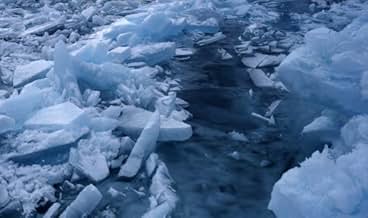
I saw it at Sundance a couple of days ago. I was enthralled by it and sad when it ended. The opening is narratively engaging, yes, with humans and story. That is fascinating, but the film really gets going when it get's past any promise of overall narrative, and begins with its true purpose: to offer a privileged window into the true awesomeness of the water on this planet. Frozen, still, turbulent, graceful, violent, beautiful, it is all there, painstakingly captured with top shelf equipment and cinematography. It is a cinematic poem and of visual glory, awe-inspiring power and incredible natural sounds, mixed and designed in Dolby Atmos surround. The sound is immersive in a way that no other film I have seen has been, and it invites one to surrender and sink into the film. It is not a narrative journey, but a visual and sensual one, that allows time and space to contemplate part of the world we live in, both in celebration and contemplation of human's impact. It is not an overtly environmentalist film, other than to remind us of the power and beauty of nature, and to show some of how we interact with it.
There are moments where the film is scored, with Finnish heavy metal. This worked very well. I had the impression that power chords and distortion may be the only fitting texture to score images of such raw power as thousands of tons of turbulent waves of water.
The visuals sometimes get abstract in a beautiful way that reminds me of the films of Stan Brakhage, specifically Mothlight and Window Water Baby Moving. Again, it invites one to just let it wash over you, and to enjoy the ride.
I can't wait to see this film again, next time hopefully in true 96 fps, which I understand unlocks an entirely new visual experience.
I fully expected an uproarious standing ovation at the end of the screening. I was surprised to hear an average reaction from the crowd. I think people need to approach film with more openness and patience, and not fall into the trap of judging it in the narrow context of "entertainment". This is a cinematic poem on an epic scale and I am so very grateful for its creation.
It's good, but not that good
It's an impressive documentary, the first 30 minutes in particular is great however i feel it is so loose and lacking in narrative that the last 30 minutes I wasn't that bothered...its a cinematic feat though and deserves credit for the cinematography alone
splash and moan
Greetings again from the darkness. This is not your father's Nature documentary. It's more like Mother Nature giving us a glimpse at her most beautiful, peaceful, ferocious and terrifying self. And it's just water. Simple H2O. Only it's not so simple. In fact, water takes many forms, and Russian filmmaker Victor Kossakovsky serves up some stunning water photography from around the globe.
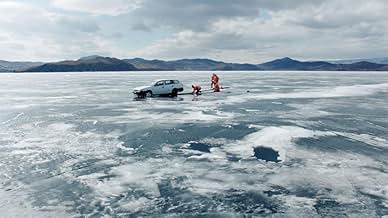
The film begins with a rescue team working frantically to pull out a car that has fallen through the ice. When the camera finally does pull back, we see the vast space of the lake covered in ice. Other cars speed across the frozen body of water as if it's a sport or thrill for the driver. When another mishap occurs, we realize the tragedy is blamed on ice that has melted "3 weeks" earlier than usual. So we brace ourselves for another lecture on climate change.
It's a lecture that never comes. Surprisingly, there is no narrator. Perhaps Morgan Freeman signed a non-compete with the penguins. Kossakovsky allows the camera and nature to show the story, albeit with periodic musical accompaniment from composer Eicca Toppinen - sometimes with heavy metal chords, sometimes with soothing strings. Filmed in Greenland, Venezuela, Siberia (Lake Baikal), and Miami, Florida, where we see the effect of Hurricane Irma, water is shown in its glory. At times peaceful, at times violent. A sailboat captain fighting a storm might be followed by a breath-taking waterfall, which might be followed by a flooded town ... and even a swimming horse is photographed underwater.
Waves, glaciers, whales and dolphins combine for an unusual cinematic experience, and the most staggering sound comes courtesy of the ice moaning and water running. It's one best enjoyed with theatre screen and sound, and a film that will likely lose something even on the finest home systems. Filmed at 94 frames per second (rather than industry norm of 24 or 48), the visuals are truly breathtaking ... and sometimes disorienting. As George (on "Seinfeld") once said, "The sea was angry that day, my friend"; and now we have witnessed the anger for ourselves.
The film begins with a rescue team working frantically to pull out a car that has fallen through the ice. When the camera finally does pull back, we see the vast space of the lake covered in ice. Other cars speed across the frozen body of water as if it's a sport or thrill for the driver. When another mishap occurs, we realize the tragedy is blamed on ice that has melted "3 weeks" earlier than usual. So we brace ourselves for another lecture on climate change.
It's a lecture that never comes. Surprisingly, there is no narrator. Perhaps Morgan Freeman signed a non-compete with the penguins. Kossakovsky allows the camera and nature to show the story, albeit with periodic musical accompaniment from composer Eicca Toppinen - sometimes with heavy metal chords, sometimes with soothing strings. Filmed in Greenland, Venezuela, Siberia (Lake Baikal), and Miami, Florida, where we see the effect of Hurricane Irma, water is shown in its glory. At times peaceful, at times violent. A sailboat captain fighting a storm might be followed by a breath-taking waterfall, which might be followed by a flooded town ... and even a swimming horse is photographed underwater.
Waves, glaciers, whales and dolphins combine for an unusual cinematic experience, and the most staggering sound comes courtesy of the ice moaning and water running. It's one best enjoyed with theatre screen and sound, and a film that will likely lose something even on the finest home systems. Filmed at 94 frames per second (rather than industry norm of 24 or 48), the visuals are truly breathtaking ... and sometimes disorienting. As George (on "Seinfeld") once said, "The sea was angry that day, my friend"; and now we have witnessed the anger for ourselves.
A mesmerising film
I watched this at home, curious as to what was happening at the beginning. As the film progressed and showed the enormity and awesome beauty of water, in all its forms, was amazing. The score was non intrusive and well suited to what was being portrayed. Camera angles and cinematography was excellent in showing how water is an indomitable force of nature. Ideal slow detailed film with awesome scenes that stays with you long afterwards.
Water deserves much, much more
Great Subject, maybe the greatest on this planet, drives you to great expectations, but at the end leaves you with great disappointment. I have personally been in some of the locations like Baikal, Arctic Ocean, Sweden, Canadian North Pacific, Great Lakes including Niagara Falls. I didn't have even a fraction of feelings I had compared to what was when I first been there.


Did you know
- TriviaThe composer, Eicca Toppinen, is the main man of the Finnish cello-metal band, Apocalyptica.
- ConnectionsReferenced in Evening Urgant: Feduk/Sharlot (2019)
- How long is Aquarela?Powered by Alexa
Details
- Release date
- Countries of origin
- Official site
- Languages
- Also known as
- 水視界
- Filming locations
- Production companies
- See more company credits at IMDbPro
Box office
- Gross US & Canada
- $307,346
- Opening weekend US & Canada
- $24,753
- Aug 18, 2019
- Gross worldwide
- $671,631
- Runtime
- 1h 30m(90 min)
- Color
- Sound mix
- Aspect ratio
- 2.35 : 1
Contribute to this page
Suggest an edit or add missing content