IMDb RATING
6.0/10
211
YOUR RATING
Examining various battles during America's Civil War, Civil War Chronicles exposes America's unsung heroes.Examining various battles during America's Civil War, Civil War Chronicles exposes America's unsung heroes.Examining various battles during America's Civil War, Civil War Chronicles exposes America's unsung heroes.
- Awards
- 2 nominations total
Browse episodes
6.0211
1
2
3
4
5
6
7
8
9
10
Featured reviews
Be careful about inaccurate reviews
This documentary is a train-wreck, but be careful of reviews which are even more wildly inaccurate. For instance, one review from a self-described non-historian says " this documentary makes it seem as if the southern states had seceded out of fear of Abe abolishing slavery! Not only was abolishing slavery among the first things the confederacy was going to do after the war, but Abe wanted to send every African American to Panama! You've got to show every side of the secession because non of it is cut and dry. How would you like to be taxed "exporting" goods to your own country because you lived and worked in the south?"
He's wrong about every item there. Southern states DID secede over fear that Lincoln would abolish slavery. They said so, openly and officially. The Declarations of Causes of Secession, the "Declarations of Independence" for most of the original Confederate states, all mention slavery repeatedly and talk of Republican plans to destroy it.
Lincoln did not want to send every African American to Panama. He initially supported voluntary colonization, but abandoned the scheme when African-American leaders made it clear they didn't want to leave. Also note the contradiction between the reviewer's claim that ending slavery wasn't a Union war aim and his claim that Lincoln wanted to kick out all the black people.
The claim that the Confederacy planned to abolish slavery is a bald- faced lie. There isn't a single bit of evidence that the Confederate government wished to do anything of the kind. Even at the very end, when they were desperate enough to try to recruit black soldiers, the Confederate Congress wouldn't pass the law until the provision requiring the freeing of enlisted slaves was struck.
And the claim that southerners were taxed for exporting goods is another total fabrication. The United States didn't have export tariffs. It only taxed IMPORTS, and most of those imports came into northern ports, not southern. The "tax revolt" story is a fantasy concocted by defeated Confederate leaders after the war to make their cause look more attractive, but until the Confederacy collapsed they were quite open about being devoted to the preservation of slavery. I urge everyone who reads this to examine the primary sources and see for themselves where the truth lies.
He's wrong about every item there. Southern states DID secede over fear that Lincoln would abolish slavery. They said so, openly and officially. The Declarations of Causes of Secession, the "Declarations of Independence" for most of the original Confederate states, all mention slavery repeatedly and talk of Republican plans to destroy it.
Lincoln did not want to send every African American to Panama. He initially supported voluntary colonization, but abandoned the scheme when African-American leaders made it clear they didn't want to leave. Also note the contradiction between the reviewer's claim that ending slavery wasn't a Union war aim and his claim that Lincoln wanted to kick out all the black people.
The claim that the Confederacy planned to abolish slavery is a bald- faced lie. There isn't a single bit of evidence that the Confederate government wished to do anything of the kind. Even at the very end, when they were desperate enough to try to recruit black soldiers, the Confederate Congress wouldn't pass the law until the provision requiring the freeing of enlisted slaves was struck.
And the claim that southerners were taxed for exporting goods is another total fabrication. The United States didn't have export tariffs. It only taxed IMPORTS, and most of those imports came into northern ports, not southern. The "tax revolt" story is a fantasy concocted by defeated Confederate leaders after the war to make their cause look more attractive, but until the Confederacy collapsed they were quite open about being devoted to the preservation of slavery. I urge everyone who reads this to examine the primary sources and see for themselves where the truth lies.
Often wrong and sometimes lazy!!!!
One episode I thought should have been named "The John Adams Jr show, it was about Fredericksburg but left out everything except what the great grandson of a President went through! Of course I am predudice about it. You see, the pontoon boat which he went over & back on had my great-great grandfather & my namesake was on the pontoon boat, as captain of the boat. But he wasn't so lucky and was shot in the head! No mention of any of the others who never made it back and forth! Then Gettysburgh the h being origninal because us Scots founded a lot of the PA cities but when the English got here the names were changed, no mention was made of the fact that Lee's army had to buy their cannon fuses from a different company because the normal on had been flooded out. Well the new ones were made with made with more juice in the powder and caused a hotter blast, sending most shots well past where they were intended to go. And nobody, EVER, mentions that four of the original 13 colonies put in the Articles of Confederation, the contract that made the country, that they had the right of withdrawl from the Union at anytime. They were PA., MA., New York and Virginia! But Lincoln totally ignored this, which in fact made the countries creation a joke! And I had between 24-30 union fighters in my family as we were coal miners & slaves for 200 years!
A slap in the face
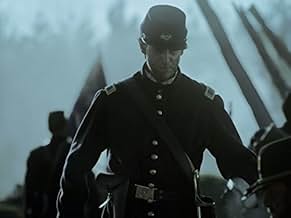
I have been a volunteer living historian at Antietam National Battlefield for over 5 years. I personally know most of the historians that were interviewed for the Antietam episode. Their segments are great. The rest of the production is a historical disgrace. Others have gone into detail about the many inaccuracies, so I won't cover those in this review. What I will say is that those inaccuracies are not the result of a low budget, but rather laziness or downright willful ignorance. It doesn't cost money to look at period photos and drill manuals on the Internet and see what your soldiers should look like and how they should handle a rifle and a cannon. The lack of research for the battle scenes in this production is a disgrace and it is a slap in the face to the historians that were interviewed and to the soldiers who fought and died at Antietam. Shame on you, AHC. You are disrespecting the American Heroes you claim to care so much about.
There are no winners in this war.
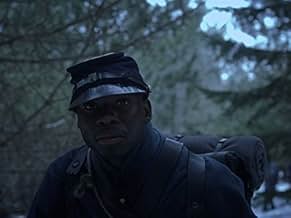
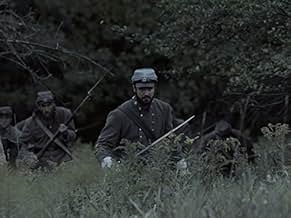
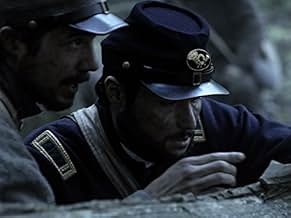
As someone with family members who served—and died—on both sides during the Civil War, I regret that this production has done more to make "those people back then" seem even more remote to the modern viewer. Even the layman can tell that there's something hokey about how the soldiers are portrayed, in their actions and equipment. There were thousands upon thousands of photographs taken in studios and in the field from 1861 to 1865. Play a simple game of "one of these things is not like the other" and compare them to this show. One might say " well, the average person doesn't know," and this is a faulty excuse. For one, the purpose of a documentary is to inform. Second, they may not be able to articulate just WHAT is wrong, but there is a subliminal aesthetic on which anyone can pick up. Take a simple uniform cap. During the war, the brims were made of a varnished, stiff leather that can look quite fetching when worn with purpose. You see a photo of a soldier from 155 years ago wearing one, and you can connect with him. You think "this guy had a personality. He was real." Now get a cheap, costume-grade replica that is finished with a soft, pleather brim that looks rather sad and creased like a baseball cap, plopped on the head of an actor. The actor looks weird, because he treats it as a costume, and presumes that "well, this probably looked good to those old-fashioned people." It is all disingenuous because it, itself, is wrong and is being worn with ignorance. This stuff is more important, and detectable, than many realize.
For me, part of making "them" feel less different from "us" is to just represent them as they would have looked and acted, not a contrived farce that seems to presume that history, left as it was, is too "boring" for modern audiences.
Put it this way: you can't expect to create an accurate-looking Civil War scene from scratch by renting costumes and weapons, handing them out, and saying "action." You, literally, need to build an army unit. The background in "Cold Mountain" went through a "camp of instruction" to bring them up to a basic level of proficiency. I'm not saying that reenactors are God's gift to history, but at least there's a core, basic knowledge there. You start with that, and bring in a military coordinator/adviser to smooth out the few individual quirks and "reenactorisms," and go from there.
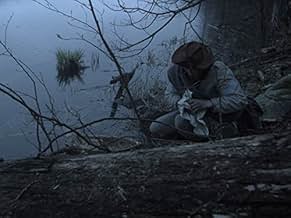
I've seen viewers who are afraid of this production being "one-sided" (i.e. acknowledging that the North won the war) but I assure you that both sides in this are equally sullied with plastic water bottles and flag poles that look to have been taken from the church auditorium.
For me, part of making "them" feel less different from "us" is to just represent them as they would have looked and acted, not a contrived farce that seems to presume that history, left as it was, is too "boring" for modern audiences.
Put it this way: you can't expect to create an accurate-looking Civil War scene from scratch by renting costumes and weapons, handing them out, and saying "action." You, literally, need to build an army unit. The background in "Cold Mountain" went through a "camp of instruction" to bring them up to a basic level of proficiency. I'm not saying that reenactors are God's gift to history, but at least there's a core, basic knowledge there. You start with that, and bring in a military coordinator/adviser to smooth out the few individual quirks and "reenactorisms," and go from there.
I've seen viewers who are afraid of this production being "one-sided" (i.e. acknowledging that the North won the war) but I assure you that both sides in this are equally sullied with plastic water bottles and flag poles that look to have been taken from the church auditorium.
Weak, superficial and often inaccurate
Key battles of the American Civil War, as seen through the eyes of soldiers from either side.
A novel idea, very badly executed. Most war documentaries give the strategic view - this give's the everyman's view. Just not an interesting, accurate or compelling one.
The characters are generally well chosen but the dramatisations are quite weak and don't really give that much of an insight into the battle. Due to the narrow focus, much of the detail is lost. For example, if you watched the episode on the Battle of Antietam you would think that the entire battle occurred in the cornfield. Burnside's Bridge is not mentioned, or Bloody Lane. Similarly, Gettysburg covers only Big and Little Round Tops. Pickett's Charge isn't even mentioned by name.
To make it worse, you have the worst line-up of historians-for-hire ever. More salesmen than historians, their job seems to be to talk up, through shouting and talking fast, the importance of each battle and these characters parts in it. The Battle of Nashville, which was much more a coup de grace than a pivotal battle, gets turned into something vital to the survival of Sherman's Army and the Union. The hyperbole on display is quite ridiculous.
Not even a series for Civil War beginners, this is that dumbed down and inaccurate.
Do yourself a favour: watch Ken Burns's The Civil War instead. Surely the greatest documentary series ever made, on any subject.
A novel idea, very badly executed. Most war documentaries give the strategic view - this give's the everyman's view. Just not an interesting, accurate or compelling one.
The characters are generally well chosen but the dramatisations are quite weak and don't really give that much of an insight into the battle. Due to the narrow focus, much of the detail is lost. For example, if you watched the episode on the Battle of Antietam you would think that the entire battle occurred in the cornfield. Burnside's Bridge is not mentioned, or Bloody Lane. Similarly, Gettysburg covers only Big and Little Round Tops. Pickett's Charge isn't even mentioned by name.
To make it worse, you have the worst line-up of historians-for-hire ever. More salesmen than historians, their job seems to be to talk up, through shouting and talking fast, the importance of each battle and these characters parts in it. The Battle of Nashville, which was much more a coup de grace than a pivotal battle, gets turned into something vital to the survival of Sherman's Army and the Union. The hyperbole on display is quite ridiculous.
Not even a series for Civil War beginners, this is that dumbed down and inaccurate.
Do yourself a favour: watch Ken Burns's The Civil War instead. Surely the greatest documentary series ever made, on any subject.
Did you know
- TriviaCream Productions was so bombarded with negative reviews for their inaccurate portrayal of the American Civil War they were forced to remove their Facebook review page and block and delete numerous reviewers.
Details
- Release date
- Country of origin
- Official site
- Language
- Also known as
- Blood and Fury: America's Civil War
- Filming locations
- Production companies
- See more company credits at IMDbPro
- Color
Contribute to this page
Suggest an edit or add missing content