Somebody to Love
- Episode aired Jun 21, 2017
- TV-MA
- 53m

Gloria follows the money; Nikki plays a game; Emmit learns a lesson about progress from Varga.Gloria follows the money; Nikki plays a game; Emmit learns a lesson about progress from Varga.Gloria follows the money; Nikki plays a game; Emmit learns a lesson about progress from Varga.
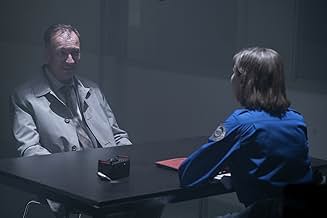
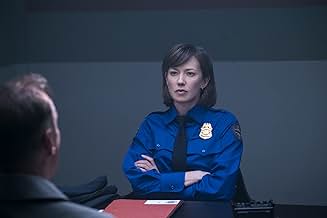

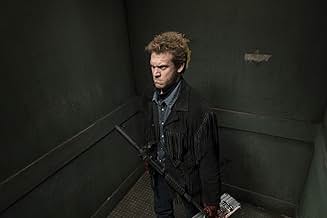


- Dennis
- (as Niko Koupantsis)


- Director
- Writer
- All cast & crew
- Production, box office & more at IMDbPro
Featured reviews
A thought-provoking finale that encapsulates Fargo's third season with emotional depth, narrative sophistication, and existential inquiry
The episode opens with Gloria Burgle (Carrie Coon) tendering her resignation from the police force, feeling overwhelmed by the systemic failures and personal losses she has endured. However, just as she steps away, an IRS agent calls with new evidence, pulling her back into the investigation of the Stussy family's criminal entanglements. This moment underscores Gloria's role as the moral compass of the season, embodying perseverance and integrity amid chaos. Coon's nuanced performance captures Gloria's weariness and determination, grounding the narrative's emotional core.
Meanwhile, Emmit Stussy (Ewan McGregor) is at his lowest point, having lost his company to V. M. Varga's (David Thewlis) manipulations and grappling with the guilt over his brother Ray's death. In a poignant scene, Emmit discards the final Sisyphus stamp-the symbol of the feud that destroyed his family-signifying a tentative desire for redemption. McGregor's dual portrayal of Emmit's vulnerability and desperation is a highlight, conveying the tragic consequences of pride and misjudgment.
The episode's tension escalates as Nikki Swango (Mary Elizabeth Winstead) confronts Emmit with a shotgun, demanding justice for Ray. Their confrontation is charged with emotional complexity, blending anger, betrayal, and a faint hope for understanding. The arrival of a police officer interrupts the standoff, leading to a tragic shootout in which both Nikki and the officer die. This sudden and brutal climax underscores the season's meditation on fate and the unpredictability of violence. Winstead's performance conveys Nikki's fierce resolve and vulnerability, making her demise profoundly affecting.
Parallel to these events, Mr. Wrench (Russell Harvard) avenges Nikki by killing Varga's henchman Meemo, a moment of poetic justice that ties back to the series' earlier seasons and expands its mythos. This act of retribution adds a layer of narrative closure and thematic resonance regarding loyalty and vengeance.
Visually, the episode employs a muted color palette and stark cinematography by Dana Gonzales, capturing the cold Minnesota winter and the claustrophobic interiors with atmospheric precision. The editing by Regis Kimble maintains a taut pace, balancing moments of high tension with quieter, reflective scenes. Jeff Russo's haunting score weaves through the narrative, enhancing its emotional and thematic depth.
Thematically, "Somebody to Love" grapples with the elusive nature of truth, the consequences of choices, and the possibility of redemption. The episode's ambiguous ending-Gloria watching a school bus with her son, reflecting on the innocence of childhood-offers a poignant counterpoint to the season's darkness, suggesting hope amid uncertainty. The final scene between Gloria and Varga, a tense and unresolved confrontation, encapsulates the ongoing struggle between order and chaos, truth and deception.
Critically, the episode was widely praised for its strong performances, especially from McGregor, Coon, and Winstead, as well as its intelligent writing and effective pacing. Reviewers highlighted the finale's ability to provide satisfying character arcs while maintaining thematic complexity and narrative ambiguity. Some critiques focused on certain plot conveniences and the abruptness of the shootout, but these were generally outweighed by the episode's emotional impact and philosophical richness.
"Somebody to Love" is a compelling and thought-provoking finale that encapsulates Fargo's third season with emotional depth, narrative sophistication, and existential inquiry. Through layered performances, meticulous direction, and evocative storytelling, it immerses viewers in a world where truth is multifaceted, justice is elusive, and human frailty shapes destiny. The episode challenges audiences to reflect on the nature of morality, the cost of ambition, and the enduring hope for connection, solidifying Fargo's reputation as a distinctive and intellectually engaging television drama.
Fargo - Season 3 very fulfilling.....
Another great season!
Yet another fab Fargo
Amazing finale for this season - and story


Did you know
- TriviaCarrie Coon is the only cast member to appear on screen in every episode of Season 3.
- GoofsAfter his car has stopped and there is no signal, Emmit smashes his cellular phone on the road. Howevr, it seems that police didn't find it in their investigation of crime scene.
- Quotes
V.M. Varga: Are you familiar with the Russian saying, "The past is unpredictable"?
Gloria Burgle: I'm pretty sure you made that up.
V.M. Varga: Possibly. But which of us can say with certainty what has occurred, actually occurred, and what is simply rumor, misinformation, opinion?
Gloria Burgle: A photograph is considered proof in a court of law.
V.M. Varga: Well, photographs can be doctored. One's eyes can be deceived. We see what we believe, not the other way around.
- SoundtracksAppassionata Sonata (Piano Sonata No. 23 in F Minor, Op. 57), First Movement, Allegro Assai
(uncredited)
Written by Ludwig van Beethoven
Details
- Runtime
- 53m
- Color
- Sound mix
- Aspect ratio
- 1.78 : 1
- 2.00 : 1