

This love story chronicles the lifelong relationship of conductor-composer Leonard Bernstein and actress Felicia Montealegre Cohn Bernstein.This love story chronicles the lifelong relationship of conductor-composer Leonard Bernstein and actress Felicia Montealegre Cohn Bernstein.This love story chronicles the lifelong relationship of conductor-composer Leonard Bernstein and actress Felicia Montealegre Cohn Bernstein.
- Nominated for 7 Oscars
- 27 wins & 180 nominations total






- Director
- Writers
- All cast & crew
- Production, box office & more at IMDbPro
6.568.4K
1
2
3
4
5
6
7
8
9
10
Featured reviews
I've watched too many of this kind of story, and 'Maestro' isn't an inch different.
A struggling musician agonized by his own genius, talents, and creativity and trapped in loveless marriage filled with guilt. Both look the other way while one has an affair and realize the importance of one's own partner too late. Right now, at the top of my head I can think of 'Fosse/Verdon', 'A Star Is Born', 'George & Tammy', 'Walk the Line', 'Dreamgirls', 'Daisy Jones & The Six', and etc. (Wow, that's a lot.) Biographical genre is especially tricky because it has to excel the life of actual historical figures. 'Maestro' could have been so much better if it delved into the introspective and artistic side of Bernstein deeper or provided a different and fresh point of view on his life rather than reciting his personal life. His autobiography or research would be more fun and interesting than this explanatory movie.
There were a few futile attempts to make the movie look more artistic, abstract, and ambiguous. They failed because they serve no purpose but to look pretentious. White and black, camera movement, the use of light and shadows, and musical aspects. They are all good attempts, but for what? By doing so, is the story getting stronger? Do they enhance what viewers feel? Waste of time and films.
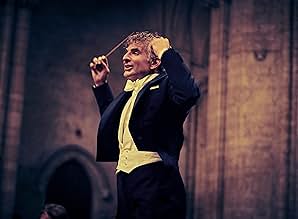
Bradley Cooper's performance is disappointing. He never acts; he imitates. When he's on the screen, we know clearly that he's acting. It's hard to be absorbed and immersed into the screen because he always pushes the audience away with his trying too hard. I get that he wants to emulate Bernstein's twangy voice. However, emotions and messages he delivers are more important than his likeness of Bernstein's tone, accent, sound, or mannerism. He focuses on what's outside of Bernstein rather than what would be inside of him. There is a 10 minute sequence of Cooper conducting, and it's screaming 'Look how good I am!!!'. It's one of the highest points for emotions to burst out for the audience, and I started to laugh.
There were a few futile attempts to make the movie look more artistic, abstract, and ambiguous. They failed because they serve no purpose but to look pretentious. White and black, camera movement, the use of light and shadows, and musical aspects. They are all good attempts, but for what? By doing so, is the story getting stronger? Do they enhance what viewers feel? Waste of time and films.
Bradley Cooper's performance is disappointing. He never acts; he imitates. When he's on the screen, we know clearly that he's acting. It's hard to be absorbed and immersed into the screen because he always pushes the audience away with his trying too hard. I get that he wants to emulate Bernstein's twangy voice. However, emotions and messages he delivers are more important than his likeness of Bernstein's tone, accent, sound, or mannerism. He focuses on what's outside of Bernstein rather than what would be inside of him. There is a 10 minute sequence of Cooper conducting, and it's screaming 'Look how good I am!!!'. It's one of the highest points for emotions to burst out for the audience, and I started to laugh.
All style with little substance
Think of a biopic of a famous person as like a complex cake - you can carefully dissect one slice of it to examine the contents, or you can bravely try to examine the whole lot to see what it's made of.
This biopic of American composer and conductor Leonard Bernstein is like looking at only the surface of the cake through a slice of Swiss cheese - a lot of loosely connected vignettes with no depth. If you don't know much about the man, you would leave the theatre with no great insights about him.
The film jumps around in time and gives you snippets of the man's life and work. There are scenes about his bisexuality and penchant for men, his role as a conductor and composer, his drug addictions and his relationship with his daughter, but none of these are examined in any depth at all. His bipolar relationship with his wife and her later death from cancer are given the most screen time, but still feels unfulfilled and lacking in substance.
Bradley Cooper directs in a rather disjointed style. The first half is shot in black and white, then we change to colour for no good reason except maybe historical chronology - it doesn't work. Neither does the curiously tight aspect ratio, which again inexplicably opens up to full screen near the end. Some scenes are beautifully shot but too often Cooper relies on the slow zoom in and the very long takes, which don't always seem to match the scene. The film also could have ended perfectly with the penultimate scene, but inexplicably ruins the moment with one extra shot that completely fails to land.
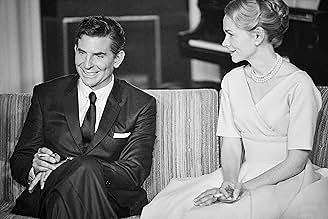
Carey Mulligan is excellent as Bernstein's wife but Cooper as Bernstein doesn't quite work for me. He tends to overact, gives you little insight into the man himself, and the nasal voice starts to grate after a while - maybe it was inevitable with the prosthetic nose he was required to wear.
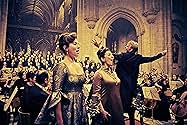
Even the grand concert scene in the cathedral, conducting his beloved Mahler, didn't quite generate the depth of feeling it could have - contrast this with the Tchaikovsky concert scene in the French-Russian film Le Concert, which takes emotion (actors and viewers) to a much higher level.
All in all this is not a bad movie, and to be fair it does engage the viewer a little more in the second half. But it tackles too many themes with a disturbing superficiality, giving very little substance to almost any. It could have been a lot better. No doubt however it will get lots of Oscar nominations, but then the Academy lost the plot years ago and succumbs to hype more than merit.
This biopic of American composer and conductor Leonard Bernstein is like looking at only the surface of the cake through a slice of Swiss cheese - a lot of loosely connected vignettes with no depth. If you don't know much about the man, you would leave the theatre with no great insights about him.
The film jumps around in time and gives you snippets of the man's life and work. There are scenes about his bisexuality and penchant for men, his role as a conductor and composer, his drug addictions and his relationship with his daughter, but none of these are examined in any depth at all. His bipolar relationship with his wife and her later death from cancer are given the most screen time, but still feels unfulfilled and lacking in substance.
Bradley Cooper directs in a rather disjointed style. The first half is shot in black and white, then we change to colour for no good reason except maybe historical chronology - it doesn't work. Neither does the curiously tight aspect ratio, which again inexplicably opens up to full screen near the end. Some scenes are beautifully shot but too often Cooper relies on the slow zoom in and the very long takes, which don't always seem to match the scene. The film also could have ended perfectly with the penultimate scene, but inexplicably ruins the moment with one extra shot that completely fails to land.
Carey Mulligan is excellent as Bernstein's wife but Cooper as Bernstein doesn't quite work for me. He tends to overact, gives you little insight into the man himself, and the nasal voice starts to grate after a while - maybe it was inevitable with the prosthetic nose he was required to wear.
Even the grand concert scene in the cathedral, conducting his beloved Mahler, didn't quite generate the depth of feeling it could have - contrast this with the Tchaikovsky concert scene in the French-Russian film Le Concert, which takes emotion (actors and viewers) to a much higher level.
All in all this is not a bad movie, and to be fair it does engage the viewer a little more in the second half. But it tackles too many themes with a disturbing superficiality, giving very little substance to almost any. It could have been a lot better. No doubt however it will get lots of Oscar nominations, but then the Academy lost the plot years ago and succumbs to hype more than merit.
The Best Intensions. But Not the Best Result.
I had hoped to enjoy 'Maestro'. It is a film for adult audiences, featuring actors I appreciate (Bradley Cooper and Carey Mulligan) and directed by that same Bradley Cooper. It deals with a true American Icon (composer / conductor Leonard Bernstein) and deals with the 'man' inside that icon. In this time of Holiday Blockbusters it promised to appeal to an audience like me. And, in fact, it did. The theatre was two-thirds full; a first-time-since-the-Pandemic at this small art house.
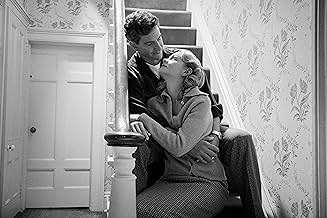
The film, however, is something of a mess. It is confused about the type of picture it wants to be. In its first thirty minutes it takes on a flight-of-fancy aura; it is as though Bernstein and his soon to be wife are in a musical-comedy with the background stage settings changing as if by magic. The film's first half is in black and white; I imagine a testament to The Forties and early Fifties (the time period covered by those scenes) but, in fact, lots of color-films were made at that time.
Leonard Bernstein was bisexual. And that bisexuality is, in fact, revealed, but revealed in a coy, teasing, easy-to-misunderstand way. And then there is the background music, all of which was composed by Bernstein, but not all of which fits the scene it backgrounds. The selection from his 'West Side Story' is the most emblematic of this. But not the only example.
For me, the story belongs to Bernstein's wife Felicia (played by Mulligan). She is the wife of a bisexual man; a fact that is problematic enough. But he is a man who is always center-stage, and for whom she gave up a promising career to raise their children, support her husband, and who suffers in silence until she can suffer silently no longer. But even here (and though Mulligan has long been a favorite of mine), there is a smile on her character that (a) rings insincere and (b) is repeated so often that I wanted to scream, No more. But, sadly, there is more; the most cinematic, most hard-to-believe smile coming, in a hard-to believe scene, in London's Westminster Cathedral.
Finally there is the finale. I will give nothing away when I say that the film ends one scene too late, it is one scene too long. A scene in which Bernstein instructs a young orchestra conductor would be as appropriate an ending as one could hope for.
But then .....
The film, however, is something of a mess. It is confused about the type of picture it wants to be. In its first thirty minutes it takes on a flight-of-fancy aura; it is as though Bernstein and his soon to be wife are in a musical-comedy with the background stage settings changing as if by magic. The film's first half is in black and white; I imagine a testament to The Forties and early Fifties (the time period covered by those scenes) but, in fact, lots of color-films were made at that time.
Leonard Bernstein was bisexual. And that bisexuality is, in fact, revealed, but revealed in a coy, teasing, easy-to-misunderstand way. And then there is the background music, all of which was composed by Bernstein, but not all of which fits the scene it backgrounds. The selection from his 'West Side Story' is the most emblematic of this. But not the only example.
For me, the story belongs to Bernstein's wife Felicia (played by Mulligan). She is the wife of a bisexual man; a fact that is problematic enough. But he is a man who is always center-stage, and for whom she gave up a promising career to raise their children, support her husband, and who suffers in silence until she can suffer silently no longer. But even here (and though Mulligan has long been a favorite of mine), there is a smile on her character that (a) rings insincere and (b) is repeated so often that I wanted to scream, No more. But, sadly, there is more; the most cinematic, most hard-to-believe smile coming, in a hard-to believe scene, in London's Westminster Cathedral.
Finally there is the finale. I will give nothing away when I say that the film ends one scene too late, it is one scene too long. A scene in which Bernstein instructs a young orchestra conductor would be as appropriate an ending as one could hope for.
But then .....
Too much Leonard, not enough Bernstein
It's an old (and unanswerable) question: to what extent is it possible - or desirable - to separate the art from the artist? Is it possible to appreciate the art simply as art, and not to delve into the (sometimes tawdry) details of the artist? Or are the art and the artist so inextricably entwined that you cannot understand the one without knowing the other?
I very much lean towards separation. I fell in love with Bernstein's music the first time I saw West Side Story mumble years ago at an impressionable age; which is why I was disappointed that there was so little West Side Story in this film. Surely a biopic of a composer should feature that composer's music pretty heavily?
Of course, we all know that beneath every great artist is a human being - usually with a collection of human flaws. But does this matter? Well, it matters here. What we mostly get is a film about Leonard the man, and his complicated marriage to Felicia Montealegre. Much of this was new to me. I knew that Bernstein was bisexual, but didn't care. I find that I also don't care about most of the other details of his life which were revealed to me - although if the film was truly about the man, not his music, his record as a human rights activist should probably have been at least touched on. But never mind that: I came for the music, and didn't get enough.
Not that this film is without merit. Bradley Cooper's performance is first class - there's one sequence in which he truly shows us the passion of a great conductor - and Carey Mulligan is as riveting as ever. Cinematography and sound are both excellent.
Overall, this is a good film, but ultimately a disappointing one.
I very much lean towards separation. I fell in love with Bernstein's music the first time I saw West Side Story mumble years ago at an impressionable age; which is why I was disappointed that there was so little West Side Story in this film. Surely a biopic of a composer should feature that composer's music pretty heavily?
Of course, we all know that beneath every great artist is a human being - usually with a collection of human flaws. But does this matter? Well, it matters here. What we mostly get is a film about Leonard the man, and his complicated marriage to Felicia Montealegre. Much of this was new to me. I knew that Bernstein was bisexual, but didn't care. I find that I also don't care about most of the other details of his life which were revealed to me - although if the film was truly about the man, not his music, his record as a human rights activist should probably have been at least touched on. But never mind that: I came for the music, and didn't get enough.
Not that this film is without merit. Bradley Cooper's performance is first class - there's one sequence in which he truly shows us the passion of a great conductor - and Carey Mulligan is as riveting as ever. Cinematography and sound are both excellent.
Overall, this is a good film, but ultimately a disappointing one.
Such a wasted opportunity
I was very excited when I heard Maestro was coming out. With all this filmmaking firepower, it would have to be worthy of its subject. Now I've seen the movie and am stunned by the wasted talent and energy expended for what turned into another movie about rich, talented people who appear to have it all, but get sad and emotional just like the rest of us. They just talk about it a LOT more.
The film is beautifully photographed, but I have no idea what the format change and the black and white to color change accomplished. The acting was good, but rather than being shown that the characters are going through something emotional, we are told, All these immensely talented people seem to talk about is their feelings, not their motivations, plans and aspirations.
Leonard Bernstein wrote and conducted some of the most memorable music of the 20th century. He singlehandedly (with help from Bugs Bunny) kept interest in classical music alive when jazz and rock were kings. But we learn nothing of this in this film. Bernstein's talents and accomplishments are presented as facts, without exploration. What a waste.
The film is beautifully photographed, but I have no idea what the format change and the black and white to color change accomplished. The acting was good, but rather than being shown that the characters are going through something emotional, we are told, All these immensely talented people seem to talk about is their feelings, not their motivations, plans and aspirations.
Leonard Bernstein wrote and conducted some of the most memorable music of the 20th century. He singlehandedly (with help from Bugs Bunny) kept interest in classical music alive when jazz and rock were kings. But we learn nothing of this in this film. Bernstein's talents and accomplishments are presented as facts, without exploration. What a waste.


Did you know
- TriviaOf the scene in which Leonard Bernstein conducts the London Symphony Orchestra at the Ely Cathedral in 1976, Bradley Cooper said, "That scene I was so worried about because we did it live... I was recorded live. I had to conduct them. And I spent six years learning how to conduct six minutes and 21 seconds of music. I was able to get the raw take where I just watched Leonard Bernstein [conduct] at Ely Cathedral... And so I had that to study."
- GoofsThe day after Bernstein makes his wildly successful debut with the N.Y. Philharmonic in November of 1943, the story is carried on the front page of the N.Y. Times. One of his friends notes that the front page also includes a headline reading "Hitler Bombs Poland." Germany had bombed and conquered Poland in September, 1939, so the country had already been under German occupation for over four years at the time of Bernstein's debut concert.
- Quotes
Leonard Bernstein: Summer sang in me a little while, it sings in me no more. Edna St. Vincent Millay.
Felicia Montealegre: If the summer doesn't sing in you, then nothing sings in you. And if nothing sings in you, then you can't make music.
- ConnectionsFeatured in Chris Plante: The Right Squad: Episode #1.70 (2023)
- How long is Maestro?Powered by Alexa
Details
- Release date
- Countries of origin
- Official site
- Language
- Also known as
- Rybernia
- Filming locations
- Production companies
- See more company credits at IMDbPro
Box office
- Budget
- $80,000,000 (estimated)
- Gross worldwide
- $383,532
- Runtime
- 2h 9m(129 min)
- Color
- Sound mix
- Aspect ratio
- 1.33 : 1
Contribute to this page
Suggest an edit or add missing content