Git Gone
- Episode aired May 21, 2017
- TV-MA
- 1h 1m
IMDb RATING
7.9/10
3.6K
YOUR RATING


The story of Laura's life and death is explored, including her first encounter with Shadow and how exactly she came to be sitting on the edge of his motel room bed.The story of Laura's life and death is explored, including her first encounter with Shadow and how exactly she came to be sitting on the edge of his motel room bed.The story of Laura's life and death is explored, including her first encounter with Shadow and how exactly she came to be sitting on the edge of his motel room bed.






Crispin Glover
- Mr. World
- (credit only)

Bruce Langley
- Technical Boy
- (credit only)

Yetide Badaki
- Bilquis
- (credit only)

Pablo Schreiber
- Mad Sweeney
- (credit only)

Ian McShane
- Mr. Wednesday
- (credit only)


7.93.5K
1
2
3
4
5
6
7
8
9
10
Featured reviews
The Irony of Death
To this point, American Gods has been enjoyable, but difficult to get into without knowing all of the nooks and crannies that the source material has to offer. With that said, this most recent episode managed to secure my faith back in the property as there was a bit of an "explainer" episode if you will. Instead of continuing with Shadow and Wednesday, we got a flashback episode entailing what Laura Moon has been up to all this time, considering she wasn't in her grave. As it turns out, she was able to cheat death, or at least come back from it, which we can only assume has something to do with Mad Sweeney's coin that was left on top of her grave. Although the episode doesn't break any new ground, as it ends as Shadow finds his alive wife, it added so much necessary context to what's going on. I didn't entirely care about Shadow's loss at the time, but I feel like seeing their relationship unfold naturally over the course of an episode was a great addition to the season. As was the welcomed return of Audrey, who can now say she was a part of both of my two favorite scenes this season, her and Shadow at the grave, and her seeing one-armed Laura return from the dead (and proceed to crap out some sort of side effect to death on a toilet). I'm realizing now that the series will always tend to stray on the side of obscurity and weirdness, but it's episodes like this that break the mold and give us a new perspective, that feel so powerful and important.
9.0/10
9.0/10
The zombie episode
The worst episode of the series. The Walking Dead invaded American Gods. The arm sewn by needle and thread is the emblematic of the ridicule embodied by this useless episode. Laura is an annoying character; an hour to say something that would be enough for 10 minutes. Empty passage.
Boring and empty
This one could have easily been cut down to 5-10 minutes. Or less.
Annoying irritating character in an annoying and irritating episode.
Pass on this one, unless you are sitting in the DMB with an hour to kill.
Annoying irritating character in an annoying and irritating episode.
Pass on this one, unless you are sitting in the DMB with an hour to kill.
Zombie Hawww
Wow! Blown away.
The detour taken really pays off. This episode is a masterpiece. Phenomenal performances. Great backstory. Perfect blend of horror and humour.
I can't understand the negative reviews, I really can't. I guess people are just impatient?
The detour taken really pays off. This episode is a masterpiece. Phenomenal performances. Great backstory. Perfect blend of horror and humour.
I can't understand the negative reviews, I really can't. I guess people are just impatient?
A bold, character-centric examination by shifting the perspective away from protagonist Shadow Moon to center almost exclusively on Laura Moon
"Git Gone," the fourth episode of American Gods' inaugural season, represents a radical narrative departure, both in terms of structure and focus. Directed by Craig Zobel, this chapter offers a bold, character-centric examination by shifting the perspective away from protagonist Shadow Moon to center almost exclusively on Laura Moon, a figure until now described primarily through the lens of others. This creative risk pays substantial dividends, delivering poignant insights into themes of love, alienation, and agency, while simultaneously recontextualizing the mythic underpinnings established in prior episodes.
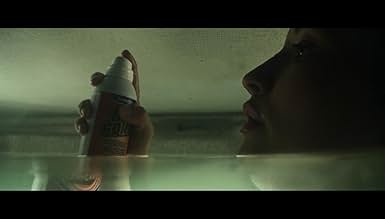
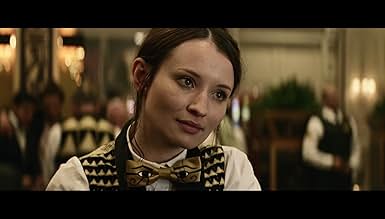
From its outset, "Git Gone" overturns the series' signature format. The episode eschews the "Coming to America" vignettes that have introduced supernatural elements in previous installments, instead launching directly into Laura's mundane, colorless existence as a blackjack dealer at the pharaoh-themed Anubis Casino. Laura (Emily Browning) is presented as deeply disenchanted-her evenings marked by inertia and a strange flirtation with self-destruction, as manifested in a visually and thematically charged scene where she attempts to end her life with bug spray in a hot tub, only to settle for stasis rather than escape. This opening action, loaded with subtext, forms the episode's narrative core: tracing the sources of Laura's malaise and the significance of her choices.
Cinematographically, the episode is remarkable in its close, almost claustrophobic visuals, employing intimate framing to establish Laura's isolation. Zobel's direction harnesses muted lighting and a deliberately flat color palette to evoke the grayness of Laura's life pre-Shadow, in stark contrast to the baroque mythic surrealism that typified previous episodes. The detailed focus on the daily grind-turning off televisions, feeding a cat, mechanically shuffling cards-draws viewers empathetically into Laura's perspective, encouraging a reconsideration of motivation and meaning that will ultimately drive her resurrection.
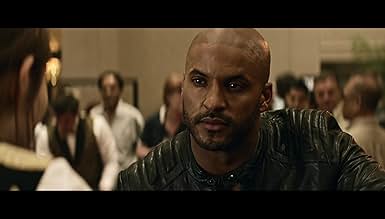
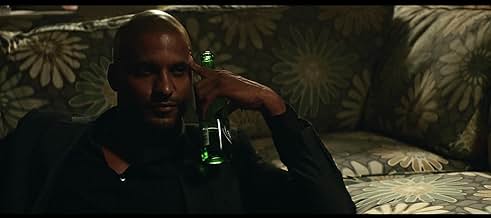
Narratively, "Git Gone" is unapologetic in its commitment to a slower, character-driven pace. Laura's meeting with Shadow (Ricky Whittle) is both ordinary and fateful: he tries to hustle at her table, she displays no-nonsense resolve, and their rapport develops through a mix of sardonic banter and mutual yearning. Rather than idealizing their romance, the script underscores Laura's ambivalence and emotional detachment, even after their marriage. Her motivations for proposing the casino heist, as well as her subsequent extramarital affair with Shadow's friend Robbie (Dane Cook), are depicted less as acts of love or desperation than as attempts to feel something palpable in a life defined by numb routine.
The episode's structure, unfolding in nonlinear fragments, mirrors Laura's existential disconnection. Cutting between past and present, "Git Gone" traces the series of choices that culminate in Laura's fatal car accident. The aftermath-her resurrection by Anubis (Chris Obi), her grotesque half-life, and her subsequent quest to reconnect with Shadow-plays with horror iconography, but never exploits it for shock value. Rather, the episode finds dark humor and pathos in Laura's attempts to reconcile her literal and figurative undead state, resulting in memorable sequences such as her bathroom encounter with Audrey (Betty Gilpin), which balances the macabre with absurdist wit.
Performance is central to the episode's success, with Emily Browning delivering a tour de force as Laura. Her portrayal captures a spectrum of emotion-from listlessness to anger, ironic detachment to yearning-in subtle, compelling ways. Browning renders Laura sympathetic not by asking for pity, but by embracing the character's flaws and regrets with honesty. The chemistry between Browning and Whittle adds nuance to their limited shared screen time, lending credence to the notion that their relationship, in all its dysfunction, is both catalyst and tragedy.
The dialogue, crafted by Fuller and Green, is incisive and layered, offering naturalistic exchanges punctuated with darkly comic moments. The writing gives Laura the narrative authority that the source novel only hinted at, contextualizing her choices and challenging the assumption that her role is merely adjunct to Shadow's story. In this way, "Git Gone" fulfills Bryan Fuller's promise to flesh out secondary female characters, transforming Laura into a figure whose agency and contradictions are vital to the series' mythos.
Zobel's directorial approach, complemented by restrained editing and a melancholic score, fosters a tension between fatalism and hope. Pacing is intentionally measured, indulging in scenes that linger on silence and inaction, reflecting Laura's inner state. Where earlier episodes leaned into psychedelic montage and bombast, "Git Gone" is introspective, focused on the rituals and repetitions that define-and sometimes destroy-meaning in ordinary lives.
Visually, the episode employs motifs of light and decay to reinforce Laura's ambiguous connection to the world of the living. Scenes of resurrection are tinged with sickly color; Laura's supernatural strength is rendered with matter-of-fact brutality, such as her dismemberment of Technical Boy's henchmen. Even these moments of violence are grounded in the tragic charisma of a character who, despite newfound powers, remains fundamentally unfulfilled and uncertain.
Critically, the episode has been noted for both its reinvigoration of the source material and its polarizing tonal shift. Some viewers and critics praised the episode's capacity to transform a marginal character into the narrative's emotional anchor, drawing comparisons to inventive television storytelling seen in Lost and The Leftovers, where supporting characters are given standalone focus to enrich the tapestry of the ensemble. Others expressed frustration at the contained, repetitive structure and lack of direct narrative advancement, arguing that the show's limited episode count leaves little room for detours. Nevertheless, consensus holds that the risk taken here is largely vindicated by emotional payoff and the deepened stakes it yields for future chapters.
Subtextual, the episode interrogates notions of agency and fate, positioning Laura as both author and victim of her own story. Her interaction with Anubis in the afterlife is memorable for her outright refusal to accept cosmic judgment-"F*c* you," she spits at Anubis, a line that encapsulates the character's stubborn will and also echoes broader themes in American pop culture about resisting arbitrary authority. This stance subverts expectations about women in genre fiction, especially in mythic contexts, and draws upon contemporary discussions in literature and television about female autonomy (Fargo, The Handmaid's Tale). The episode's treatment of resurrection draws on horror traditions while sidestepping objectification, preferring psychological horror to sensationalism.
Contextualizing the episode within broader cultural and artistic spheres, "Git Gone" sits at the intersection of modern prestige television and classical tragedy. It employs visual and narrative motifs from noir cinema, as well as existentialist literature, with Laura's malaise evoking the alienation of Camus's Meursault. Stylistically, the episode echoes modern series that interrogate unreliable perspectives and fractured identity (such as Mr. Robot or BoJack Horseman), utilizing the camera as a subjective narrator.
Musically and visually, the casino's Egyptian setting is more than set-dressing-it serves as a sly commentary on reincarnation and the cyclical nature of fate. The production's attention to thematic detail extends to set design and props (the "Git Gone" bug spray), which become wry symbols for failed escape and lingering regret.
In sum, "Git Gone" is a daring and introspective installment that broadens American Gods' scope, rendering the story's mythological stakes through the lens of human failure, longing, and the search for redemption. Its creative risks are borne out through innovative direction, sophisticated performance, and a willingness to challenge both genre conventions and audience expectations. By focusing on Laura Moon's journey, the episode not only fleshes out a previously enigmatic character, but also complicates the series' portrayal of belief, mortality, and love in ways both moving and unresolved.
From its outset, "Git Gone" overturns the series' signature format. The episode eschews the "Coming to America" vignettes that have introduced supernatural elements in previous installments, instead launching directly into Laura's mundane, colorless existence as a blackjack dealer at the pharaoh-themed Anubis Casino. Laura (Emily Browning) is presented as deeply disenchanted-her evenings marked by inertia and a strange flirtation with self-destruction, as manifested in a visually and thematically charged scene where she attempts to end her life with bug spray in a hot tub, only to settle for stasis rather than escape. This opening action, loaded with subtext, forms the episode's narrative core: tracing the sources of Laura's malaise and the significance of her choices.
Cinematographically, the episode is remarkable in its close, almost claustrophobic visuals, employing intimate framing to establish Laura's isolation. Zobel's direction harnesses muted lighting and a deliberately flat color palette to evoke the grayness of Laura's life pre-Shadow, in stark contrast to the baroque mythic surrealism that typified previous episodes. The detailed focus on the daily grind-turning off televisions, feeding a cat, mechanically shuffling cards-draws viewers empathetically into Laura's perspective, encouraging a reconsideration of motivation and meaning that will ultimately drive her resurrection.
Narratively, "Git Gone" is unapologetic in its commitment to a slower, character-driven pace. Laura's meeting with Shadow (Ricky Whittle) is both ordinary and fateful: he tries to hustle at her table, she displays no-nonsense resolve, and their rapport develops through a mix of sardonic banter and mutual yearning. Rather than idealizing their romance, the script underscores Laura's ambivalence and emotional detachment, even after their marriage. Her motivations for proposing the casino heist, as well as her subsequent extramarital affair with Shadow's friend Robbie (Dane Cook), are depicted less as acts of love or desperation than as attempts to feel something palpable in a life defined by numb routine.
The episode's structure, unfolding in nonlinear fragments, mirrors Laura's existential disconnection. Cutting between past and present, "Git Gone" traces the series of choices that culminate in Laura's fatal car accident. The aftermath-her resurrection by Anubis (Chris Obi), her grotesque half-life, and her subsequent quest to reconnect with Shadow-plays with horror iconography, but never exploits it for shock value. Rather, the episode finds dark humor and pathos in Laura's attempts to reconcile her literal and figurative undead state, resulting in memorable sequences such as her bathroom encounter with Audrey (Betty Gilpin), which balances the macabre with absurdist wit.
Performance is central to the episode's success, with Emily Browning delivering a tour de force as Laura. Her portrayal captures a spectrum of emotion-from listlessness to anger, ironic detachment to yearning-in subtle, compelling ways. Browning renders Laura sympathetic not by asking for pity, but by embracing the character's flaws and regrets with honesty. The chemistry between Browning and Whittle adds nuance to their limited shared screen time, lending credence to the notion that their relationship, in all its dysfunction, is both catalyst and tragedy.
The dialogue, crafted by Fuller and Green, is incisive and layered, offering naturalistic exchanges punctuated with darkly comic moments. The writing gives Laura the narrative authority that the source novel only hinted at, contextualizing her choices and challenging the assumption that her role is merely adjunct to Shadow's story. In this way, "Git Gone" fulfills Bryan Fuller's promise to flesh out secondary female characters, transforming Laura into a figure whose agency and contradictions are vital to the series' mythos.
Zobel's directorial approach, complemented by restrained editing and a melancholic score, fosters a tension between fatalism and hope. Pacing is intentionally measured, indulging in scenes that linger on silence and inaction, reflecting Laura's inner state. Where earlier episodes leaned into psychedelic montage and bombast, "Git Gone" is introspective, focused on the rituals and repetitions that define-and sometimes destroy-meaning in ordinary lives.
Visually, the episode employs motifs of light and decay to reinforce Laura's ambiguous connection to the world of the living. Scenes of resurrection are tinged with sickly color; Laura's supernatural strength is rendered with matter-of-fact brutality, such as her dismemberment of Technical Boy's henchmen. Even these moments of violence are grounded in the tragic charisma of a character who, despite newfound powers, remains fundamentally unfulfilled and uncertain.
Critically, the episode has been noted for both its reinvigoration of the source material and its polarizing tonal shift. Some viewers and critics praised the episode's capacity to transform a marginal character into the narrative's emotional anchor, drawing comparisons to inventive television storytelling seen in Lost and The Leftovers, where supporting characters are given standalone focus to enrich the tapestry of the ensemble. Others expressed frustration at the contained, repetitive structure and lack of direct narrative advancement, arguing that the show's limited episode count leaves little room for detours. Nevertheless, consensus holds that the risk taken here is largely vindicated by emotional payoff and the deepened stakes it yields for future chapters.
Subtextual, the episode interrogates notions of agency and fate, positioning Laura as both author and victim of her own story. Her interaction with Anubis in the afterlife is memorable for her outright refusal to accept cosmic judgment-"F*c* you," she spits at Anubis, a line that encapsulates the character's stubborn will and also echoes broader themes in American pop culture about resisting arbitrary authority. This stance subverts expectations about women in genre fiction, especially in mythic contexts, and draws upon contemporary discussions in literature and television about female autonomy (Fargo, The Handmaid's Tale). The episode's treatment of resurrection draws on horror traditions while sidestepping objectification, preferring psychological horror to sensationalism.
Contextualizing the episode within broader cultural and artistic spheres, "Git Gone" sits at the intersection of modern prestige television and classical tragedy. It employs visual and narrative motifs from noir cinema, as well as existentialist literature, with Laura's malaise evoking the alienation of Camus's Meursault. Stylistically, the episode echoes modern series that interrogate unreliable perspectives and fractured identity (such as Mr. Robot or BoJack Horseman), utilizing the camera as a subjective narrator.
Musically and visually, the casino's Egyptian setting is more than set-dressing-it serves as a sly commentary on reincarnation and the cyclical nature of fate. The production's attention to thematic detail extends to set design and props (the "Git Gone" bug spray), which become wry symbols for failed escape and lingering regret.
In sum, "Git Gone" is a daring and introspective installment that broadens American Gods' scope, rendering the story's mythological stakes through the lens of human failure, longing, and the search for redemption. Its creative risks are borne out through innovative direction, sophisticated performance, and a willingness to challenge both genre conventions and audience expectations. By focusing on Laura Moon's journey, the episode not only fleshes out a previously enigmatic character, but also complicates the series' portrayal of belief, mortality, and love in ways both moving and unresolved.


Did you know
- TriviaThe black-and-gold playing cards used at Laura's casino are a real deck called Anubis, designed by Steve Minty and successfully funded through Kickstarter a year prior to the release of the show.
- GoofsWithout going into detail and traumatizing anyone, Laura has been autopsied. Her organs have been removed and all connections to them severed. Including her brain. She would no longer be able to see or hear. Let alone move, vomit, breathe, speak or use the bathroom. Why would the coin just put everything back in place but not reattach her arm?
Details
- Runtime
- 1h 1m(61 min)
- Color
- Sound mix
- Aspect ratio
- 16:9 HD
Contribute to this page
Suggest an edit or add missing content