IMDb RATING
6.7/10
8.8K
YOUR RATING

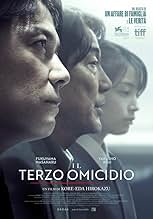
A courtroom drama centered around the murder of a factory president.A courtroom drama centered around the murder of a factory president.A courtroom drama centered around the murder of a factory president.
- Awards
- 6 wins & 17 nominations total





- Director
- Writer
- All cast & crew
- Production, box office & more at IMDbPro
6.78.7K
1
2
3
4
5
6
7
8
9
10
Featured reviews
Back to form
With "The Third Murder" Hirokazu Koreeda sidepaths from the more lighthearted thematics his more recent movies like "our little sister" or "after the storm" had and reenters the realm of profound dramas in which he previously worked with in movies like "Like father like son" and one of his ealier works "after life". While the light hearted stuff is enjoyable and it is not as much of a risky "hit and miss" as a movie like "afterlife" might be, I think his more deep and serious movies are definitly more impacting and memorable, thats why I think "The third murder" is definitly one of Koreedas finest works.
In this crime thriller Koreeda explores heavily the ideas of truth, justice and especially motivation. Why do people say what they say? Can we really trust anyone? This movie was just so beautifully crafted with nearlly every scene you learn new things about character you thought you know already, just to find out how wrong you were, until you dont know what to believe anymore.
The cinematography was pretty unique to his other movies I would say. He added some emotionally driven music shots that fitted quite well with the tone of the movie and made some character interactions that were already tense and interesting even better by presenting interesting camera shots.
It was only fitting for Koreeda to give Masaharu Fukuyama the lead role given how well he did in "Like father like son" and he did a wonderful job again with this role. Also one of japans best actors "Koji Yakusho" did a perfect job, like most of the time and gave his role the exact nuance i was talking about previously, with being able to make yourself question your own judgement.
Overall I can only recommend this movie. Hirokazu Koreeda is one of Japans best living directos and "the third murder" is one of his best movies and I am already looking forward of rewatching this movie.
In this crime thriller Koreeda explores heavily the ideas of truth, justice and especially motivation. Why do people say what they say? Can we really trust anyone? This movie was just so beautifully crafted with nearlly every scene you learn new things about character you thought you know already, just to find out how wrong you were, until you dont know what to believe anymore.
The cinematography was pretty unique to his other movies I would say. He added some emotionally driven music shots that fitted quite well with the tone of the movie and made some character interactions that were already tense and interesting even better by presenting interesting camera shots.
It was only fitting for Koreeda to give Masaharu Fukuyama the lead role given how well he did in "Like father like son" and he did a wonderful job again with this role. Also one of japans best actors "Koji Yakusho" did a perfect job, like most of the time and gave his role the exact nuance i was talking about previously, with being able to make yourself question your own judgement.
Overall I can only recommend this movie. Hirokazu Koreeda is one of Japans best living directos and "the third murder" is one of his best movies and I am already looking forward of rewatching this movie.
Interesting approach but wanted more
It's interesting that Koreeda approaches an apparent thriller in the same way he approaches his family dramas. In fact, this is a drama and, as usual for him, a film about people and grey areas. Here, he addresses the difference between legal justice and what may be ethically acceptable even if a crime.
It's not an easy film, with a quite slow pace and few events that capture our interest. Despite loving thrillers and loving Koreeda's usual style, this film left me wanting much more. Nevertheless, the approach is interesting, the performances are very good, it's beautifully shot (with incredible mirror shots), and the ethical issues it raises stay with us.
It's not an easy film, with a quite slow pace and few events that capture our interest. Despite loving thrillers and loving Koreeda's usual style, this film left me wanting much more. Nevertheless, the approach is interesting, the performances are very good, it's beautifully shot (with incredible mirror shots), and the ethical issues it raises stay with us.
Very good...but the pacing will create a problem for many viewers
In recent years, Hirokazu Koreeda has been among the most exciting and interesting Japanese filmmakers. In movies such as "Like Father, Like Son", "Our Little Sister" and "Shoplifters", he tells marvelous stories about seemingly ordinary and non-cimematic sitations....stories about real people and about problems which you rarely hear about in Japanese movies. Here, in a bit of a change of pace, Koreeda takes on a story about murder....and it's complex, strange and ultimately worth seeing. Sadly, however, the pacing is glacially slow...and many viewers ultimately might give up on the film before its conclusion.
The story is about a group of lawyers who have been a pretty hopeless case to defend. It seems a man has pled guilty to murder and burning a corpse...and he's done little to help himself avoid the death penalty. In addition, his story is very inconsistent and keeps changing. Inexplicably, instead of just going through the motions as most lawyers would do in a case like this, Shigemori keeps digging to learn exactly what did happen and why...and, not surprisingly, it's not what the case originally seemed to be.
The story is slow....very, very slow. For non-Japanese audiences, this slowness makes watching the film with subtitles a bit tough...and I found myself drifting off on occasion. My advice is to stick with it....the twist is shocking and exposes some issues rarely addressed in films...especially Japanese films. Not surprising, as Koreeda seems to enjoy addressing topics which other Japanese filmmakers avoid.
The story is about a group of lawyers who have been a pretty hopeless case to defend. It seems a man has pled guilty to murder and burning a corpse...and he's done little to help himself avoid the death penalty. In addition, his story is very inconsistent and keeps changing. Inexplicably, instead of just going through the motions as most lawyers would do in a case like this, Shigemori keeps digging to learn exactly what did happen and why...and, not surprisingly, it's not what the case originally seemed to be.
The story is slow....very, very slow. For non-Japanese audiences, this slowness makes watching the film with subtitles a bit tough...and I found myself drifting off on occasion. My advice is to stick with it....the twist is shocking and exposes some issues rarely addressed in films...especially Japanese films. Not surprising, as Koreeda seems to enjoy addressing topics which other Japanese filmmakers avoid.
The True Motive
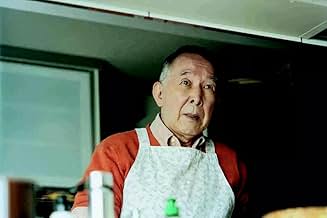
The defense attorney Shigemori (Masaharu Fukuyama) is summoned to help his coworkers in a murder case. The prisoner Misumi (Kôji Yakusho) has confessed the murder of his former boss and factory owner that was burnt to ashes nearby a river to rob his wallet to pay debts in gambling. Misumi will face death penalty since thirty years ago he killed another man and was defended by Shigemori´s father. Shigemori´s purpose is to change the sentence from death penalty to life. Shigemori is not satisfied with the lack of evidences of the case and notes that Misumi changes his testimony in each interview. He decides to investigate deeper the case and questions the true motive for the murder.
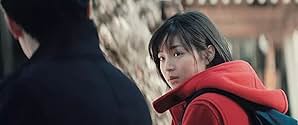
"Sandome no satsujin", a.k.a. "The Third Murder", is a tribunal and fatherhood drama with a screenplay with many twists. The storyline is based on a murder case with a confessing defendant and his new attorney seeking evidences to learn the truth. In common, there is the fatherhood: Shigemori is an absent father due to his dedication to his profession. Misumi is also an absent father since he has spent his last thirty years imprisoned. The victim was an abusive father and Misumi connects to his daughter as a second chance in life. In the end, was the murder to pay a debt with the Yakuza or a righteous justice act? My vote is seven.
Title (Brazil): "O Terceiro Assassinato" ("The Third Murder")
"Sandome no satsujin", a.k.a. "The Third Murder", is a tribunal and fatherhood drama with a screenplay with many twists. The storyline is based on a murder case with a confessing defendant and his new attorney seeking evidences to learn the truth. In common, there is the fatherhood: Shigemori is an absent father due to his dedication to his profession. Misumi is also an absent father since he has spent his last thirty years imprisoned. The victim was an abusive father and Misumi connects to his daughter as a second chance in life. In the end, was the murder to pay a debt with the Yakuza or a righteous justice act? My vote is seven.
Title (Brazil): "O Terceiro Assassinato" ("The Third Murder")
Interesting but a bit too slow and too talky.
The great lawyer Shigomori accepts a delicate case, the defense of Misumi, accused of theft and murder. Misumi, who thirty years earlier had served a prison sentence for murder, is now facing the death penalty. Astonishingly, the accused does not seem to care at all about his lot, the best evidence being that he does nothing to help his defender avoid it.
A specialist in childhood and family relations, Kore-eda ventures here into unfamiliar territory, the judicial thriller. The film raises interesting questions about the relativity of justice while at the same time keeping up the mystery: why does the accused, whose guilt is far from being proven, play cat and mouse with his defender and put obstacles in his way when he does everything in his power to save him from being hanged? Unfortunately, too much chatter and slowness diminishes the effectiveness of the film. But there are undeniable good points : the subtle acting of the two main protagonists, the beautiful nostalgic music by Ludovico Einaudi as well as the end of the film, a little more tonic than what preceded it. Quite a fair work on the whole but not up to the level of " Nobody Knows " or " Like father Like Son ".
A specialist in childhood and family relations, Kore-eda ventures here into unfamiliar territory, the judicial thriller. The film raises interesting questions about the relativity of justice while at the same time keeping up the mystery: why does the accused, whose guilt is far from being proven, play cat and mouse with his defender and put obstacles in his way when he does everything in his power to save him from being hanged? Unfortunately, too much chatter and slowness diminishes the effectiveness of the film. But there are undeniable good points : the subtle acting of the two main protagonists, the beautiful nostalgic music by Ludovico Einaudi as well as the end of the film, a little more tonic than what preceded it. Quite a fair work on the whole but not up to the level of " Nobody Knows " or " Like father Like Son ".


Did you know
- TriviaTo write the film the director consulted with the legal supervisor for one of his previous films, Like Father, Like Son.
- How long is The Third Murder?Powered by Alexa
Details
- Release date
- Country of origin
- Official sites
- Language
- Also known as
- The 3rd Murder
- Filming locations
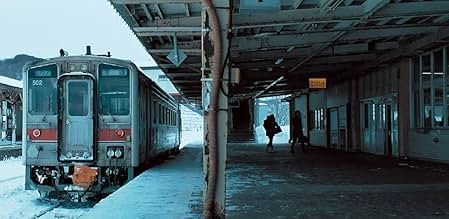
- Rumoi Station, Rumoi, Hokkaido, Japan(the three lawyers arrive in Rumoi)
- Production companies
- See more company credits at IMDbPro
Box office
- Gross US & Canada
- $89,315
- Opening weekend US & Canada
- $10,670
- Jul 22, 2018
- Gross worldwide
- $13,411,936
- Runtime
- 2h 4m(124 min)
- Color
- Sound mix
- Aspect ratio
- 2.35 : 1
Contribute to this page
Suggest an edit or add missing content