IMDb RATING
6.8/10
2.5K
YOUR RATING


Collection of 24 short four-and-a-half minute films inspired by still images, including paintings and photographs.Collection of 24 short four-and-a-half minute films inspired by still images, including paintings and photographs.Collection of 24 short four-and-a-half minute films inspired by still images, including paintings and photographs.
- Director
- Stars
- Awards
- 3 wins total

6.82.4K
1
2
3
4
5
6
7
8
9
10
Featured reviews
Perfect stories, even if they barely exist
Most people want to compare this movie to non-narrative visual art, and that's not what I saw. Really, it reminded me more of The Ballad of Buster Scruggs, another collection of short stories which feels meticulously plotted yet like an illusion that vanishes when you try to make literal meaning out of it. The two are the best evocation of the era when short story collections mattered to normal people and vice versa. There are almost no humans, but the movie is full of perfectly observed character moments that are orchestrated with thematic precision. This is the Winesburg, Ohio of avant garde filmmaking, and probably a better cinematic version of that book's accomplishments in micro-observation than the adaptation.
This film belongs to a fine art gallery.
Beautiful film and some frames are striking. It is slow and would take peserverance to sit till the end. I am surprised it'd be shown in HK cinemas which are usually quite commercial - probably because of his big name. I fell asleep from 11-16th frame, then again the last two frames. But no audience left the cinema which I find quite amusing.
I wouldn't say it's a great film. At many points I was a bit disappointed at how rough the details were made...it was like seeing a large installation work of a respectfulartost in a gallery, but noticing execution flaws here and there.
It would not have been shown in hk cinemas or received that many awards, if it were a film by a new film maker.
It's experimental but I can hardly describe it as a good film. I'd not recommend t to friends. Sorry.
I wouldn't say it's a great film. At many points I was a bit disappointed at how rough the details were made...it was like seeing a large installation work of a respectfulartost in a gallery, but noticing execution flaws here and there.
It would not have been shown in hk cinemas or received that many awards, if it were a film by a new film maker.
It's experimental but I can hardly describe it as a good film. I'd not recommend t to friends. Sorry.
a work of art
'24 Frames' is one of those films that, in retrospect, is said to be a testament of a great director. There are enough arguments in favor of this categorization, including the final frame or scene in which we have on the screen the image of another screen in which the end of a classic film unfolds, including the magical 'The End'. And yet, even though Abbas Kiarostami was 76 years old when he filmed '24 Frames', I don't think that his intention was to create a testament film. This film radiates search and exploration of new ways of artistic expression. Far from being some 'last famous words', it seems more like a mid-career film of an artist in constant search. Returning to some of the tools he had used many decades before, at the beginning of his journey as an artist, the Iranian director combines them with the most advanced techniques of animation and digital image processing. A complete and versatile artist, Abbas Kiarostami has created in '24 Frames' a work of art that defies categorization. Personally, I confess that I have never been able to fully understand what the boundaries are between cinematography as art and video art. '24 Frames' seems to belong to both and many other fields of art. Watching it is a spiritual experience.
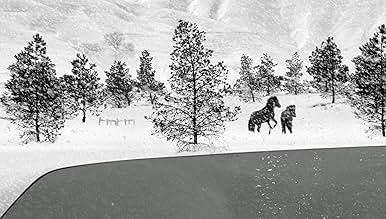
24 is a magic number in cinematography. 24 frames per second was the standard for classic projectors. The day has 24 hours and in the film time is one of the main subjects. Abbas Kiarostami constructed his work as a sequence of 24 sequences, each 4 and a half minutes long. Fixed, classic forms were one of the aesthetic obsessions of the creator who was, among many others, a creator of haikus. The first frame starts from a famous painting by Pieter Bruegel the Elder, 'Hunters in the Snow'. With the help of computer animation, portions of the painting wake up one by one. The soundtrack also comes to life placing the painting into its natural and period context. What was a snapshot of a single moment in time becomes a moment in a sequence of the passage of time. Similar patterns will be present in the following frames, but the starting points are photos created by the author. In its early versions '24 Frames' was supposed to be a sequence of reflections on art starting from famous paintings, as in the first frame, but due to copyright reasons Kiarostami had to change his strategy and used his own creations from albums of still photography, an artistic field that he had practiced at the beginning of his artistic journey.
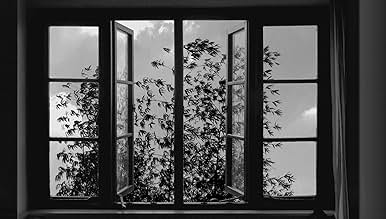
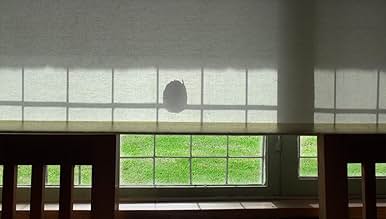
'24 Frames' is a very different viewing experience than a traditional film. There is no plot, no human characters. Kiarostami, the filmmaker who excelled in creating heroes drawn from reality and who built psychologists full of credibility and humanity for them, places his human silhouettes - when they appear - on an equal level with those of animals, plants, landscape items. One can also interpret this attitude as an expression of the idea that we humans are only a part of an endless Universe, and not necessarily the center of it. The film seems more like a collection of philosophical essays or poems. Each of the frames has an aesthetic value in itself, but they also tell a lot about the connection between the creator and the artistic objects resulting from his imagination, about nature and its observation. The world in the frames is often seen through the geometry of a window, and in a few cases transparent but material screens or windows separate the viewer from the nature beyond. A nature that, let's not forget, is largely artificial, the result of the author's thinking in relation to the context of the still images that represent the starting points of each frame.
The viewer who dares to see '24 Frames' must know (and if he doesn't know, he will find out after the first frames) that this is not an ordinary entertainment film. The reward will come from the beauty and depth of cinematic thought and the boldness of the author's artistic exploration, which he becomes witness of. An unforgettable artistic experience.
24 is a magic number in cinematography. 24 frames per second was the standard for classic projectors. The day has 24 hours and in the film time is one of the main subjects. Abbas Kiarostami constructed his work as a sequence of 24 sequences, each 4 and a half minutes long. Fixed, classic forms were one of the aesthetic obsessions of the creator who was, among many others, a creator of haikus. The first frame starts from a famous painting by Pieter Bruegel the Elder, 'Hunters in the Snow'. With the help of computer animation, portions of the painting wake up one by one. The soundtrack also comes to life placing the painting into its natural and period context. What was a snapshot of a single moment in time becomes a moment in a sequence of the passage of time. Similar patterns will be present in the following frames, but the starting points are photos created by the author. In its early versions '24 Frames' was supposed to be a sequence of reflections on art starting from famous paintings, as in the first frame, but due to copyright reasons Kiarostami had to change his strategy and used his own creations from albums of still photography, an artistic field that he had practiced at the beginning of his artistic journey.
'24 Frames' is a very different viewing experience than a traditional film. There is no plot, no human characters. Kiarostami, the filmmaker who excelled in creating heroes drawn from reality and who built psychologists full of credibility and humanity for them, places his human silhouettes - when they appear - on an equal level with those of animals, plants, landscape items. One can also interpret this attitude as an expression of the idea that we humans are only a part of an endless Universe, and not necessarily the center of it. The film seems more like a collection of philosophical essays or poems. Each of the frames has an aesthetic value in itself, but they also tell a lot about the connection between the creator and the artistic objects resulting from his imagination, about nature and its observation. The world in the frames is often seen through the geometry of a window, and in a few cases transparent but material screens or windows separate the viewer from the nature beyond. A nature that, let's not forget, is largely artificial, the result of the author's thinking in relation to the context of the still images that represent the starting points of each frame.
The viewer who dares to see '24 Frames' must know (and if he doesn't know, he will find out after the first frames) that this is not an ordinary entertainment film. The reward will come from the beauty and depth of cinematic thought and the boldness of the author's artistic exploration, which he becomes witness of. An unforgettable artistic experience.
A slow meditation
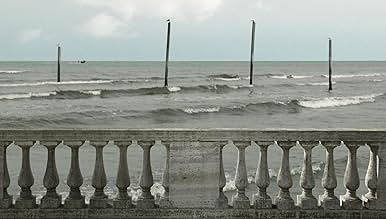
As contemplative as watching ocean waves eternally roll in, as soaring as listening to Ave Maria while pigeons flutter about, as mysterious as daydreaming while clouds billow past, and as somber as watching death come from nowhere to stop life in its tracks, yet knowing that nature will simply continue on. Maybe these are the images an artist nearing his own end has in mind, an homage to the beauty of life in its simple, underappreciated moments, and at the same time, a calm acceptance of death.
I loved the concept of this film, particularly in the life that Kiarostami breathed in to Bruegel's Hunters in the Snow in frame 1, but found that what followed a little too similar, and that not knowing the source of inspiration for 21 of the next 23 frames to be a detractor. It's certainly immersive and meditative, demanding patience of the viewer or a frame of mind that allows simple images to wash over oneself, but at 114 minutes, nearly 5 minutes a frame, it seemed too much for me.
The final frame, containing the kiss between Teresa Wright and Dana Andrews at the end of The Best Years of Our Lives (1946) played in very slow motion on a computer screen, while trees sway outside in the darkness, is stirring, powerful stuff. The only thing we have are these moments when we cling to one another, and if only we could slow them down. I just wish the music selected for this piece was something more poetic than Andrew Lloyd Weber's Love Never Dies, and that it hadn't taken so long to get to it.
I loved the concept of this film, particularly in the life that Kiarostami breathed in to Bruegel's Hunters in the Snow in frame 1, but found that what followed a little too similar, and that not knowing the source of inspiration for 21 of the next 23 frames to be a detractor. It's certainly immersive and meditative, demanding patience of the viewer or a frame of mind that allows simple images to wash over oneself, but at 114 minutes, nearly 5 minutes a frame, it seemed too much for me.
The final frame, containing the kiss between Teresa Wright and Dana Andrews at the end of The Best Years of Our Lives (1946) played in very slow motion on a computer screen, while trees sway outside in the darkness, is stirring, powerful stuff. The only thing we have are these moments when we cling to one another, and if only we could slow them down. I just wish the music selected for this piece was something more poetic than Andrew Lloyd Weber's Love Never Dies, and that it hadn't taken so long to get to it.
GREAT BACKGROUND !
Gr8 Background !
It's like living wallpaper for your TV !
24 LIVING FRAMES !
.hence the name.
And some gr8 tunes too.
Frame 13 was brutal ! True and touching !
Frame 13 was brutal ! True and touching !


Did you know
- TriviaThis is Abbas Kiarostami's final work. It consists of 24 four-and-a-half-minute shorts shot by Kiarostami over a period of three years. The style has been described as fixed tableau with the use of blue screen.
- ConnectionsFeatured in Film: The Living Record of Our Memory (2021)
- How long is 24 Frames?Powered by Alexa
Details
Box office
- Gross US & Canada
- $34,482
- Opening weekend US & Canada
- $8,101
- Feb 4, 2018
- Gross worldwide
- $39,808
- Runtime
- 1h 54m(114 min)
- Color
- Sound mix
- Aspect ratio
- 1.78 : 1
Contribute to this page
Suggest an edit or add missing content