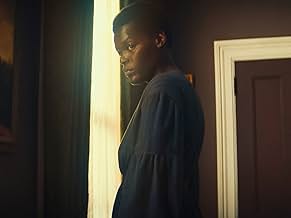
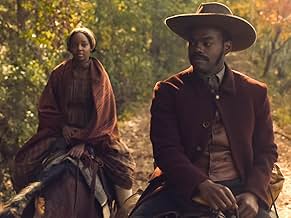
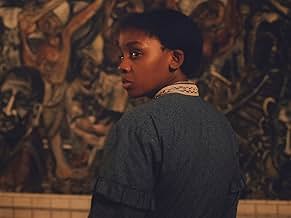
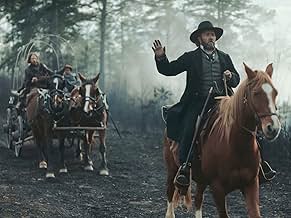
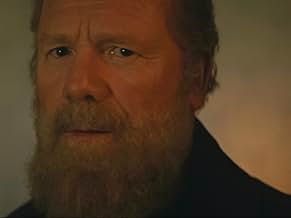
A young woman named Cora makes an amazing discovery during her attempt to break free from slavery in the deep south.A young woman named Cora makes an amazing discovery during her attempt to break free from slavery in the deep south.A young woman named Cora makes an amazing discovery during her attempt to break free from slavery in the deep south.
- Nominated for 7 Primetime Emmys
- 14 wins & 55 nominations total
Browse episodes
7.49.3K
1
2
3
4
5
6
7
8
9
10
Summary
Reviewers say 'The Underground Railroad' is acclaimed for its storytelling, visuals, and performances, especially Thuso Mbedu and Joel Edgerton. It is celebrated for emotional depth and world-building, blending historical and magical realism. Criticisms include historical inaccuracies, slow pacing, and dramatic scenes. Viewers are divided on its artistic liberties versus historical representation. Despite this, many find it impactful, highlighting slavery's horrors and character resilience.
Featured reviews
Deeply moving magical realist interpretation of the Underground Railroad
This 10-part series is filled with deeply impactful scenes of the African-American experience in the South and southern Indiana in the pre-Civil War era.
Cora Randall, the escaped slave, and Arnold Ridgeway, the slave catcher, are unforgettable characters. Some of the violence is extremely graphic.
The series takes a magical realist approach to the story, which is not my favored approach to fiction. I found some symbolism very distracting and the many very dimly-lit scenes hard to follow.
Worth watching.
Cora Randall, the escaped slave, and Arnold Ridgeway, the slave catcher, are unforgettable characters. Some of the violence is extremely graphic.
The series takes a magical realist approach to the story, which is not my favored approach to fiction. I found some symbolism very distracting and the many very dimly-lit scenes hard to follow.
Worth watching.
Great show, just not historically accurate, but that's okay
The wife and I are 5 episodes in and so far its excellent, but there's a few things you should know before jumping in, spoiler free.
Number one is this show is not historically accurate in anyway and that's okay, but you should know that. The only true thing about this show is that slavery existed and there was an "underground railroad", but that is not accurately represented.
The Underground Railroad in this show is a literal railroad and in the historical sense it was not, but rather used as a way to secretly communicate the movement of runaway slaves to the north. There are also several other historical inaccuracies, but again that's okay as long as you look at the show as a complete work of fiction that has SOME historical context.
That being said, the show is excellent when you omit historical accuracy. Its a great work of fiction with good acting, cinematography, directing and writing. Very enjoyable and look forward to seeing the end of the story.
Number one is this show is not historically accurate in anyway and that's okay, but you should know that. The only true thing about this show is that slavery existed and there was an "underground railroad", but that is not accurately represented.
The Underground Railroad in this show is a literal railroad and in the historical sense it was not, but rather used as a way to secretly communicate the movement of runaway slaves to the north. There are also several other historical inaccuracies, but again that's okay as long as you look at the show as a complete work of fiction that has SOME historical context.
That being said, the show is excellent when you omit historical accuracy. Its a great work of fiction with good acting, cinematography, directing and writing. Very enjoyable and look forward to seeing the end of the story.
Has a few highs, but overall a dreadful bore-fest
The enormously well-received series starts strong with an incredibly powerful pilot episode, and a very interesting second one. But that's where the charm ends, and the show becomes obsessed with incredibly boring white characters. I dragged it out till episode 8 so far, and will definitely finish the show - but I think it should just have ended at Episode 2.
Arnold Ridgeway - the most pathetically boring character invented in 2021.
Stunning series
This is a visually stunning series, with incredible imagery. The acting is fantastic, and the director keeps a consistent mood throughout, which is pretty similar to the book. The overall points in the narrative and the chapters are also pretty similar to the book. The quality of this series is high enough I'm giving it eight stars.
However, the TV series tells a very different story than the book. Unfortunately, I read the book first, and prefer it.
Almost all of the characters in the series feel far more two-dimensional than in the book, with the exception of Ridgeway. The TV series gives Ridgeway more backstory that makes his actions seem more nuanced. The book gives just enough background to establish that Ridgeway has a pattern-he clearly cares about some things, but human lives are only a small part of his moral equation. He's more opaque in the book, which makes his actions there more terrifying, in my opinion.
Cora is more of an active agent in her decisions and fates in the book than in the TV series. In the series, things just seem to happen to her, and the only way she seems able to play much of a role for over half the series is to cry. The book version of Cora is resilient, tenacious, adaptive. That's not to say that things always go great for her, but she refuses to be a passive bystander.
Normally, I'd give the series a six for doing wrong to the main characters that way, but I think this series still tells an important story and tells it well...it's just less nuanced than the book.
However, the TV series tells a very different story than the book. Unfortunately, I read the book first, and prefer it.
Almost all of the characters in the series feel far more two-dimensional than in the book, with the exception of Ridgeway. The TV series gives Ridgeway more backstory that makes his actions seem more nuanced. The book gives just enough background to establish that Ridgeway has a pattern-he clearly cares about some things, but human lives are only a small part of his moral equation. He's more opaque in the book, which makes his actions there more terrifying, in my opinion.
Cora is more of an active agent in her decisions and fates in the book than in the TV series. In the series, things just seem to happen to her, and the only way she seems able to play much of a role for over half the series is to cry. The book version of Cora is resilient, tenacious, adaptive. That's not to say that things always go great for her, but she refuses to be a passive bystander.
Normally, I'd give the series a six for doing wrong to the main characters that way, but I think this series still tells an important story and tells it well...it's just less nuanced than the book.
Haters don't understand that it's fiction with poetic license
This movie, based on a Pulitzer-winning fantasy fiction novel, is heavy with emotion, violence, and even hope. Those who are looking for fast-paced action or historical accuracy may not enjoy it, but those who appreciate strong characters and a rich story will find it rewarding.
While it throws out some realism to make way for historical metaphors, it stays fiercely loyal to the themes of this dark time in our nation's history. The viewer's emotions are taken on a rough ride with complex characters (especially Homer) and continually changing circumstances.
I'll watch this series many times, and now cannot wait to read the book.
While it throws out some realism to make way for historical metaphors, it stays fiercely loyal to the themes of this dark time in our nation's history. The viewer's emotions are taken on a rough ride with complex characters (especially Homer) and continually changing circumstances.
I'll watch this series many times, and now cannot wait to read the book.
Did you know
- TriviaThe "Underground Railroad" as a train/railroad had never really existed. That name describes a network of secret routes and safe houses during the 19th century across the Eastern Seaboard of the United States of America. The "railroad" helped enslaved African Americans escape to Northern states, and, after the Fugitive Slave Act, to Canada. The first literal subway/tube/underground railroad was built in London, England, in 1863, while America was embroiled in the Civil War to end slavery.
- ConnectionsFeatured in Late Night with Seth Meyers: Joel Edgerton/Edward-Isaac Dovere (2021)
- How many seasons does The Underground Railroad have?Powered by Alexa
Details
- Runtime
- 59m
- Color
- Sound mix
- Aspect ratio
- 1.78 : 1
Contribute to this page
Suggest an edit or add missing content