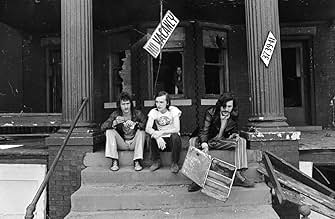
Creem: America's Only Rock 'n' Roll Magazine
Original title: Boy Howdy: The Story of Creem Magazine
IMDb RATING
6.9/10
358
YOUR RATING
Explores the seminal music magazine from its 1969 launch in Detroit to the untimely death of its publisher Barry Kramer in 1981.Explores the seminal music magazine from its 1969 launch in Detroit to the untimely death of its publisher Barry Kramer in 1981.Explores the seminal music magazine from its 1969 launch in Detroit to the untimely death of its publisher Barry Kramer in 1981.
- Awards
- 1 win & 2 nominations total
Lester Bangs
- Self - Senior Editor
- (archive footage)
Barry Kramer
- Self - Publisher
- (archive footage)
- Director
- Writers
- All cast & crew
- Production, box office & more at IMDbPro
Featured reviews
Creem magazine was a goofy-hip, inside-jokesters publication aimed at teenage boys that was founded above a record store/head shop in 1969 Detroit by Barry Kramer (he named/misspelled the magazine Creem after the band Cream, just as Rolling Stone named their rival publication after The Rolling Stones). With R. Crumb artwork and the Boy Howdy logo (often used as a faux beer can), Creem was the anti-rock journal, an F-you to Rolling Stone. This 76mn documentary, peopled with mostly reprehensible personalities (such as senior editor Lester Bangs, who appeared to be both anti-Semitic and homophobic), gets surprisingly serious near the end as the principals leave us. Their legacy is of an important piece of rock 'n' roll history which faded into the sunset 20 years after it appeared. The film is slick, flashy, funny and empty--like Creem itself. Great for fans, and the covers and celebrity testimonials are fun. **1/2 from ****
I really dug this film, it's interesting to see parallels to today's DIY culture, and the soundtrack is dope!
Creem was always like Rolling Stone magazine's snotty bratty little brother. Scott Crawford's documentary is a bit like that as well - quick and cheep. Only 75 minutes long it gets the story told (HBO's Rolling Stone: Stories From The Edge doc was 360 minutes long by comparison). Rolling Stone strained to be legit, Creem was sex, drugs and louder, faster rock.
Creem lasted for 20 years on the newsstands, but the Doc basically concentrates on the first third of that history. Many of the surviving members of the staff are on hand to be interviewed and tell stories. There is a bit of actual footage from the period (much of it captured on grainy videotape), but the talking heads, magazine scans and vintage photos carry the load here.
What really emerges is a portrait of three men: Publisher and founder Barry Kramer, editor Dave Marsh and bad boy critic Lester Bangs. In true rock 'n roll fashion, Kramer and Bangs both crashed and burned before they hit 40 (Bangs was only 33). The other heartbeat of Creem was that it was from Detroit, and not L. A. or NYC. Iggy Pop and the Stooges, the MC5 and Motown gave it a 'middle of the country' soul. The original Creem office was in a nasty part of the inner city, which makes the two years at a virtual commune far outside the metropolis seem even more of an oddity.
Crawford's Doc can't escape the feel of a Boy Howdy! Production with half the Creem employees and Kramer's family producing it*. Still, the friends and family don't skimp on the dirty laundry. Even in their 60s and 70s, the staff still has the attitude - much like the magazine they helped bring about.
* Boy Howdy! Was the defacto logo for the magazine much like Alfred E. Neuman for Mad - they even touted a faux beer with the label!
Creem lasted for 20 years on the newsstands, but the Doc basically concentrates on the first third of that history. Many of the surviving members of the staff are on hand to be interviewed and tell stories. There is a bit of actual footage from the period (much of it captured on grainy videotape), but the talking heads, magazine scans and vintage photos carry the load here.
What really emerges is a portrait of three men: Publisher and founder Barry Kramer, editor Dave Marsh and bad boy critic Lester Bangs. In true rock 'n roll fashion, Kramer and Bangs both crashed and burned before they hit 40 (Bangs was only 33). The other heartbeat of Creem was that it was from Detroit, and not L. A. or NYC. Iggy Pop and the Stooges, the MC5 and Motown gave it a 'middle of the country' soul. The original Creem office was in a nasty part of the inner city, which makes the two years at a virtual commune far outside the metropolis seem even more of an oddity.
Crawford's Doc can't escape the feel of a Boy Howdy! Production with half the Creem employees and Kramer's family producing it*. Still, the friends and family don't skimp on the dirty laundry. Even in their 60s and 70s, the staff still has the attitude - much like the magazine they helped bring about.
* Boy Howdy! Was the defacto logo for the magazine much like Alfred E. Neuman for Mad - they even touted a faux beer with the label!
This film really did a wonderful job portraying the rise and fall of a magazine empire. It also took the time to describe in detail the feel of the country, music scene and Detroit during the era. As a Michigan native, it really opened my eyes to the history of it all.
"CREEM: America's Only Rock 'n' Roll Magazine" (2019 release; 75 min.) is a documentary about the (in)famous music magazine, founded and published by Barry Kramer in 1969. As the movie opens, we see grainy B&W footage of the CREEM gang in downtown Detroit, as they introduce themselves. We then step back and get a Detroit Rock Scene 101 primer, as we are reminded how many great rock artists emerged from Detroit (too many to name here). Kramer owned a record store/hang-out room on Cass Avenue that then started publishing CREEM with hardly anyone having any writing or rock credentials. Led by Editor-in-Chief Dave Marsch, they were a trailblazer in bringing the rock stars to the reading public. Comments REM's Micheal Stipe: "My life changed when I saw Patti Smith's picture in CREEM." At this point we are 10 min. into the film.
Couple of comments: this is the second documentary directed by Scott Crawford. More importantly, it is produced by JJ Kramer, the son of original founder Barry Kramer, and by Jaan Uhelszki, one of CREEM's original journalists (she also wrote the film's script). There is much to tell, and the movie moves at a frantic pace as we learn how CREEM functions in the early days (the magazine was named after the band Cream, whom Kramer adored). Dave Marsch and Kramer argued often. Then in the early 70s Lester Bangs joins CREEM and now even more internal tension ensues, while the magazine continues to grow. The film covers mostly the 1969-1981 era, and along with it, we get a ton of fun archive footage from the 70s. With so much materials to cover, it's a bit of a shame that the movie runs only 75 min. but it's a minor quibble.
"CREEM: America's Only Rock n'n Roll MAgazine" premiered at the 2019 SXSW festival to immediate acclaim, and was scheduled to be released in theaters this Spring. Then a little think called COVID-19 happened. Theaters are very slowly reopening, and "CREEM" opened out of the blue this weekend at my local art-house theater here in Cincinnati (complying fully with all COVID-19 measures). I couldn't wait to see it. The Friday early evening screening where I saw this at was attended so-so (3 people including myself). The movie's DVD release is scheduled for next month. If you have any interest in rock music, I'd readily suggest you check this out, be it in the theater, on VOD or soon on DVD/Blu-ray, and draw your own conclusion.
Couple of comments: this is the second documentary directed by Scott Crawford. More importantly, it is produced by JJ Kramer, the son of original founder Barry Kramer, and by Jaan Uhelszki, one of CREEM's original journalists (she also wrote the film's script). There is much to tell, and the movie moves at a frantic pace as we learn how CREEM functions in the early days (the magazine was named after the band Cream, whom Kramer adored). Dave Marsch and Kramer argued often. Then in the early 70s Lester Bangs joins CREEM and now even more internal tension ensues, while the magazine continues to grow. The film covers mostly the 1969-1981 era, and along with it, we get a ton of fun archive footage from the 70s. With so much materials to cover, it's a bit of a shame that the movie runs only 75 min. but it's a minor quibble.
"CREEM: America's Only Rock n'n Roll MAgazine" premiered at the 2019 SXSW festival to immediate acclaim, and was scheduled to be released in theaters this Spring. Then a little think called COVID-19 happened. Theaters are very slowly reopening, and "CREEM" opened out of the blue this weekend at my local art-house theater here in Cincinnati (complying fully with all COVID-19 measures). I couldn't wait to see it. The Friday early evening screening where I saw this at was attended so-so (3 people including myself). The movie's DVD release is scheduled for next month. If you have any interest in rock music, I'd readily suggest you check this out, be it in the theater, on VOD or soon on DVD/Blu-ray, and draw your own conclusion.
Details
- Release date
- Country of origin
- Official sites
- Language
- Also known as
- Boy Howdy: The Story of Creem Magazine
- Production companies
- See more company credits at IMDbPro
- Runtime
- 1h 15m(75 min)
- Color
Contribute to this page
Suggest an edit or add missing content