Mr. K
- 2024
- 1h 34m
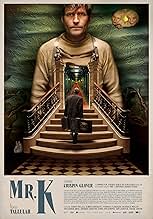
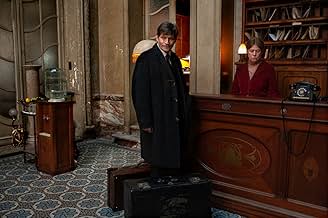
After spending the night in a remote hotel, Mr. K is stuck in a claustrophobic nightmare when he discovers that he can't leave the building.After spending the night in a remote hotel, Mr. K is stuck in a claustrophobic nightmare when he discovers that he can't leave the building.After spending the night in a remote hotel, Mr. K is stuck in a claustrophobic nightmare when he discovers that he can't leave the building.
- Director
- Writer
- Stars
- Awards
- 8 wins & 6 nominations total
- Director
- Writer
- All cast & crew
- Production, box office & more at IMDbPro
5.41.7K
1
2
3
4
5
6
7
8
9
10
Featured reviews
Visually intriguing, thematically vague
Mr. K offers a compelling setup with well-crafted visuals and an eerie atmosphere. You spend much of the film trying to decode what the hotel represents - is it a metaphor for life, death, mental imprisonment? Unfortunately, the film offers little clarity, and its abstract nature feels more hollow than profound.
The guests seem resigned to their fate, contrasting with Mr. K's restlessness. One character asks, "Why isn't my truth the right one?" - a question never truly explored. Despite its short runtime, the film drags due to a lack of rising urgency and thematic consistency. The hotel supposedly shrinks, but its dimensions seem to shift arbitrarily.
In the end, Mr. K frees a mysterious being - and perhaps himself. But is he truly free, or has he accepted his fate? The final scene, swimming toward a light, raises more questions than it answers. I wanted to like this film more, but it left me unmoved.
The guests seem resigned to their fate, contrasting with Mr. K's restlessness. One character asks, "Why isn't my truth the right one?" - a question never truly explored. Despite its short runtime, the film drags due to a lack of rising urgency and thematic consistency. The hotel supposedly shrinks, but its dimensions seem to shift arbitrarily.
In the end, Mr. K frees a mysterious being - and perhaps himself. But is he truly free, or has he accepted his fate? The final scene, swimming toward a light, raises more questions than it answers. I wanted to like this film more, but it left me unmoved.
Interesting Concept, Confusing Ending
Mr. K had an intriguing concept and some cool, moody vibes. The setup made me think it was going to go somewhere really interesting, but the ending was underwhelming and left me a bit confused. The intro dragged on longer than it needed to, which made it harder to stay engaged early on. I could tell the film was trying to say something deeper, but it didn't really land for me because I just didn't get it. That said, the acting was solid and it looked great visually. Cinematically, no complaints. It had style and potential, but it just didn't fully connect for me in the end. I guess it's one of those "weird" movies.
Weird and surreal, but enjoyable
Well, I enjoyed it.
The best comparison that I can make is that this film is a mix of Gormenghast, Neverwhere, Brazil with a bit of David Cronenberg thrown in.
Crispin Glover is always a strange actor, and his Mr K is difficult to empathise with. The film is full of weird and irrational characters. Nothing makes sense, and the ending provides no answers. The viewer is left to interpret the events in their own way.
If you enjoy surreal trips down the rabbit hole, where nothing makes sense, then I suggest that this is worth your time, despite some dodgy pacing and jarring tonal changes.
However, if you prefer simple stories where everything makes sense and is explained, then steer well clear of this movie.
The best comparison that I can make is that this film is a mix of Gormenghast, Neverwhere, Brazil with a bit of David Cronenberg thrown in.
Crispin Glover is always a strange actor, and his Mr K is difficult to empathise with. The film is full of weird and irrational characters. Nothing makes sense, and the ending provides no answers. The viewer is left to interpret the events in their own way.
If you enjoy surreal trips down the rabbit hole, where nothing makes sense, then I suggest that this is worth your time, despite some dodgy pacing and jarring tonal changes.
However, if you prefer simple stories where everything makes sense and is explained, then steer well clear of this movie.
Very disappointed with the plot
I first saw the trailer and was really looking forward to the film. The beginning was okay, the first few minutes. I thought it would be a great film. The setting, costumes, and camera work are all very good. But as time goes on, the film becomes increasingly silly and nonsensical. I was very disappointed after about an hour, but I kept watching. After about 80 minutes, I found the film so incredibly silly that I had to turn it off. Yes, I can only rate the 80 minutes or so, and I give it 5 out of 10. It's a shame; I had completely different expectations.
Enjoyable showcase with people disturbed in their quiet life, resisting changes. Several deeper meanings included, as suggested by the film title
Saw this at the Imagine 2024 film festival in Amsterdam, where it was the main course at the formal opening. Very strange story, impossible to condense in a few sentences, other than what the synopsis on various websites already tried to tell us about this movie.
Kafka is referenced very often in the synopsis and reviews, and implicitly in the film title (Mr. K.) too. It is not bureaucracy being K's primary obstacle, but other people in the hotel, who are very happy the way it is now and don't want any change. The continuous drive K had to find the hotel exit, came initially from an early appointment he had the first day of his stay. Once he missed that, his urge to get out of the hotel persisted for no reason other than instinct.
A variety of mysterious circumstances and events hinder him on his way out, one of which is an often-appearing marching band passing through the hallways, without any goal or purpose, if only to confuse us as well as Mr. K. The walls and wallpaper start crackling, later revealing some vegetation, maybe suggesting that the hotel is in fact an organism with a purpose of its own. More such extraneous things pass by, none of those really eerie, merely unusual or unexpected, by lack of better words to describe what happened. K's whereabouts in the hotel's kitchen are even stranger, but what it means, if anything, can better be left to an unprepared viewer.
Quote: "We didn't need an exit before you came." From early on, we see the word Liberator painted on the wall near K's hotel room, obviously meaning something, but we don't know the author nor the reason why K is appointed that role. One moment he is respected, nearly worshipped as their liberator, and a few scenes later he is chased and attacked for destroying the hotel and ending everyone's peaceful existence. Neither is true, of course, but we don't know the real truth either. Maybe the best parody on normal life is demonstrated in the kitchen, with a peculiar hierarchy, and a head chef who sees some talent in K, only to feel challenged by him later.
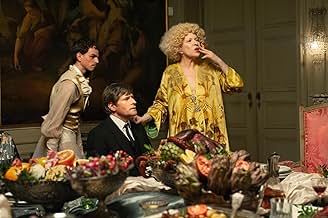
The only objective evidence that unexplainable things are happening, and that the inhabitants cannot go on forever like they are used to, is the shrinking of the hotel rooms. We see the hotel guests cheerfully bringing their furniture to the corridor (which is also shrinking, but they do it anyway). Strangely enough, no inhabitant finds the shrinking building something to worry about. K's journey through the building lets us meet a variety of characters, all having their own role in defending the status quo as the way it should be, defying any changes.
Quote: "You look for the reception where you came into the hotel, to find the exit. Sometimes, the entrance is not the exit." (paraphrased). This comes from two wise-cracking elderly ladies, repeatedly offering him coffee and cake, seemingly in no way concerned about the world around them. They try to cheer up K, who is apparently in distress and deaf to their good-natured comments.
All in all, if you want a deeper showcase for the behavior of people living happily in their comfort zone, only to be disturbed in their happy isolation, this is an interesting and entertaining story. The "offender" causing the disturbance is ridiculed as well as worshipped. Instead of Kafka's struggle with bureaucracy, this Mr. K. must overcome the natural resistance of average people who clinch to their quiet and peaceful existence, and who also refuse to see a lurking danger that is obvious to us but not to them. You need an outsider to trigger change, or better said a revolution.
Kafka is referenced very often in the synopsis and reviews, and implicitly in the film title (Mr. K.) too. It is not bureaucracy being K's primary obstacle, but other people in the hotel, who are very happy the way it is now and don't want any change. The continuous drive K had to find the hotel exit, came initially from an early appointment he had the first day of his stay. Once he missed that, his urge to get out of the hotel persisted for no reason other than instinct.
A variety of mysterious circumstances and events hinder him on his way out, one of which is an often-appearing marching band passing through the hallways, without any goal or purpose, if only to confuse us as well as Mr. K. The walls and wallpaper start crackling, later revealing some vegetation, maybe suggesting that the hotel is in fact an organism with a purpose of its own. More such extraneous things pass by, none of those really eerie, merely unusual or unexpected, by lack of better words to describe what happened. K's whereabouts in the hotel's kitchen are even stranger, but what it means, if anything, can better be left to an unprepared viewer.
Quote: "We didn't need an exit before you came." From early on, we see the word Liberator painted on the wall near K's hotel room, obviously meaning something, but we don't know the author nor the reason why K is appointed that role. One moment he is respected, nearly worshipped as their liberator, and a few scenes later he is chased and attacked for destroying the hotel and ending everyone's peaceful existence. Neither is true, of course, but we don't know the real truth either. Maybe the best parody on normal life is demonstrated in the kitchen, with a peculiar hierarchy, and a head chef who sees some talent in K, only to feel challenged by him later.
The only objective evidence that unexplainable things are happening, and that the inhabitants cannot go on forever like they are used to, is the shrinking of the hotel rooms. We see the hotel guests cheerfully bringing their furniture to the corridor (which is also shrinking, but they do it anyway). Strangely enough, no inhabitant finds the shrinking building something to worry about. K's journey through the building lets us meet a variety of characters, all having their own role in defending the status quo as the way it should be, defying any changes.
Quote: "You look for the reception where you came into the hotel, to find the exit. Sometimes, the entrance is not the exit." (paraphrased). This comes from two wise-cracking elderly ladies, repeatedly offering him coffee and cake, seemingly in no way concerned about the world around them. They try to cheer up K, who is apparently in distress and deaf to their good-natured comments.
All in all, if you want a deeper showcase for the behavior of people living happily in their comfort zone, only to be disturbed in their happy isolation, this is an interesting and entertaining story. The "offender" causing the disturbance is ridiculed as well as worshipped. Instead of Kafka's struggle with bureaucracy, this Mr. K. must overcome the natural resistance of average people who clinch to their quiet and peaceful existence, and who also refuse to see a lurking danger that is obvious to us but not to them. You need an outsider to trigger change, or better said a revolution.
Did you know
- ConnectionsReferences The Trial (1962)
- How long is Mr. K?Powered by Alexa
Details
Box office
- Gross US & Canada
- $16,056
- Opening weekend US & Canada
- $1,692
- Oct 12, 2025
- Gross worldwide
- $153,594
- Runtime
- 1h 34m(94 min)
- Color
- Sound mix
- Aspect ratio
- 2.39:1
Contribute to this page
Suggest an edit or add missing content