IMDb RATING
5.8/10
8.8K
YOUR RATING


Satire about the world of the super-rich.Satire about the world of the super-rich.Satire about the world of the super-rich.
- Director
- Writers
- Stars
- Awards
- 1 win total





- Director
- Writers
- All cast & crew
- Production, box office & more at IMDbPro
5.88.8K
1
2
3
4
5
6
7
8
9
10
Featured reviews
Negative reviews are from people expecting a comedy
Yes Steve Coogan is in this film but people need to just stop assuming it's going to be a comedy. Read all the negative reviews and they all complain about this not being a comedy.
It's not supposed to be a comedy. It's a mockumentary holding a mirror up to society allowing the rich to dodge tax and hire almost slave labour to sustain their empires, with people happily buying slave made products.
I went into this film without knowing anything about it and was pleasantly surprised.
So ignore the people moaning that this isn't a comedy and just watch it for what it actually it.
It's not supposed to be a comedy. It's a mockumentary holding a mirror up to society allowing the rich to dodge tax and hire almost slave labour to sustain their empires, with people happily buying slave made products.
I went into this film without knowing anything about it and was pleasantly surprised.
So ignore the people moaning that this isn't a comedy and just watch it for what it actually it.
Tries to do too much, ends up doing too little.
What kind of film is this supposed to be? A comedy? A polemic? A social satire? An expose? It seems to be trying to be all of these simultaneously - and the result is something of a mess.
Steve Coogan is good as a loathsome tycoon who doesn't care who he tramples underfoot as he amasses his fortune. David Mitchell is also good as his bumbling would-be biographer; and the preparations for Coogan's hedonistic birthday bash contain some fine comedy.
But the film also wants to condemn the way the fashion industry is built on the exploitation of workers in Sri Lanka and elsewhere (and everyone who has ever bought clothes in their local High St is complicit in this exploitation). This is a theme worthy of treatment, but to attempt to splice it with the comedic strand of the film jars dreadfully.
The plight of refugees crossing the Mediterranean is also touched upon. Again, this is something we should all be concerned about, but it can hardly be blamed on retail fashion moguls - so why try to shoehorn it into this film?
And as if there wasn't too much in the film already, we also get the filming of some sort of reality TV programme, the relationship of which to the main plot is far from clear.
They say that less is more. In the case of this film, more is less.
Steve Coogan is good as a loathsome tycoon who doesn't care who he tramples underfoot as he amasses his fortune. David Mitchell is also good as his bumbling would-be biographer; and the preparations for Coogan's hedonistic birthday bash contain some fine comedy.
But the film also wants to condemn the way the fashion industry is built on the exploitation of workers in Sri Lanka and elsewhere (and everyone who has ever bought clothes in their local High St is complicit in this exploitation). This is a theme worthy of treatment, but to attempt to splice it with the comedic strand of the film jars dreadfully.
The plight of refugees crossing the Mediterranean is also touched upon. Again, this is something we should all be concerned about, but it can hardly be blamed on retail fashion moguls - so why try to shoehorn it into this film?
And as if there wasn't too much in the film already, we also get the filming of some sort of reality TV programme, the relationship of which to the main plot is far from clear.
They say that less is more. In the case of this film, more is less.
Coogan is excellent, but the film is too simplistic with the preachy message
Steve Coogan gives a great performance as ever, but the rest of the film didn't quite hold it together.
The message Winterbottom was trying to engage the audience with became too preachy, particularly the end montage of statistics aimed at shaming the fashion industry and its use of sweatshop labour. This was wholly unnecessary as the story made this point without this tacked on piece of activism.
The CGI lion was also disappointing, as was the general direction of the story, and many of the characters felt under-developed and derivative.
It was all a bit too obvious, and very simplistic in its outlook.
We all know that the very wealthy and powerful mostly made that wealth through ruthlessness, this is an old, tired narrative now.
The message Winterbottom was trying to engage the audience with became too preachy, particularly the end montage of statistics aimed at shaming the fashion industry and its use of sweatshop labour. This was wholly unnecessary as the story made this point without this tacked on piece of activism.
The CGI lion was also disappointing, as was the general direction of the story, and many of the characters felt under-developed and derivative.
It was all a bit too obvious, and very simplistic in its outlook.
We all know that the very wealthy and powerful mostly made that wealth through ruthlessness, this is an old, tired narrative now.
A savage and hilarious satire
We live in an era where wealth is distributed upwards and the gap between the haves and have-nots has become wider than ever. According to inequality org, the richest 1% of the world's population controls 45% of global wealth, whilst the poorest 64% of the population control less than 1% of the wealth. In 2018, Oxfam reported that the wealth of the 26 richest people in the world was equal to the combined wealth of the 3.5 billion poorest people. This is the milieu of Greed, a hilarious satire from prolific genre-hopping writer/director Michael Winterbottom. Examining how the rich get richer, the film focuses on a successful British clothing entrepreneur, and its bread and butter is the concomitant grotesquery that results when an individual has the same wealth as a small country. Mixing send-up and satire with more serious socio-economic points, Greed doesn't really do or say a huge amount that hasn't been done or said before, but it's entertaining, amusing, and undeniably relevant.
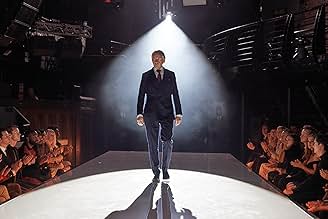
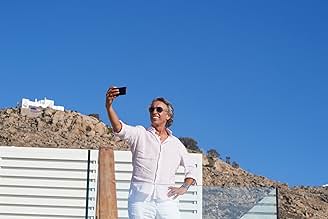
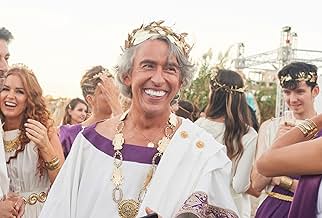
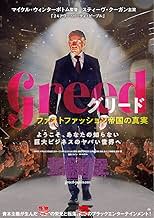
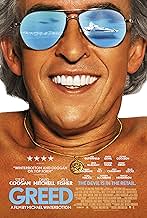
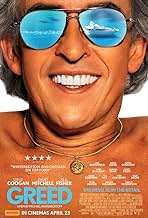
Sir Richard McCreadie (Steve Coogan) is one of Britain's richest men. The perma-tanned "self-made" billionaire is the owner of several clothing chains and is known as "the King of the High Street", although a less complimentary nickname is "Greedy" McCreadie. The non-linear narrative depicts 1) his rise to power, when, as a young man (played by a wonderfully loathsome Jamie Blackley), he opens multiple businesses (all of which fail) as he learns the ins and outs of asset-stripping and the importance of using foreign sweatshops; 2) in the modern-day, we see him hauled before a Parliamentary Select Committee convened to investigate the bankruptcy of one of his chains; and, 3) in the film's present, on the Greek island of Mykonos, the final (chaotic) touches are being put to McCreadie's Roman-themed 60th birthday bash - complete with mandatory togas, a fake coliseum, and a real, albeit somnolent, lion. Much of the story is told through the lens of McCreadie's "official biographer" Nick (David Mitchell), a classically-trained literature buff who drops quotes from Shakespeare and Shelley into everyday conversation, and who hates himself for agreeing to write a fawning celebration of McCreadie.
The idea that a billionaire could be so cut off from workaday reality as to stage a Roman-themed birthday party on a Greek island may sound far too on the nose, too ridiculously hubristic to say anything of any worth, too over-the-top to even function as satire. However, McCreadie is based on Sir Philip Green, chairman of the Arcadia Group, avoider of taxes, exploiter of the working-class, asset-stripper, and enemy of the #MeToo movement. Similarly, many of the details of McCreadie's ludicrous birthday are lifted verbatim from Green's very real 50th birthday celebrations in 2002 - when he flew 219 guests to Cyprus for a three-day toga party.
McCreadie, of course, is a hilariously despicable slimeball, a man who unironically feels hard done by when Syrian refugees show up on the (public) beach he's using for his birthday, and both Coogan and Blackley portray him as not only narcissistic and void of conscience, but as a completely classless philistine - whereas Nick, for example, can quote Shakespeare and recite Shelley, lofty symbols of Englishness both, McCreadie proudly gets his cultural know-how from BrainyQuote. However, the important point is that for all his loathsomeness, McCreadie is a symbol for the system that gave rise to and sustains him. For all his crass hubristic excess, McCreadie is neither an aberrant individual nor is he a criminal - he's an especially vulgar product of the system. And, with the crushing defeat of Labour in the 2019 English general election, it seems he's the product of a system which the vast majority of people appear to support.
The film gets pretty serious towards the end, and before the closing credits, a series of title cards detail some of the facts and figures of global economic disparity, particularly concerning the vast gulf between those who make the clothes we wear and those who sell them to us. Originally, these cards named specific brands as especially guilty of exploiting sweatshop employees, pointing out, for example, that workers in Myanmar earn $3.60 a day making clothes for H&M, whilst owner Stefan Persson is worth $18 billion, and workers in Bangladesh earn $2.84 a day making clothes for Zara, whilst owner Amancio Ortega is worth $68 billion. However, Sony Pictures International, which financed the film with Film4, refused to allow Winterbottom to use these cards, with company head Laine Kline telling him, "we're worried about the potential damage to Sony's corporate relations with these brands". And so replacement cards were used, which feature much of the same information but without reference to any specific companies or people. So how do we know what the original cards said? Because Winterbottom, very much in the viciously sardonic spirit of the film, read them out on-stage after the world première in Toronto! Kline, who was in the audience, was far from impressed, which may account for the shoddy advertising campaign, with the film being released into theatres with virtually no market awareness. Whatever the case, Kline seems unaware of the irony of his actions - in relation to a film which accuses the rich of all manner of shenanigans to insulate and protect themselves and their fortunes, a massive corporate entity has exerted its authority to protect other massive corporate entities. It's like something McCreadie himself would do.
Aesthetically, the film employs a plethora of techniques, including non-linear editing, direct-to-camera addresses, YouTube videos to provide exposition, split-screen, fake news footage, and title cards. However, it's at its most effective when at its simplest, particularly in scenes involving the wonderful Dinita Gohil as McCreadie's overworked, under-appreciated PA. Amanda's interactions with Nick provide the emotional core of the story, and there's nothing bombastic or ostentatious about their construction - it's all simple shot/counter-shot editing and blocking. And by far the film's best sequence, which comes towards the end, is another simple setup involving Amanda and McCreadie, wherein the scene tells its story not through aesthetic construction or even through dialogue, but through the expression on Gohil's face. It's the moment during which Winterbottom drops all pretence of comedy and focuses on the more serious issues that have hovered at the fringes since the opening seconds.
If I were to focus on any one problem, it would be two underdeveloped subplots. A (staged) reality TV show subplot involving McCreadie's daughter Lily (Sophie Cookson) provides for some very funny individual moments, but it contributes nothing whatsoever to the main plot. Additionally, the fact that McCreadie and his ex-wife Samantha (Isla Fisher) are still in love with one another is a theme which never really goes anywhere, which is a shame, as it could have provided some much-needed character development for her and some shades of grey for him.
For better or worse, we live in an age where there are more billionaires than ever before, and Greed is a comedy about the excess and disconnect of such people. However, so too is it a cautionary tale, a reminder that just because we're removed from exploitation doesn't mean such exploitation isn't happening.
Sir Richard McCreadie (Steve Coogan) is one of Britain's richest men. The perma-tanned "self-made" billionaire is the owner of several clothing chains and is known as "the King of the High Street", although a less complimentary nickname is "Greedy" McCreadie. The non-linear narrative depicts 1) his rise to power, when, as a young man (played by a wonderfully loathsome Jamie Blackley), he opens multiple businesses (all of which fail) as he learns the ins and outs of asset-stripping and the importance of using foreign sweatshops; 2) in the modern-day, we see him hauled before a Parliamentary Select Committee convened to investigate the bankruptcy of one of his chains; and, 3) in the film's present, on the Greek island of Mykonos, the final (chaotic) touches are being put to McCreadie's Roman-themed 60th birthday bash - complete with mandatory togas, a fake coliseum, and a real, albeit somnolent, lion. Much of the story is told through the lens of McCreadie's "official biographer" Nick (David Mitchell), a classically-trained literature buff who drops quotes from Shakespeare and Shelley into everyday conversation, and who hates himself for agreeing to write a fawning celebration of McCreadie.
The idea that a billionaire could be so cut off from workaday reality as to stage a Roman-themed birthday party on a Greek island may sound far too on the nose, too ridiculously hubristic to say anything of any worth, too over-the-top to even function as satire. However, McCreadie is based on Sir Philip Green, chairman of the Arcadia Group, avoider of taxes, exploiter of the working-class, asset-stripper, and enemy of the #MeToo movement. Similarly, many of the details of McCreadie's ludicrous birthday are lifted verbatim from Green's very real 50th birthday celebrations in 2002 - when he flew 219 guests to Cyprus for a three-day toga party.
McCreadie, of course, is a hilariously despicable slimeball, a man who unironically feels hard done by when Syrian refugees show up on the (public) beach he's using for his birthday, and both Coogan and Blackley portray him as not only narcissistic and void of conscience, but as a completely classless philistine - whereas Nick, for example, can quote Shakespeare and recite Shelley, lofty symbols of Englishness both, McCreadie proudly gets his cultural know-how from BrainyQuote. However, the important point is that for all his loathsomeness, McCreadie is a symbol for the system that gave rise to and sustains him. For all his crass hubristic excess, McCreadie is neither an aberrant individual nor is he a criminal - he's an especially vulgar product of the system. And, with the crushing defeat of Labour in the 2019 English general election, it seems he's the product of a system which the vast majority of people appear to support.
The film gets pretty serious towards the end, and before the closing credits, a series of title cards detail some of the facts and figures of global economic disparity, particularly concerning the vast gulf between those who make the clothes we wear and those who sell them to us. Originally, these cards named specific brands as especially guilty of exploiting sweatshop employees, pointing out, for example, that workers in Myanmar earn $3.60 a day making clothes for H&M, whilst owner Stefan Persson is worth $18 billion, and workers in Bangladesh earn $2.84 a day making clothes for Zara, whilst owner Amancio Ortega is worth $68 billion. However, Sony Pictures International, which financed the film with Film4, refused to allow Winterbottom to use these cards, with company head Laine Kline telling him, "we're worried about the potential damage to Sony's corporate relations with these brands". And so replacement cards were used, which feature much of the same information but without reference to any specific companies or people. So how do we know what the original cards said? Because Winterbottom, very much in the viciously sardonic spirit of the film, read them out on-stage after the world première in Toronto! Kline, who was in the audience, was far from impressed, which may account for the shoddy advertising campaign, with the film being released into theatres with virtually no market awareness. Whatever the case, Kline seems unaware of the irony of his actions - in relation to a film which accuses the rich of all manner of shenanigans to insulate and protect themselves and their fortunes, a massive corporate entity has exerted its authority to protect other massive corporate entities. It's like something McCreadie himself would do.
Aesthetically, the film employs a plethora of techniques, including non-linear editing, direct-to-camera addresses, YouTube videos to provide exposition, split-screen, fake news footage, and title cards. However, it's at its most effective when at its simplest, particularly in scenes involving the wonderful Dinita Gohil as McCreadie's overworked, under-appreciated PA. Amanda's interactions with Nick provide the emotional core of the story, and there's nothing bombastic or ostentatious about their construction - it's all simple shot/counter-shot editing and blocking. And by far the film's best sequence, which comes towards the end, is another simple setup involving Amanda and McCreadie, wherein the scene tells its story not through aesthetic construction or even through dialogue, but through the expression on Gohil's face. It's the moment during which Winterbottom drops all pretence of comedy and focuses on the more serious issues that have hovered at the fringes since the opening seconds.
If I were to focus on any one problem, it would be two underdeveloped subplots. A (staged) reality TV show subplot involving McCreadie's daughter Lily (Sophie Cookson) provides for some very funny individual moments, but it contributes nothing whatsoever to the main plot. Additionally, the fact that McCreadie and his ex-wife Samantha (Isla Fisher) are still in love with one another is a theme which never really goes anywhere, which is a shame, as it could have provided some much-needed character development for her and some shades of grey for him.
For better or worse, we live in an age where there are more billionaires than ever before, and Greed is a comedy about the excess and disconnect of such people. However, so too is it a cautionary tale, a reminder that just because we're removed from exploitation doesn't mean such exploitation isn't happening.
Good intentions, but messy overall.
On the Greek island of Mykonos, British billionaire and fashion retail extraordinaire Sir Richard McCreadie (Coogan, in a role loosely inspired by Sir Philip Green) prepares to celebrate his 60th birthday. While preparations for a wild extravaganza commence, McCreadie is surveyed by Nick (David Mitchell), who has been tasked with writing his biography; a project that will hopefully salvage McCreadie's soiled reputation. Winterbottom's odd comedy is a satirical effort that examines the inequality present throughout the fashion industry. While it is evident that Greed is a film with a clear message to convey, it is somewhat frustrating to see it handled in such a clumsy manner. Greed tackles a myriad of themes, including wealth inequality, the refuge crisis and the superficial nature of reality television. Scattered throughout Winterbottom's screenplay are a wide range of characters, but very few of them actually feel fully realized. Coogan's McCreadie (an all-round unlikable man) doesn't even feel like a leading character in his own film, though Coogan makes do with the material he's given. David Mitchell is a welcome presence, for sure, and his portrayal of Nick, a mild-mannered, good man observing an otherwise seedy world within which he doesn't belong, results in one of the only likable characters in the film. Much of the comedy falls flat (save for a few chuckle-worthy one liners here and there), and the climactic scene takes a bizarrely brutal turn that feels tonally out of place with the rest of the picture. Greed certainly has good intentions, but the screenplay could have done with a few extra revisions to ensure a more cohesive structure. Mitchell is the standout here, but everything else is largely forgettable.


Did you know
- TriviaSacha Baron Cohen was originally going to play Sir Richard McCreadie but dropped out. After Steve Coogan was cast in the lead Isla Fisher was cast as Sir Richard McCreadie's ex-wife and she is married to Sacha Baron Cohen in real life.
- GoofsAll entries contain spoilers
- Quotes
Samantha: No one reads the Mail Online, it's cleavage clickbait!
Sir Richard McCreadie: Yeah, except I'M the tit this time.
- ConnectionsFeatured in Projector: Greed (2020) (2020)
- How long is Greed?Powered by Alexa
Details
- Release date
- Countries of origin
- Official sites
- Language
- Also known as
- 貪婪之人
- Filming locations
- Production companies
- See more company credits at IMDbPro
Box office
- Gross US & Canada
- $355,308
- Opening weekend US & Canada
- $24,163
- Mar 1, 2020
- Gross worldwide
- $1,460,431
- Runtime
- 1h 44m(104 min)
- Color
- Aspect ratio
- 2.39 : 1
Contribute to this page
Suggest an edit or add missing content