Includes unlimited streaming via the free Bandcamp app, plus high-quality download in MP3, FLAC and more.
Purchasable with gift card
Download available in 24-bit/96kHz.
$9USD or more
Record/Vinyl + Digital Album
140g "Old Sun Orange" vinyl LP, housed in full color jacket with 24" x 12" insert. Limited edition of 1000, exclusive to the Sessa and Mexican Summer webstores.
Includes unlimited streaming of Pequena Vertigem de Amor
via the free Bandcamp app, plus high-quality download in MP3, FLAC and more.
Download available in 24-bit/96kHz.
ships out within 3 days
edition of 1000
Purchasable with gift card
$26.99USDor more
Record/Vinyl + Digital Album
140g black vinyl LP, housed in a full-color jacket with a 24" x 12" insert.
Includes unlimited streaming of Pequena Vertigem de Amor
via the free Bandcamp app, plus high-quality download in MP3, FLAC and more.
Download available in 24-bit/96kHz.
ships out within 3 days
Purchasable with gift card
$25.99USDor more
Compact Disc (CD) + Digital Album
CD in 4 panel wallet with poster folder.
Includes unlimited streaming of Pequena Vertigem de Amor
via the free Bandcamp app, plus high-quality download in MP3, FLAC and more.
Pequena Vertigem de Amor — the third full-length in Sergio Sayeg’s expanding catalogue as Sessa — is not just an evolution in the São Paulo artist’s sound; it is a transformation. Like a camera lens slowly zooming out, Sessa’s records reveal a progression from the private, carnal and earth-bound erotic desires probed on 2019’s Grandeza, to an exploration of the limits and possibilities in relationships between people in love on 2022’s Estrela Acesa.
With Pequena Vertigem de Amor, which translates to “Lil’ Love Vertigo,” Sessa’s view turns upward, to the infinite sky, catching glimpses of universality in the intimacy of becoming a father. Sessa says these songs “are a mix of personal chronicles and quiet meditations about life in the face of personal change, of experiencing something so big that you realize your insignificant size in space and time.”
This new perspective and reality remade his personal life and his connection to music: “For the first time I saw music move from the center to the side of my life.” The radical reordering of priorities presented fresh opportunities in his music. “In an interesting way, music became more mixed with my life,” Sessa notes, as he found ways to conjure melodies, lyrics and inspiration from the daily rhythms of life.
Estrela Acesa built on Grandeza’s minimal ingredients with the addition of Biel Basile (from the beloved Brazilian indie trio O Terno) as co-producer and drummer, Marcelo Cabral on bass, as well as the emotionally evocative hand-in-glove arrangements for strings and horns. These new ingredients elevated the emotional intimacy and intensity that Sessa captured on Grandeza — his sonic signature of whispered poetry over ornate acoustic guitar patterns, buoyed by primal percussion and an ethereal chorus of female vocals. “After two very guitar-centric records, along with hundreds of tour dates with me holding down the music with my guitar, I was a bit out of the ideas for the instrument,” he says.
On Pequena Vertigem de Amor, Sessa continues to expand his sonic palette, stretching in multiple dimensions simultaneously. There’s an emphasis on rhythm and enhanced tempos, as he experiments with new vocal cadences and textures, and adds a bunch of musical instruments not heard on his previous recordings, like piano, synthesizer, wah-wah guitar, and a primitive drum machine. Sessa tracked his existential transformation to magnetic tape at Cosmo, the studio he cofounded with Biel Basile, over five sessions between April 2024 and March 2025.
Sessa describes the album as “a bit more nocturnal, open-ended, crooked funky,” highlighting inspiration from soulful influences indigenous to North and South America, from Shuggie Otis, Roy Ayers and Sly Stone to Erasmo Carlos, Tim Maia and Hyldon. “I have this theory that the music that you fell in love when you were a teenager or in your early twenties really stains your soul,” he says, and the countless hours a young Sergio spent manning the counter at Tropicália in Furs, the legendary East Village record shop, cemented his love for soul music. “Going through stacks and stacks of soul 45s and classic soul records, at some point I realized I wasn’t gonna be that tight funky type of musician, so I decided to own the crookedness in my playing, a soft swing intrinsic to my upbringing in Brazil. My guitar playing went from the traditional Brazilian fingerpicking style to a more rhythmic full hand strumming playing.”
A cosmic connection by way of his son’s pre-school yielded a missing musical ingredient — an “element on piano, which I had never put in my music, that fulfilled my search for a classic samba jazz sound.” A fellow musician and parent suggested Marcelo Maita, the younger brother of São Paulo samba jazz legend Amado Maita, whose lone self-titled solo album from 1972 is the other album (along with Erasmo’s Sonhos e Memorias) that’s been banned from the Sessa family turntable due to excessive spins. Invited to contribute a few songs, Maita’s rhythmic and urgent piano stabs on “Nome de Deus” (Name of God) steer the piece through its absence of Sessa’s guitar. Over the heightened musical tension of Maita’s staccato attacks and Biel’s aggressive percussion, Sessa’s impassioned vocals assert agency in defiance of deities, primal urges in conflict with nature’s laws.
“Dodói” perfectly embodies Sessa’s new rhythmic sensibility, building on an acoustic guitar riff that is accentuated by the insistent pulse of Marcelo Cabral’s bubbling bass and Basile’s propulsive tom-tom and cymbal stomp. Effortlessly funky, the unadorned intro loops for 40 seconds, begging to be chopped and sampled. For the non-lusophone listeners, the song title translates to “boo-boo,” with Sessa cooing the first line: “dá um beijinho no meu dodói / eu sou criança / tem uma coisa que me corrói / é uma dança / desde a barriga / é uma briga, bonita briga / chama da vida” (come kiss my boo-boo / i’m a child / something’s eating me up / it’s a dance / ever since the belly / there’s a fight, a lovely fight / spark of life). Simon Hanes’s string arrangement alternates between supportive swells and sinister swoops, while Maita’s piano dances around the interlocked bass/drum/guitar rhythm.
The emotional core and midpoint of the album evokes the stoned bucolic bliss of Erasmo Carlos’s introspective 1972 album Sonhos e Memorias 1941-1972, first with “Bicho Lento” (Slow Creature) with its lackadaisical flute arrangement courtesy of frequent collaborator Alex Chumak (Soyuz) and then transitioning seamlessly into Sessa’s most earnestly joyful composition, “Vale a Pena” (It’s Worth It). Sessa sets the vibe playing a Suette electric piano, an obscure Brazilian keyboard comparable to the Fender Rhodes. With a vocal delivery so relaxed as to suggest blissful exhaustion, Sessa croons, “pedras no caminho / brilhos no meu chão / dribles do destino / eu vou” (stones on the path / sparkles on my floor / destiny’s dribbles / here i go). On the second go-round, the singers Cecília Góes, Lau Ra, Ina & Paloma Mecozzi urge Sessa along, buttressing his fragile vocals, as Sessa disarmingly delivers these sentimental and direct lyrics that suggest an acceptance of the profound, unexpected and inevitable joys and pains of this new life phase: “vale a pena / viver vale a pena / estou com vocês / vale a pena / viver vale a pena / minha galera” (it’s worth it / living is worth it / i’m with you / it’s worth it / living is worth it / with my crew).
Across nine tracks, Sessa reflects on his personal evolution, an experience that he says brings into sharp contrast “the ambiguities and contradictions in life, which is a place that always has inspired my writing.” Pequena Vertigem de Amor, reminds us that experiencing vertigo is simultaneously terrifying and exhilarating, sentiments that this collection of Sessa songs delivers lyrically and musically, fusing novel and familiar sounds, styles and instruments in celebration and wonderment of life’s “ordinary and extraordinary” rites of passage.
credits
released November 7, 2025
Produced by Sessa and Biel Basile
Recorded by Sessa and Biel Basile at Estúdio Cosmo (São Paulo, SP), April 2024–March 2025
Strings recorded by Al Carlson at Gary's Electric Studio (Brooklyn, NY)
Mixed by Seth Manchester at Machines With Magnets (Pawtucket, RI) in April 2025
Mastered by Dave Cooley at Elysian Masters (Los Angeles, CA)
Strings arranged and conducted by Simon Hanes
Flutes on “Roupa dos Mortos” and “Bicho Lento” arranged by Alex Chumak
Flutes on “Planta Santa” arranged by Filipe Nader
All songs written by Sessa
Sessa: vocals, nylon acoustic guitar, wah wah guitar, bass on “Bicho Lento,” electric piano on “Vale a Pena”
Biel Basile: drums, percussion
Marcelo Cabral: bass
Cecília Góes: vocals
Lau Ra: vocals
Ina: vocals
Paloma Mecozzi: vocals
Alex Chumak: electric piano, synthesizer
Marcelo Maita: piano
Gabriel Milliet: flutes
Filipe Nader: alto saxophone
Kate Goddard: violin
Ludovica Burtone: violin
Laura Sacks: viola
Daniel Parker: violoncello
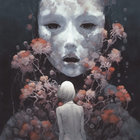
Artwork by Ben Styer
Front and back cover photos by and courtesy of Helena Wolfenson
All insert photos by Biel Basile, except for the photo of Biel Basille by the tape machine, taken by Alex Chumak
Lyrics translated from Portuguese to English by J. Westfal
Designed by Alex Tults
All songs Copyright Control Sergio Sayeg (BMI)
This record is dedicated to my partner and lover Helena and my son Bem, and it wouldn't have been possible to make it without the generous help my family and friends: Virginia Kalili Sayeg, Victor Sayeg, Marcelo Sayeg, Alexandre Wahrhaftig, Pat, Naná, Milton Langes, Jonathan Shedletzky, Bled Celhyka, Keith Abrahamson, Jonas Morbach, Tiago Valente, Arlindo de Paula, Roberto Santana, Luiza Lian, Anaiis, Tim Bernardes, Décio 7, Joel Stones, Diana Foxwell, Cem Misirlioglu, Vic Del Nur, Laura Pereira, Sarah Gautier, Malik Abdul-Rahmaan, Amghy Chaco, Jonas Sá.
Sessa is fascinated by “the mess” of music, “the crooked translations that music gets when it travels.” A cultural cannibal
like the iconic Brazilian Tropicalistas from the late sixties, Sessa unapologetically and seamlessly mashes musical references, from rock to jazz to samba and soul....more
supported by 63 fans who also own “Pequena Vertigem de Amor”
Even at 80 years old, Pharoah Sanders played his tenor sax with the conviction of a gospel preacher. Every second of this album is arrestingly beautiful. As far as I'm concerned, this is essential listening for anyone who considers themselves a fan of music. 3sidesinasquare