

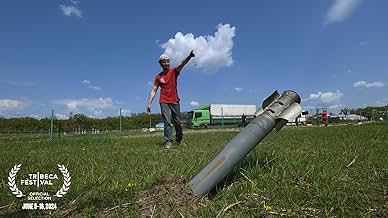
In der Anfangsphase des russisch-ukrainischen Krieges waren fast 5.000 Tiere in einem Wildpark hinter den feindlichen Linien gefangen.In der Anfangsphase des russisch-ukrainischen Krieges waren fast 5.000 Tiere in einem Wildpark hinter den feindlichen Linien gefangen.In der Anfangsphase des russisch-ukrainischen Krieges waren fast 5.000 Tiere in einem Wildpark hinter den feindlichen Linien gefangen.
- Regisseur/-in
- Autoren
- Stars
- Auszeichnungen
- 10 Gewinne & 4 Nominierungen insgesamt

8,0123
1
2
3
4
5
6
7
8
9
10
Empfohlene Bewertungen
Mr Z's Manipulation
This film is not worthy of your time. This is not to say that the subject of "Checkpoint Zoo" is unworthy-far from it. The documentary, from director Joshua Zeman, bravely attempts to shine a light on one of the most heartbreaking and often overlooked casualties of human conflict: the animals. The premise is one of immense promise and inherent drama: a group of dedicated volunteers risking their lives amidst the Russian invasion of Ukraine to rescue thousands of animals from a zoo near Kharkiv. You want this film to succeed. You want it to be a testament to compassion in the face of chaos.
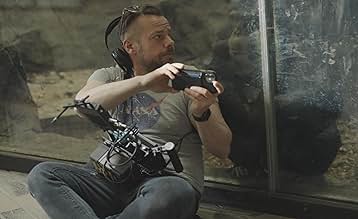
But the finished product, I am sorry to report, is a cinematic muddle, a film that fumbles its powerful subject matter with a narrative that is both disjointed and strangely manipulative. Zeman, who has proven his talents with documentaries like "Cropsey" and "The Loneliest Whale," seems to have forgotten a fundamental rule of storytelling: do not exploit your audience's empathy, earn it. The film, in its chaotic, sometimes baffling editing, careens from one harrowing moment to the next, often without giving the viewer a clear emotional anchor. The constant use of raw, shaky camera footage from cell phones and GoPros, while initially effective in conveying the immediacy of the conflict, quickly becomes a crutch, preventing any kind of coherent narrative from taking shape. Instead of a powerful, focused story, we are left with a series of jarring and disconnected clips that fail to build any meaningful tension or emotional arc.
The result is a film that feels less like a tribute to bravery and more like a rushed assembly of tragedy. It is a work that, for all its good intentions, manages to turn a deeply moving and heroic story into a surprisingly hollow experience. It is a shame, for the story of these volunteers deserves to be told with grace, clarity, and the kind of narrative purpose that Zeman's other work has so often possessed. But this film, for all its heart, simply misses the mark. It gets a resounding thumbs down.
But the finished product, I am sorry to report, is a cinematic muddle, a film that fumbles its powerful subject matter with a narrative that is both disjointed and strangely manipulative. Zeman, who has proven his talents with documentaries like "Cropsey" and "The Loneliest Whale," seems to have forgotten a fundamental rule of storytelling: do not exploit your audience's empathy, earn it. The film, in its chaotic, sometimes baffling editing, careens from one harrowing moment to the next, often without giving the viewer a clear emotional anchor. The constant use of raw, shaky camera footage from cell phones and GoPros, while initially effective in conveying the immediacy of the conflict, quickly becomes a crutch, preventing any kind of coherent narrative from taking shape. Instead of a powerful, focused story, we are left with a series of jarring and disconnected clips that fail to build any meaningful tension or emotional arc.
The result is a film that feels less like a tribute to bravery and more like a rushed assembly of tragedy. It is a work that, for all its good intentions, manages to turn a deeply moving and heroic story into a surprisingly hollow experience. It is a shame, for the story of these volunteers deserves to be told with grace, clarity, and the kind of narrative purpose that Zeman's other work has so often possessed. But this film, for all its heart, simply misses the mark. It gets a resounding thumbs down.
Humanity documented
This is one of the best, if not the best documentary I have ever seen. It is a compelling story of love in the face of war. If you have compassion for innocents enough so you would you risk your life for them? In the face of animals trapped between warring armies, these zookeepers, neighbours, and volunteers became the heroes we need.
This is a superhero documentary.
This is a superhero documentary.
10aadoors
"Hope of a Better Tomorrow"
Documentary filmmaker Joshua Zeman brings global audiences an intimate and harrowing look at the early days of the war in Ukraine, focusing on Kharkiv, the country's second-largest city. His powerful film centers on Feldman Ecopark, a zoo caught directly in the crossfire of the Russian-Ukrainian conflict. The story follows the courageous efforts by staff, volunteers, and community members to rescue the animals amidst the chaos-while also confronting the darkest facets of humanity. Captured through raw, guerrilla-style footage by crew members and staff who risked their lives, the documentary is often difficult to watch, but stands as a vital reminder of the ongoing suffering faced by millions in Ukraine.
The film includes some lighter moments as volunteers make plans to feed and care for smaller animals after the shelling begins, eventually evacuating them to safer areas and other animal sanctuaries across Ukraine. Ecopark, once a popular destination for families, housed countless animals like alpacas, donkeys, goats, and birds-gentle creatures typically found in a children's petting zoo. However, when it comes to dealing with dangerous predators, the tone takes a much darker turn. The volunteers face life-threatening challenges as they race against time to develop a plan, with the constant risk of death looming over every decision. The editing, by Cy Christiansen and Andrew Ford, skillfully weaves together hundreds of hours of footage-not just from the main camera crew, but also from personal devices used by volunteers. Much of this material had to be enhanced and upscaled to match the production quality of the footage. Impressively, the film stays focused on its immediate story, avoiding detours into broader geopolitical commentary. While it inevitably sheds light on the atrocities of war and the emotional toll on ordinary people, it does so through the lens of this intimate, ground-level narrative. The cinematography, by Nelson Hume and Olivier Sarbil, captures the chaos with remarkable precision, despite working in extremely tight quarters and under the unpredictable threat of constant Russian shelling. No one could anticipate where or when the next strike would hit, forcing the crew to remain agile and ready to act at a moment's notice.
The horrors of war can be seen in the eyes of the animals, who can't fully process what was going on around them, as a haunting window into the soul of humanity. One of the more striking anecdotes shared during the Q&A with director Joshua Zeman was the potential revelation that part of the Russian strategy to demoralize Ukrainian civilians involved deliberately targeting cultural institutions and urban zoos. These places-often located in city centers-were seen as symbols of hope, especially for children. By destroying them, the intent was not just physical devastation, but a psychological one: to erode the spirit of the Ukrainian people by eliminating spaces associated with joy, learning, and emotional refuge.
The original score (Anne Nikitin) creates a searing, immersive atmosphere that perfectly complements the film's emotional intensity and vibrant, archetypal characters. Her music underscores the sense of urgency and moral clarity, propelling the audience into what feels like an impossible mission-one driven by courage, resilience, and the fight for freedom and sovereignty.
Checkpoint Zoo's New York City premiere at the Quad Cinema was accompanied by a Q&A; joining filmmaker Zeman was journalist and filmmaker Katya Soldak, Natalia Musiienko from the Consul of Ukraine in New York, and activist Vsevolod Myrnyi, who shared with the audience ways to continue to support the people of Ukraine.
Sometimes, it takes our love for animals to bring out the best in humanity and shine a light in the darkest moments. The heroic spirit of Ukraine, fighting against brutal aggression while also saving thousands of animals, is a gut-wrenching yet profoundly uplifting example of what it truly means to be human. As we continue down a path of environmental destruction and global conflict, it's a poignant reminder that compassion-especially for the most vulnerable-can reconnect us with the essence of our humanity. In a world desperate for hope, the extraordinary efforts of the people at Ecopark serve as a testament to resilience, kindness, and the possibility of a better tomorrow.
The film includes some lighter moments as volunteers make plans to feed and care for smaller animals after the shelling begins, eventually evacuating them to safer areas and other animal sanctuaries across Ukraine. Ecopark, once a popular destination for families, housed countless animals like alpacas, donkeys, goats, and birds-gentle creatures typically found in a children's petting zoo. However, when it comes to dealing with dangerous predators, the tone takes a much darker turn. The volunteers face life-threatening challenges as they race against time to develop a plan, with the constant risk of death looming over every decision. The editing, by Cy Christiansen and Andrew Ford, skillfully weaves together hundreds of hours of footage-not just from the main camera crew, but also from personal devices used by volunteers. Much of this material had to be enhanced and upscaled to match the production quality of the footage. Impressively, the film stays focused on its immediate story, avoiding detours into broader geopolitical commentary. While it inevitably sheds light on the atrocities of war and the emotional toll on ordinary people, it does so through the lens of this intimate, ground-level narrative. The cinematography, by Nelson Hume and Olivier Sarbil, captures the chaos with remarkable precision, despite working in extremely tight quarters and under the unpredictable threat of constant Russian shelling. No one could anticipate where or when the next strike would hit, forcing the crew to remain agile and ready to act at a moment's notice.
The horrors of war can be seen in the eyes of the animals, who can't fully process what was going on around them, as a haunting window into the soul of humanity. One of the more striking anecdotes shared during the Q&A with director Joshua Zeman was the potential revelation that part of the Russian strategy to demoralize Ukrainian civilians involved deliberately targeting cultural institutions and urban zoos. These places-often located in city centers-were seen as symbols of hope, especially for children. By destroying them, the intent was not just physical devastation, but a psychological one: to erode the spirit of the Ukrainian people by eliminating spaces associated with joy, learning, and emotional refuge.
The original score (Anne Nikitin) creates a searing, immersive atmosphere that perfectly complements the film's emotional intensity and vibrant, archetypal characters. Her music underscores the sense of urgency and moral clarity, propelling the audience into what feels like an impossible mission-one driven by courage, resilience, and the fight for freedom and sovereignty.
Checkpoint Zoo's New York City premiere at the Quad Cinema was accompanied by a Q&A; joining filmmaker Zeman was journalist and filmmaker Katya Soldak, Natalia Musiienko from the Consul of Ukraine in New York, and activist Vsevolod Myrnyi, who shared with the audience ways to continue to support the people of Ukraine.
Sometimes, it takes our love for animals to bring out the best in humanity and shine a light in the darkest moments. The heroic spirit of Ukraine, fighting against brutal aggression while also saving thousands of animals, is a gut-wrenching yet profoundly uplifting example of what it truly means to be human. As we continue down a path of environmental destruction and global conflict, it's a poignant reminder that compassion-especially for the most vulnerable-can reconnect us with the essence of our humanity. In a world desperate for hope, the extraordinary efforts of the people at Ecopark serve as a testament to resilience, kindness, and the possibility of a better tomorrow.
10whheee
The most thrilling documentary of the year
Checkpoint Zoo is a documentary from Joshua Zeman that plays out like a thriller. Almost all the action, and it's fully action-packed, occurs at the Feldman Ecopark on the outskirts of Kharkiv. Home to more than 5,000 species, the park was one of the most popular destinations for Ukrainians. Founded by Oleksander Feldman, Ecopark was a labor of love, containing rehab zones, programs for kids, an alpaca farm, monkeys, predators and more.
Until February 24, 2022, the day that Russia attacked Ukraine and began bombing Kharkiv. That was the day Feldman's new mission began: find a way to transport his 5000 animals out of the war zone to safety.
Approximately 30 km from Russia's border, Ecopark was located in Kharkiv, Ukraine's second-largest city. Following the initial attack, the Ukrainian Army pushed back Putin's invading forces, but the military action left the park trapped between the two front lines.
At peak season, Ecopark was staffed by 100 dedicated workers. When the film begins, we learn that a staff of 10 have remained behind to care for all 5,000 residents. This was their mission. It also became the mission for volunteers who arrived at the park's entrance, answering an emergency plea to help save these innocent animals.
To even reach the park was perilous. Military checkpoints were set up along the road, while bombs and missiles flew constantly overhead. Whenever someone arrived at the park, the missiles started flying shortly after. The park had no heat, no electricity and no running water. The assault was in the dead of winter; temperatures dropped to -18 degrees.
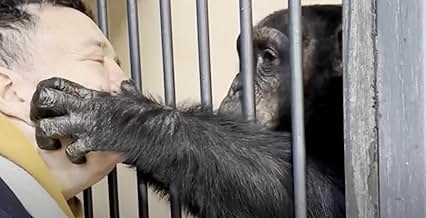
These volunteers hand-fed grapes to petrified, hungry lemurs, while the shells continued to fall. They tossed in whatever meat they could buy or scrounge to feed the starving big cats. Carried buckets of water to thirsty camels at the far end of the park. The small rodent exhibit, once populated by guinea pigs, was decimated. Invading Russian soldiers had used their little bodies for target practice. You can see the holes in the glass and walls. Volunteers had to enter the exhibit and retrieve the tiny, mutilated carcasses.
Checkpoint Zoo follows heroes like Tymofii Kharchenko, a veterinarian, who just showed up to help. He drafted several of his friends and relatives including Oleksii Husak and Andrii Tyvaniuk. This band of brothers became known as "the Boys". The Boys, assisted by Ukrainian families whose homes were in the area, are pushed to the brink, finding themselves in perilous situations from both bombs and animals. Many animals have been starved for weeks and are down to skin and bone.
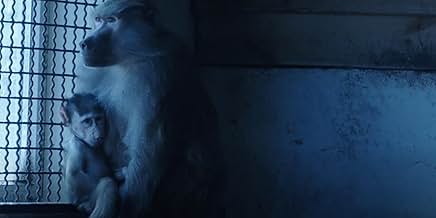
Let's not forget that the filmmakers are not recreating these events. They are there when the camels and ostriches are herded into buses and vans. When the wild cats are darted to sedate them, then transported into whatever vehicles were mobile. You can feel their sadness after a missile hits the roof of the monkey house, and one of the animals succumbs to a heart attack. The Monkey House, a centerpiece of the Park, was destroyed and many, many monkeys perished.
All these heroic volunteers dig deep to help the animals survive, while desperately searching for a way to avoid further tragedy. Somehow, amid everything, these humans remain positive. We're given moments of sheer amazement - imagine glancing behind you and seeing a sedated lion in the back of your van! Reluctant kangaroos are dragged to safety by their tails, when they refuse to leave their enclosure. Goats draped over their rescuer's shoulders when they are too scared to move.
But how, and where can 5000 animals go, while a war is raging just miles from their home?
Time is running out and food, medicine and shelter are quickly becoming scarcer. Though the Ukrainians had hoped for a fast end to the war, that did not happen. The Russian attacks continue to this day.
If you're lucky enough to have Checkpoint Zoo come to your neck of the woods during a local film festival, grab a ticket. It's been a smash hit wherever it plays. You will be spellbound by this moving, magical tale of tragedy and triumph.
Until February 24, 2022, the day that Russia attacked Ukraine and began bombing Kharkiv. That was the day Feldman's new mission began: find a way to transport his 5000 animals out of the war zone to safety.
Approximately 30 km from Russia's border, Ecopark was located in Kharkiv, Ukraine's second-largest city. Following the initial attack, the Ukrainian Army pushed back Putin's invading forces, but the military action left the park trapped between the two front lines.
At peak season, Ecopark was staffed by 100 dedicated workers. When the film begins, we learn that a staff of 10 have remained behind to care for all 5,000 residents. This was their mission. It also became the mission for volunteers who arrived at the park's entrance, answering an emergency plea to help save these innocent animals.
To even reach the park was perilous. Military checkpoints were set up along the road, while bombs and missiles flew constantly overhead. Whenever someone arrived at the park, the missiles started flying shortly after. The park had no heat, no electricity and no running water. The assault was in the dead of winter; temperatures dropped to -18 degrees.
These volunteers hand-fed grapes to petrified, hungry lemurs, while the shells continued to fall. They tossed in whatever meat they could buy or scrounge to feed the starving big cats. Carried buckets of water to thirsty camels at the far end of the park. The small rodent exhibit, once populated by guinea pigs, was decimated. Invading Russian soldiers had used their little bodies for target practice. You can see the holes in the glass and walls. Volunteers had to enter the exhibit and retrieve the tiny, mutilated carcasses.
Checkpoint Zoo follows heroes like Tymofii Kharchenko, a veterinarian, who just showed up to help. He drafted several of his friends and relatives including Oleksii Husak and Andrii Tyvaniuk. This band of brothers became known as "the Boys". The Boys, assisted by Ukrainian families whose homes were in the area, are pushed to the brink, finding themselves in perilous situations from both bombs and animals. Many animals have been starved for weeks and are down to skin and bone.
Let's not forget that the filmmakers are not recreating these events. They are there when the camels and ostriches are herded into buses and vans. When the wild cats are darted to sedate them, then transported into whatever vehicles were mobile. You can feel their sadness after a missile hits the roof of the monkey house, and one of the animals succumbs to a heart attack. The Monkey House, a centerpiece of the Park, was destroyed and many, many monkeys perished.
All these heroic volunteers dig deep to help the animals survive, while desperately searching for a way to avoid further tragedy. Somehow, amid everything, these humans remain positive. We're given moments of sheer amazement - imagine glancing behind you and seeing a sedated lion in the back of your van! Reluctant kangaroos are dragged to safety by their tails, when they refuse to leave their enclosure. Goats draped over their rescuer's shoulders when they are too scared to move.
But how, and where can 5000 animals go, while a war is raging just miles from their home?
Time is running out and food, medicine and shelter are quickly becoming scarcer. Though the Ukrainians had hoped for a fast end to the war, that did not happen. The Russian attacks continue to this day.
If you're lucky enough to have Checkpoint Zoo come to your neck of the woods during a local film festival, grab a ticket. It's been a smash hit wherever it plays. You will be spellbound by this moving, magical tale of tragedy and triumph.
Absolute powerhouse film that everyone should see.
A heart-shredding yet hopeful look at a handful of heroes who dare to rescue nearly 5000 animals from a zoo on the front lines. A magnificent and terrifying true story of heroism and bravery that proves that humans can be animals, while ordinary humans can accomplish extraordinary things.
There is so much heartbreak and hope in equal measure. I can't remember being so moved by a documentary. It felt like I was watching the Schindler's List of zoo animals. I feel like I'll need several days to fully process what I've seen, and I know many moments in this film will follow me for life.
Everyone in the world should see this incredible film.
There is so much heartbreak and hope in equal measure. I can't remember being so moved by a documentary. It felt like I was watching the Schindler's List of zoo animals. I feel like I'll need several days to fully process what I've seen, and I know many moments in this film will follow me for life.
Everyone in the world should see this incredible film.


Top-Auswahl
Melde dich zum Bewerten an und greife auf die Watchlist für personalisierte Empfehlungen zu.
Details
- Erscheinungsdatum
- Herkunftsländer
- Offizielle Standorte
- Sprache
- Auch bekannt als
- Блокпост Зоопарк
- Produktionsfirmen
- Weitere beteiligte Unternehmen bei IMDbPro anzeigen
- Laufzeit
- 1 Std. 43 Min.(103 min)
- Farbe
Zu dieser Seite beitragen
Bearbeitung vorschlagen oder fehlenden Inhalt hinzufügen