

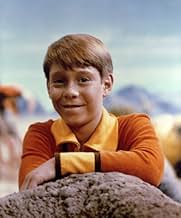
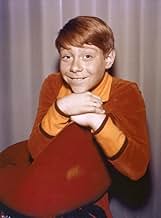
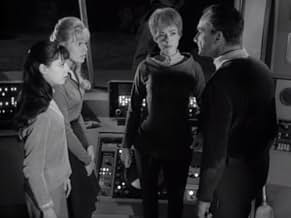
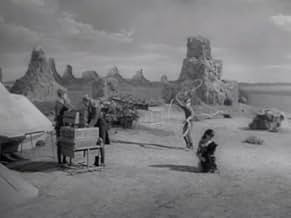
Una familia en una colonia espacial intenta sobrevivir cuando un polizón accidental saca a su nave del rumbo establecido.Una familia en una colonia espacial intenta sobrevivir cuando un polizón accidental saca a su nave del rumbo establecido.Una familia en una colonia espacial intenta sobrevivir cuando un polizón accidental saca a su nave del rumbo establecido.
- Nominado para 2 premios Primetime Emmy
- 1 premio y 5 nominaciones en total
Explorar episodios








7,39.6K
1
2
3
4
5
6
7
8
9
10
Reseñas destacadas
Forbidden Planet meets Seinfeld meets Gilligan's Island
I don't know if combining Forbidden Planet with Seinfeld and Gilligan's Island is exactly on target, but there are elements of all three. I was in second grade when this show premiered, and I never missed an episode. The stories were always interesting to me, and even at age eight the character of Dr. Smith absolutely captured my imagination. There are aspects of this fellow that are so very interesting - here is a guy with a great deal of education who never seems to have learned anything from the mythology he is always reciting to everyone, as in "All That Glitters", my all-time favorite episode. He didn't remember the tragedy of King Midas when he was making his wish? His greed and his cowardice override any mental advantage he may have. He is truly the George Costanza of space exploration - whenever he stumbles upon a piece of good fortune he has to milk it for all it's worth until the whole situation turns on him. Then there are the children - Will and Penny. No matter what Dr. Smith does they still like the guy, and he does a lot. He bargains with aliens to take Will's brain for their experiments instead of his, and in another episode turns Penny into platinum, although he does feel remorse about the latter deed. In fact, the children are Smith's only friends. He is merely tolerated by the adults, and for good reason.
Finally there is the "innocence and chastity beyond reason" element that was part of Gilligan's Island and is part of this show too. Despite the only natural and healthy attraction between Major Donald West and Judy Robinson, we are to believe that nothing really happens between the two for years on end. Also like Gilligan's Island, although the group's first priority starts off as finding a way to return to earth, eventually they settle into a kind of domestic tranquility and seem to make peace with their situation of being "lost in space".
Of course, rewatching this series over forty years later, it is not quite as great as I remembered it, but it is still great fun and Smith is still a fascinating character. It's also interesting to see what people in the 1960's thought earthly civilization would be like in 1997. It's humorous yet somewhat tragic to see the optimistic viewpoint people had of the future in the 1960's pertaining to human nature. What the series' creators couldn't foresee is that today people are much more like Zachary Smith than the Robinson family - at least the people in charge of things are.
Finally there is the "innocence and chastity beyond reason" element that was part of Gilligan's Island and is part of this show too. Despite the only natural and healthy attraction between Major Donald West and Judy Robinson, we are to believe that nothing really happens between the two for years on end. Also like Gilligan's Island, although the group's first priority starts off as finding a way to return to earth, eventually they settle into a kind of domestic tranquility and seem to make peace with their situation of being "lost in space".
Of course, rewatching this series over forty years later, it is not quite as great as I remembered it, but it is still great fun and Smith is still a fascinating character. It's also interesting to see what people in the 1960's thought earthly civilization would be like in 1997. It's humorous yet somewhat tragic to see the optimistic viewpoint people had of the future in the 1960's pertaining to human nature. What the series' creators couldn't foresee is that today people are much more like Zachary Smith than the Robinson family - at least the people in charge of things are.
The best show from TV's greatest decade
I guess I'm alone in my views these days, but I've never agreed with the critics (or the vast audiences) that adore contemporary TV series like "Seinfeld" or "Friends."
For me, the best decade for TV (by a million miles) was the 1960s. It was truly a unique decade for television. Series produced then are totally unlike anything produced previously or since. I don't know what it was (perhaps someone spiked the water back then), but TV in the 1960s was unique. There was a certain sense of wonder, a certain sense of the fantastic---and a definite 60s vibe of surrealism that crept into every show from "Green Acres" to "Batman" to "Gilligan's Island."
And for my money, the best show in TV's greatest decade was "Lost in Space." It's impossible to describe what watching this show was like in the 1960s. It's an experience that simply can't be re-produced today. For a start, America was still an optimistic nation and we had an ambitious space program that would soon take us to the moon. For everyone who was young in the 60s, it seemed highly plausible that, we too, would get a chance to ride a rocket into space within our lifetimes. Little could we fathom that, after 1972, America wouldn't even land a person on the moon for 35 long years.
Today's TV shows are stiflingly dull and seem to be created by committees that cynically use focus groups to create their sterile product. "Lost in Space" is a million miles away from this creative process. In fact, it's the total opposite (and all the more brilliant for this).
The greatest science fiction always had a sense of wonder and mystery. "Lost in Space" captured the mystery of space---indeed, the show itself was actually quite bizarre. It's a far cry from the over-rated "Star Trek," which, instead of giving us a sense of mystery, followed an (increasingly stale) by-the-numbers formula.
And "formula" is precisely what one did NOT get in viewing "Lost in Space." Indeed, this show is so strange that, viewing it today, it seems like a relic from a lost civilization. It's hard, in fact, to really even fathom who the producers were targeting as their audience.
Naturally, there are cynics who hate this show, and fall over themselves pointing out the plot holes and the ignorance of "realism." To those folks, I say: Chill out. Even TV's "realistic" shows are NOT as realistic as they hyped to be. "Star Trek," for example, has plenty of flaws in its science. Even a highly-praised show like "ER," the medical drama, has plenty of inaccuracies (as any medical professional will tell you).
In many ways, "Lost in Space" does a wonderful job of capturing the essence of what made the 60s the greatest decade of the 20th century for TV, film, music, and culture in general. It's something we'll never re-capture in today's stale culture, dominated as it is by dull, overpaid celebrities. We've gone a long ways downhill from The Beatles to "American Idol."
For me, the best decade for TV (by a million miles) was the 1960s. It was truly a unique decade for television. Series produced then are totally unlike anything produced previously or since. I don't know what it was (perhaps someone spiked the water back then), but TV in the 1960s was unique. There was a certain sense of wonder, a certain sense of the fantastic---and a definite 60s vibe of surrealism that crept into every show from "Green Acres" to "Batman" to "Gilligan's Island."
And for my money, the best show in TV's greatest decade was "Lost in Space." It's impossible to describe what watching this show was like in the 1960s. It's an experience that simply can't be re-produced today. For a start, America was still an optimistic nation and we had an ambitious space program that would soon take us to the moon. For everyone who was young in the 60s, it seemed highly plausible that, we too, would get a chance to ride a rocket into space within our lifetimes. Little could we fathom that, after 1972, America wouldn't even land a person on the moon for 35 long years.
Today's TV shows are stiflingly dull and seem to be created by committees that cynically use focus groups to create their sterile product. "Lost in Space" is a million miles away from this creative process. In fact, it's the total opposite (and all the more brilliant for this).
The greatest science fiction always had a sense of wonder and mystery. "Lost in Space" captured the mystery of space---indeed, the show itself was actually quite bizarre. It's a far cry from the over-rated "Star Trek," which, instead of giving us a sense of mystery, followed an (increasingly stale) by-the-numbers formula.
And "formula" is precisely what one did NOT get in viewing "Lost in Space." Indeed, this show is so strange that, viewing it today, it seems like a relic from a lost civilization. It's hard, in fact, to really even fathom who the producers were targeting as their audience.
Naturally, there are cynics who hate this show, and fall over themselves pointing out the plot holes and the ignorance of "realism." To those folks, I say: Chill out. Even TV's "realistic" shows are NOT as realistic as they hyped to be. "Star Trek," for example, has plenty of flaws in its science. Even a highly-praised show like "ER," the medical drama, has plenty of inaccuracies (as any medical professional will tell you).
In many ways, "Lost in Space" does a wonderful job of capturing the essence of what made the 60s the greatest decade of the 20th century for TV, film, music, and culture in general. It's something we'll never re-capture in today's stale culture, dominated as it is by dull, overpaid celebrities. We've gone a long ways downhill from The Beatles to "American Idol."
One Of The Best Sci-Fi Shows Ever!
There are a lot of people who gripe about how the show set out to be dead serious and later became corrupted by the "camp craze" that started with the Batman show. But I like this series from beginning to end, with my only regret being that the show didn't get properly wrapped up at the end.
I like this show because you could see the love Will Robison felt for his father and unlike the dysfunctional television families of today, John Robison had great love for his son; and the bond between John and Maureen was also unshakable. This was a warm and caring family, and I liked that more then some of the silly plots.
That's not to say that I didn't like the plots: often they were silly and made me laugh-- probably when they were trying to be serious, and made more so by the limited budgets and special effects of the '60s. But if you made the same show today, using the most expensive CGI effects, the new show would not have the same warmth and charm, and it would die within a season. It's so sad that writers today don't know anything about what a family should be. Look at the recent movie; see how the producer's '90s view had a troubled Will Robinson, and a self-centered Penny, along with a soulless John Robinson who had all the charm of a brick.
I am glad that Lost In Space is on DVD as well as video and that people can see a great classic television show. So what, there were giant talking carrots! It was one of several funny episodes that I wouldn't miss it for anything in the world. There were some that stank, too, and I wouldn't miss those either. It was overall, a great series. And without Lost In Space, there would not have been a Star Trek. People forget that, too.
I give my respects to the late, great, Jonathan Harris. Doctor Smith, I'll miss you...
I like this show because you could see the love Will Robison felt for his father and unlike the dysfunctional television families of today, John Robison had great love for his son; and the bond between John and Maureen was also unshakable. This was a warm and caring family, and I liked that more then some of the silly plots.
That's not to say that I didn't like the plots: often they were silly and made me laugh-- probably when they were trying to be serious, and made more so by the limited budgets and special effects of the '60s. But if you made the same show today, using the most expensive CGI effects, the new show would not have the same warmth and charm, and it would die within a season. It's so sad that writers today don't know anything about what a family should be. Look at the recent movie; see how the producer's '90s view had a troubled Will Robinson, and a self-centered Penny, along with a soulless John Robinson who had all the charm of a brick.
I am glad that Lost In Space is on DVD as well as video and that people can see a great classic television show. So what, there were giant talking carrots! It was one of several funny episodes that I wouldn't miss it for anything in the world. There were some that stank, too, and I wouldn't miss those either. It was overall, a great series. And without Lost In Space, there would not have been a Star Trek. People forget that, too.
I give my respects to the late, great, Jonathan Harris. Doctor Smith, I'll miss you...
The Best Of Irwin Allen
I think this was the best thing that Irwin Allen ever did. Although the show drifted far away from its original synopsis,the adventures of a family in space, it eventually became the story of a boy and his robot. Bill Mumy became a hot talent in Hollywood after the series and his role as Will as the likeable son is one of TV's most endearing roles. Johnathan Harris was the villain we loved to hate as he became of another of the screen's most versatile character actors. The man showed great talent arguing with an inanimate prop and making it the hero of the show. The unnamed robot, ironically, became more dimensionally than anyone else in the show, and forget Mary Anne vs. Ginger, how many guys had crushes on Penny Robinson than on Judy ? Penny was the adorable ingenue next to the obvious Hollywood presence of Marta Kristen, the first Marilyn Monroe of the galaxy. John and June Robinson, however, slowly became less the leaders and heros of the series as they became closer to Ward and June Cleaver as they spilled out parental advice and punishments. Don West, however, remained mostly the same character without any developments in his character and past, but that can be directly blamed on the series focus between Will, the Robot and Dr. Smith while everyone else became just a little bit more than supporting roles. Despite these few faults, I still think its one of the best things to ever grace television.
An excellent example of a neglected genre, namely...
SPACE FANTASY... STAR TREK certainly utilized elements of whimsy but not to this degree ...I think especially of an example such as the space circus episode,or the wonderful episode in which Dr. Smith turns slowly into a stalk of celery (an acting tour de force, by the way...)...Stunning use of archetypes such as the innocent young lad, the brave companion and the cowardly uncle...many have complained of the cardboard quality of the so called "main characters" of this series, but what an interesting use of them. The so called adult "stars" being only paper backdrops, intentionally made so, so as to throw into relief the richness of these archetypes and the genuinely mythic adventures in which they find themselves.The "special guest star" status of Jonathan Harris is one of the great ironic tricks of network television. A very underrated series.


¿Sabías que...?
- CuriosidadesJune Lockhart had the biggest parking space on the 20th Century-Fox lot because she would often drive her favorite vehicle to work - a 1923 fire engine.
- PifiasThe Robot is mounted on tracks. Yet in close-ups when it moves with a normal walking action and it is possible to see the actors legs move in the lower parts of the suit.
- Versiones alternativasA pilot episode was filmed that did not include either Robot or Dr. Smith! This film was not broadcast in 1965 but was shown on TV and released to video in the 1990s.
- ConexionesEdited into The Man from the 25th Century (1968)
Selecciones populares
Inicia sesión para calificar y añadir a tu lista para recibir recomendaciones personalizadas
Detalles
- Duración
- 1h(60 min)
- Color
Contribuir a esta página
Sugerir un cambio o añadir el contenido que falta