PUNTUACIÓN EN IMDb
5,9/10
297
TU PUNTUACIÓN

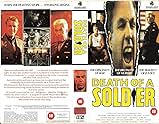
James Coburn interpreta a un abogado militar al que se le asigna la defensa de un asesino psicótico confeso. El asesino acusado afirma haber matado a 3 mujeres para poseer sus voces.James Coburn interpreta a un abogado militar al que se le asigna la defensa de un asesino psicótico confeso. El asesino acusado afirma haber matado a 3 mujeres para poseer sus voces.James Coburn interpreta a un abogado militar al que se le asigna la defensa de un asesino psicótico confeso. El asesino acusado afirma haber matado a 3 mujeres para poseer sus voces.
- Director/a
- Guionista
- Estrellas
- Premios
- 2 nominaciones en total




Maurie Fields
- Det. Sgt. Martin
- (as Maurice Fields)


John McTernan
- Col. Williams
- (as John McTiernan)

- Director/a
- Guionista
- Todo el reparto y equipo
- Producción, taquilla y más en IMDbPro
5,9297
1
2
3
4
5
6
7
8
9
10
Reseñas destacadas
An accurate and important piece of history
It's obvious from the remarks in the previous commentaries by others, that none of them were ever in the military. Coburn was portraying a Military Police major (Maj. Dannenberg) serving as the Assistant Provost Marshal - he was not playing an Army attorney. At that time (and still optional today) an officer from any branch in the military can serve as legal council to an accused soldier - you don't have to be a lawyer (JAG Corps). This particular story was true, and is the event in military history that is directly responsible for the creation and implementation of the Uniform Code of Military Justice (UCMJ) applicable to all the Armed Forces. The film is accurate and does not portray any Hollywood political bias. It's a great film and a good piece of history. A little known fact: Gen. MacArthur came close to being court martialed for preventing Maj. Dannenberg from appealing Pvt. Leonski's death sentence and conviction, but political allies in Washington intervened.
History on a high
Watching this film, you could be forgiven for thinking that the battles the Australians and Americans fought against the Japanese were merely practice for the battles they fought against each other on the streets of Melbourne.
"Death of a Soldier" looks at life in Melbourne in 1942 when General MacArthur and the Americans hit town. There were tensions, but the film takes the urban myths of the time and gives them a large dose of anabolic steroids.
The film's strength is in the story of Eddie Leonski the American soldier who strangled three Australian women (The Brownout Murders). After reading "Murder at Dusk" by Ian W. Shaw I was surprised at how close the film stayed to the facts of the case.
James Coburn as Major Patrick Dannenberg has a lot of work to do in the film. Not only does he manage relations between the Americans and the Australians, but also becomes deeply involved in the investigation of the murders. Bill Hunter and Maurie Fields play Australian detectives investigating Leonski's crimes. They do this with a series of poses - standing with their hands in their pockets at the crime scenes or leaning against the bar of the local boozer.
Reb Brown played Eddie Leonski. He's a powerful-looking dude and although his performance seems over-the-top, apparently Eddie Leonski was that crazy. Another impressive performance was delivered by formidable, 6'4" Australian Max Fairchild as MP Major Fricks, a man you would instinctively address as "Sir".
Other reviewers have pointed out that there was always the perception that something like the shootout between American and Australian soldiers had happened. But the origin of the incident would seem to be the one given in the "The Battle of Brisbane" by Peter Thompson, when a U.S. soldier was pursued and shot by Australian police and soldiers after he killed an Australian on a train. Hardly the shootout depicted in the film with casualties rivalling the assault on Buna.
My main criticism of the film is that it's all sensation with very little balance. In reality much of the aggression between the two allies involved brawls between scrappy young men who probably went in for that sort of thing back in civilian life anyway. Similar things happened in New Zealand (The Battle of Manners Street).
Not all Australians felt put upon. 15,000 Australians married Americans (possibly that left some Aussies fuming), but most Australians appreciated that despite gutsy efforts by the Diggers in New Guinea, the situation would have been dire if the U.S. had not arrived in force in 1942.
But perceptions are important and the negative vibe in "Death of a Soldier" probably carries more weight than it should. Maybe Dr. Brendan Nelson, the director of the Australian War Memorial, put things into broader perspective during a speech to the National Press Club in 2013:
"... I've said to the Americans in particular in various roles I've had that not a day goes by in this country where we don't give thanks and gratitude for American sacrifice in this part of the world".
"Death of a Soldier" looks at life in Melbourne in 1942 when General MacArthur and the Americans hit town. There were tensions, but the film takes the urban myths of the time and gives them a large dose of anabolic steroids.
The film's strength is in the story of Eddie Leonski the American soldier who strangled three Australian women (The Brownout Murders). After reading "Murder at Dusk" by Ian W. Shaw I was surprised at how close the film stayed to the facts of the case.
James Coburn as Major Patrick Dannenberg has a lot of work to do in the film. Not only does he manage relations between the Americans and the Australians, but also becomes deeply involved in the investigation of the murders. Bill Hunter and Maurie Fields play Australian detectives investigating Leonski's crimes. They do this with a series of poses - standing with their hands in their pockets at the crime scenes or leaning against the bar of the local boozer.
Reb Brown played Eddie Leonski. He's a powerful-looking dude and although his performance seems over-the-top, apparently Eddie Leonski was that crazy. Another impressive performance was delivered by formidable, 6'4" Australian Max Fairchild as MP Major Fricks, a man you would instinctively address as "Sir".
Other reviewers have pointed out that there was always the perception that something like the shootout between American and Australian soldiers had happened. But the origin of the incident would seem to be the one given in the "The Battle of Brisbane" by Peter Thompson, when a U.S. soldier was pursued and shot by Australian police and soldiers after he killed an Australian on a train. Hardly the shootout depicted in the film with casualties rivalling the assault on Buna.
My main criticism of the film is that it's all sensation with very little balance. In reality much of the aggression between the two allies involved brawls between scrappy young men who probably went in for that sort of thing back in civilian life anyway. Similar things happened in New Zealand (The Battle of Manners Street).
Not all Australians felt put upon. 15,000 Australians married Americans (possibly that left some Aussies fuming), but most Australians appreciated that despite gutsy efforts by the Diggers in New Guinea, the situation would have been dire if the U.S. had not arrived in force in 1942.
But perceptions are important and the negative vibe in "Death of a Soldier" probably carries more weight than it should. Maybe Dr. Brendan Nelson, the director of the Australian War Memorial, put things into broader perspective during a speech to the National Press Club in 2013:
"... I've said to the Americans in particular in various roles I've had that not a day goes by in this country where we don't give thanks and gratitude for American sacrifice in this part of the world".
A fascinating flawed curiosity
In the 1970s Phillipe Mora looked to be a director who was going to deliver the goods. His strange doco BROTHER CAN YOU SPARE A DIME was a 30s jigsaw puzzle of fascinating imagery that needed a commentary. In the 80s he delivered this quite fascinating film. But in the 90s it all went wrong with terrible horror films and now, nothing. In the last week I have seen two James Coburn films. I have never ever been interested in any performance or film of his. Timing has now led me to THE AMERICANIZATION OF EMILY (1964)...a superb military satire, and DEATH OF A SOLDIER, two films made 20 years apart both with him, both set during WW2... and I have to admit I now have a new found appreciation of Coburn's acting and characterizations. DEATH OF A SOLDIER is a very well made Wartime murder drama with a protagonist played by under rated and over looked he-man Reb Brown. My only vision of him was during BIG Wednesday of all things, when, during a hilarious house party, he cleaned up the gatecrashers in a demolition derby worthy of Hercules visiting Animal House. He is great looking and appears as a cross between Steve McQueen and Ryan O'Neal with a great physique. Here that look is used to great affect as a loudmouth Yankee party bumpkin on leave during WW2 whose alcoholic haze leads to crimes that actually did happen In Melbourne in the mid 40s.. His character is a lot like that of Don Murray, the yahooo-ing cowboy in the Marilyn Monroe film BUS STOP. It is the study of his mentality and it's effect that mires Coburn into a court trial or considerable predicament. The film is excellent and interesting in so many ways, and really flawed in two major things: the clumsy appearance of "General MacArthur" posing and strutting about.... never speaking ..even wearing sunglasses indoors to maintain the image (Jeez!) ....and the overuse of obvious 40s music. If I hear In The Mood again in a 40s film well..... Sadly the film did no biz in its day which I remember had a lot to do with Mora's difficulties with the distributor and with the media, and remains a strange and interesting example of a period piece pic almost 'got right'. Coburn is the best actor there, among Aussie stalwarts... with Maurie Fields being very real. There is far too much swearing.
Background on Coburn's character, Ira C. Rothgerber, Jr.
Although James Coburn's character is called Major Donnenberg in the movie, the person who actually defended Leonski was Ira C. Rothgerber, Jr. He died in 1993 and was one of the greatest Colorado lawyers of the 20th Century.
With the outbreak of World War II, Ira joined the Army and rose to the rank of Lieutenant Colonel. Stationed in the South Pacific and Australia, he served in combat areas and won a Bronze Star. In Australia, he served with another young lawyer from New Jersey, Colonel Bill Powers, whom he convinced to return with him to Denver and join the firm at the end of the war. The firm then became known as Rothgerber, Appel & Powers.
During his service in Australia, Ira was appointed as co-counsel to represent a young, uneducated private accused of the rape and murder of several Sydney women. General MacArthur's command was determined to show the Australians that U.S. soldiers in their country would be held to a strict code of conduct, and the prosecution sought the death penalty. The soldier, William Leonski, was by all accounts mentally deranged and likely insane. Nevertheless, he was found competent to stand trial, and his mental impairment defense-then unprecedented in military courts-was swiftly rejected.
His client summarily tried, convicted, and sentenced to hang, Ira sought an appeal through the military high command. Denied review, Ira dictated by long-distance telephone a petition for stay and certiorari to Denver for transmission to the U.S. Supreme Court. However, before the Court could consider the petition, Leonski was hanged
With the outbreak of World War II, Ira joined the Army and rose to the rank of Lieutenant Colonel. Stationed in the South Pacific and Australia, he served in combat areas and won a Bronze Star. In Australia, he served with another young lawyer from New Jersey, Colonel Bill Powers, whom he convinced to return with him to Denver and join the firm at the end of the war. The firm then became known as Rothgerber, Appel & Powers.
During his service in Australia, Ira was appointed as co-counsel to represent a young, uneducated private accused of the rape and murder of several Sydney women. General MacArthur's command was determined to show the Australians that U.S. soldiers in their country would be held to a strict code of conduct, and the prosecution sought the death penalty. The soldier, William Leonski, was by all accounts mentally deranged and likely insane. Nevertheless, he was found competent to stand trial, and his mental impairment defense-then unprecedented in military courts-was swiftly rejected.
His client summarily tried, convicted, and sentenced to hang, Ira sought an appeal through the military high command. Denied review, Ira dictated by long-distance telephone a petition for stay and certiorari to Denver for transmission to the U.S. Supreme Court. However, before the Court could consider the petition, Leonski was hanged
This Is A movie To Be Remembered
It's War Time, circa 1942. The Place is Melbourne in Australia. A serious of murders have occurred in the dimly lit back alley streets. A number of eye witnesses claim that they have seen an American G.I running away from the scene of the crimes that have been committed.
If truth be told, film director Philippe Mora, was never what you would call a fashionable movie maker. Taking a look a his filmography, what can we see, "The Return Of Captain Invincible" and "Howling 2" both of which although not classics have since garnered cult camp status, the latter of which, if memory serves, Mora as a director was not happy with so he took the option and made the third in the franchise in his adopted homeland of Australia.
Anyway, with "Death Of A Soldier" Mora gets it first time, coupled with a gritty script by the late William Nagle and a star turn by Reb Brown, as the American G.I. at the centre of the controversial true story, namely one Edward Leonski, If you consider the majority of Brown's film output, i really don't think the man ever really had a chance to shine on screen, that was until this one came along. Superb period detail, and a truly devastating approach, especially more so as the movie itself is based on fact.
This is one movie that needs to be rediscovered, if you can, find it, buy it and cherish it. I know i have.
10 out of 10 This is a movie to be remembered
If truth be told, film director Philippe Mora, was never what you would call a fashionable movie maker. Taking a look a his filmography, what can we see, "The Return Of Captain Invincible" and "Howling 2" both of which although not classics have since garnered cult camp status, the latter of which, if memory serves, Mora as a director was not happy with so he took the option and made the third in the franchise in his adopted homeland of Australia.
Anyway, with "Death Of A Soldier" Mora gets it first time, coupled with a gritty script by the late William Nagle and a star turn by Reb Brown, as the American G.I. at the centre of the controversial true story, namely one Edward Leonski, If you consider the majority of Brown's film output, i really don't think the man ever really had a chance to shine on screen, that was until this one came along. Superb period detail, and a truly devastating approach, especially more so as the movie itself is based on fact.
This is one movie that needs to be rediscovered, if you can, find it, buy it and cherish it. I know i have.
10 out of 10 This is a movie to be remembered


¿Sabías que...?
- CuriosidadesThis movie is based on the true story of the murders of three Melbourne women by a US Army private stationed near the city during World War II. The series of killings are known as The Brown-Out Murders while the killer, Pvt. Eddie Leonski, was known as "The Brownout Strangler" or "The Brownout Murderer". "Brown-out" was a term used during the war when people would dim the lights in their houses to reduce the chances of enemy airplanes using them as a "beacon" for aerial bombing. At the time of the murders, Melbourne was in the thick of brown-out, in which the streets were dark and shadowy.
- ConexionesFeatured in The Spoony Experiment: Death of a Soldier (2011)
- Banda sonoraSentimental Dreams
music by Allan Zavod
lyrics by Marty Fields
sung by Kerrie Biddell
published by Filmtrax PLC
Selecciones populares
Inicia sesión para calificar y añadir a tu lista para recibir recomendaciones personalizadas
Detalles
- Duración
- 1h 33min(93 min)
- Color
- Mezcla de sonido
- Relación de aspecto
- 2.39 : 1
Contribuir a esta página
Sugerir un cambio o añadir el contenido que falta