ÉVALUATION IMDb
7,4/10
38 k
MA NOTE


Un accident de bus dans une petite ville y amène un avocat pour défendre les familles, mais il découvre que tout le monde a quelque chose à cacher.Un accident de bus dans une petite ville y amène un avocat pour défendre les familles, mais il découvre que tout le monde a quelque chose à cacher.Un accident de bus dans une petite ville y amène un avocat pour défendre les familles, mais il découvre que tout le monde a quelque chose à cacher.
- Réalisation
- Scénaristes
- Vedettes
- Nommé pour 2 oscars
- 34 victoires et 56 nominations au total


7,437.8K
1
2
3
4
5
6
7
8
9
10
Avis en vedette
The Uncertainty of Uncertainty...
... of not knowing what's behind closed doors, that leads us to hope nothing other than normal is going on behind them - whatever normal is. In this case no optimism, which I don't think is normal, there's always optimism, there's always a shade of hope, whether you choose to grab hold of it or not.
You could take a bus full of school children on any given day, in any part of the world, and observe the chaos that results after an appalling accident similar to the one presented here - but few outcomes would be the same after the despair, loss, rage and anger have subsided, and nobody would suggest it was fate. It is however, a beautifully performed picture, it leaves you reflective and thoughtful about the lives of the characters, how they became who they are and what they will become as a result. I don't buy the loss as a metaphor for the loss of the nostalgic view of the childhood of yesteryear either - that metaphor should be a celebration of opportunity. I would not want to curse myself with the childhood of my parents or similarly do the same to my own children.
You could take a bus full of school children on any given day, in any part of the world, and observe the chaos that results after an appalling accident similar to the one presented here - but few outcomes would be the same after the despair, loss, rage and anger have subsided, and nobody would suggest it was fate. It is however, a beautifully performed picture, it leaves you reflective and thoughtful about the lives of the characters, how they became who they are and what they will become as a result. I don't buy the loss as a metaphor for the loss of the nostalgic view of the childhood of yesteryear either - that metaphor should be a celebration of opportunity. I would not want to curse myself with the childhood of my parents or similarly do the same to my own children.
Interesting concept that is unevenly executed.
Tragedy and moral ambiguity are explored at a very elongated and deliberate pace in this tale of a small rural town coping with a colossal tragedy. This is one of those Art house films that will most likely test the patience of viewers in that it's about 45 minutes too long. At least 30 minutes could have been shaved off this film to deliver its intended purpose or message whatever it may have been.
We have scenes where we have family discussions and the dialogue is delivered in a very slow, monotone and lethargic rhythm. I'm not certain if this was Egoyan's method of directing the actors or if this is an underlying problem in the actors themselves. If this movie intends to be a realistic portrayal of people's responses to personal tragedy then we have a crucial problem. If not, then this can only serve as a morose allegory of cinema. The poetic narrations performed by the teenage survivor of the crash add a layer of content to the theme, but fail to provide any substantial meaning to the plot. Therefore it is up to us to make sense of this. The story of Hamelin's Pied Piper may have a personal significance to the character of Nicole, but doesn't resonate too well with the viewer. The plot and directing style doesn't connect us with the characters on an empathetic level. We are alienated from their internalized grief and aren't given enough time with them to experience that which i believe is completely necessary in stories of tragedy.
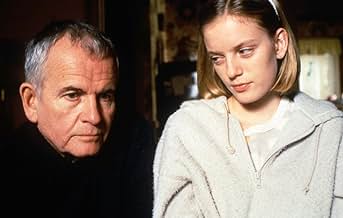
Ian Holm, as the morally questionable attorney, is misused as a key character here. As a morally bifurcated and broken man we may initially cast him as a villain, but later see him as a broken man trying to identify with parents of dead or degenerate children. Greed can turn into munificence if handled tactically and justly. His acting style here looks too lethargic and preachy. We wonder if he is the effective and prestigious lawyer he pretends to be. It's even questionable why he felt that turning this situation into a Civil Lawsuit was worthwhile. And a result, we are left to decide what his morality and intentions really were. What a pain. Sam Greenwood is a strong presence in the film. With his deep southern drawl and intimidating stare he can register moments of personal confrontation which inadvertently raise the motivations of the characters involved in the lawsuit. The strangest actress in this film would have to be Sarah Polley who is very monotone, deliberate and almost ghostly. Her lilting and melancholy voice seem oddly inappropriate for a girl who is dealing with what she is going through. By the twist ending we realize that she is actually more of a manipulator than a damaged girl trying to find her way through. The moment with her pallid father in the car has a comical note which grades against the seriousness of this story.
My guess is that this movie is depicting human tragedy as a new and precarious beginning where we feel vulnerable and confused. It's poetic and lugubrious. We are fed a plethora of poetic narrations and moving montages that depress and sedate our senses.
We have scenes where we have family discussions and the dialogue is delivered in a very slow, monotone and lethargic rhythm. I'm not certain if this was Egoyan's method of directing the actors or if this is an underlying problem in the actors themselves. If this movie intends to be a realistic portrayal of people's responses to personal tragedy then we have a crucial problem. If not, then this can only serve as a morose allegory of cinema. The poetic narrations performed by the teenage survivor of the crash add a layer of content to the theme, but fail to provide any substantial meaning to the plot. Therefore it is up to us to make sense of this. The story of Hamelin's Pied Piper may have a personal significance to the character of Nicole, but doesn't resonate too well with the viewer. The plot and directing style doesn't connect us with the characters on an empathetic level. We are alienated from their internalized grief and aren't given enough time with them to experience that which i believe is completely necessary in stories of tragedy.
Ian Holm, as the morally questionable attorney, is misused as a key character here. As a morally bifurcated and broken man we may initially cast him as a villain, but later see him as a broken man trying to identify with parents of dead or degenerate children. Greed can turn into munificence if handled tactically and justly. His acting style here looks too lethargic and preachy. We wonder if he is the effective and prestigious lawyer he pretends to be. It's even questionable why he felt that turning this situation into a Civil Lawsuit was worthwhile. And a result, we are left to decide what his morality and intentions really were. What a pain. Sam Greenwood is a strong presence in the film. With his deep southern drawl and intimidating stare he can register moments of personal confrontation which inadvertently raise the motivations of the characters involved in the lawsuit. The strangest actress in this film would have to be Sarah Polley who is very monotone, deliberate and almost ghostly. Her lilting and melancholy voice seem oddly inappropriate for a girl who is dealing with what she is going through. By the twist ending we realize that she is actually more of a manipulator than a damaged girl trying to find her way through. The moment with her pallid father in the car has a comical note which grades against the seriousness of this story.
My guess is that this movie is depicting human tragedy as a new and precarious beginning where we feel vulnerable and confused. It's poetic and lugubrious. We are fed a plethora of poetic narrations and moving montages that depress and sedate our senses.
Masterpiece? Or Turgid Nonsense?
I've seen this film twice now, and had the same reaction both times, so it's not out of gut reaction that I label "The Sweet Hereafer" an odious piece of simple-minded garbage.
The central idea (a school bus crash) has such intrinsic emotional repercussions that I can see how most viewers are washed away in grief enough to not notice the emptiness of the conceit built around it.
As an intruding lawyer, Ian Holm is asked to give a performance of staggeringly self-conscious falseness in which his every word, movement and breath is meant to project "SOMETHING IMPORTANT". His episodic encounters with the people of the community in which the accident took place only reveals Egoyan's total condescension toward life's "little people", presenting them as simpletons who, gosh darn it, love their children and each other and turn their noses up at anything so disgusting as a dollar bill.
In a failed attempt to make at least one character two-dimensional, a subplot is slopped on about the lawyer losing touch with his own child, the most ridiculous drug-addicted banshee every put on film.
Toss in heavy-handed allegories, heart-tugging muzak and trite conclusions, and what have you got? An award-winning "masterpiece", to hear most people talk. More likely they woke up the next morning, remembered something about angelic children heading for their final bus ride, and forgot the manipulative banality of the rest.
View the first episode of Krzysztof Kieslowski's 1988 "Decalogue", which covers similar thematic ground and, in 50 short minutes, accomplishes worlds more.
3 out of 10 for nice work by actors Bruce Greenwood and Sarah Polley.
The central idea (a school bus crash) has such intrinsic emotional repercussions that I can see how most viewers are washed away in grief enough to not notice the emptiness of the conceit built around it.
As an intruding lawyer, Ian Holm is asked to give a performance of staggeringly self-conscious falseness in which his every word, movement and breath is meant to project "SOMETHING IMPORTANT". His episodic encounters with the people of the community in which the accident took place only reveals Egoyan's total condescension toward life's "little people", presenting them as simpletons who, gosh darn it, love their children and each other and turn their noses up at anything so disgusting as a dollar bill.
In a failed attempt to make at least one character two-dimensional, a subplot is slopped on about the lawyer losing touch with his own child, the most ridiculous drug-addicted banshee every put on film.
Toss in heavy-handed allegories, heart-tugging muzak and trite conclusions, and what have you got? An award-winning "masterpiece", to hear most people talk. More likely they woke up the next morning, remembered something about angelic children heading for their final bus ride, and forgot the manipulative banality of the rest.
View the first episode of Krzysztof Kieslowski's 1988 "Decalogue", which covers similar thematic ground and, in 50 short minutes, accomplishes worlds more.
3 out of 10 for nice work by actors Bruce Greenwood and Sarah Polley.
The master work of a great humanist director.
When it comes to drama, The Sweet Hereafter represents the finest cinema of the decade. The film lifts the director Atom Egoyan to the highest place of Canadian directors -right next to David Cronenberg. With extraordinary intelligence, Egoyan -the maker of "Exotica"- creates labyrinths of relationships. Brilliantly using flashbacks the director reveals the emotions of the characters to the viewers -a powerful way to make the audience feel anxiety.
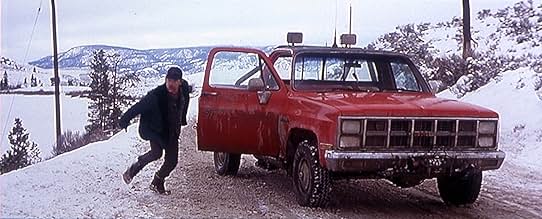
The Sweet Hereafter is based on a novel by Russell Banks. This doesn't mean that Egoyan hasn't created a film that looks like his own creation. Very beautifully, even with a sense of poetry, the camera moves in a canadian small-town, a scenery full of snow. The nicely unusual music of Mychael Danna creates the mood when a lawyer played by Ian Holm arrives to the town. A School bus lies under ice, and the lawyer is invited to sue someone for the loss of several children.
A very important slice of the scenario belongs to a school girl (Sarah Polley), who realizes that the grief of loss can't be eased by judging the cause of it. Also the other people of the town play a remarkable role in the script.
Egoyan speaks clearly, but with a sound of personality, about the need of love, the pain of loneliness and the crossing of emotional obstacles. Fortunately someone knows how to direct interesting movies with elements of drama in them. The Sweet Hereafter possesses a brilliant structure where the visual telling breaths in the spirit of symbolism. I'm a very demanding viewer, a true cynic who always tries to find the worst sides of the film, but in this case I can't say anything negative.
The Sweet Hereafter is based on a novel by Russell Banks. This doesn't mean that Egoyan hasn't created a film that looks like his own creation. Very beautifully, even with a sense of poetry, the camera moves in a canadian small-town, a scenery full of snow. The nicely unusual music of Mychael Danna creates the mood when a lawyer played by Ian Holm arrives to the town. A School bus lies under ice, and the lawyer is invited to sue someone for the loss of several children.
A very important slice of the scenario belongs to a school girl (Sarah Polley), who realizes that the grief of loss can't be eased by judging the cause of it. Also the other people of the town play a remarkable role in the script.
Egoyan speaks clearly, but with a sound of personality, about the need of love, the pain of loneliness and the crossing of emotional obstacles. Fortunately someone knows how to direct interesting movies with elements of drama in them. The Sweet Hereafter possesses a brilliant structure where the visual telling breaths in the spirit of symbolism. I'm a very demanding viewer, a true cynic who always tries to find the worst sides of the film, but in this case I can't say anything negative.
Interesting, but not as moving as I thought it would be.
Lately I've been seeing just about every movie that someone recommends to me, and "the Sweet Hereafter" has been on quite a few of my friends' lists. I was excited about finally seeing the movie.
What I found was less compelling than I expected. None of the characters were really engaging, and perhaps that's the aim of the film. But I honestly can't understand how this movie could have made people cry. Who did they identify with? Ian Holm's character, whose grimacing and silence set my teeth on edge, and whose attitude toward the families of the accident victims was so entirely self-serving? Sarah Polley's character, who almost never displayed any spark of life? And even if I had begun to identify with one character or another, I would have been instantly put off by the trite lines that kept coming out of their mouths. "Let me direct your rage?" Give me a break.
Not to imply too much of a connection between the films, but if you want to feel the terror and rage surrounding a tragedy as though you were there living through it, see "Boys Don't Cry." The words that go unsaid in that film are worth much more than those voiced-over or spoken all too clearly in "the Sweet Hereafter."
What I found was less compelling than I expected. None of the characters were really engaging, and perhaps that's the aim of the film. But I honestly can't understand how this movie could have made people cry. Who did they identify with? Ian Holm's character, whose grimacing and silence set my teeth on edge, and whose attitude toward the families of the accident victims was so entirely self-serving? Sarah Polley's character, who almost never displayed any spark of life? And even if I had begun to identify with one character or another, I would have been instantly put off by the trite lines that kept coming out of their mouths. "Let me direct your rage?" Give me a break.
Not to imply too much of a connection between the films, but if you want to feel the terror and rage surrounding a tragedy as though you were there living through it, see "Boys Don't Cry." The words that go unsaid in that film are worth much more than those voiced-over or spoken all too clearly in "the Sweet Hereafter."


Le saviez-vous
- AnecdotesAs indicated on writer and director Atom Egoyan's commentary track on the DVD, many people ask about the odd mask worn by the notetaker during the deposition scene. This is a stenographer's mask, an item which is used in real life by a stenographer to record his or her own voice during the deposition.
- GaffesWhen Stephens visits the Ottos, and Mr. Otto offers him some tea, we hear a tea kettle whistling but the one we see on the wood stove is not the whistling type, and there is no steam coming from the kettle.
- Citations
Mitchell Stephens: You'd make a good poker player, kid.
- Bandes originalesOne More Colour
Words and Music by Jane Siberry
Courtesy of Wing in Music/Red Sky Music
Arranged by Mychael Danna
Vocal by Sarah Polley
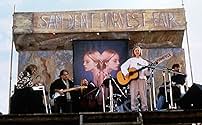
Performed by The Sam Dent Band
Meilleurs choix
Connectez-vous pour évaluer et surveiller les recommandations personnalisées
- How long is The Sweet Hereafter?Propulsé par Alexa
Détails
Box-office
- Budget
- 5 000 000 $ (estimation)
- Brut – États-Unis et Canada
- 3 263 585 $ US
- Fin de semaine d'ouverture – États-Unis et Canada
- 31 149 $ US
- 12 oct. 1997
- Brut – à l'échelle mondiale
- 3 263 585 $ US
- Durée
- 1h 52m(112 min)
- Couleur
- Mixage
- Rapport de forme
- 2.35 : 1
Contribuer à cette page
Suggérer une modification ou ajouter du contenu manquant