VALUTAZIONE IMDb
7,3/10
2564
LA TUA VALUTAZIONE
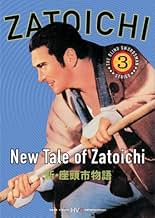
Aggiungi una trama nella tua linguaWishing to find peace, Zatoichi travels to his old village but only finds trouble when he ends up in a love triangle and finds old scores have followed him home.Wishing to find peace, Zatoichi travels to his old village but only finds trouble when he ends up in a love triangle and finds old scores have followed him home.Wishing to find peace, Zatoichi travels to his old village but only finds trouble when he ends up in a love triangle and finds old scores have followed him home.
- Regia
- Sceneggiatura
- Star
- Premi
- 1 candidatura in totale
7,32.5K
1
2
3
4
5
6
7
8
9
10
Recensioni in evidenza
The New Tale of Zatoichi is another worthwhile entry in this series and an absolute must-see.
I recently rewatched The New Tale of Zatoichi (1963) on a random streaming service. The storyline follows Zatoichi as he returns home seeking peace. However, he finds anything but-his hometown is threatened by a local mob, the brother of a man he killed is tracking him down, and two women fall in love with him. Can Zatoichi save himself and his townspeople from these challenges?
Directed by Tokuzô Tanaka (The Haunted Castle), the film stars Shintarô Katsu (*Hanzo the Razor), Mikiko Tsubouchi (Yokai Monsters: 100 Monsters), Seizaburô Kawazu (Yojimbo), and Fujio Suga (The Master Spearman).
Shintarô Katsu is fantastic in all of these movies, but it's especially fun to watch a younger depiction of his character. Zatoichi is an easy character to root for-always noble and righteous. I always hope he'll get the girl in the end, even when you know how things are likely to conclude. The female lead in this film is both compelling and complex, making her someone you can root for and against. The overall storyline is intricate, well-written, and a pleasure to watch unfold. The choreography is top-notch, with a thrilling opening fight at a bar, a dynamic battle when he first arrives in town, and a final samurai showdown that could go either way. There's a lot to appreciate here.
In conclusion, The New Tale of Zatoichi is another worthwhile entry in this series and an absolute must-see. I would score it a 7.5/10 and strongly recommend it.
Directed by Tokuzô Tanaka (The Haunted Castle), the film stars Shintarô Katsu (*Hanzo the Razor), Mikiko Tsubouchi (Yokai Monsters: 100 Monsters), Seizaburô Kawazu (Yojimbo), and Fujio Suga (The Master Spearman).
Shintarô Katsu is fantastic in all of these movies, but it's especially fun to watch a younger depiction of his character. Zatoichi is an easy character to root for-always noble and righteous. I always hope he'll get the girl in the end, even when you know how things are likely to conclude. The female lead in this film is both compelling and complex, making her someone you can root for and against. The overall storyline is intricate, well-written, and a pleasure to watch unfold. The choreography is top-notch, with a thrilling opening fight at a bar, a dynamic battle when he first arrives in town, and a final samurai showdown that could go either way. There's a lot to appreciate here.
In conclusion, The New Tale of Zatoichi is another worthwhile entry in this series and an absolute must-see. I would score it a 7.5/10 and strongly recommend it.
His past still follows.
'New Tale Of Zatoichi (1963)' sees its eponymous blind swordsman/masseur return to the town in which he was trained, followed by his reputation and the repercussions of the prior movie's events. Once again, it's a relatively meditative character study at heart. With flashes of fast-paced, decisive action and a background plot focused on a kidnapping, the picture ebbs and flows until it reaches its melancholic yet explosive finale. It's a little bit scatterbrained and doesn't have the strongest of central threads; the closest thing to a proper through-line is probably an ill-fated romance that brings out the best in Zatoichi but the worst in his master. In general, the movie is enjoyable. Plus, its shift to colour has little impact on its overall look and feel. Even if it isn't as solid as its two predecessors, it's still well-made and engaging. 7/10
Philosophical entry in the saga
The following review is an extract from the book "Shintaro Katsu´s Zatoichi: Complete guide to all movies", which is now available on Amazon.
In this third part of the Zatoichi saga, the protagonist (played by Shintaro Katsu) wants to change some things of his past, leave behind the Yakuza and correct his mistakes, returning to the town where he grew up. On the way he meets a former schoolmate, who acts as a musician singing and playing the shamisen. His childhood friend is with his wife and young son. The four stay in an inn for the night, and as Ichi sings a song with the shamisen, the place is assaulted by a gang of hooded thieves. So as not to endanger his friends and other guests, Zatoichi does not resist for the time being, and prefers the criminals to believe that he is nothing more than a poor, blind masseur (when in reality he is a prodigious swordsman, even though he lacks a sense of vision).
(...)
The third part of the Zatoichi saga has a slight philosophical background that is somewhat reminiscent of Taoism (the action of non-doing, or wu-wei). Zatoichi's apparent passivity towards Kanbei's brother, who wants revenge, provokes new reactions and events. The attitude of the protagonist is to renounce his past life and become a new man by returning to the origins, to the village where he grew up. There he will discover with disappointment that the one who trained him in the arts of fencing, the one to whom he owes his knowledge in the handling of the sword, far from being a venerable master, is actually a despot who does not hesitate to mercilessly murder unarmed people and in inferior conditions, either as a consequence of his uncontrollable anger or simply for money and material goods, in cold blood. Much more noble and honorable is the young yakuza. After verifying this, Zatoichi decides to continue his wandering life, renounces family and marriage and continues on his way with the firm intention of never returning to his village.
In this third part of the Zatoichi saga, the protagonist (played by Shintaro Katsu) wants to change some things of his past, leave behind the Yakuza and correct his mistakes, returning to the town where he grew up. On the way he meets a former schoolmate, who acts as a musician singing and playing the shamisen. His childhood friend is with his wife and young son. The four stay in an inn for the night, and as Ichi sings a song with the shamisen, the place is assaulted by a gang of hooded thieves. So as not to endanger his friends and other guests, Zatoichi does not resist for the time being, and prefers the criminals to believe that he is nothing more than a poor, blind masseur (when in reality he is a prodigious swordsman, even though he lacks a sense of vision).
(...)
The third part of the Zatoichi saga has a slight philosophical background that is somewhat reminiscent of Taoism (the action of non-doing, or wu-wei). Zatoichi's apparent passivity towards Kanbei's brother, who wants revenge, provokes new reactions and events. The attitude of the protagonist is to renounce his past life and become a new man by returning to the origins, to the village where he grew up. There he will discover with disappointment that the one who trained him in the arts of fencing, the one to whom he owes his knowledge in the handling of the sword, far from being a venerable master, is actually a despot who does not hesitate to mercilessly murder unarmed people and in inferior conditions, either as a consequence of his uncontrollable anger or simply for money and material goods, in cold blood. Much more noble and honorable is the young yakuza. After verifying this, Zatoichi decides to continue his wandering life, renounces family and marriage and continues on his way with the firm intention of never returning to his village.
So far, the best of the series.
In terms of plot, the third Zatoichi is no better than the previous two films. Cinematically, it is a vast improvement. Every shot is fantastic, and the score is as good as it gets. The change in Director really shows. Oh, and it's in colour. I do love black and white photography, but the colour adds so much in a film like this.
Like the previous film, it's a little melodramatic in places, but it works in the films favour. The lead actor is as great here as he was the last two times round, and the actor playing his master is perfectly cast. There is a lot of character development in this one. A little more about Zatoichi's past is revealed, as is his desire to leave the yakuza life, and the shame he feels for his past deeds. As someone else said, there is a great scene in which he plays a game of odds and evens. Maybe I'm just a softy, but after a scene like that I find it impossible not to rank this film higher than the previous two. I love it when villains have a change of heart. Very impactful scene. Admittedly, the character Zatoichi befriends in the first film and their relationship is stronger overall... but that odds and evens scene... Love it.
This film also has a great ending; a far cry from the abrupt ending of the previous, which felt as though they ran out of time and cut it short. I'm all for stylish abrupt endings (Sword of Doom), but the second film's ending felt almost accidental, almost as if they had an allocated time slot and were running over. This one ends with style. In fact, for a film like this I'd say it's a perfect ending (though not as good as Sword of Doom's ending, obviously). In a way it reminded me of some of the Sharpe (Sean Bean series) endings, and that non-detrimental melodrama reminded me of Sharpe, too.
I've not seen all the films in the series yet. I'm working my way through and rating them as I go, but so far Zatoichi 3 is the clear winner. Stylish and impactful.
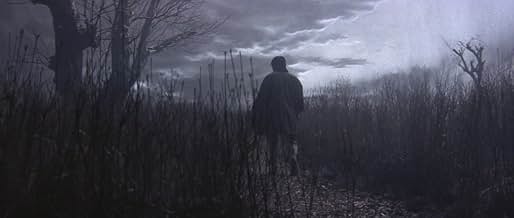
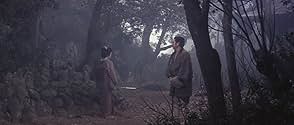
EDIT - I'm now up to the ninth film. There have been films that surpasses this one overall, but I have to add that so far this film is still the best in terms of visuals and cinematography. Every shot is fantastic, so much so that the photo used for the actor is a still from this film.
Like the previous film, it's a little melodramatic in places, but it works in the films favour. The lead actor is as great here as he was the last two times round, and the actor playing his master is perfectly cast. There is a lot of character development in this one. A little more about Zatoichi's past is revealed, as is his desire to leave the yakuza life, and the shame he feels for his past deeds. As someone else said, there is a great scene in which he plays a game of odds and evens. Maybe I'm just a softy, but after a scene like that I find it impossible not to rank this film higher than the previous two. I love it when villains have a change of heart. Very impactful scene. Admittedly, the character Zatoichi befriends in the first film and their relationship is stronger overall... but that odds and evens scene... Love it.
This film also has a great ending; a far cry from the abrupt ending of the previous, which felt as though they ran out of time and cut it short. I'm all for stylish abrupt endings (Sword of Doom), but the second film's ending felt almost accidental, almost as if they had an allocated time slot and were running over. This one ends with style. In fact, for a film like this I'd say it's a perfect ending (though not as good as Sword of Doom's ending, obviously). In a way it reminded me of some of the Sharpe (Sean Bean series) endings, and that non-detrimental melodrama reminded me of Sharpe, too.
I've not seen all the films in the series yet. I'm working my way through and rating them as I go, but so far Zatoichi 3 is the clear winner. Stylish and impactful.
EDIT - I'm now up to the ninth film. There have been films that surpasses this one overall, but I have to add that so far this film is still the best in terms of visuals and cinematography. Every shot is fantastic, so much so that the photo used for the actor is a still from this film.
Good entry in the series
This is the third entry in the popular Zatoichi series, and as usual it features an outstanding performance from Shintaro Katsu as the blind masseur who is also a master of sword play. This time he takes on a gang of thieves who are marauding the countryside. Of particular note is Akira Ifubuke's brilliant and evocative score, reminiscent of his best work from kaiju.
Lo sapevi?
- QuizThis is the first Zatoichi movie to be shot in colour.
- ConnessioniFeatured in Best in Action: 1963 (2019)
I più visti
Accedi per valutare e creare un elenco di titoli salvati per ottenere consigli personalizzati
- How long is New Tale of Zatoichi?Powered by Alexa
Dettagli
- Data di uscita
- Paese di origine
- Lingua
- Celebre anche come
- New Tale of Zatoichi
- Azienda produttrice
- Vedi altri crediti dell’azienda su IMDbPro
- Tempo di esecuzione
- 1h 31min(91 min)
- Proporzioni
- 2.35 : 1
Contribuisci a questa pagina
Suggerisci una modifica o aggiungi i contenuti mancanti