VALUTAZIONE IMDb
7,5/10
27.128
LA TUA VALUTAZIONE


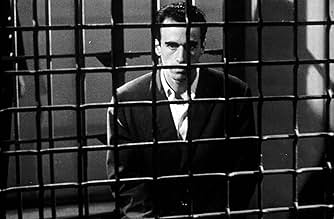
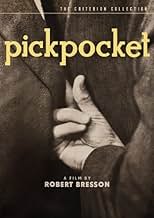
Michel viene rilasciato dal carcere dopo aver scontato una condanna per furto. Sua madre muore e lui ricorre al borseggio come mezzo di sopravvivenza.Michel viene rilasciato dal carcere dopo aver scontato una condanna per furto. Sua madre muore e lui ricorre al borseggio come mezzo di sopravvivenza.Michel viene rilasciato dal carcere dopo aver scontato una condanna per furto. Sua madre muore e lui ricorre al borseggio come mezzo di sopravvivenza.
- Regia
- Sceneggiatura
- Star
- Premi
- 3 candidature totali
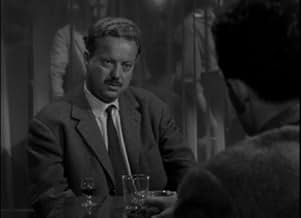

Martin LaSalle
- Michel
- (as Martin La Salle)

Sophie Saint-Just
- Bit Part
- (non citato nei titoli originali)

Dominique Zardi
- Un passager du métro
- (non citato nei titoli originali)
- …
7,527.1K
1
2
3
4
5
6
7
8
9
10
Recensioni in evidenza
Deliberately unconventional approach to filmmaking with great results
Pickpocket is a film that apparently has serious flaws- from the very beginning it displays little to no emotion as the actors on screen just say their lines and the camera just follows them from a distance, with no close-ups or any other tricks.
But what is unique about this film is that this very criticism is actually a deliberate attempt to cause uneasiness in the viewer. And it succeeds- the anxiety, as felt by the pickpocket in his everyday living, is also transmitted to us. So, to correct my previous statement: this movie does not lack emotions- it has emotions: anxiety, uncertainty, but these are delivered in an unconventional manner.
From a personal standpoint, I wasn't sure if I liked it or not. It is hard to appreciate this dimension of the film at first. But after seeing some extras from the excellent Criterion package, I was able to understand better. How Bresson actually committed to cause these emotions in the viewer, how he re-shot several times various scenes until the actors just repeated their lines, until no trait of emotions were left. Michel's narration voice-over is flat, plain. These were non-professional actors set to work in a non-standard way, Bresson's way. And the result is this: a film somewhat off-putting, but still a great work of art.
But what is unique about this film is that this very criticism is actually a deliberate attempt to cause uneasiness in the viewer. And it succeeds- the anxiety, as felt by the pickpocket in his everyday living, is also transmitted to us. So, to correct my previous statement: this movie does not lack emotions- it has emotions: anxiety, uncertainty, but these are delivered in an unconventional manner.
From a personal standpoint, I wasn't sure if I liked it or not. It is hard to appreciate this dimension of the film at first. But after seeing some extras from the excellent Criterion package, I was able to understand better. How Bresson actually committed to cause these emotions in the viewer, how he re-shot several times various scenes until the actors just repeated their lines, until no trait of emotions were left. Michel's narration voice-over is flat, plain. These were non-professional actors set to work in a non-standard way, Bresson's way. And the result is this: a film somewhat off-putting, but still a great work of art.
The Fall and Redemption of a Pickpocket
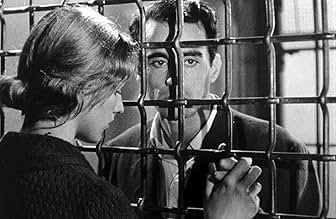
In Paris, the lonely and anguished pickpocket Michel (Martin La Salle) lives in a dirty little room and spends his time stealing wallets and purses in public spaces. His only friends are Jacques (Pierre Leymarie), who tries to help him to find a job, and his mother's next door neighbor Jeanne (Marika Green). After the death of his mother, Michel teams-up with two smalltime thieves despite the permanent surveillance of the local police inspector (Jean Pélégri). Later he travels overseas to get rid of the observation of the police, but two years later he returns to Paris and finds Jeanne alone, with her son with Jacques after a brief love affair. Michel decides to help her and find an honest job; but in a horse race, he is tempted by his addiction with tragic consequences.
This is the first time that I have watched"Pickpocket" and I expected much more from this famous movie. The development of the lead character Michel is confused and it is clear that he is a troubled, lonely and anguished unemployed young man, but it is never clear the motives why he is addicted in stealing since he shows no ambition or dream or love. The beauty of Marika Green is impressive and she seems to love Michel since the very beginning but again her feelings are never clear. Indeed the actors and actress express no sentiments and the plot is very weird. My vote is seven.
Title (Brazil): "Pickpocket"
This is the first time that I have watched"Pickpocket" and I expected much more from this famous movie. The development of the lead character Michel is confused and it is clear that he is a troubled, lonely and anguished unemployed young man, but it is never clear the motives why he is addicted in stealing since he shows no ambition or dream or love. The beauty of Marika Green is impressive and she seems to love Michel since the very beginning but again her feelings are never clear. Indeed the actors and actress express no sentiments and the plot is very weird. My vote is seven.
Title (Brazil): "Pickpocket"
The pain of solitude
- Do you feel lonely ? -Bresson : very lonely . Very but I don't like it to be lone !!
It would be hard for a regular movie-watcher , some one who just watches for fun , to like the movies made by formalist , strictly stylist director , Robert Bresson . But when we are aware of his elaborate work and subtlety , we admire his skill , undoubtedly .
Pickpocket ( 1959 ) , is one his best and most thoughtful films and has a key role in recognizing both Bresson and his works .
Pickpocket is about an alone and desperate writer who think of himself as a superior to the society ; He thinks he is better than others and believes to be in the right of breaking the rules and neglecting the social Contract .
He defines justice for himself as " some people have the privilege to break the laws , willingly " . He feels humiliated to do regular jobs and thus , begins pocket picking .
And from one of the most basic elements of the story , i.e. main character , there is a gap , a distance , between us ( audience ) and the film . In fact , because of non-naturalistic quality of the plot , we can't sympathize with him ; and what makes him even more distant , is the Bresson's personal touch and fond of "deadpan acting and not showing emotions " . Bresson says himself that " if possible , he prefers to utilize an image , a sound , and any other elements ( and metaphors ) instead of actors " . He wants the actors ( as a matter of fact he uses non-professional actors after his second movie ) to act deliberately and be aware of a witness called camera . In other words he wants them " not to act " .
In this movie , the cast and specially the hero are totally flat and expressionless ; even his walking style is sort of flat . But we can't reject his way of acting ( in fact , not acting ) . There is a deep coldness in this style of performance which makes it surprisingly and paradoxically acceptable and fits well in the world of the movie ; particularly , sympathetic face of the main character which increases contributes in this plausibility .
The cinematography , lighting and playing with shadows and lights in this movie is truly delicate and these factors in addition to a cold open and sort of suspension , forms the idea of a thriller movie . Yes ! Suspension is a key factor here ; and not a regular kind of suspension ; but a Bresson type .
Even , some think that sound editing in this movie , decrease the suspension in some scenes and increase it in some other scenes . For example , in some occasions , a sound or noise , inform us of the occurrence of an incident ; or repeating a sound in another scene can mitigate the effect of suspension . Also there is a scene in which the main character is walking anxiously in a crowded sidewalk ; we can not hear the sounds , the street noise and even the cars ; the only sound is his footsteps , which makes suspension .
It is true that use of music is not considerable in this film , but we can't renounce the sound effects here .
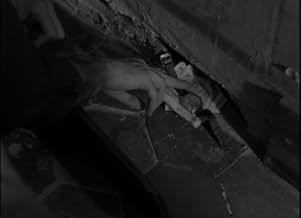
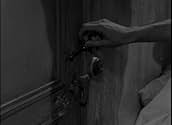
Another point is that Bresson never lets the main character to show fear and anxiety ( unlike Hitchcock who loves to do so ) ; instead he depends on images and sounds to supply the fear : sound of footsteps , images of shaking hands and cold faces ( the opening scene ) , door handle turned quietly and actually anything .
There are some references to" Dostoyevsky's Crime and Punishment" ; like the basic similarities between the heroes : Michel and Raskolnikov who both tend to commit crimes ; both being lonely and isolated and even the hole behind Michel's bed he use to hide the stolen valuable goods ( like Dostoyevsky's hero ) . Knowing these references , is a suspension itself ; some kind of fear .
Yes ! most of the times , we don't have music ; the music remains silent , and waits ; ( something unusual in those days of film-making ) ; yet , this small appearance of music , is fitting and timely . There is no such a thing as spare scenes or excess dialog in this movie ; everything is in its right place and for those who can't comprehend the non- naturalistic structure of the film , and can not accept fears , anxiety , and emotional disturbances of this cold hero , Bresson arranges the famous final scene in which the main character redeems through love ; with music !! Now , let us come back to the QA we had at the beginning of this article ; we see Bresson , lonely like the hero of his film ; self-consciously tries to break the rules ( another kind of rules ) ; and has a style of his own ! And make us to admire his mastership and loneliness !
Admired More Than Enjoyed
This slow burn film from Robert Bresson is not going to be to everyone's taste, and I'm not sure it was to mine. It's a film I admired more than enjoyed.
It tells the story of a man who's addicted to theft, or maybe more accurately addicted to the rush of getting away with theft, or maybe more accurately addicted to the rush of possibly being caught thieving. It's not a long movie but it may try your patience, as it's very slow and very quiet. The main character is a bit of a blank slate, and he remains so. We never learn much about him, and I personally didn't feel especially invested in what happened to him. It was only in reading about the film after seeing it that I found out the ending is considered to be remarkable among film scholars, but I didn't react to it much myself.
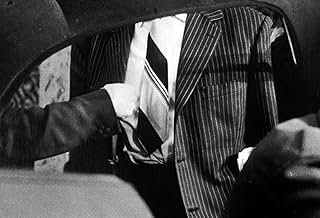
The best scenes in the movie are those that show the elaborate rituals that exist among pickpocket teams, and the pretty amazing feats they pull off. They're like magicians who use sleight of hand for nefarious purposes.
Grade: B+
It tells the story of a man who's addicted to theft, or maybe more accurately addicted to the rush of getting away with theft, or maybe more accurately addicted to the rush of possibly being caught thieving. It's not a long movie but it may try your patience, as it's very slow and very quiet. The main character is a bit of a blank slate, and he remains so. We never learn much about him, and I personally didn't feel especially invested in what happened to him. It was only in reading about the film after seeing it that I found out the ending is considered to be remarkable among film scholars, but I didn't react to it much myself.
The best scenes in the movie are those that show the elaborate rituals that exist among pickpocket teams, and the pretty amazing feats they pull off. They're like magicians who use sleight of hand for nefarious purposes.
Grade: B+
Purity that clings to self II
More interesting than any individual film, it's Bresson's philosophy that I feel is worth examining. He's all about striving, the question is what for? If it's purity, as most would agree, and purity always seems like something to aspire to, is it a purity that we can take as a base for living?
I don't think I will have conclusions before Balthazar, perhaps his most famous. Already, since Diary of a Priest, I can see him moving in a direction, growing that philosophy. Even more sparse, even more laconic, removes flourish and leaves bare floors so that we endure something being revealed in the pacing. That's fine. More revealing is another trajectory being delineated, human- based.
It's once more about a lone youth who struggles with a life that suffocates. In Diary he was a pious young priest who wanted absolute sincerity in the face of life; but people were complicated beings, the journey caused spiritual torment, questions of angst abounded. In Man Escaped the same youth becomes a prisoner, also endures a life of anguish, but now endures quietly, without torment and piety. It was Bresson peeling away the romanticizing of suffering of Diary, what was left was simply the work of breaking free from that prison- world, stoicism in place of romanticism.
So what does he do in this next one? The same youth once more, but now he's not bound by duty to truth or has any work set out before him. Now he's free to wander the world which the man in Escaped had struggled to break free to. Without an intellectual or other struggle before him, he's simply awash with time. He's stifled by the freedom, he has no place. He perceives himself as a man of lofty talents, possibly a genius, but wastes these talents in being a pickpocket around town who won't even go see his dying mother. He always comes and goes from his tiny apartment to no real purpose.
Observant viewers will note the equation of pickpocketing as presented in the film, an elaborately precise choreography of hands and motions, with Bresson's own filmmaking. Film lore touts him as pure and simple as if that simplicity is conquered without effort, in truth he's all about the meticulous timing and moving of exact pieces. His favorite tool is exactly this game of hide and show that controls what we see; for example a scene like in Man Escaped where the new cellmate is introduced off-camera, we don't know who our man is talking to until we turn to see. He does it here too, often by having characters turn and leave, questions hanging, creating gap and resonance. He's the opposite of natural.
Back to the conundrum expressed at the beginning however; if this is pure, what does it strive purely for?
The only answer I get here is that we no longer have a man who is trying to understand life, or someone who works towards an end, these selves have been shed. Now we have someone who endures, but has no idea exactly what or what for. It's Bresson inching towards the same cessation that he strives for visually. What stands before him now is what he sketches in the opening intertitle; something pushes the man from the inside.
He bangles this all up at the end, and I believe that looking back he would probably have been unsatisfied himself. He reverts back to his romanticism where the tormented young man has love reserved for him, but a wistful love that doesn't feel earned, there's simply nothing that rings true about her infatuation with him. This is Eva Green's aunt by the by.
So this has done its job, shed one self and one set of conundrums and replaced them with another. Onwards to his next, which looks like another draft of the same philosophy, and then Balthazar is around the corner. I already believe I disagree with Schrader.
I don't think I will have conclusions before Balthazar, perhaps his most famous. Already, since Diary of a Priest, I can see him moving in a direction, growing that philosophy. Even more sparse, even more laconic, removes flourish and leaves bare floors so that we endure something being revealed in the pacing. That's fine. More revealing is another trajectory being delineated, human- based.
It's once more about a lone youth who struggles with a life that suffocates. In Diary he was a pious young priest who wanted absolute sincerity in the face of life; but people were complicated beings, the journey caused spiritual torment, questions of angst abounded. In Man Escaped the same youth becomes a prisoner, also endures a life of anguish, but now endures quietly, without torment and piety. It was Bresson peeling away the romanticizing of suffering of Diary, what was left was simply the work of breaking free from that prison- world, stoicism in place of romanticism.
So what does he do in this next one? The same youth once more, but now he's not bound by duty to truth or has any work set out before him. Now he's free to wander the world which the man in Escaped had struggled to break free to. Without an intellectual or other struggle before him, he's simply awash with time. He's stifled by the freedom, he has no place. He perceives himself as a man of lofty talents, possibly a genius, but wastes these talents in being a pickpocket around town who won't even go see his dying mother. He always comes and goes from his tiny apartment to no real purpose.
Observant viewers will note the equation of pickpocketing as presented in the film, an elaborately precise choreography of hands and motions, with Bresson's own filmmaking. Film lore touts him as pure and simple as if that simplicity is conquered without effort, in truth he's all about the meticulous timing and moving of exact pieces. His favorite tool is exactly this game of hide and show that controls what we see; for example a scene like in Man Escaped where the new cellmate is introduced off-camera, we don't know who our man is talking to until we turn to see. He does it here too, often by having characters turn and leave, questions hanging, creating gap and resonance. He's the opposite of natural.
Back to the conundrum expressed at the beginning however; if this is pure, what does it strive purely for?
The only answer I get here is that we no longer have a man who is trying to understand life, or someone who works towards an end, these selves have been shed. Now we have someone who endures, but has no idea exactly what or what for. It's Bresson inching towards the same cessation that he strives for visually. What stands before him now is what he sketches in the opening intertitle; something pushes the man from the inside.
He bangles this all up at the end, and I believe that looking back he would probably have been unsatisfied himself. He reverts back to his romanticism where the tormented young man has love reserved for him, but a wistful love that doesn't feel earned, there's simply nothing that rings true about her infatuation with him. This is Eva Green's aunt by the by.
So this has done its job, shed one self and one set of conundrums and replaced them with another. Onwards to his next, which looks like another draft of the same philosophy, and then Balthazar is around the corner. I already believe I disagree with Schrader.


Lo sapevi?
- QuizBanned in Finland until 1965 because of its depiction of authentic pickpocketing techniques.
- ConnessioniEdited into Histoire(s) du cinéma: Une histoire seule (1989)
- Colonne sonoreSuite de symphonies d'Amadis (selection)
(uncredited)
Music by Jean-Baptiste Lully (as J.B. Lulli)
Éditions Transatlantiques
I più visti
Accedi per valutare e creare un elenco di titoli salvati per ottenere consigli personalizzati
- How long is Pickpocket?Powered by Alexa
Dettagli
Botteghino
- Lordo in tutto il mondo
- 7541 USD
- Tempo di esecuzione
- 1h 16min(76 min)
- Colore
- Proporzioni
- 1.37 : 1
Contribuisci a questa pagina
Suggerisci una modifica o aggiungi i contenuti mancanti