
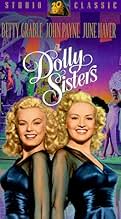
Two sisters from Hungary become famous entertainers in the early 1900s. Fictionalized biography with lots of songs.Two sisters from Hungary become famous entertainers in the early 1900s. Fictionalized biography with lots of songs.Two sisters from Hungary become famous entertainers in the early 1900s. Fictionalized biography with lots of songs.
- Director
- Writers
- Stars
- Nominated for 1 Oscar
- 1 nomination total





Fred Aldrich
- Soldier
- (uncredited)

Lester Allen
- Morrie Keno
- (uncredited)

Herbert Ashley
- Fields
- (uncredited)
Nino Bellini
- French Actor
- (uncredited)

Brooks Benedict
- Party Guest
- (uncredited)

Trude Berliner
- German Actress
- (uncredited)

Edward Biby
- Party Guest
- (uncredited)
Lulu Mae Bohrman
- Party Guest
- (uncredited)

Eddie Borden
- Man on Bus
- (uncredited)
- Director
- Writers
- All cast & crew
- Production, box office & more at IMDbPro
6.2885
1
2
3
4
5
6
7
8
9
10
Featured reviews
Betty Grable & June Haver in a Joyous Fox musical
"The Dolly Sisters" is Betty Grable and June Haver's most joyously tuneful musical, a gaudy, loud, exquisitely Technicolored extravaganza of songs, dancing, and romance, the kind of vacuous yet tasteful fluff 20th Century Fox did well with great success. The studio head, Darryl Zanuck intended as a vehicle for Alice Faye & Betty Grable, but he couldn't convince Faye to get out of retirement, so producer George Jessel casted June Haver, and the movie become one of the top grossing pictures of the 1940s.
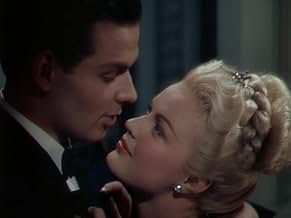
Grable and Haver (fantastic throughout) are the Hungarian born blonde sisters, Jenny & Rosie that took Broadway by storm. Their story begins with their arrival in New York in 1904, their subsequent rise from vaudeville acts to Broadway & Folies Bergere of Paris. They meet an aspiring composer Harry (John Payne) who arranges a meeting with Oscar Hammerstein to appear his Music Hall. Betty falls in love with Harry while June settles for a far less troubled romance with Frank Latimore. Betty is particularly very revealing, especially when she gets the nervous breakdown. Good performances also by S.Z. Sakall and Reginald Gardiner.
Lots of rollicking, uproarious songs/numbers, including the Oscar-winning "I Can't Begin to Tell You", the haunting "I'm Always Chasing Rainbows", plus some kitschy stuff like "Powder, Lipstick and Rouge", "Give Me The Moonlight, Give Me The Girl".
"Dolly Sisters" can be best appreciated if you see it back to back with June Haver's 1946's musical, "Three Little Girls in Blue", a joyous merriment in need of resurrection.
Grable and Haver (fantastic throughout) are the Hungarian born blonde sisters, Jenny & Rosie that took Broadway by storm. Their story begins with their arrival in New York in 1904, their subsequent rise from vaudeville acts to Broadway & Folies Bergere of Paris. They meet an aspiring composer Harry (John Payne) who arranges a meeting with Oscar Hammerstein to appear his Music Hall. Betty falls in love with Harry while June settles for a far less troubled romance with Frank Latimore. Betty is particularly very revealing, especially when she gets the nervous breakdown. Good performances also by S.Z. Sakall and Reginald Gardiner.
Lots of rollicking, uproarious songs/numbers, including the Oscar-winning "I Can't Begin to Tell You", the haunting "I'm Always Chasing Rainbows", plus some kitschy stuff like "Powder, Lipstick and Rouge", "Give Me The Moonlight, Give Me The Girl".
"Dolly Sisters" can be best appreciated if you see it back to back with June Haver's 1946's musical, "Three Little Girls in Blue", a joyous merriment in need of resurrection.
Sumptuous Fox musical
Betty Grable and June Haver are "The Dolly Sisters" in this 1945 film also starring John Payne, S.Z. Sakall and Reginald Gardner. Grable enjoyed an unparalleled run - 10 years in a row - in the Hollywood top ten box office, from 1941 to 1951, yet when Turner Classic Movies published their Unforgettable Leading Ladies of the Studio Era book, Grable was left out. For anyone who believes - erroneously - that Turner Classic Movies has any interest in film history, she was left out - just as Tyrone Power was left out of the leading men book - because TCM doesn't own their films.
Not realizing that for a huge audience later on, it wouldn't exist, 20th Century Fox spared no expense for this lavish color musical about two real-life Hungarian sisters (actually brunettes) who were big entertainers in the beginning of the century. The story focuses on Jenny Dolly (Grable) primarily and her romance and marriage to Ziegfeld performer Harry Fox (inventor of the "fox trot"), played by John Payne, and how World War I and career separations destroyed their marriage.
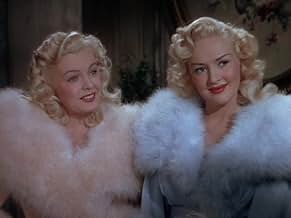
Grable and Haver look just like sisters and are marvelous together, wearing gorgeous costumes and looking fabulous and radiant throughout. Both bring a lot of energy to their roles. Payne does a good job as Harry, singing and acting well. A versatile actor, he could not only appear in musicals where he did his own singing, but he did plenty of drama and was also a hunk. He was invaluable to Fox during the war years.
This is a very entertaining film, but it's a shame that a film on the true story of the Dolly Sisters has never been made. Jenny and Fox were divorced in 1921. She was indeed involved in a car accident with an ex-boyfriend in 1933 and had to sell her jewels to pay for many surgeries, but unlike the film, she never really recovered. She never reconciled with Fox and in 1941, she hung herself. Rosie did marry a Chicago businessman; she attempted suicide in 1962, though it failed, and she died in 1970. The two women were huge gamblers, only hinted at in the film, and made a fortune: They won $850,000 in one season at Deauville and one evening in Cannes, Jenny won 4 million francs, which she converted to a collection of jewelry, and then went on to win another 11 million more francs.
I suppose during World War II, no one would have been interested in such a downer, so it's just as well that we have this film, which gives us vibrant entertainment in the best 20th Century Fox tradition.
Not realizing that for a huge audience later on, it wouldn't exist, 20th Century Fox spared no expense for this lavish color musical about two real-life Hungarian sisters (actually brunettes) who were big entertainers in the beginning of the century. The story focuses on Jenny Dolly (Grable) primarily and her romance and marriage to Ziegfeld performer Harry Fox (inventor of the "fox trot"), played by John Payne, and how World War I and career separations destroyed their marriage.
Grable and Haver look just like sisters and are marvelous together, wearing gorgeous costumes and looking fabulous and radiant throughout. Both bring a lot of energy to their roles. Payne does a good job as Harry, singing and acting well. A versatile actor, he could not only appear in musicals where he did his own singing, but he did plenty of drama and was also a hunk. He was invaluable to Fox during the war years.
This is a very entertaining film, but it's a shame that a film on the true story of the Dolly Sisters has never been made. Jenny and Fox were divorced in 1921. She was indeed involved in a car accident with an ex-boyfriend in 1933 and had to sell her jewels to pay for many surgeries, but unlike the film, she never really recovered. She never reconciled with Fox and in 1941, she hung herself. Rosie did marry a Chicago businessman; she attempted suicide in 1962, though it failed, and she died in 1970. The two women were huge gamblers, only hinted at in the film, and made a fortune: They won $850,000 in one season at Deauville and one evening in Cannes, Jenny won 4 million francs, which she converted to a collection of jewelry, and then went on to win another 11 million more francs.
I suppose during World War II, no one would have been interested in such a downer, so it's just as well that we have this film, which gives us vibrant entertainment in the best 20th Century Fox tradition.
Spectacle Must Be Seen to Be Believed
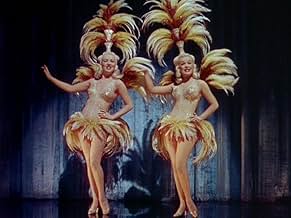
Betty Grable was considered quite the hot number in her day-a favorite pin-up girl of American soldiers. I always thought she had a crabby look on her face. Be that as it may, this is one of her biggest hits, probably her most lavish musical, made at the peak of her career. An up-and-coming June Haver also stars. Although it has some basis in the lives of the real Dolly sisters, the film makes no effort to be biographical. It traces the rise and heartbreak of the sisters as they conquer vaudeville, Broadway, and Europe singing tunes like "Carolina in the Morning," "Give Me the Moonlight, Give Me the Girl (and leave the rest to Me)," "I'm Always Chasing Rainbows," and the newer tune "I Can't Begin To Tell You," which was a Hit Parade favorite. If you watch a copy that hasn't been cut, the outrageous production numbers are considered the height of kitsch today, "monuments to bad taste" they have been called, that must be seen to be believed. "Darktown Strutters Ball" features Grable and Haver in with bronzed faces, singing in mutilated French, and cavorting around a Harlem set as pig-tailed 'picaninnies' surrounded by deeply tanned chorus girls in hats made of watermelons, dice, and playing cards. At least the girls are made up to look gorgeous and not foolish. It's quite a spectacle. ---from Musicals on the Silver Screen, American Library Association, 2013
Colorful, splashy but almost total fiction
The real Dolly Sisters were dark, in both complexion and hair, Hungarian dancers with complex personalities and troubled lives, in fact Jenny had committed suicide several years before the debut of this musical, so if you are looking for anything resembling a depiction of the actual Dolly Sisters story look elsewhere. However if a sumptuous overstuffed showcase for blonds Betty Grable and June Haver is what you seek this is for you. Filmed in almost blinding Technicolor with some good songs and one great and beautiful one, I'm Always Chasing Rainbows, eye popping costumes and hairstyles this is old fashioned entertainment dished up with style.
Grables's Splashiest Technicolor Musical
One of Betty Grables's biggest hits (it grossed over $4 million in 1945) THE DOLLY SISTERS stands as perhaps her splashiest and most lavish musical made at the summit of her career. Originally intended for Alice Faye and Betty, Faye withdrew early in pre-production, not wanting to commit to another exausting musical. Producer George Jessel substituted up-and-coming blonde June Haver, with John Payne (who had worked with Grable numerous times at Paramount and Fox) and Frank Latimore (in a role originally intended for Randolph Scott) as the male-co stars. And although the easy-going Grable usually got on famously with all her female co-stars, June Haver was the exception. It's likely that this was mainly uncharacteristic jealousy on Betty's part - it had taken Grable a decade of hard work to attain her position as Fox's brightest and most bankable actress, while the teenaged Haver had catapulted to stardom in just two years. The fact that none of this animosity shows on screen says a lot for Grables professionalism. As for the storyline...well, to say that it takes great liberties with the lives of its subjects is kind - the real-life Dollys were both small dark brunettes (not leggy blondes), both went through several husbands and Jenny's car accident left her permanently scarred (unlike Grable who gets thru the accident with only a tiny band-aid). Also, the real-life Jenny Dolly was a drug addict who hung herself in 1941 - such elements would certainly be out of place in a bubbly Hollywood musical of 1945! Instead, the film traces the rise and heartbreak of the sisters as they conquer vaudeville, Broadway and Europe, accompanied by numerous nostalgic tunes like "Carolina in the Morning" "Give Me The Moonlight, Give Me The Girl (and leave the rest to Me)" and "I'm Always Chasing Rainbows" and the new James Monaco-Josef Myrow tune "I Can't Begin To Tell You" which was a Hit Parade favorite. What gives the musical its special flavor are its outrageous production numbers by Seymour Felix, which one writer considers to be prime examples of "kitchy vulgarity...monuments to bad taste", which means, naturally that they are irresistably fabulous! "Powder, Lipstick and Rouge" is a Paean to a Make-Up kit ("Beautiful Faces come out of Vanity Cases!") that has to be seen to be believed, and the decidedly un-P.C. "Darktown Strutters Ball" number was usually cut from old TV prints as it featured Grable in Haver in blackface, cavorting around a 'Harlem' set as pig-tailed 'picaninnies' surrounded by chorus girls in hats made of watermelons, dice and playing cards - not until "Springtime for Hitler" in Mel Brooks' THE PRODUCERS was there a musical number that revelled in its tastelessness! Equally eye-catching are the non-stop parade of breathtaking costumes by Orry-Kelly, easily the most lushly glamorous of any Grable film, and both Betty and June look smashing in them. Topping it all off is Fox's succulent Technicolor and elegant set design. Once when a guest on THE CAROL BURNETT SHOW, Grable was asked about a prospective project. She replyed: "It's flashy, it's gaudy, It's vulgar. It's like everything I've ever done. I LOVE IT!" This sums up THE DOLLY SISTERS as well - and you'll love it, too!


Did you know
- ConnectionsFeatured in Fred Astaire Salutes the Fox Musicals (1974)
- How long is The Dolly Sisters?Powered by Alexa
Details
- Release date
- Country of origin
- Language
- Also known as
- Dolly Sisters
- Filming locations
- Production company
- See more company credits at IMDbPro
Box office
- Budget
- $2,510,000 (estimated)
- Runtime
- 1h 54m(114 min)
- Aspect ratio
- 1.37 : 1
Contribute to this page
Suggest an edit or add missing content