IMDb RATING
6.3/10
2.5K
YOUR RATING

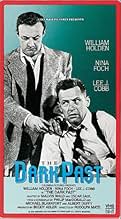
An escaped psychopathic killer who takes the family and neighbors of police psychologist hostage reveals a recurring nightmare to the doctor.An escaped psychopathic killer who takes the family and neighbors of police psychologist hostage reveals a recurring nightmare to the doctor.An escaped psychopathic killer who takes the family and neighbors of police psychologist hostage reveals a recurring nightmare to the doctor.
- Awards
- 2 wins total


Charles Cane
- Sheriff
- (uncredited)
Bill Cartledge
- Arrested Man Leaving Wagon
- (uncredited)
Tom Coleman
- Detective
- (uncredited)

G. Pat Collins
- Al's Father
- (uncredited)

Ellen Corby
- Agnes
- (uncredited)

Lester Dorr
- First Man in Police Line-Up
- (uncredited)

Edward Earle
- McCoy
- (uncredited)
6.32.4K
1
2
3
4
5
6
7
8
9
10
Featured reviews
A very good remake...in fact, a bit better than the original.
"The Dark Past" is a remake of the 1939 picture "Blind Alley" which starred Chester Morris and Ralph Bellamy. In this newer version, William Holden and Lee J. Cobb play these roles.
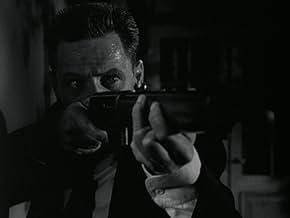
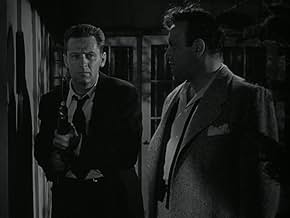
The film begins with a prison break. Al Walker (Holden) is the leader of the band of thugs and he murders the Warden (who they've taken hostage) just for kicks. He decides the gang will NOT hold up in one of the empty vacation homes nearby but one with people in it. This way, he figures, the cops won't suspect where they are hiding. The home happens to be filled with quite a few people, as Dr. Collins and his family are hosting a dinner party. Soon, all of them are prisoners and hoping that the gang doesn't kill them. As for Dr. Collins, he is a psychiatrist and plays a mental game of cat and mouse with Walker.
In many ways, this film is reminiscent of "Suddenly" and "The Desperate Hours"---both films about families being held hostage by killers. All of these are very good films and what sets this film apart is the psychiatrist angle. I enjoyed the film, though as a trained psychotherapist I should point out that Dr. Collins' approach is very Freudian...and rarely used today by therapists. Dream interpretation and mother blaming are rarely discussed in therapy today. And, folks like Walker are NOT cured so quickly and easily!! Ridiculous, sure...but still entertaining.
While I rarely say this, I think this film is actually a bit better than the original. Much of this is due to William Holden's more realistic and less sensationalistic performance.
The film begins with a prison break. Al Walker (Holden) is the leader of the band of thugs and he murders the Warden (who they've taken hostage) just for kicks. He decides the gang will NOT hold up in one of the empty vacation homes nearby but one with people in it. This way, he figures, the cops won't suspect where they are hiding. The home happens to be filled with quite a few people, as Dr. Collins and his family are hosting a dinner party. Soon, all of them are prisoners and hoping that the gang doesn't kill them. As for Dr. Collins, he is a psychiatrist and plays a mental game of cat and mouse with Walker.
In many ways, this film is reminiscent of "Suddenly" and "The Desperate Hours"---both films about families being held hostage by killers. All of these are very good films and what sets this film apart is the psychiatrist angle. I enjoyed the film, though as a trained psychotherapist I should point out that Dr. Collins' approach is very Freudian...and rarely used today by therapists. Dream interpretation and mother blaming are rarely discussed in therapy today. And, folks like Walker are NOT cured so quickly and easily!! Ridiculous, sure...but still entertaining.
While I rarely say this, I think this film is actually a bit better than the original. Much of this is due to William Holden's more realistic and less sensationalistic performance.
Introductory Psychology Gussied Up as a Crime Film
"The Dark Past" is a Psych 101 class disguised as a film noir.
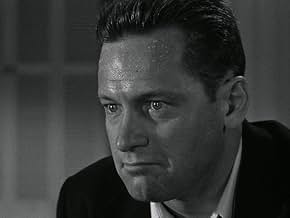
William Holden plays Al Walker, notorious criminal who has escaped from prison and, along with his girlfriend (Nina Foch) and assorted goons, takes a family hostage in their country home while waiting for his getaway. The family patriarch (Lee J. Cobb), however, happens to be a criminal psychologist, and he begins to deconstruct Holden's psyche, eventually rendering him helpless when the ultimate showdown with the police occurs.
This isn't a terribly interesting film, either in style or subject matter. A good portion of the film is spent in Cobb analyzing a recurring nightmare of Holden's, acknowledging it as the key to Holden's anti-social tendencies. But the dream itself is basic Freud, all about anger towards father figures and love for a lost mother. This all might have seemed cutting edge at the time, when psychology as an area of study had become trendy to address in film, but it has a been-there-done-that quality now.
Holden isn't very good in his role, overacting to the hilt, and he's not convincing as a bad guy. But it is nice to see both he and Cobb playing against type for a change. Cobb especially is refreshing, for once playing a character quietly and reservedly rather than as a bellowing lout.
Director Rudolph Mate and his screenwriter could have done all sorts of things to explore the group dynamics of a situation like this, but they don't. For a much better family-taken-hostage story, watch "Key Largo," released the same year as this film.
Grade: B-
William Holden plays Al Walker, notorious criminal who has escaped from prison and, along with his girlfriend (Nina Foch) and assorted goons, takes a family hostage in their country home while waiting for his getaway. The family patriarch (Lee J. Cobb), however, happens to be a criminal psychologist, and he begins to deconstruct Holden's psyche, eventually rendering him helpless when the ultimate showdown with the police occurs.
This isn't a terribly interesting film, either in style or subject matter. A good portion of the film is spent in Cobb analyzing a recurring nightmare of Holden's, acknowledging it as the key to Holden's anti-social tendencies. But the dream itself is basic Freud, all about anger towards father figures and love for a lost mother. This all might have seemed cutting edge at the time, when psychology as an area of study had become trendy to address in film, but it has a been-there-done-that quality now.
Holden isn't very good in his role, overacting to the hilt, and he's not convincing as a bad guy. But it is nice to see both he and Cobb playing against type for a change. Cobb especially is refreshing, for once playing a character quietly and reservedly rather than as a bellowing lout.
Director Rudolph Mate and his screenwriter could have done all sorts of things to explore the group dynamics of a situation like this, but they don't. For a much better family-taken-hostage story, watch "Key Largo," released the same year as this film.
Grade: B-
Killer Personality
The Dark Past may very well have been a turning point in the career of William Holden. As you remember Holden had a dual contract with Columbia and Paramount and I'm sure Billy Wilder at Paramount must have seen The Dark Past before casting Holden in Sunset Boulevard. This B film for Columbia was unlike any of the 'smiling jim' roles that Holden had played up to now.
The Dark Past has only a 75 minute running time and was playing the bottom end of Columbia double bills when it first came out. It's a remake of another Columbia film Dark Past with Chester Morris in Holden's part as the escaped killer. The part of the psychiatrist played by Lee J. Cobb here was played by Ralph Bellamy in the previous production.
Cobb is now a police psychiatrist, but wasn't always; in fact as he relates in flashback he was a professor when he ran into Holden who was escaping from jail with his mob and his moll. They take refuge in Cobb's summer house where Cobb and family are entertaining guests.
Lee is as cool as he would be emerging from a refrigerator. He starts getting under Holden's skin with his training exposing the real cause of his killer personality. Most disarming in every sense of the word.
If it were only that easy. Still the film in its short run does keep one in suspense. A lot like the duel of minds between Humphrey Bogart and Fredric March in The Desperate Hours. Also look for a very good performance by Nina Foch as Holden's moll who unwittingly leads to her man's downfall when she asks Cobb to find out about a recurrent nightmare Holden has.
If a dose of Freud could only cure all bad behavior.
The Dark Past has only a 75 minute running time and was playing the bottom end of Columbia double bills when it first came out. It's a remake of another Columbia film Dark Past with Chester Morris in Holden's part as the escaped killer. The part of the psychiatrist played by Lee J. Cobb here was played by Ralph Bellamy in the previous production.
Cobb is now a police psychiatrist, but wasn't always; in fact as he relates in flashback he was a professor when he ran into Holden who was escaping from jail with his mob and his moll. They take refuge in Cobb's summer house where Cobb and family are entertaining guests.
Lee is as cool as he would be emerging from a refrigerator. He starts getting under Holden's skin with his training exposing the real cause of his killer personality. Most disarming in every sense of the word.
If it were only that easy. Still the film in its short run does keep one in suspense. A lot like the duel of minds between Humphrey Bogart and Fredric March in The Desperate Hours. Also look for a very good performance by Nina Foch as Holden's moll who unwittingly leads to her man's downfall when she asks Cobb to find out about a recurrent nightmare Holden has.
If a dose of Freud could only cure all bad behavior.
Do we all have a dark past?
On a night I couldn't sleep, I came across this movie on the TV set by chance. The house of a psychiatrist is held hostage by an escaped prisoner and his entourage. The prisoner (william holden) battles his mental demons throughout the night while the psychiatrist is intrigued to discover why this man has become the "bad egg" he is today. The dialogue between them both is intriguing, with the psychiatrist trying to enter the escaped prisoner's mind and explain the dream this man has had since childhood. A good movie to watch on a rainy day. One particularly for the crime/noir buffs.
Insanity and the Criminal Mind.
The Dark Past is directed by Rudolph Maté and adapted by Malvin Wald, Oscar Saul, Philip MacDonald, Michael Blankfort and Albert Duffy from the play Blind Alley written by James Warwick. It stars William Holden, Nina Foch, Lee J. Cobb, Adele Jergens, Stephen Dunne and Lois Maxwell. Music is by George Duning and cinematography by Joseph Walker.
Al Walker Breaks Jail!
One from a number of classic era Hollywood's ventures into Freudian thrillers. Here we have Holden as escaped convict Al Walker, who along with his loyal crew hold hostage psychologist Dr. Andrew Collins (Cobb) and his guests at the doctor's remote country retreat. With Walker clearly unstable of mind and often showing a cold blooded streak, the good doctor, the calmest man in the house, slowly tries to draw out of Walker the root of his murderous leanings.
James Warwick's play had already had a film adaptation in 1939 as Blind Alley (Charles Vidor), but such was the advent of film noir and crime films of similar ilk, the source material was ripe for a remake in the late 40s. Maté's film is doubly reliant on strong acting performances and strength of subject matter, the former is no problem at all, with Cobb methodically excellent, Holden twitchy and coiled spring like and Foch smooth foil for both of them.
The latter issue isn't totally successful, though, the picture is very talky anyway, but much of the psycho-babble talk about conscious states, dreams, sensor bands and damage childhoods is handled so matter of fact, it's never really convincing as narrative thrust and it slow builds to a finale that lacks dramatic oomph. It's annoying really because Maté paints it in light and shade and a dream sequence, stripped back to negative form, is surreal excellence and befitting the interesting core basics of the psychological issues on the page.
It's definitely worth a look by those interested in the Freud influenced entries in the film noir cycle, while fans of hostage dramas like The Desperate Hours and The Petrified Forest will enjoy the character dynamics on show. But it's not all it can be and the handling of the crime and mental health equation is just too short changed to matter. 6.5/10
Al Walker Breaks Jail!
One from a number of classic era Hollywood's ventures into Freudian thrillers. Here we have Holden as escaped convict Al Walker, who along with his loyal crew hold hostage psychologist Dr. Andrew Collins (Cobb) and his guests at the doctor's remote country retreat. With Walker clearly unstable of mind and often showing a cold blooded streak, the good doctor, the calmest man in the house, slowly tries to draw out of Walker the root of his murderous leanings.
James Warwick's play had already had a film adaptation in 1939 as Blind Alley (Charles Vidor), but such was the advent of film noir and crime films of similar ilk, the source material was ripe for a remake in the late 40s. Maté's film is doubly reliant on strong acting performances and strength of subject matter, the former is no problem at all, with Cobb methodically excellent, Holden twitchy and coiled spring like and Foch smooth foil for both of them.
The latter issue isn't totally successful, though, the picture is very talky anyway, but much of the psycho-babble talk about conscious states, dreams, sensor bands and damage childhoods is handled so matter of fact, it's never really convincing as narrative thrust and it slow builds to a finale that lacks dramatic oomph. It's annoying really because Maté paints it in light and shade and a dream sequence, stripped back to negative form, is surreal excellence and befitting the interesting core basics of the psychological issues on the page.
It's definitely worth a look by those interested in the Freud influenced entries in the film noir cycle, while fans of hostage dramas like The Desperate Hours and The Petrified Forest will enjoy the character dynamics on show. But it's not all it can be and the handling of the crime and mental health equation is just too short changed to matter. 6.5/10


Did you know
- TriviaThe re-creation of Al's dream uses a few seconds of footage from Blind Alley (1939), the earlier film version of this story; specifically the shot approaching the saloon, panning to see the policemen following the narrator, and panning back to the saloon side entrance.
- GoofsAl takes a book off of Andrew's book shelf and opens it around page 50 or 60, but in the next closeup, the page Al is looking at the start of Chapter 22. It's highly unlikely that a scholarly book about psychology would average under three pages per chapter.
- ConnectionsReferenced in Discovering Film: William Holden (2015)
- How long is The Dark Past?Powered by Alexa
Details
- Runtime
- 1h 13m(73 min)
- Color
- Aspect ratio
- 1.37 : 1
Contribute to this page
Suggest an edit or add missing content