IMDb RATING
6.8/10
1.6K
YOUR RATING

A financier's sins are recalled by his ex-partner and boyhood pal.A financier's sins are recalled by his ex-partner and boyhood pal.A financier's sins are recalled by his ex-partner and boyhood pal.
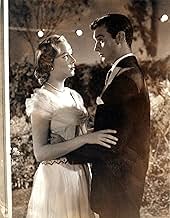
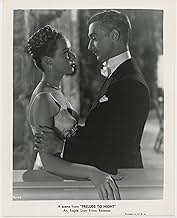
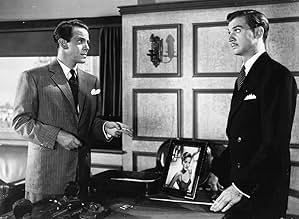


Robert J. Anderson
- Horace Vendig as Child
- (as Bob Anderson)


Frederick Worlock
- J. Norton Sims
- (as Fred Worlock)

6.81.5K
1
2
3
4
5
6
7
8
9
10
Featured reviews
from Bobby Anderson to Zachary Scott
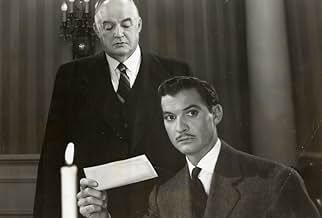
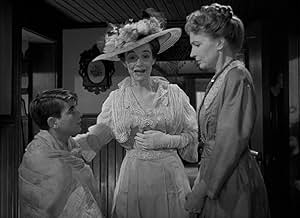
Apparently a brief exchange between the adolescent boy (Bobby Anderson) and his father (Raymond Burr) in which the father tells him that opportunity only comes around once, is the reason why Anderson morphs into the social climbing and ruthless business tycoon played by Zachary Scott. It hardly seems like enough of an influence to change a nice kid into a prototypical (and stereotypical) greedy capitalist millionaire. Though it's difficult to establish a connection between the two, Scott makes a believable social climber, and the story has a pretty good trajectory from his adolescence through dark mansions and well furnished offices with New York skyline views, to a finale gala event where Scott is organizing a philanthropy to unload some of his millions and ease his conscience. Ulmer doles out the action in bits and pieces, but delivers a pretty memorable ending.
A+ Drama. What a treat, if you can find it.
Excellent drama about a poor boy who is adopted by a rich family after saving their daughter from drowning. Given all the benefits of wealth and society, he uses the people who care about him and give him his breaks, especially the women he meets. Zachery Scott is chilling in his mentally perverse portrayal of a tycoon that is more in league with Norman Bates than William Randall Hurst. Diana Lynn (the Sandra Bullock of her day) is wonderful as the woman he had saved as a girl and who's heart he would break in his rise to success. There is a twist in the plot mid-way that will be a treat to Lynn fans, though I would have liked to seen more of her in the second half. The entire cast is compelling and the soundtrack is appropriately eerie. Very rare to find this on VHS or TV, so if you find it anywhere, get it, rent it, buy it, tape it, watch it.
Slow-starting character study becomes a fascinating drama with elements of noir
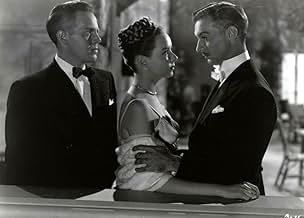
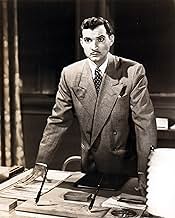
A childhood incident propels Horace Vendig (Zachary Scott) onto a new path in life into the circles of the well-to-do and he does everything he can to capitalise on this unexpected turn of events. Having carried out a much-lauded good deed as a child, at first, his "ruthlessness" is not very apparent; he seems to be more of an opportunist as he attempts to valiantly bootstrap himself out of a broken, poverty-stricken, neglectful family. Although the story starts off quite glacially and tamely, the psychological damage caused by his upbringing and how this drives his behaviours is soon all too apparent. Even Horace himself seems to be at moments self-aware of his twisted personality and how devastating this is to those around him but his compulsion to persist in his Machiavellian maneuvers overcomes him, discarding business partners, friends and lovers like trash for the next 'big thing' as he clambers his way to the 'top'. Later, any glimmers of contrition and self-recrimination he had wither away as we see the 'ruthless' lengths he is willing to go to get the women and the status he craves. The noir-ish elements include multiple extensive flashbacks, ambiguity in the motives and morals of some of the players, a weird 'doubling' of a female character (the same actress plays two women), unexpected fateful reverses, and a "good versus evil" streak that runs through this film. This dark energy gets amped up at the halfway point when Sydney Greenstreet turns up as a bigger-than-life tycoon. His Buck Mansfield brings a fresh dimension to the movie as a wily big shot who Horace treats as a white whale to be harpooned, and whose position he schemes to usurp. In addition, there are quite a few other threads including a few romances that are not as straightforward as they look at first glance, and the meaning of friendship between men as they mature with different values (to say the least). Initially slightly dull, stuffy and stiff, I was pleasantly surprised by the increasing depth, twistiness, and darkening of tone of the film, with great acting all round from Scott, Hayward, Greenstreet, Vickers, Lynn and others. It is fascinating to watch the central character's initially quite blank and ambiguous character become ever more morally depraved (even deranged). By the end we get a somewhat nuanced and riveting portrait of Horace Vendig, a man we almost feel sorry for at some points: a sociopath driven by his own avaricious demons, who even seems to be sincerely ready to return to the path of 'good' at various times, aided by well-meaning people around him, but who is ultimately consumed by his own insatiable envy and overweening ambition. Get through the first 30 mins and you will be rewarded with a rarely-seen little gem.
I don't want to be a man. Never! I wish there weren't any men in the whole world.
Ruthless is directed by Edgar G. Ulmer and adapted to screenplay by S.K. Lauren, Gordon Kahn and Alvah Bessie from Dayton Stoddart's novel Prelude to Night. It stars Zachary Scott, Louis Hayward, Sydney Greenstreet, Diana Lynn, Lucille Bremer and Martha Vickers. Music is by Werner Jansen and cinematography by Bert Glennon.
Even as a boy Horace Vendig always got what he wanted. Then into adulthood and he manipulates himself into high society. Now a fully fledged tyro of commerce he is even more cruel and impervious to how his actions harm others. But when Horace (Scott) reunites with his old best friend Vic Lambdin (Hayward) and he falls a foul of the bitter Buck Mansfield (Greenstreet), all the resentments come crashing together as one!
"Animals kill for food or love. You and I spoil the jungle because we kill for profit, a taste of victory and revenge. Then we destroy each other after"
It was a one time hard to locate picture, where even in early releases it had been shorn of 25 minutes, but now it's out there, a full one hour and forty four minutes of Ruthlessness! Ok, that might be over selling it a touch, but this is a pretty spicy piece of greedy film noir, a scathing attack on capitalism, a telling of the corruption of a man's soul and the bitter treatment he hands out to those who care for him.
Tagged as a sort of baby brother to Citizen Kane, which is fair enough in fact, but that be in narrative drive more than visual panache. There's some nice expressionistic touches, with Glennon (Crime Wave) proving what a very talented cinematographer he was (see his Westerns output), but the pic does lack for noirish visual menace to marry up with the sour lead characterisation. Which is a crime given it's Ulmer (The Black Cat/Bluebeard/Detour/Strange Illusion) in the directors chair.
However, where the pic shines bright is with the performances, Ulmer getting his cast to turn in impressive portrayals of the human condition. The ladies are especially great (Lynn has a dual role) as they nail the respective heartbeats of women buffeted by Horace's duality of twisted emotions and lofty avarice ambitions. In short we get very mature turns in a film that's very much mature in thematics. Add it to your Ulmer "to see lists" post haste. 7.5/10
Even as a boy Horace Vendig always got what he wanted. Then into adulthood and he manipulates himself into high society. Now a fully fledged tyro of commerce he is even more cruel and impervious to how his actions harm others. But when Horace (Scott) reunites with his old best friend Vic Lambdin (Hayward) and he falls a foul of the bitter Buck Mansfield (Greenstreet), all the resentments come crashing together as one!
"Animals kill for food or love. You and I spoil the jungle because we kill for profit, a taste of victory and revenge. Then we destroy each other after"
It was a one time hard to locate picture, where even in early releases it had been shorn of 25 minutes, but now it's out there, a full one hour and forty four minutes of Ruthlessness! Ok, that might be over selling it a touch, but this is a pretty spicy piece of greedy film noir, a scathing attack on capitalism, a telling of the corruption of a man's soul and the bitter treatment he hands out to those who care for him.
Tagged as a sort of baby brother to Citizen Kane, which is fair enough in fact, but that be in narrative drive more than visual panache. There's some nice expressionistic touches, with Glennon (Crime Wave) proving what a very talented cinematographer he was (see his Westerns output), but the pic does lack for noirish visual menace to marry up with the sour lead characterisation. Which is a crime given it's Ulmer (The Black Cat/Bluebeard/Detour/Strange Illusion) in the directors chair.
However, where the pic shines bright is with the performances, Ulmer getting his cast to turn in impressive portrayals of the human condition. The ladies are especially great (Lynn has a dual role) as they nail the respective heartbeats of women buffeted by Horace's duality of twisted emotions and lofty avarice ambitions. In short we get very mature turns in a film that's very much mature in thematics. Add it to your Ulmer "to see lists" post haste. 7.5/10
He wasn't a man... he was a way of life
This may be Edgar G. Ulmer's masterpiece. RUTHLESS is a terrific noir/melodrama - sharply written (by the to-be-blacklisted Alvah Bessie and Gordon Kahn), consistently beautifully photographed (by the underrated Bert Glennon), and truly adventurous in its editing and flash forward-flash backward construction.
Zachary Scott is the "ruthless" title character, but the title is more a cheap shot than anything else; Scott's Vendig is more an emotionally bankrupt, pathological character than a villain per se. The narrative takes pains to reveal - gradually - the series of events from childhood through adulthood which affected his perverse makeup, making for a fascinating character study. Subtle revelations and plot twists come about every fifteen minutes, but they're deliberately ambiguous when they hit the screen, forcing the viewer to pay close attention as the truth of the situation is revealed. This technique alone puts RUTHLESS way ahead of any other Poverty Row melodrama of the period and cements Ulmer's reputation as a thoughtful stylist.
Louis Hayward plays a sort of Greek chorus, an often acquiescent voice of conscience/best friend/nemesis who keeps the episodic story moving along. Diana Lynn (in two roles), Martha Vickers and Lucille Bremer each give terrific performances as the various women who appear, disappear, and reappear in the lives of both men. All are sharply drawn, a testament to the determination of Bessie, Kahn and other blacklisted writers to put strong female characters on screen in defiance of the Production Code, which seemed to encourage either submissive or predatory roles for women.
And as if all that isn't enough, Sidney Greenstreet drops in and sets the screen on fire in every sequence he appears in. A classic coiled spring, his portrayal of a similarly greedy corporate boss is perfectly slimy, and provides a genuine shock when he suddenly grabs Lucille Bremer by the hair and jerks her backwards for a kiss. Likewise, a later sequence where Bremer drags him in front of the mirror so she can brutally compare him to her new, younger lover is unforgettably painful.
RUTHLESS sits comfortably alongside DETOUR, THE MAN FROM PLANET X and THE STRANGE WOMAN, other Ulmer gems of note. A great movie.
Zachary Scott is the "ruthless" title character, but the title is more a cheap shot than anything else; Scott's Vendig is more an emotionally bankrupt, pathological character than a villain per se. The narrative takes pains to reveal - gradually - the series of events from childhood through adulthood which affected his perverse makeup, making for a fascinating character study. Subtle revelations and plot twists come about every fifteen minutes, but they're deliberately ambiguous when they hit the screen, forcing the viewer to pay close attention as the truth of the situation is revealed. This technique alone puts RUTHLESS way ahead of any other Poverty Row melodrama of the period and cements Ulmer's reputation as a thoughtful stylist.
Louis Hayward plays a sort of Greek chorus, an often acquiescent voice of conscience/best friend/nemesis who keeps the episodic story moving along. Diana Lynn (in two roles), Martha Vickers and Lucille Bremer each give terrific performances as the various women who appear, disappear, and reappear in the lives of both men. All are sharply drawn, a testament to the determination of Bessie, Kahn and other blacklisted writers to put strong female characters on screen in defiance of the Production Code, which seemed to encourage either submissive or predatory roles for women.
And as if all that isn't enough, Sidney Greenstreet drops in and sets the screen on fire in every sequence he appears in. A classic coiled spring, his portrayal of a similarly greedy corporate boss is perfectly slimy, and provides a genuine shock when he suddenly grabs Lucille Bremer by the hair and jerks her backwards for a kiss. Likewise, a later sequence where Bremer drags him in front of the mirror so she can brutally compare him to her new, younger lover is unforgettably painful.
RUTHLESS sits comfortably alongside DETOUR, THE MAN FROM PLANET X and THE STRANGE WOMAN, other Ulmer gems of note. A great movie.


Did you know
- TriviaBuck Mansfield quotes twice from the Bible. The first occasion is when he is being pursued by his creditors and he reads from Proverbs 31:10 -12 and 21 (...Who can find a virtuous woman? For her price is far above rubies....). The second instance is when he speaks to the bartender at Vendig's function and the quote is from Obadiah 1: 2-4 (...Though you set your nest among the stars, From there I will bring you down ...).
- Quotes
Mrs. Burnside: [to unhappy young Horace] Be brave. Be a man.
Horace Vendig as Child: I don't want to be a man. Never! I wish there weren't any men in the whole world.
- ConnectionsReferenced in Let's Go to the Movies (1949)
- How long is Ruthless?Powered by Alexa
Details
- Runtime
- 1h 44m(104 min)
- Color
- Aspect ratio
- 1.37 : 1
Contribute to this page
Suggest an edit or add missing content