IMDb RATING
6.8/10
1.6K
YOUR RATING

A financier's sins are recalled by his ex-partner and boyhood pal.A financier's sins are recalled by his ex-partner and boyhood pal.A financier's sins are recalled by his ex-partner and boyhood pal.


Robert J. Anderson
- Horace Vendig as Child
- (as Bob Anderson)


Frederick Worlock
- J. Norton Sims
- (as Fred Worlock)

6.81.5K
1
2
3
4
5
6
7
8
9
10
Featured reviews
Ruthless
Edgar G. Ulmer (1904-72) may be best remembered for the pessimistic 1945 film noir Detour, but that is only one of his several directing credits, many of which have fallen out of fame over the past decades. One of Ulmer's lesser known works is his 1948 drama Ruthless, a character study of a superficially successful but inwardly broken man, in some ways evoking memories of the themes in Orson Welles' legendary debut feature Citizen Kane (1941).
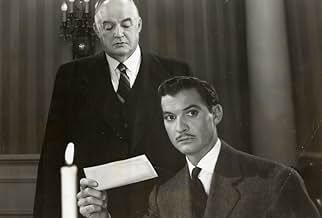
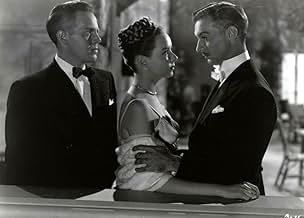
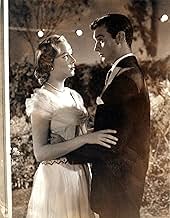
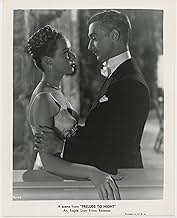
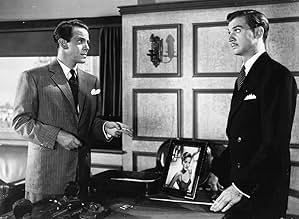
Like many noirs, Ruthless utilizes extensive flashbacks in its narrative. The frame story takes place in a high society party where Vic Lambdin (Louis Hayward) and his lady friend Mallory Flagg (Diana Lynn) have arrived to meet Vic's old friend Horace Vendig (Zachary Scott), a millionaire philanthropist. Upon meeting Mallory, Vendig is startled by her resemblance to a girl called Martha Burnside, Vic and Vendig's common friend who was once engaged to marry the latter. Several flashbacks then cast light on what has happened between Vendig, Vic, Martha and other figures from the past, some of whom are present at the party. In spite of his generous donations to charitable organizations, in his personal life Vendig is revealed to be far from perfect.
Vendig's personality is seen stemming from his childhood trauma of feeling unwanted by his parents. Perhaps this is why he never really allows anyone get close to him, always handling his relationships in a cold and calculating manner. Even though the premise sounds fairly interesting, the execution is not without its problems. Namely, a lot of the lengthy flashbacks feel too long and seem to merely present the actions of Vendig rather than providing insight on his inner world. He mentions that he is aware of his irresistible urge to strive for success which causes him to knowingly hurt his loved ones by dumping them in favour of business opportunities, but the scenes of him going through numerous financial negotiations and meetings start feeling tiresome soon. How does he feel about what he does? I don't think we, the audience, ever get to know him very well, but he does not really carry an aura of mystery around him either because the writing leaves his traits too scarce. Some might call this lack of clearness subtlety, but I would have wanted to see more clues about Vendig's thoughts and how he became what he is at the dramatic ending.
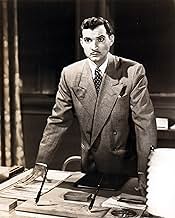
Regardless of my complaints above, I enjoyed many aspects of the film. For one thing, the acting is generally good throughout; especially the women are at home in their roles, from the beautiful Diana Lynn in a double role as Martha and Mallory to Lucille Bremer as the frustrated Christa Mansfield and Martha Vickers as Vendig's fiancée Susan. Sydney Greenstreet also delivers a great performance as Bremer's on-screen husband Buck Mansfield, an aging businessman who has to face his limitations due to Vendig's schemes. On the other hand though, the kid actors in the first flashback are not as impressive as the adults, but Ruthless is hardly the first (or last) movie with kids as the weakest link. Zachary Scott's "old" makeup could have been more convincing too; a small moustache is hardly enough to convey the feel of an older man. Other than that, the melancholic-looking Scott suits the lead role somewhat comfortably.
Some of the shadowy photography in the exterior scenes and low camera angles looks pretty nice, even though the visuals are not really as starkly contrasted as in many proper noirs. It is probably best to see Ruthless as a withdrawn character study instead of expecting anything very 'hard-boiled' to ever step into the picture. In the end, with more fleshed out character development Ruthless could have been a very enjoyable film, but I think it is easily watchable as it is now as well, flawed or not.
Like many noirs, Ruthless utilizes extensive flashbacks in its narrative. The frame story takes place in a high society party where Vic Lambdin (Louis Hayward) and his lady friend Mallory Flagg (Diana Lynn) have arrived to meet Vic's old friend Horace Vendig (Zachary Scott), a millionaire philanthropist. Upon meeting Mallory, Vendig is startled by her resemblance to a girl called Martha Burnside, Vic and Vendig's common friend who was once engaged to marry the latter. Several flashbacks then cast light on what has happened between Vendig, Vic, Martha and other figures from the past, some of whom are present at the party. In spite of his generous donations to charitable organizations, in his personal life Vendig is revealed to be far from perfect.
Vendig's personality is seen stemming from his childhood trauma of feeling unwanted by his parents. Perhaps this is why he never really allows anyone get close to him, always handling his relationships in a cold and calculating manner. Even though the premise sounds fairly interesting, the execution is not without its problems. Namely, a lot of the lengthy flashbacks feel too long and seem to merely present the actions of Vendig rather than providing insight on his inner world. He mentions that he is aware of his irresistible urge to strive for success which causes him to knowingly hurt his loved ones by dumping them in favour of business opportunities, but the scenes of him going through numerous financial negotiations and meetings start feeling tiresome soon. How does he feel about what he does? I don't think we, the audience, ever get to know him very well, but he does not really carry an aura of mystery around him either because the writing leaves his traits too scarce. Some might call this lack of clearness subtlety, but I would have wanted to see more clues about Vendig's thoughts and how he became what he is at the dramatic ending.
Regardless of my complaints above, I enjoyed many aspects of the film. For one thing, the acting is generally good throughout; especially the women are at home in their roles, from the beautiful Diana Lynn in a double role as Martha and Mallory to Lucille Bremer as the frustrated Christa Mansfield and Martha Vickers as Vendig's fiancée Susan. Sydney Greenstreet also delivers a great performance as Bremer's on-screen husband Buck Mansfield, an aging businessman who has to face his limitations due to Vendig's schemes. On the other hand though, the kid actors in the first flashback are not as impressive as the adults, but Ruthless is hardly the first (or last) movie with kids as the weakest link. Zachary Scott's "old" makeup could have been more convincing too; a small moustache is hardly enough to convey the feel of an older man. Other than that, the melancholic-looking Scott suits the lead role somewhat comfortably.
Some of the shadowy photography in the exterior scenes and low camera angles looks pretty nice, even though the visuals are not really as starkly contrasted as in many proper noirs. It is probably best to see Ruthless as a withdrawn character study instead of expecting anything very 'hard-boiled' to ever step into the picture. In the end, with more fleshed out character development Ruthless could have been a very enjoyable film, but I think it is easily watchable as it is now as well, flawed or not.
from Bobby Anderson to Zachary Scott
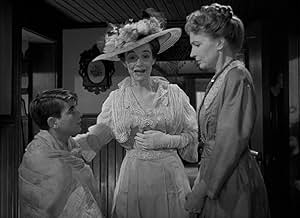
Apparently a brief exchange between the adolescent boy (Bobby Anderson) and his father (Raymond Burr) in which the father tells him that opportunity only comes around once, is the reason why Anderson morphs into the social climbing and ruthless business tycoon played by Zachary Scott. It hardly seems like enough of an influence to change a nice kid into a prototypical (and stereotypical) greedy capitalist millionaire. Though it's difficult to establish a connection between the two, Scott makes a believable social climber, and the story has a pretty good trajectory from his adolescence through dark mansions and well furnished offices with New York skyline views, to a finale gala event where Scott is organizing a philanthropy to unload some of his millions and ease his conscience. Ulmer doles out the action in bits and pieces, but delivers a pretty memorable ending.
Edgar G Ulmer with an A production
I just returned from an American Cinemateque screening of a UCLA restored print of this movie. Here is ample evidence that Ulmer, the King of the B's, given bigger budgets might well have had a much bigger career. Detour may be his most famous movie, but this is his best. The Alvah Bessie screenplay about greed and the relentless pursuit of success has dated not at all. The cinematography is excellent, with strong noirish elements. The sets and costumes are very good. Zachary Scott, one of the screen's great cads, is somewhat toned down here if still fairly nasty. There is strong work by Diana Lynn, Lucille Bremer, and Martha Vickers as women who get used and discarded along the way. Sidney Greenstreet shows up mid film as an equally greedy and grasping character, dominating all his scenes. But the standout, unexpectedly, is Louis Hayward as a sympathetic boyhood friend and link to the entire storyline. Ulmer brings out more warmth in this actor that was usually seen. Raymond Burr has a small part early in his career when he seemed to be copying Laird Cregar as Scott's father seen in flashback. Ulmer's daughter this evening explained that the studio Eagle-Lion/Paramount cut some scenes just before release with a particularly anti-capitalist tone. I hope the footage still exists somewhere. That aside, it is thoroughly accomplished film that needs no explanation or apologies. The current recession gives it renewed meaning. Hopefully a DVD release will soon follow.
Absolute power corrupts absolutely
That's the lesson learned too late by all the good souls who help ruthless Zachry Scott in this movie. Scott is appropriately hard and tough in the unsympathetic lead role, and Diana Lynn, Sydney Greenstreet, and Raymond Burr head up a marvelous supporting cast. Still, there's an element missing here, although I cannot put my finger on precisely what it is, that would have made this movie truly memorable instead of merely interesting.
I don't want to be a man. Never! I wish there weren't any men in the whole world.
Ruthless is directed by Edgar G. Ulmer and adapted to screenplay by S.K. Lauren, Gordon Kahn and Alvah Bessie from Dayton Stoddart's novel Prelude to Night. It stars Zachary Scott, Louis Hayward, Sydney Greenstreet, Diana Lynn, Lucille Bremer and Martha Vickers. Music is by Werner Jansen and cinematography by Bert Glennon.
Even as a boy Horace Vendig always got what he wanted. Then into adulthood and he manipulates himself into high society. Now a fully fledged tyro of commerce he is even more cruel and impervious to how his actions harm others. But when Horace (Scott) reunites with his old best friend Vic Lambdin (Hayward) and he falls a foul of the bitter Buck Mansfield (Greenstreet), all the resentments come crashing together as one!
"Animals kill for food or love. You and I spoil the jungle because we kill for profit, a taste of victory and revenge. Then we destroy each other after"
It was a one time hard to locate picture, where even in early releases it had been shorn of 25 minutes, but now it's out there, a full one hour and forty four minutes of Ruthlessness! Ok, that might be over selling it a touch, but this is a pretty spicy piece of greedy film noir, a scathing attack on capitalism, a telling of the corruption of a man's soul and the bitter treatment he hands out to those who care for him.
Tagged as a sort of baby brother to Citizen Kane, which is fair enough in fact, but that be in narrative drive more than visual panache. There's some nice expressionistic touches, with Glennon (Crime Wave) proving what a very talented cinematographer he was (see his Westerns output), but the pic does lack for noirish visual menace to marry up with the sour lead characterisation. Which is a crime given it's Ulmer (The Black Cat/Bluebeard/Detour/Strange Illusion) in the directors chair.
However, where the pic shines bright is with the performances, Ulmer getting his cast to turn in impressive portrayals of the human condition. The ladies are especially great (Lynn has a dual role) as they nail the respective heartbeats of women buffeted by Horace's duality of twisted emotions and lofty avarice ambitions. In short we get very mature turns in a film that's very much mature in thematics. Add it to your Ulmer "to see lists" post haste. 7.5/10
Even as a boy Horace Vendig always got what he wanted. Then into adulthood and he manipulates himself into high society. Now a fully fledged tyro of commerce he is even more cruel and impervious to how his actions harm others. But when Horace (Scott) reunites with his old best friend Vic Lambdin (Hayward) and he falls a foul of the bitter Buck Mansfield (Greenstreet), all the resentments come crashing together as one!
"Animals kill for food or love. You and I spoil the jungle because we kill for profit, a taste of victory and revenge. Then we destroy each other after"
It was a one time hard to locate picture, where even in early releases it had been shorn of 25 minutes, but now it's out there, a full one hour and forty four minutes of Ruthlessness! Ok, that might be over selling it a touch, but this is a pretty spicy piece of greedy film noir, a scathing attack on capitalism, a telling of the corruption of a man's soul and the bitter treatment he hands out to those who care for him.
Tagged as a sort of baby brother to Citizen Kane, which is fair enough in fact, but that be in narrative drive more than visual panache. There's some nice expressionistic touches, with Glennon (Crime Wave) proving what a very talented cinematographer he was (see his Westerns output), but the pic does lack for noirish visual menace to marry up with the sour lead characterisation. Which is a crime given it's Ulmer (The Black Cat/Bluebeard/Detour/Strange Illusion) in the directors chair.
However, where the pic shines bright is with the performances, Ulmer getting his cast to turn in impressive portrayals of the human condition. The ladies are especially great (Lynn has a dual role) as they nail the respective heartbeats of women buffeted by Horace's duality of twisted emotions and lofty avarice ambitions. In short we get very mature turns in a film that's very much mature in thematics. Add it to your Ulmer "to see lists" post haste. 7.5/10


Did you know
- TriviaBuck Mansfield quotes twice from the Bible. The first occasion is when he is being pursued by his creditors and he reads from Proverbs 31:10 -12 and 21 (...Who can find a virtuous woman? For her price is far above rubies....). The second instance is when he speaks to the bartender at Vendig's function and the quote is from Obadiah 1: 2-4 (...Though you set your nest among the stars, From there I will bring you down ...).
- Quotes
Mrs. Burnside: [to unhappy young Horace] Be brave. Be a man.
Horace Vendig as Child: I don't want to be a man. Never! I wish there weren't any men in the whole world.
- ConnectionsReferenced in Let's Go to the Movies (1949)
- How long is Ruthless?Powered by Alexa
Details
- Runtime
- 1h 44m(104 min)
- Color
- Aspect ratio
- 1.37 : 1
Contribute to this page
Suggest an edit or add missing content