IMDb RATING
7.0/10
2.7K
YOUR RATING

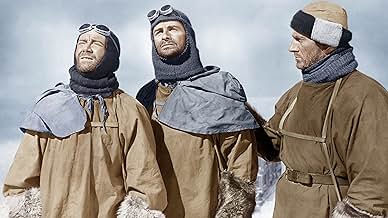
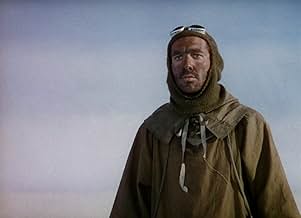
The story of British explorer Robert Falcon Scott's 1912 expedition and his quest to be the first to reach the South Pole.The story of British explorer Robert Falcon Scott's 1912 expedition and his quest to be the first to reach the South Pole.The story of British explorer Robert Falcon Scott's 1912 expedition and his quest to be the first to reach the South Pole.
- Director
- Writers
- Stars
- Nominated for 1 BAFTA Award
- 1 win & 2 nominations total


James McKechnie
- Surgeon Lt. E.L.Atkinson R.N.
- (as James Mc Kechnie)


- Director
- Writers
- All cast & crew
- Production, box office & more at IMDbPro
7.02.7K
1
2
3
4
5
6
7
8
9
10
Featured reviews
Scott was a hero, but...
There is a general feeling, already noted here, that this film whitewashes Scott and turns him into a heroic figure. This is not surprising when you consider that when it was being made survivors of the expedition and relatives of those who died (particularly Kathleen Scott) were still alive.
Nevertheless, the film does raise some questions about Scott's leadership and judgement: his desperation to be first at the Pole with inadequate planning and resources; his last-minute decision to take a fifth man to the Pole when supplies had been calculated for a four-man team; the fact that none of these questionable decisions are challenged by subordinates bound by Royal Navy discipline.
The scenes at the Pole are particularly telling. When the British reach the Norwegian camp it is Wilson who enters their tent, while Scott tells Bowers to "check the position". Wilson's look of disgust emphasises Scott's refusal to face hard reality at a critical moment.
So, yes, this is the story of a "national hero", but watch it with care and it is far from uncritical.
Nevertheless, the film does raise some questions about Scott's leadership and judgement: his desperation to be first at the Pole with inadequate planning and resources; his last-minute decision to take a fifth man to the Pole when supplies had been calculated for a four-man team; the fact that none of these questionable decisions are challenged by subordinates bound by Royal Navy discipline.
The scenes at the Pole are particularly telling. When the British reach the Norwegian camp it is Wilson who enters their tent, while Scott tells Bowers to "check the position". Wilson's look of disgust emphasises Scott's refusal to face hard reality at a critical moment.
So, yes, this is the story of a "national hero", but watch it with care and it is far from uncritical.
One of Ealing's most overlooked efforts
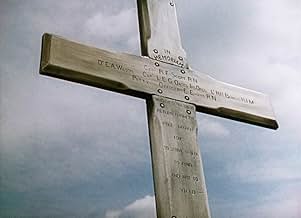
Produced by Ealing Studios, Scott of the Antarctic is a stiff upper- lipped depiction of Captain Scott's infamous, ill-fated expedition to the South Pole. Facing freezing storms, starvation, lack of fuel, and having just digested the sobering revelation that Norwegian rival Roald Amundsen had beaten them too it, Scott and his remaining team of four settled and died just 11 miles from camp, where food, warmth and undoubtedly survival awaited them. Trading very much on the legend of Captain Scott, the film charms thanks to it's post-WWII optimism and gorgeous colour cinematography.
Beginning with a determined Scott, played heartily by John Mills, rounding up his crew, the film takes it's time to get to the Arctic. Relying on Captain Scott's beautifully written diary for its source of information, the film feels more documentary than straight feature. It is all the more detailed and authentic for it, but it comes at the expense of any real character development. By the time the credits roll, we know little more about Scott than when we started, apart from that he was obviously a determined and courageous man. But it makes up for this neglect with a startling final third, where director Charles Frend puts us through every step of Scott's exhausting final thrust to get back to civilisation.
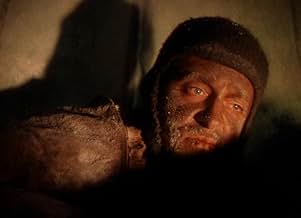
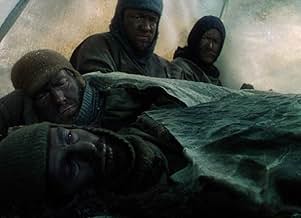
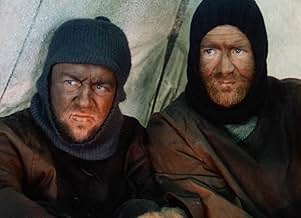
Mills and the supporting cast (James Robertson Justice, Kenneth More, Harold Warrender et al) are excellent throughout, starting out as eager and boisterous, and later, as the last survivors wait to die in the tent that would become their tomb, withdrawn and contemplative. The setting plays as the main villain, and it's captured as both a place of isolated beauty and uninhabitable terror , thanks to Jack Cardiff's stunning cinematography, and it's the encroaching sense of doom that gives Scott of the Antarctic a raw power. Although it obviously ends badly, Scott's death proved to be the making of him. Amundsen was (somewhat cruelly) dismissed as a bad sportsman, and Scott was instantly labelled a hero for daring to stare such overwhelming odds in the face and hold his head high. For a country still recovering from the ravishes of war at the time of the film's release, it must have been a powerful sentiment indeed. One of Ealing's most overlooked efforts.
www.the-wrath-of-blog.blogspot.com
Beginning with a determined Scott, played heartily by John Mills, rounding up his crew, the film takes it's time to get to the Arctic. Relying on Captain Scott's beautifully written diary for its source of information, the film feels more documentary than straight feature. It is all the more detailed and authentic for it, but it comes at the expense of any real character development. By the time the credits roll, we know little more about Scott than when we started, apart from that he was obviously a determined and courageous man. But it makes up for this neglect with a startling final third, where director Charles Frend puts us through every step of Scott's exhausting final thrust to get back to civilisation.
Mills and the supporting cast (James Robertson Justice, Kenneth More, Harold Warrender et al) are excellent throughout, starting out as eager and boisterous, and later, as the last survivors wait to die in the tent that would become their tomb, withdrawn and contemplative. The setting plays as the main villain, and it's captured as both a place of isolated beauty and uninhabitable terror , thanks to Jack Cardiff's stunning cinematography, and it's the encroaching sense of doom that gives Scott of the Antarctic a raw power. Although it obviously ends badly, Scott's death proved to be the making of him. Amundsen was (somewhat cruelly) dismissed as a bad sportsman, and Scott was instantly labelled a hero for daring to stare such overwhelming odds in the face and hold his head high. For a country still recovering from the ravishes of war at the time of the film's release, it must have been a powerful sentiment indeed. One of Ealing's most overlooked efforts.
www.the-wrath-of-blog.blogspot.com
An inspiring and timeless film
The Ealing Studios production `Scott of the Antarctic' is a work of art and an inspiration to human achievement. The film depicts the polar explorers of the Second Scott Antarctic Expedition (1910-1913). They are portrayed first as pygmies against the terrible backdrop of the ice continent, then as dauntless giants within the enclosed spaces of their fragile tents as they await their certain death.
The mood of the film is High Victorian, although strictly speaking the setting is Late Edwardian. Edward Adrian Wilson, the artist, played by Harold Warrender, is the quintessential gentleman naturalist. As the film begins, Wilson is shown in the summery garden of his tranquil country homestead in England, meticulously creating a scientific illustration of a mounted bat. At the end, when Wilson is among the few remaining explorers who face frozen death in their wind-whipped tent, his spirit drifts away to his English home.
The Victorian faith in mechanisms is brought forth by close up shots of distance-measuring wheels that are attached to the backs of clumsy man-drawn sledges, and by the heroic but flawed powered tractors that break down in the awful cold.
The film invites the viewer to arrive at his or her own conclusions about the character of Captain Scott. The film makes no judgments - it merely portrays Scott through the superb acting of John Mills.
`Scott of the Antarctic' is a timeless film about eternal values: human endeavor, achievement and triumph.
The mood of the film is High Victorian, although strictly speaking the setting is Late Edwardian. Edward Adrian Wilson, the artist, played by Harold Warrender, is the quintessential gentleman naturalist. As the film begins, Wilson is shown in the summery garden of his tranquil country homestead in England, meticulously creating a scientific illustration of a mounted bat. At the end, when Wilson is among the few remaining explorers who face frozen death in their wind-whipped tent, his spirit drifts away to his English home.
The Victorian faith in mechanisms is brought forth by close up shots of distance-measuring wheels that are attached to the backs of clumsy man-drawn sledges, and by the heroic but flawed powered tractors that break down in the awful cold.
The film invites the viewer to arrive at his or her own conclusions about the character of Captain Scott. The film makes no judgments - it merely portrays Scott through the superb acting of John Mills.
`Scott of the Antarctic' is a timeless film about eternal values: human endeavor, achievement and triumph.
Have your parka handy
This was a terrific film. I first saw this movie in the summer in Atlanta when it was near 100 degrees and our air cond was not blowing very cold. Scenes in this film actually made me feel cold. I felt as though I had been on a journey to The South pole after this one. The final 45 minutes of this film are a gripping adventure, and does it without todays special effects.
A Beautifully Shot Film
Although it verges on being a hagiography and cannot be considered to be historically accurate (what historical film is?), Scott of the Antarctic is a beautifully shot film with a great score and a solid cast. Some of the equipment from the actual expedition was used as props.
One of the other commentators on here makes mention of various failings of Scott's. Skis were depoted on the plateau due to poor surface conditions, as it was easier to haul without them and to carry them would have meant a considerable extra weight. Scott's own team depoted their skis, but went back for them when the conditions improved they did after all have an extra 200 miles to travel than Teddy Evan's team. Taff Evans wasn't abandoned on the Beardmore: he was suffering from possible brain damage and unable to pull the sledge. Considering that they all faced death if they didn't make the next depot in time, the other expedition members went on ahead with the intention of letting him catch up, whereupon he collapsed and died. Out of Teddy Evans's returning party only Evans himself came down with scurvy as he refused to eat either seal or pony meat for months. The other two members of his team, Crean and Lashly, didn't come down with scurvy and when the bodies of Scott and his men were discovered, the signs of scurvy were not visible on them either.
Nansen DID use dogs on his attempt at reaching the North Pole in 1893-95, although his earlier crossing of Greenland was done by manhaul. Scott already had decided to take skis on his expedition BEFORE he met Nansen in Norway, as he had gone there to buy the skis and test the motorised sledges. In fact it was he showed Nansen his locally purchased skis that the great man suggested Scott taking Gran with him. Gran DID teach Scott's men the basics of skiing on the pack ice on the way south. Scott himself was as good a skier as the average Norwegian. There is no evidence of an affair between Kathleen Scott and Nansen as on the occasion in question she was staying with American friends, not in the hotel with Nansen. According to the evidence they were good friends and nothing more.
One of the other commentators on here makes mention of various failings of Scott's. Skis were depoted on the plateau due to poor surface conditions, as it was easier to haul without them and to carry them would have meant a considerable extra weight. Scott's own team depoted their skis, but went back for them when the conditions improved they did after all have an extra 200 miles to travel than Teddy Evan's team. Taff Evans wasn't abandoned on the Beardmore: he was suffering from possible brain damage and unable to pull the sledge. Considering that they all faced death if they didn't make the next depot in time, the other expedition members went on ahead with the intention of letting him catch up, whereupon he collapsed and died. Out of Teddy Evans's returning party only Evans himself came down with scurvy as he refused to eat either seal or pony meat for months. The other two members of his team, Crean and Lashly, didn't come down with scurvy and when the bodies of Scott and his men were discovered, the signs of scurvy were not visible on them either.
Nansen DID use dogs on his attempt at reaching the North Pole in 1893-95, although his earlier crossing of Greenland was done by manhaul. Scott already had decided to take skis on his expedition BEFORE he met Nansen in Norway, as he had gone there to buy the skis and test the motorised sledges. In fact it was he showed Nansen his locally purchased skis that the great man suggested Scott taking Gran with him. Gran DID teach Scott's men the basics of skiing on the pack ice on the way south. Scott himself was as good a skier as the average Norwegian. There is no evidence of an affair between Kathleen Scott and Nansen as on the occasion in question she was staying with American friends, not in the hotel with Nansen. According to the evidence they were good friends and nothing more.


Did you know
- TriviaCaptain Scott's log and many of the personal effects of the explorers were loaned by The British Museum to add to the authenticity of this near-documentary.
- GoofsNo one's breath is ever visible in the Antarctic.
- Quotes
Capt. L.E.G. Oates: I'm just going outside; I may be away some time.
[as he leaves tent for certain death]
- Crazy creditsRalph Vaughan Williams, then revered as Britain's greatest living composer, has an official credit consisting only of his surname, 'Vaughan Williams'.
- ConnectionsFeatured in Antarctica (1991)
- SoundtracksWill Ye No Come Back Again?
(uncredited)
Traditional Scottish tune, and lyrics by Lady Carolina Nairne (as Carolina Oliphant, Lady Nairne)
Heard as the ship leaves New Zealand
- How long is Scott of the Antarctic?Powered by Alexa
Details
Box office
- Budget
- £2,370,000 (estimated)
- Runtime
- 1h 51m(111 min)
- Aspect ratio
- 1.37 : 1
Contribute to this page
Suggest an edit or add missing content