IMDb RATING
6.7/10
2.3K
YOUR RATING

A film director tries to create the best film in history, but finds out that human abilities have their limits.A film director tries to create the best film in history, but finds out that human abilities have their limits.A film director tries to create the best film in history, but finds out that human abilities have their limits.


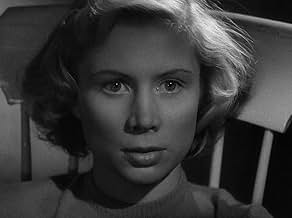


Birgit Lindkvist
- Anna - inneboende på pensionatet
- (as Bibi Lindkvist)


John W. Björling
- En man i Birgitta Carolinas dröm
- (uncredited)
Sven Björling
- En filmarbetare i ateljén
- (uncredited)
Anita Blom
- Anna - Signes kusindotter
- (uncredited)

Britta Brunius
- Lasses mamma
- (uncredited)

Åke Engfeldt
- Ena kriminalpolisen
- (uncredited)
Gösta Ericsson
- Andra kriminalpolisen
- (uncredited)

Kenne Fant
- Arne - Skådespelare
- (uncredited)
- Director
- Writer
- All cast & crew
- Production, box office & more at IMDbPro
6.72.3K
1
2
3
4
5
6
7
8
9
10
Featured reviews
Director Ingmar Bergman's First Original Screenplay
Swedish filmmaker Ingmar Bergman, 30, had directed five movies and wrote eight screenplays adapted from varying sources made into feature films. His first movie he both directed and wrote a orig script was March 1949's "Prison" (named 'The Devil's Wonton' in America and the UK). Because of Bergman's skill he displayed in his previous movies, Swedish producer Lorens Marmstedt agreed to finance his movie, but with certain stipulations. "Make a cheap film," he told Bergman, "make the cheapest film ever made in a Swedish studio and you'll be given enormous freedom to work entirely as your conscience and invention dictate. For this reason I set out to cut down on costs right across the board. Reduce the number of studio days. Limit set building. No extras. No music, or a minimal amount. Ban overtime. Limit access to celluloid."
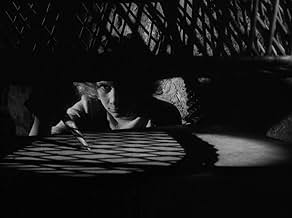
"Prison" established a pattern of Bergman's where his movies were low budgeted with minimum sets, and churned out relatively quickly. Despite these limitations he emerged as one of Sweden's most popular directors, if not one of cinema's most influential of all time. Bergman's most highly-regarded movies came from his own original ideas. They largely dealt with deep subjects, such as the human psyche, the purpose of life and and death, the souls living on earth and in the afterlife, and religion. In "Prison," he explores 'Hell on Earth' And the devil's amusement in seeing all the pain going on. The movie opens with a film director hosting a former professor with a few guests. The professor has an idea for a great movie: the Devil has been able to exert tremendous power over people, making their life miserable and at times suicidal. As a movie-within-a movie, the participants weigh the professor's idea after he leaves, which soon leads to the portrayal of prostitution, infanticide, suicide and other miserable events, insinuating God's lack of personal control on this planet.
Bergman had an unhappy childhood, raised by a strict Lutheran minister father, who later became chaplain to the King of Sweden. Attending Stockholm University, Ingmar became interested in theatre, which led to his own play writing and stage directing. He was hired by a Swedish film studio on 1941 to rewrite screenplays, and had his own script made into 1944's 'Torment,' directed by Alf Sjöberg. In the next five years he directed five movies using the scripts he wrote based on previous works. Bergman called "Prison" an experimental one, spending under $30,000 U. S. dollars, and shot in just 18 days. Bergman said producer Marmstedt contacted several actors "and told each one, 'Don't count on getting your regular salary because this is an artistic film and one has to sacrifice something for Art!' I myself did not receive a penny, just 10 percent of the profit. There never was any profit!" Hasse Ekman, who played the professor in the opening segment, was one of Sweden's most respected film directors at the time. He was ranked as the country's most popular director since Victor Sjostrom and Mauritz Stiller, before Bergman's reputation was fully realized in the late 1950s. In the controversial role of Brigitta, Doris Svedlund plays a department store employee who moonlights in the evening as a hooker. After seeing the movie an executive representing the store workers union workers expressed his resentment on the implication employees were underpaid, writing, "We have exactly the same salaries as equivalent staff working for other employers, so we do not need to walk the streets to support ourselves." Bergman defended his characters' backgrounds, claiming they derived from his imagination alone.
In "Prison," Bergman's viewpoint was we're just marionettes manipulated by some malignant cosmic force. The movie's most discussed scene is when Tomas and Brigitta are watching a silent film where they determine, according to film reviewer James Travers, "the whole point of their existence is merely to provide entertainment for some higher spiritual entity-the Devil maybe?" The director would continue to carry such provocative ideas throughout his long influential film career.
Bergman had an unhappy childhood, raised by a strict Lutheran minister father, who later became chaplain to the King of Sweden. Attending Stockholm University, Ingmar became interested in theatre, which led to his own play writing and stage directing. He was hired by a Swedish film studio on 1941 to rewrite screenplays, and had his own script made into 1944's 'Torment,' directed by Alf Sjöberg. In the next five years he directed five movies using the scripts he wrote based on previous works. Bergman called "Prison" an experimental one, spending under $30,000 U. S. dollars, and shot in just 18 days. Bergman said producer Marmstedt contacted several actors "and told each one, 'Don't count on getting your regular salary because this is an artistic film and one has to sacrifice something for Art!' I myself did not receive a penny, just 10 percent of the profit. There never was any profit!" Hasse Ekman, who played the professor in the opening segment, was one of Sweden's most respected film directors at the time. He was ranked as the country's most popular director since Victor Sjostrom and Mauritz Stiller, before Bergman's reputation was fully realized in the late 1950s. In the controversial role of Brigitta, Doris Svedlund plays a department store employee who moonlights in the evening as a hooker. After seeing the movie an executive representing the store workers union workers expressed his resentment on the implication employees were underpaid, writing, "We have exactly the same salaries as equivalent staff working for other employers, so we do not need to walk the streets to support ourselves." Bergman defended his characters' backgrounds, claiming they derived from his imagination alone.
In "Prison," Bergman's viewpoint was we're just marionettes manipulated by some malignant cosmic force. The movie's most discussed scene is when Tomas and Brigitta are watching a silent film where they determine, according to film reviewer James Travers, "the whole point of their existence is merely to provide entertainment for some higher spiritual entity-the Devil maybe?" The director would continue to carry such provocative ideas throughout his long influential film career.
Not one of the most interesting Bergman films
Minor, depressing early Ingmar Bergman drama, bulit on an ambitious life-mirrors-art concept that doesn't really come off. It begins with the premise of a director being pitched the idea of making a film that depicts "Hell on Earth", but then the movie seems to try to prove this thesis via the story of some people involved in the filmmaking process. There is one notable extended dream sequence, but the most original touch is probably the spoken opening credits that never actually appear on the screen. It's a well-made and well-acted film, but one recommended mostly for dedicated Bergman followers. ** out of 4.
The first Bergman to disappoint
An ex Maths teacher announces he's just been released from a lunatic asylum (as you do) to some people making a film. (He used to teach one of them). He says that he has ideas about the Devil. The filmmakers try to adapt those ideas into a screenplay. Apparently they reject those ideas -after making them - for this film presumably.
The meandering narrative seems to explore scenarios that surround some pretty miserable and uninteresting people. I think I read that it's Bergman's first film to look solely at mild horror and the place of the Devil, both in philosophy, film and in folklore. Suicide, alcoholism, prostitution, even drowning babies born to the under-aged get limp, clumsy and unconvincing treatment.
It's pretty impossible to follow and no doubt spoilt by knowing what gems came later from the Master of Darkness.
Best thing to come out of it was a line that I've slightly altered - "Life Itself is a terminal illness "
The meandering narrative seems to explore scenarios that surround some pretty miserable and uninteresting people. I think I read that it's Bergman's first film to look solely at mild horror and the place of the Devil, both in philosophy, film and in folklore. Suicide, alcoholism, prostitution, even drowning babies born to the under-aged get limp, clumsy and unconvincing treatment.
It's pretty impossible to follow and no doubt spoilt by knowing what gems came later from the Master of Darkness.
Best thing to come out of it was a line that I've slightly altered - "Life Itself is a terminal illness "
Why isn't this recognised as genius?
I am a big Begman fan, and in recent times I've gone back to some of the early films - initially just because I thought it might be interesting to see the "juvenilia", but gradually I realised that so many of them are wonderful. I've now seen Prison 4 times, and each time I am stunned by how moving and visually powerful it is. And the performance by Doris Svedlund is breath-taking. Is it the most polished film? Who cares!
Bergman did many dream sequences in films (e.g. Wild Strawberries, Face to Face) - really hard to make them un-cringey - but the one in Prison is about as good as it gets.
So wonderful artistically, and very moving in terms of human interest. There is an orthodoxy about peoples "great" films which often gets in the way of just seeing what is there - please do watch great Bergman film .. I hope you won't be disappointed!
Bergman did many dream sequences in films (e.g. Wild Strawberries, Face to Face) - really hard to make them un-cringey - but the one in Prison is about as good as it gets.
So wonderful artistically, and very moving in terms of human interest. There is an orthodoxy about peoples "great" films which often gets in the way of just seeing what is there - please do watch great Bergman film .. I hope you won't be disappointed!
Jumbled Bergmann Film with Good Cinematography - Prison
The real prison is in the minds of these people, and in Bergman's in particular. Bergmann was always obsessed with depression and death; it was in all his fllms. Just like violence is in every Sergio Leone film, some directors are obsessed with one emotion or another. In this one, we find supposedly talented artists are having a difficult time with life. O poor little me! Get over it. People with real talent don't get despondent, they get to work. They may get down once in a while, but they bounce back from adversity, and overcome it. These wusses do not. They expect miracles from their mediocre talents and efforts, and are disappointed when they are not recognized as geniuses or great artists. You know how many years Bogart or Streep had to struggle before they became major stars? A lot longer than these no-talents. I hate agreeing with Woody Allen, but Bergmaaaaan is a joke; a bad joke at that. At least the photography is interesting.


Did you know
- TriviaIngmar Bergman's first film based on his own original screenplay.
- Crazy creditsThere are no opening titles in this film. An unseen narrator (Hasse Ekman) reads the credits, as well as the title, out loud approximately ten minutes in to the movie. The sole title card is the standard "Slut" (Swedish for "End") that closes the picture.
- ConnectionsEdited into Histoire(s) du cinéma: Une histoire seule (1989)
- SoundtracksDrömmen
Composed by Erland von Koch (1949)
- How long is Prison?Powered by Alexa
Details
Box office
- Budget
- SEK 240,000 (estimated)
- Runtime
- 1h 19m(79 min)
- Color
- Sound mix
- Aspect ratio
- 1.33 : 1
Contribute to this page
Suggest an edit or add missing content