
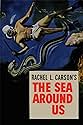
Oscar-winning documentary based on Rachel L. Carson's pioneering study of ocean life chronicled in her award-winning and best-selling 1951 book of the same name.Oscar-winning documentary based on Rachel L. Carson's pioneering study of ocean life chronicled in her award-winning and best-selling 1951 book of the same name.Oscar-winning documentary based on Rachel L. Carson's pioneering study of ocean life chronicled in her award-winning and best-selling 1951 book of the same name.
- Director
- Writers
- Stars
- Won 1 Oscar
- 1 win total
Don Forbes
- Self - Commentator
- (voice)

Theodore von Eltz
- Self - Commentator
- (voice)
- (as Theodor Von Eltz)
- Director
- Writers
- All cast & crew
- Production, box office & more at IMDbPro
6.0443
1
2
3
4
5
6
7
8
9
10
Featured reviews
early color ocean doc
It's an early documentary about the ocean. The color film has its limits but the film takes it to that limit. It starts with the biblical Genesis and volcanic reds. It continues with a lot of God and a lot of nature. It has some amazing microscopic creatures and that cinematography is good even for today. It must have awed audiences at the time. It would win the Oscar for best documentary. Granted, much of the footage must have been filmed in a tank although there is plenty of open ocean work. As part of the old ways, they do show capturing of a shark. More than half of the film is about people including the fishery rather than the natural world. It does show some giant crabs. I've never seen crabs that big. Modern environmental films would skip some of this. All in all, some of this leaves me awe-struck and would inspire future nature films. Then it ends with a gut punch. I didn't realize that global warming science was discussed so early on.
Good underwater camerawork, if a little disturbing
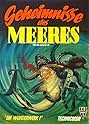
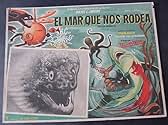
This is probably the first documentary made on life that makes its home under the water. Today, it doesn't really look like much, but for its time, there were really no other resources for learning more about undersea animals, other than going to the sea yourself or having a book. The film shows a number of extremely beautiful wonders that exist beneath our oceans, but few people have had the pleasure of seeing, such as tremendously tall growths of seaweed that can be over 100 feet in length, resembling a submerged jungle, coral reefs, and sea anemones. The film doesn't just focus on underwater things though. There's also a segment that shows how turtles hatch on land, then attempt to make a dash for the shoreline on the beach. Sadly, many of them die and are eaten by birds in the process. Also shown are seals and gannet birds. The reason why I say it's a little disturbing is because of how the interactions between the divers and some of the animals go in the movie. In particular, there's one moment when someone grabs a small shark and cuts open its midsection with a knife in only a matter of seconds, leaving it to die of blood loss. Even one of the posters I saw for the movie depicts this. Nowadays, this type of behavior would be unacceptable and divers would only take the animal's life as a last resort if it was threatening to attack a diver. Other than that, it's pretty good. If looking at the vibrant and stunning life of the ocean interests you, try to find a copy of this. The ocean is so huge and vast there are things in it we still don't know about.
10llltdesq
Excellent underwater camera work
This won an Academy Award for Documeentary Feature and most definitely deserved to win. The whole project is well-executed and the underwater camerawork is particularly worthy of mention. Holds up very well after almost fifty years. Turner Classic Movies usually shows this a few times a year. Highly recommended.
Easy to see why this won the Oscar as Best Documentary of 1953
Adaptation of Rachel Carson's book about the sea. I've never read the book so I don't know how faithful it is but some of this is fascinating. It starts out pretty badly with ponderous narration describing how the Earth (and sea) came into being. After that it lightens up pretty quickly and shows us various creatures of the sea including some incredible microscopic views of sea life. There's an interesting (and non-bloody) fight between a shark and an octopus. It also shows various occupations men have dealing with the sea like a shark walker and crab herder. The part showing different ways to capture fish (so they can be killed and eaten) might be troubling to some viewers but it's more of a sign of the time it was made than anything else. Narration aside this should be seen for visuals alone. Also the ending seems to predict global warming before it was discovered! I give it an 8.
Horror Film for Nature Lovers
This is a shockingly awful 'documentary'....what the viewer sees is almost beyond belief.
Plot in a nutshell: Underwater photographers reveal various aspects of sea life, with a healthy dose of human interference.
Why is this shockingly awful? "The Sea Around Us" is not a documentary in any modern sense of the word. If by 'documentary', you imagine film-makers immersing themselves into nature and documenting what they see, you'll be very surprised by this film; because what you get here instead is mankind inserting himself into the sea, and more importantly the film, usually to the detriment of the sea life around him.
Rather than being called "The Sea Around Us," a more accurate title would be "Man's Clueless Exploitation of the Sea." I don't think you can really have 'spoilers' for a documentary, so I'm not going to check that box, and really, what I'm about to say here SHOULD be known by anyone who thinks s/he might be interested in this 'nature' film.
Imagine seeing a diver spearing a barracuda. Then the diver spearing a moray eel. Then the diver stabbing a small shark in its belly with a knife when it comes too close. This is in fact the film-maker's idea of a documentary, it seems - namely, 'Go deep-sea diving, and kill everything that crosses your path.' Anyone who enjoys nature and wants to learn more about it will likely be flabbergasted, horrified and stunned when watching this film, as I was.
The carnage doesn't stop there. The viewer also sees an example of deep-sea trawler fishing, where the fishermen scoop up everything they can in a huge net, and whatever they don't want - 'bycatch' - simply dies in the process. We witness sponges being collected by men off the sea floor, and see salmon on their way to their breeding grounds instead being caught by fishermen positioned in strategic places along a river (what a river scene is doing in a film about the sea, well, don't ask me). We also see sharks being captured for display in aquariums and hermit crabs being trapped and captured, I assume destined for pet shops everywhere. The film is capped off - believe it or not - by a whale hunt, as the viewer watches a whale get harpooned and then mercilessly stabbed to death by the hunters. The narrator then unbelievably labels the dying whale a 'monster' not once, not twice, but three times. Never mind that the whale shown here was of no threat to humans. This film - or more accurately, this utter piece of trash - is an absolute horror fest for anyone who loves nature and finds beauty within it. 'Abysmal' is a pretty fair description for this mess.
The fact that "The Sea Around Us" won an Academy Award for Best Documentary seems to be some sort of cruel joke. It speaks volumes about the stupidity of mankind and what it deemed as acceptable and good, just a few decades ago. Famous conservationist Rachel Carson's name was used to promote this film, but after seeing the finished product, she angrily distanced herself from it, and never sold the filming rights to any of her work again. Seeing this travesty of a film, that should come as no surprise.
1/10. This is valuable only in showing the viewer what was deemed normal in 1950s America. It should serve as Exhibit A for "What to avoid when making a documentary." Would I watch again (Y/N): Hell no!
Plot in a nutshell: Underwater photographers reveal various aspects of sea life, with a healthy dose of human interference.
Why is this shockingly awful? "The Sea Around Us" is not a documentary in any modern sense of the word. If by 'documentary', you imagine film-makers immersing themselves into nature and documenting what they see, you'll be very surprised by this film; because what you get here instead is mankind inserting himself into the sea, and more importantly the film, usually to the detriment of the sea life around him.
Rather than being called "The Sea Around Us," a more accurate title would be "Man's Clueless Exploitation of the Sea." I don't think you can really have 'spoilers' for a documentary, so I'm not going to check that box, and really, what I'm about to say here SHOULD be known by anyone who thinks s/he might be interested in this 'nature' film.
Imagine seeing a diver spearing a barracuda. Then the diver spearing a moray eel. Then the diver stabbing a small shark in its belly with a knife when it comes too close. This is in fact the film-maker's idea of a documentary, it seems - namely, 'Go deep-sea diving, and kill everything that crosses your path.' Anyone who enjoys nature and wants to learn more about it will likely be flabbergasted, horrified and stunned when watching this film, as I was.
The carnage doesn't stop there. The viewer also sees an example of deep-sea trawler fishing, where the fishermen scoop up everything they can in a huge net, and whatever they don't want - 'bycatch' - simply dies in the process. We witness sponges being collected by men off the sea floor, and see salmon on their way to their breeding grounds instead being caught by fishermen positioned in strategic places along a river (what a river scene is doing in a film about the sea, well, don't ask me). We also see sharks being captured for display in aquariums and hermit crabs being trapped and captured, I assume destined for pet shops everywhere. The film is capped off - believe it or not - by a whale hunt, as the viewer watches a whale get harpooned and then mercilessly stabbed to death by the hunters. The narrator then unbelievably labels the dying whale a 'monster' not once, not twice, but three times. Never mind that the whale shown here was of no threat to humans. This film - or more accurately, this utter piece of trash - is an absolute horror fest for anyone who loves nature and finds beauty within it. 'Abysmal' is a pretty fair description for this mess.
The fact that "The Sea Around Us" won an Academy Award for Best Documentary seems to be some sort of cruel joke. It speaks volumes about the stupidity of mankind and what it deemed as acceptable and good, just a few decades ago. Famous conservationist Rachel Carson's name was used to promote this film, but after seeing the finished product, she angrily distanced herself from it, and never sold the filming rights to any of her work again. Seeing this travesty of a film, that should come as no surprise.
1/10. This is valuable only in showing the viewer what was deemed normal in 1950s America. It should serve as Exhibit A for "What to avoid when making a documentary." Would I watch again (Y/N): Hell no!


Did you know
- TriviaAccording to an article in the January 20, 1953 edition of the Los Angeles Daily News, about 1,620,000 feet of 16mm color film was collected from 2,341 sources for use in this film.
- Quotes
Commentator: It has been established beyond all reasonable doubt that the great Arctic change of climates started somewhere about 1900 and has spread so rapidly that small glaciers have already disappeared, and the big ones are melting at a startling rate.
- Crazy creditsAt the end of the film, "The End?" is displayed on screen with a question mark while an off-screen narrator speaks the last lines: "What is the fate of the world? Is this the end?" The question mark then disappears, leaving "The End" and the film closes.
Details
- Release date
- Country of origin
- Language
- Also known as
- Rachel L. Carson's The Sea Around Us
- Filming locations
- Production company
- See more company credits at IMDbPro
- Runtime
- 1h 2m(62 min)
- Aspect ratio
- 1.37 : 1
Contribute to this page
Suggest an edit or add missing content